
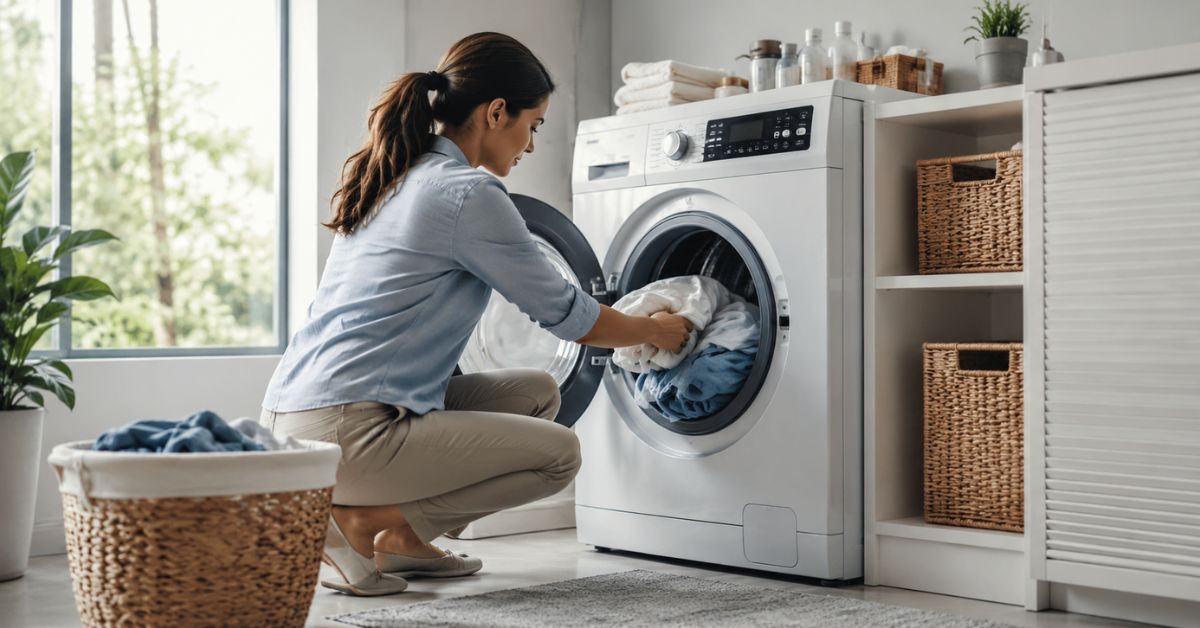
How to Load a Washing Machine: Laundry may seem like one of the easiest household chores, but many people unknowingly make mistakes before they even press the start button. Simply tossing clothes into the drum without thinking about fabric type, load size, or detergent can lead to poor cleaning results, unpleasant odors, faded colors, and even damage to your washing machine over time.
Learning how to load a washing machine correctly is one of the simplest ways to improve your laundry routine. Whether you own a front-load or top-load washer, loading clothes the right way allows water and detergent to circulate freely, helping every garment come out cleaner, fresher, and better protected. It also reduces wrinkles, prevents unnecessary wear, and helps your machine work more efficiently.
In this complete guide, you’ll learn exactly how to prepare your laundry, sort clothes properly, determine the correct load size, avoid common mistakes, and get professional-quality washing results every time.
Why Loading a Washing Machine Correctly Matters
Many people assume that washing machines do all the work automatically. In reality, the way you load the drum has a major impact on cleaning performance. Even a high-quality washing machine cannot clean clothes effectively if the load is too full, poorly balanced, or mixed incorrectly.
Proper loading offers several important benefits:
- Clothes come out cleaner because water and detergent can reach every fabric.
- Delicate garments experience less friction and last longer.
- Colors stay brighter when similar fabrics are washed together.
- The machine spins more smoothly with less vibration.
- Energy and water are used more efficiently.
- Drying time becomes shorter because clothes rinse and spin properly.
- Your washing machine experiences less strain, helping extend its lifespan.
Taking an extra two or three minutes before starting a wash cycle can save money on clothing replacements, reduce utility costs, and keep your washer performing at its best.
Before You Load the Washing Machine

Successful laundry begins before the first item enters the drum. Spending a little time preparing your clothes helps prevent stains from setting, protects delicate fabrics, and improves overall washing performance.
1. Empty Every Pocket
Check every pocket carefully before loading clothes. Small objects often cause the biggest problems.
Items to remove include:
- Coins
- Keys
- Tissues
- Receipts
- Hair clips
- Earbuds
- Pens
- Nails or screws
- Small toys
Even something as harmless as a tissue can break apart during the wash and leave white lint all over dark clothing.
2. Close Zippers and Fasten Hooks
Zip up jackets, jeans, and hoodies before washing. Fasten hooks on bras and other garments to prevent them from snagging delicate fabrics.
Leave buttons unbuttoned because tightly buttoned garments can stretch around the buttonholes during washing.
3. Turn Certain Clothes Inside Out
Turning garments inside out protects the visible surface from excessive rubbing.
This is especially helpful for:
- Dark-colored shirts
- Printed T-shirts
- Jeans
- Activewear
- Sweatshirts
- Clothing with embroidery or decorative prints
Doing this helps reduce fading while protecting logos and printed designs.
4. Treat Stains Before Washing
A washing machine removes many everyday stains, but dried or stubborn stains usually need pre-treatment.
Apply a suitable stain remover according to the fabric type and allow it to sit for several minutes before washing. Common stains such as coffee, grease, grass, makeup, and food are much easier to remove when treated before they enter the machine.
Skipping this step often means washing the same item multiple times, wasting water, energy, and detergent.
Sort Laundry the Right Way

One of the biggest laundry mistakes is washing everything together. Proper sorting not only protects fabrics but also produces noticeably cleaner results.
Sort by Color
Separate clothing into these basic groups:
- White clothing
- Light-colored clothing
- Dark-colored clothing
- Bright or heavily dyed garments
This reduces the risk of color bleeding, especially during the first few washes of new clothing.
Sort by Fabric Type
Different fabrics require different washing conditions.
For example:
- Towels and heavy cotton items
- Jeans and denim
- Delicate fabrics
- Athletic clothing
- Wool garments
- Bedding and blankets
Heavy fabrics absorb more water and can damage lighter fabrics if washed together.
Sort by Soil Level
Very dirty work clothes should not be washed with lightly worn garments.
Separate:
- Heavily soiled clothing
- Everyday clothing
- Delicate or lightly worn garments
This allows detergent to work more effectively while preventing dirt from transferring to cleaner items.
Know Your Washing Machine Type
The correct loading method depends on the type of washing machine you own.
Front-Load Washing Machines
Front-load washers clean clothes by gently lifting and tumbling them through water. These machines require enough space inside the drum for garments to move freely.
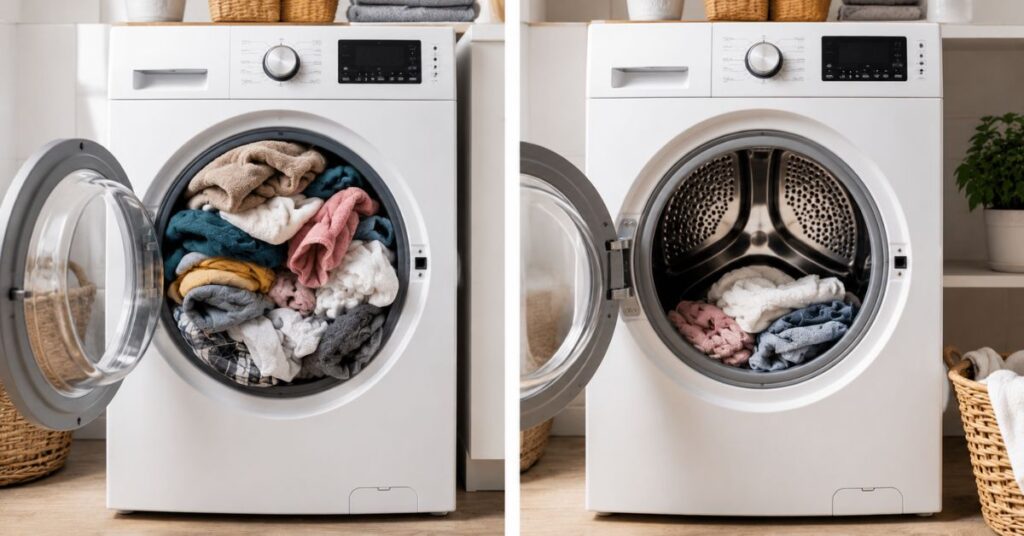
Avoid packing clothes tightly against the drum. Instead, place items loosely until the drum is about three-quarters full.
Top-Load Washing Machines
Top-load washers use either an agitator or an impeller to move clothes through the wash cycle.
If your machine has a center agitator, distribute clothes evenly around it rather than piling everything on one side. Balanced loads reduce vibration and improve cleaning performance.
For impeller models without a center agitator, spread clothing evenly around the drum instead of creating one large pile in the middle.
What Is the Correct Load Size?
One of the most common questions homeowners ask is how full a washing machine should be.
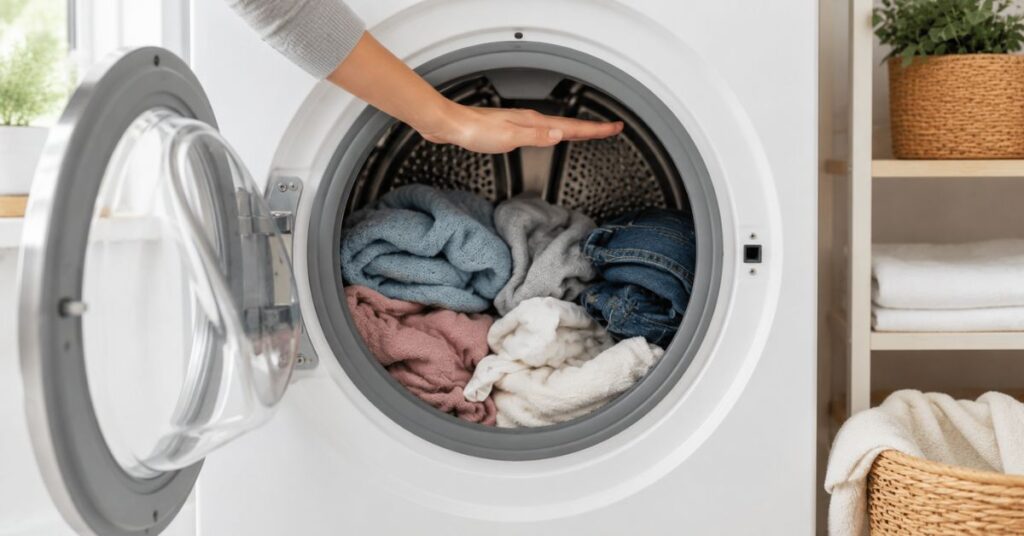
A good rule is to leave enough space for your hand to fit comfortably between the top of the clothes and the inside of the drum. This allows water, detergent, and movement to clean fabrics properly.
As a general guide:
| Load Size | Drum Capacity | Best For |
| Small Load | About one-quarter full | A few shirts, underwear, socks, or gym clothes |
| Medium Load | About half full | Everyday family laundry |
| Large Load | About three-quarters full | Towels, jeans, or larger weekly loads |
| Extra-Large Load | Only if recommended by your washer | Bulky bedding or comforters |
Overloading the drum is one of the quickest ways to reduce cleaning performance. Clothes become tightly packed, detergent cannot circulate properly, and dirt may remain trapped in the fabric after the cycle ends.
Step-by-Step: How to Load a Washing Machine the Right Way
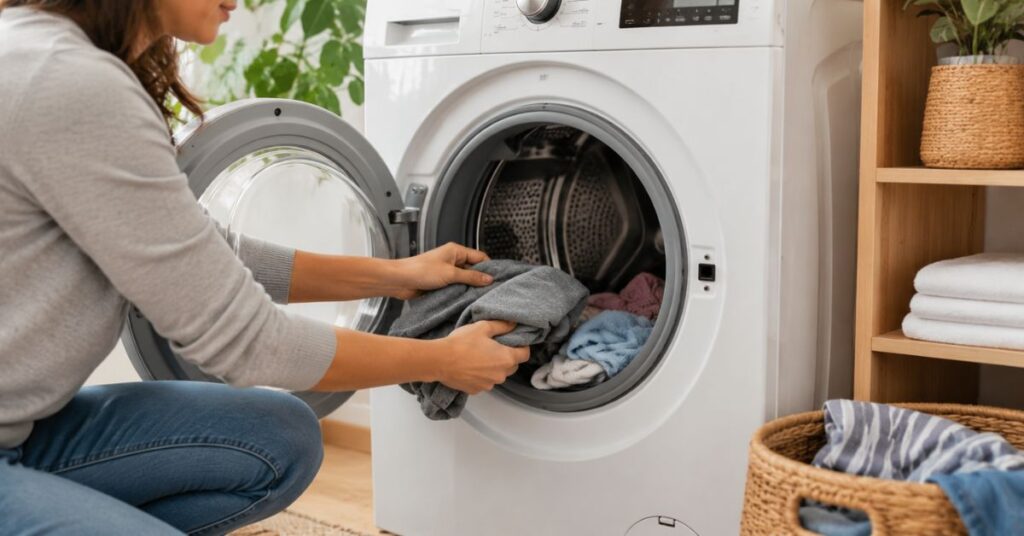
Now that your clothes are sorted and prepared, it’s time to load the washing machine correctly. Following these simple steps helps ensure your clothes are cleaned thoroughly while protecting both your fabrics and your washer.
Step 1: Place Clothes Loosely in the Drum
Never force clothing into the washing machine. Instead, place each item loosely inside the drum so it has enough room to move freely during the wash cycle.
When clothes have space to tumble, water and detergent can reach every part of the fabric. This results in cleaner laundry, fewer detergent residues, and better rinsing.
If you have large items like towels or blankets, shake them out before placing them in the drum. This prevents them from bunching together and creating an unbalanced load.
Step 2: Distribute Clothes Evenly
Balanced loads are essential for both cleaning performance and machine health.
Spread garments evenly around the drum rather than placing everything in one area. An uneven load can cause excessive vibration, loud spinning noises, and unnecessary wear on your washing machine.
For top-load washers with an agitator, arrange clothing evenly around the center post instead of wrapping items around it.
For front-load machines, simply distribute garments naturally throughout the drum without compressing them.
Step 3: Mix Large and Small Items
Washing only large items together can prevent proper movement inside the drum.
For example, if you’re washing towels, include a few smaller items such as washcloths or hand towels. This helps balance the load and allows clothes to tumble more effectively.
However, avoid mixing delicate garments with heavy fabrics like jeans or thick towels, as the heavier items can damage lighter materials.
Step 4: Leave Enough Space
One of the easiest ways to judge the correct load size is the hand-width rule.
After loading the drum, place your hand vertically between the top of the clothes and the inside of the drum.
If your hand fits comfortably, you’ve likely loaded the machine correctly.
If there is no room at all, remove a few items before starting the cycle.
This small adjustment greatly improves washing performance.
Where Should You Put Laundry Detergent?
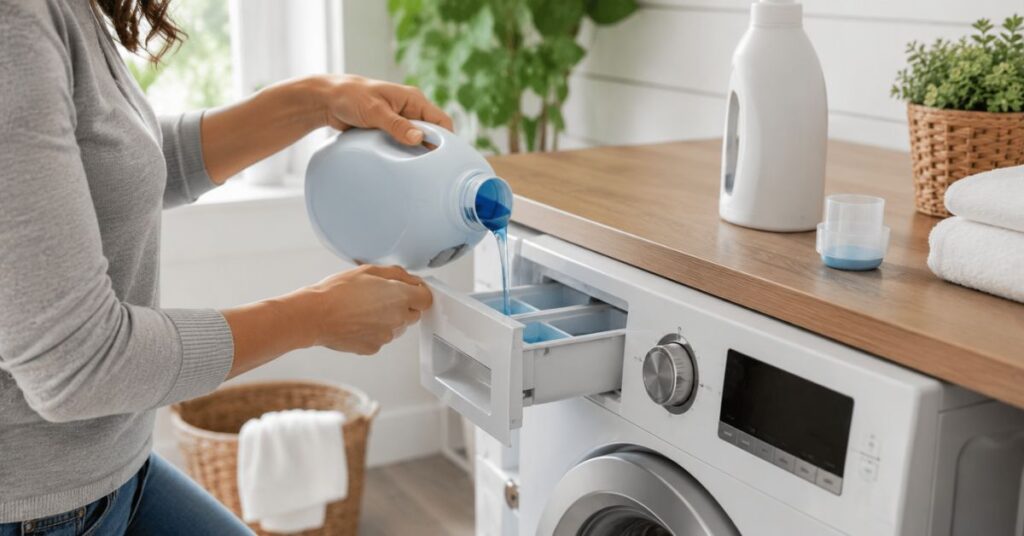
Adding detergent correctly is just as important as loading clothes properly.
Modern washing machines usually have a detergent drawer with separate compartments for:
- Main wash detergent
- Pre-wash detergent (if needed)
- Fabric softener
Always follow your machine manufacturer’s instructions when using these compartments.
If you’re using detergent pods, place the pod directly into the empty drum before adding clothes unless your washer’s manual specifies otherwise. This allows the pod to dissolve completely and distribute detergent evenly throughout the wash.
Pouring liquid detergent directly over clothing may leave residue or create light spots on certain fabrics.
How Much Detergent Should You Use?
Using more detergent doesn’t make clothes cleaner. In fact, too much detergent often creates excessive suds that trap dirt and prevent clothes from rinsing properly.
The correct amount depends on several factors:
- Load size
- Water hardness
- Type of detergent
- Soil level
- High-efficiency (HE) or standard washing machine
As a general rule, start with the amount recommended on the detergent label and adjust only if necessary. If your clothes feel stiff, look dull, or have a soapy smell after washing, you may be using more detergent than needed.
Choose the Correct Wash Cycle
Selecting the right cycle helps protect fabrics while delivering better cleaning results.
Here are some common settings you’ll find on most washing machines:
| Wash Cycle | Best For |
|---|---|
| Normal | Everyday cotton clothing |
| Quick Wash | Lightly worn clothes |
| Heavy Duty | Towels, jeans, work clothes |
| Delicate | Lingerie, lace, silk, lightweight fabrics |
| Permanent Press | Synthetic fabrics and wrinkle-resistant clothing |
| Bedding | Blankets, comforters, and sheets |
Choosing the wrong cycle can lead to unnecessary fabric wear or poor stain removal.
Select the Right Water Temperature
Water temperature affects stain removal, color protection, and fabric care.
Cold Water
Best for:
- Dark colors
- Bright colors
- Delicate fabrics
- Everyday clothing
- Energy savings
Cold water helps reduce shrinking and fading while lowering electricity costs.
Warm Water
Best for:
- Synthetic fabrics
- Moderately dirty clothes
- Mixed-color loads
Warm water provides a balance between effective cleaning and fabric protection.
Hot Water
Best for:
- White cotton towels
- Bed linens
- Heavily soiled work clothes
- Items requiring extra sanitizing
Always check the care label before using hot water because some fabrics may shrink or lose color.
Should You Wash Bedding, Towels, and Clothes Together?
Although it may seem convenient, it’s usually better to wash these items separately.
Towels
Towels are heavy, absorb large amounts of water, and produce lint. Washing them separately helps them dry faster and prevents lint from sticking to clothing.
Bedding
Sheets, pillowcases, and blankets require more room to move inside the drum. Washing them with everyday clothing often prevents proper cleaning.
Everyday Clothing
Shirts, pants, dresses, and casual wear should generally be washed together after sorting by color and fabric type.
Keeping these categories separate helps improve washing performance and extends the life of your fabrics.
Pro Tips for Cleaner Laundry Every Time
Small habits can make a noticeable difference in your laundry results.
- Shake out dirty clothes before placing them in the washer.
- Empty pockets every time, even if they seem empty.
- Close zippers to protect other garments.
- Turn dark clothes and printed shirts inside out.
- Wash new brightly colored clothing separately during the first few washes.
- Clean your washing machine once a month to remove detergent buildup and odors.
- Remove clean laundry promptly after the cycle finishes to prevent musty smells.
- Avoid leaving wet clothes sitting in the machine for several hours.
These simple practices help keep clothes looking newer while improving your washer’s long-term performance.
Common Washing Machine Loading Mistakes to Avoid
Even if you buy a high-quality washing machine, small loading mistakes can prevent it from cleaning clothes effectively. Avoiding these common errors will improve washing results and help your machine last longer.
Overloading the Drum
The most common mistake is stuffing too many clothes into the washer. When the drum is packed tightly, water and detergent cannot circulate properly.
Overloading can lead to:
- Clothes that still smell dirty after washing
- Detergent residue on fabrics
- Poor stain removal
- More wrinkles
- Increased wear on the washing machine motor
- Longer drying times
If you need to push clothes down to close the door or lid, the load is probably too large.
Washing Too Few Items
Running very small loads isn’t ideal either. A few lightweight items can become unbalanced during the spin cycle, causing unnecessary vibration and reducing washing efficiency.
Whenever possible, wash a balanced load that allows clothes to move freely.
Mixing Heavy and Delicate Fabrics
Heavy items like jeans, towels, and hoodies create more friction during washing. When washed with delicate fabrics, they can cause stretching, pilling, or even tears.
For the best results, wash similar fabric weights together.
Ignoring Clothing Care Labels
Every garment comes with care instructions for a reason. Washing delicate fabrics on a heavy-duty cycle or using hot water on items that require cold water can permanently damage clothing.
Before washing a new item, check the care label for:
- Recommended water temperature
- Suitable wash cycle
- Bleach warnings
- Drying instructions
Following these instructions helps clothes maintain their shape, color, and quality.
Using Too Much Detergent
More detergent doesn’t mean cleaner clothes. Excess detergent often leaves residue that traps dirt and causes unpleasant odors over time.
If you notice white streaks, stiff fabrics, or excessive foam, reduce the amount of detergent in your next load.
Leaving Wet Clothes in the Washer
Once the cycle finishes, remove your laundry as soon as possible. Leaving damp clothes inside the machine for several hours encourages mildew growth and creates musty odors that can transfer back to your clothes.
How to Load Special Items Correctly
Some household items need extra care when loading them into the washing machine.
Washing Towels
Shake towels before placing them in the drum to loosen dirt and lint.
Avoid overloading because towels absorb large amounts of water and become much heavier during the wash cycle.
Washing Bed Sheets
Wash sheets separately from clothing whenever possible.
Spread fitted sheets loosely inside the drum instead of twisting them into a ball. This helps them tumble freely and rinse more thoroughly.
Washing Comforters and Blankets
Bulky bedding requires enough space to move. If your comforter fills nearly the entire drum, it’s better to use a larger-capacity washer at a laundromat.
Forcing oversized bedding into a small washer can strain the motor and prevent proper cleaning.
Washing Jackets
Zip all zippers, empty every pocket, and close Velcro fasteners before washing.
Check the care label to confirm whether the jacket is machine washable and select the recommended cycle.
Washing Shoes
Only machine-wash shoes if the manufacturer allows it.
Place shoes inside a mesh laundry bag or pillowcase and add a few towels to reduce impact during the spin cycle.
Quick Laundry Checklist
Before pressing the Start button, run through this simple checklist:
✔ Empty all pockets.
✔ Separate clothes by color and fabric type.
✔ Pretreat visible stains.
✔ Zip zippers and fasten hooks.
✔ Turn dark or printed garments inside out.
✔ Load clothes loosely without packing the drum.
✔ Add the correct amount of detergent.
✔ Choose the appropriate wash cycle.
✔ Select the correct water temperature.
✔ Remove clothes promptly after the cycle ends.
Following this routine only takes a few minutes but helps deliver consistently cleaner laundry.
FAQs
Can I fill my washing machine?
No. Most washing machines clean best when the drum is about three-quarters full. Clothes need room to move so water and detergent can reach every part of the fabric.
How do I know if my washing machine is overloaded?
If clothes are tightly packed, the drum cannot rotate freely, or laundry comes out dirty or poorly rinsed, the machine is likely overloaded.
Should detergent go in before or after clothes?
It depends on your washing machine and detergent type. Liquid detergent is usually added to the detergent drawer, while detergent pods are commonly placed in the empty drum before adding clothes. Always follow your washer manufacturer’s instructions.
Is it okay to wash towels with clothes?
It’s generally better to wash towels separately. Towels create lint, absorb more water, and are heavier than everyday clothing, which can reduce cleaning performance.
How often should I clean my washing machine?
For most households, cleaning the washing machine once a month helps remove detergent residue, mineral buildup, and odor-causing bacteria. If you wash laundry frequently or use cold-water cycles most of the time, you may benefit from cleaning it more often.
Related
- How to Clean a Leather Jacket at Home: The Complete Guide to Remove Dirt, Stains, and Restore Shine
- What Is Dry Cleaning? Here’s When It’s Actually Necessary, According to the Experts
- How to Clean Leather Car Seats: 7 Easy Steps Without Damaging Them
- How to Clean Garden Tools: 7 Easy Steps for Spotless, Rust-Free Garden Tools
- 7 Easy Steps to Clean a Leather Couch Without Damaging the Finish
Final Thoughts
Knowing how to load a washing machine correctly is one of the easiest ways to improve your laundry routine. A properly loaded washer cleans clothes more effectively, protects delicate fabrics, reduces unnecessary wear, and helps your appliance operate efficiently for years.
Simple habits such as sorting laundry, avoiding overloaded drums, using the right amount of detergent, and selecting the correct wash cycle can make a noticeable difference in every load. How to Load a Washing Machine: These small changes not only leave clothes looking and smelling fresher but can also save water, energy, and money over time.
The next time you do laundry, take a few extra minutes to prepare and load your washing machine the right way. Those small steps can lead to cleaner clothes, fewer laundry problems, and better results with every wash.





Leave a Reply