
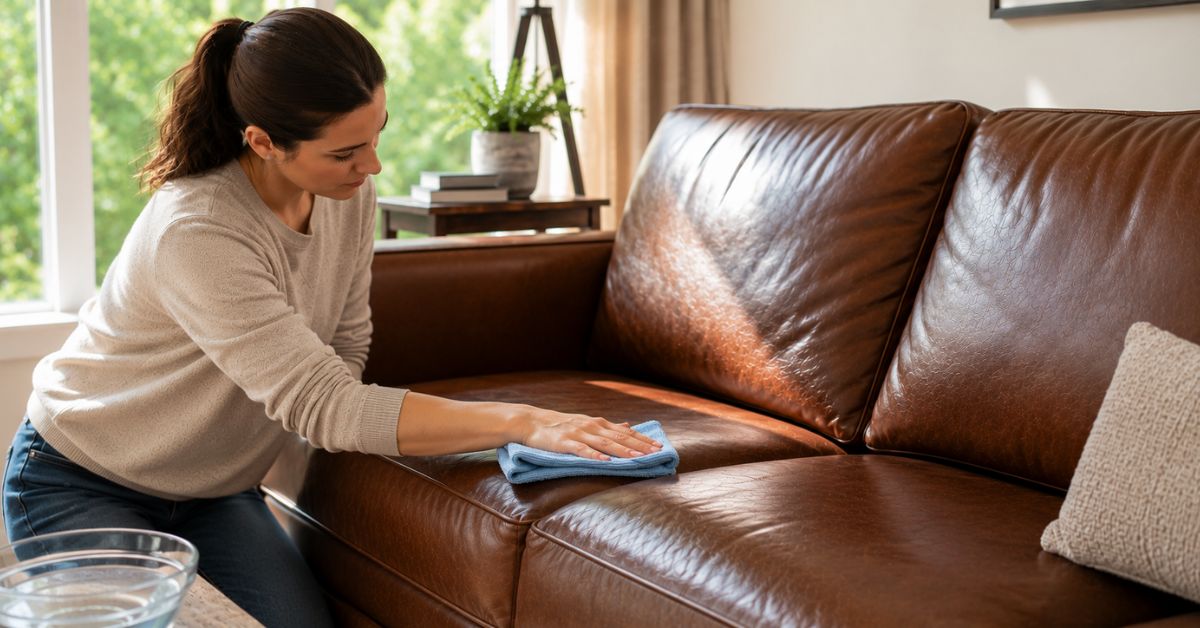
How to clean a leather couch. Leather couches bring comfort, elegance, and long-lasting value to any home, but they also require the right care to stay in excellent condition. Unlike fabric upholstery, leather has a protective finish that can become dull, dry, or damaged if cleaned with harsh products or improper techniques. Everyday dust, body oils, food crumbs, pet hair, and accidental spills slowly build up on the surface, making regular maintenance essential. Fortunately, learning how to clean a leather couch doesn’t have to be difficult. With the proper tools, gentle cleaning methods, and a little routine care, you can keep your leather furniture looking soft, beautiful, and well-protected for many years.
Many homeowners worry that cleaning leather will cause cracks, fading, or discoloration. In reality, most damage happens because the wrong products are used or because dirt is allowed to sit on the surface for too long. A simple cleaning routine can remove everyday grime while helping preserve the leather’s natural texture and finish. Whether your couch is in a busy family room, a formal living room, or a home office, taking care of it regularly will extend its lifespan and protect your investment.
If you’ve searched online for how to clean a leather couch, you’ve probably come across countless DIY tips and conflicting advice. Some sources recommend vinegar, while others warn against using it. Some suggest baby wipes, while professional leather manufacturers advise avoiding them altogether. This guide cuts through the confusion by sharing practical, experience-based housekeeping advice that focuses on safe cleaning methods suitable for most finished leather furniture. You’ll also learn when natural cleaners are appropriate, when a commercial leather cleaner is a better choice, and which common mistakes can permanently damage your couch.
Throughout this guide, we’ll cover everything you need to know, including the supplies you’ll need, important safety precautions, a simple seven-step cleaning process, natural and commercial cleaning options, expert maintenance tips, and answers to the questions homeowners ask most often. We’ll also explain when a stain can be handled at home and when it’s smarter to call a professional leather cleaning specialist.
How to clean a leather couch. At TrueHousekeeping.com, we believe great housekeeping isn’t about using expensive products; it’s about using the right techniques consistently. A few minutes of regular care can help your leather couch stay clean, comfortable, and attractive for years while reducing the need for costly repairs or early replacement. By the end of this guide, you’ll have the confidence to clean your leather furniture safely without damaging its finish.
Why Proper Cleaning Matters
A leather couch is often one of the most expensive pieces of furniture in a home, so protecting it should be part of your regular housekeeping routine. Although leather is known for its durability, it isn’t maintenance-free. Every day, tiny dust particles, body oils, pet dander, food residue, and airborne pollutants settle on the surface. Over time, these contaminants slowly wear down the protective coating, causing the leather to lose its natural softness and shine. Understanding how to clean a leather couch properly helps remove these harmful deposits before they can cause long-term damage.
Regular cleaning isn’t just about appearance. Dirt that builds up on leather acts like fine sandpaper every time someone sits down or moves across the cushions. This gradual friction can speed up wear, especially on armrests, headrests, and seat cushions where contact is most frequent. Gentle cleaning removes these abrasive particles while helping the leather maintain its smooth texture and rich color.
Proper maintenance also helps prevent one of the most common leather problems—dryness. Leather naturally loses moisture as it ages, and exposure to sunlight, heating vents, or dry indoor air can accelerate this process. Without occasional conditioning after cleaning, the material may become stiff, develop fine cracks, or lose its flexibility. A simple maintenance routine keeps the leather hydrated and helps preserve its original appearance for many years.
Another important benefit of regular leather care is creating a cleaner indoor environment. Dust, allergens, pet hair, and pollen can collect on furniture just as easily as on floors or shelves. Cleaning your leather couch regularly helps reduce these particles and contributes to a fresher, healthier living space, especially for families with children or pets.
From a financial perspective, routine maintenance is also one of the smartest ways to protect your investment. A quality leather couch can last for decades when cared for properly, while neglected furniture may require expensive repairs or replacement much sooner. Spending a few minutes cleaning and conditioning your couch every few months is far more affordable than restoring cracked or faded leather.
💡 Did You Know? How to clean a leather couch?
Even when a leather couch looks perfectly clean, invisible body oils and microscopic dust particles continue to collect on the surface every day. These hidden contaminants slowly weaken the protective finish over time, which is why regular light cleaning is just as important as removing visible dirt.
Supplies You’ll Need
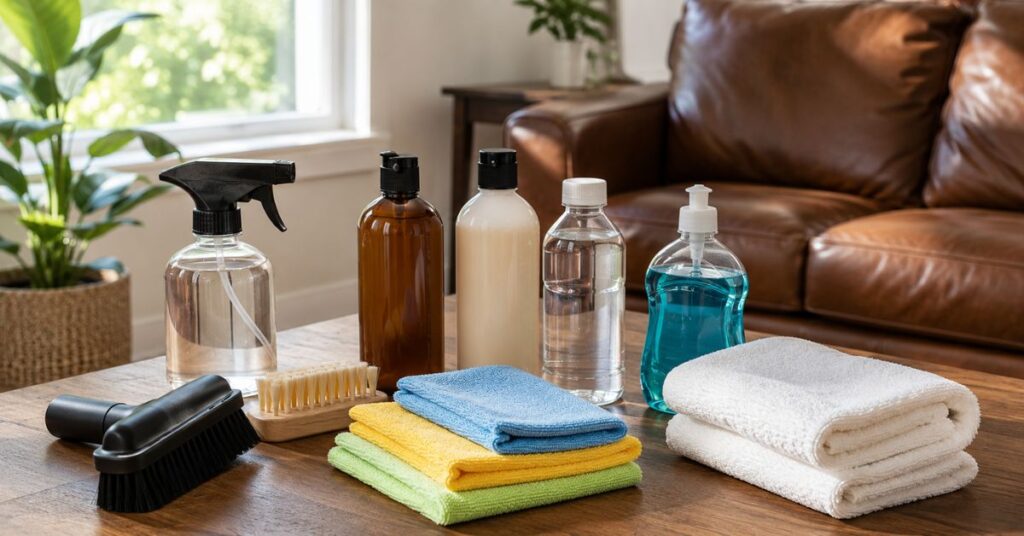
Before you begin cleaning your leather couch, it’s important to gather the right supplies. Using gentle, leather-safe tools not only makes the cleaning process easier but also helps prevent accidental damage. Many people assume they need expensive specialty products, but in most cases, a few basic household items combined with a quality leather cleaner or conditioner are all that’s required. Having everything ready before you start also prevents you from rushing or using unsuitable alternatives that could harm the leather.
A microfiber cloth is the most important tool you’ll need. Unlike rough towels or paper towels, microfiber lifts dust, dirt, and oils without scratching the leather’s protective finish. Keep several clean cloths on hand—one for dusting, one for cleaning, one for drying, and another for applying leather conditioner. Using separate cloths for each task helps prevent dirt from being transferred back onto the surface.
A vacuum cleaner with a soft brush attachment is equally essential. Before wiping the leather, remove loose dust, crumbs, pet hair, and debris from the cushions, seams, and creases. These tiny particles may seem harmless, but if they remain on the surface while you’re cleaning, they can act like fine sandpaper, creating small scratches over time. Vacuuming first makes the entire cleaning process safer and more effective.
For routine cleaning, distilled water is a better choice than ordinary tap water. Tap water may contain minerals that can leave residue or water spots on some leather finishes, while distilled water is free from these impurities. If you’re preparing a homemade cleaning solution, combine distilled water with just a few drops of mild dish soap. This gentle mixture is suitable for many finished leather couches and removes everyday dirt without stripping the protective coating.
If your couch needs a deeper clean or has stubborn grime, consider using a commercial leather cleaner specifically designed for furniture. These products are formulated to clean leather safely while preserving its natural softness and appearance. When selecting a cleaner, choose one that is pH-balanced and free from harsh chemicals such as bleach, ammonia, or strong solvents. Always read the manufacturer’s instructions carefully before use.
To keep your leather soft and prevent it from drying out, you’ll also need a quality leather conditioner. Cleaning removes dirt, oils, and other contaminants, but conditioning helps replenish moisture and maintain the leather’s flexibility. Most leather furniture only needs conditioning every six to twelve months, although couches in dry climates or heavily used homes may benefit from slightly more frequent treatment.
Quick Cleaning Checklist
Before you start, make sure you have the following supplies ready:
- ✔ Clean microfiber cloths
- ✔ Vacuum with a soft brush attachment
- ✔ Soft-bristle cleaning brush (optional)
- ✔ Distilled water
- ✔ Mild dish soap
- ✔ Leather cleaner
- ✔ Leather conditioner
- ✔ Small mixing bowl or bucket
- ✔ Spray bottle (optional)
- ✔ Clean dry towel
Although it may be tempting to grab the nearest household cleaner, many common products are too harsh for leather. Avoid using bleach, ammonia-based cleaners, hydrogen peroxide, furniture polish, abrasive scrub brushes, steam cleaners, or all-purpose sprays unless the manufacturer specifically recommends them. These products can remove the leather’s protective finish, cause discoloration, or leave the surface dry and brittle.
⚠️ Warning
Never spray water or cleaning solution directly onto a leather couch. Excess moisture can soak into the leather and underlying cushions, leading to discoloration, mildew, unpleasant odors, or damage to the padding. Instead, lightly dampen a microfiber cloth and wipe the leather gently.
Before You Start (Important Safety Tips)
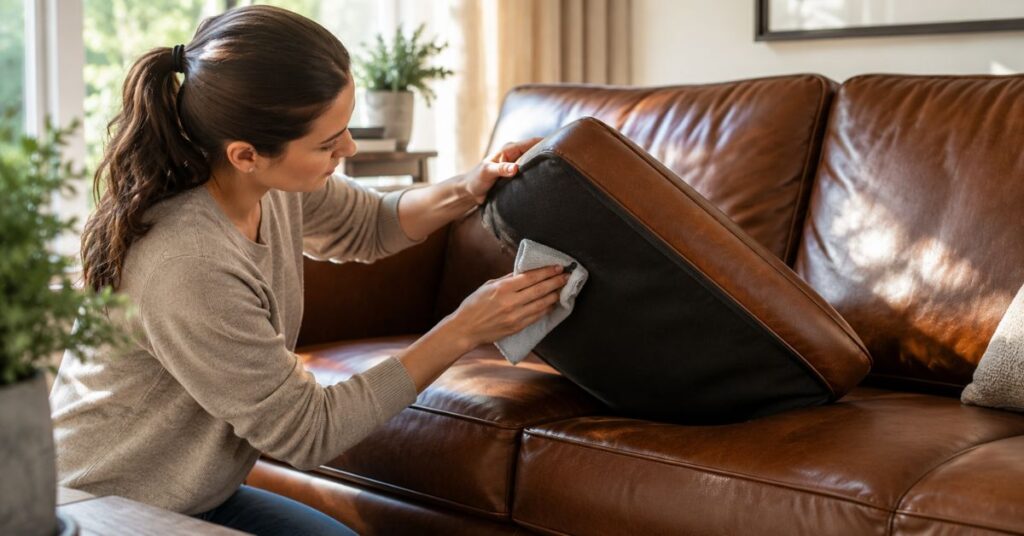
Taking a few minutes to prepare before cleaning can make a significant difference in the final results. Many cases of damaged leather aren’t caused by the cleaning products themselves but by skipping simple preparation steps. If you’re learning to clean a leather couch for the first time, these precautions will help protect your furniture and make the cleaning process smoother and more effective.
The first step is identifying the type of leather your couch is made from. Most modern sofas are made with protected or pigmented leather, which has a durable finish that can tolerate gentle cleaning. However, premium materials such as aniline, semi-aniline, nubuck, or suede require specialized care and should never be cleaned using the same methods as finished leather. If you’re unsure about the leather type, check the manufacturer’s care label or owner’s manual before using any cleaning products.
Even if you’re using a cleaner labeled as “safe for leather,” it’s always wise to perform a spot test. Apply a small amount of the product to an inconspicuous area, such as behind a cushion or underneath the couch. Allow it to dry completely before inspecting the area for any changes in color, texture, or finish. This simple step takes only a few minutes and can prevent costly mistakes.
Before introducing any moisture, thoroughly vacuum the couch using a soft brush attachment. Dust, pet hair, and crumbs often collect deep inside the seams and between the cushions. Removing this debris first prevents it from scratching the leather while you’re wiping the surface. Pay particular attention to areas that receive frequent use, such as armrests, headrests, and seat cushions.
When it’s time to clean, remember that less moisture is always better. Leather should never be soaked. Instead, dampen a microfiber cloth with your cleaning solution, wring it out thoroughly, and wipe the surface gently using light, circular motions. If excess water remains on the leather after cleaning, dry it immediately with a clean towel before allowing it to air dry naturally.
Finally, avoid exposing freshly cleaned leather to direct sunlight or artificial heat. While it may seem like a quick way to speed up drying, hair dryers, space heaters, fireplaces, and sunny windows can cause the leather to lose its natural moisture, increasing the risk of fading and cracking. Good airflow at room temperature is the safest drying method.
⭐ Pro Tip
Professional housekeepers always clean leather furniture from the top down. Begin with the backrest, continue to the armrests, then clean the seat cushions and lower sections last. This method prevents dust and cleaning solution from running onto areas you’ve already finished and leaves the couch looking evenly cleaned.
7 Easy Steps to Clean a Leather Couch Without Damaging the Finish
Now that you’ve gathered the right supplies and prepared your workspace, it’s time to begin the actual cleaning process. If you’re wondering how to clean a leather couch without causing fading, cracking, or discoloration, the key is to work slowly and gently. Leather is durable, but it responds best to careful cleaning rather than aggressive scrubbing. Following these seven simple steps will help remove dirt, restore the couch’s appearance, and protect its finish for years to come.
Step 1: Remove Dust and Loose Debris
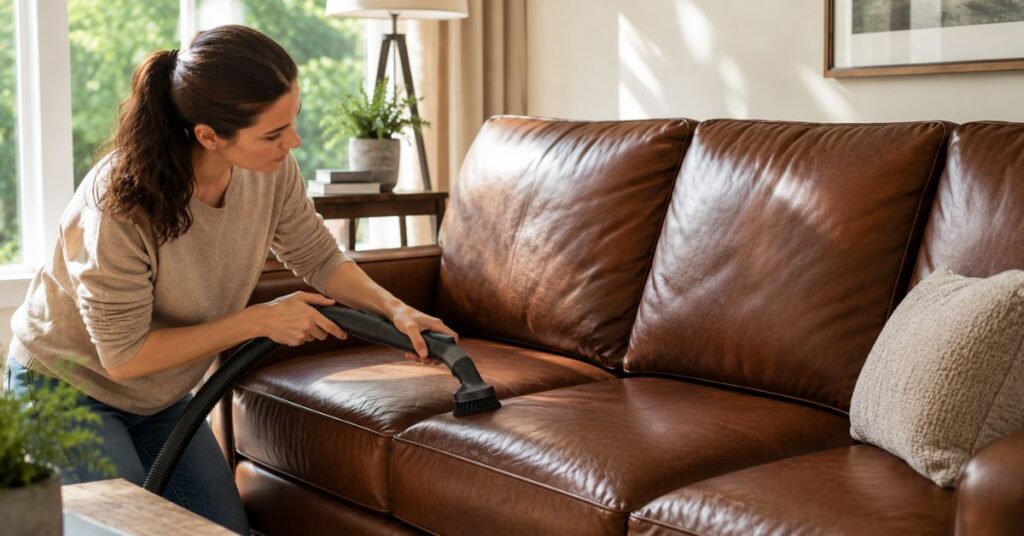
Every successful leather cleaning job starts with removing loose dirt. Even if your couch looks clean, tiny dust particles, pet hair, and food crumbs are often hiding in the seams and between the cushions. Wiping these particles across the leather can create fine scratches that gradually wear down the protective coating.
Begin by removing any pillows, blankets, or throws from the couch. Use a vacuum cleaner fitted with a soft brush attachment and carefully clean the backrest, seat cushions, armrests, and every seam where debris tends to collect. Move the brush slowly instead of pressing it firmly against the leather. After vacuuming, wipe the entire surface with a clean, dry microfiber cloth to remove any remaining dust.
This first step may seem simple, but it makes every step that follows both safer and more effective. A clean surface allows your cleaning solution to work directly on the leather instead of mixing with dirt and grit.
Step 2: Prepare a Gentle Cleaning Solution
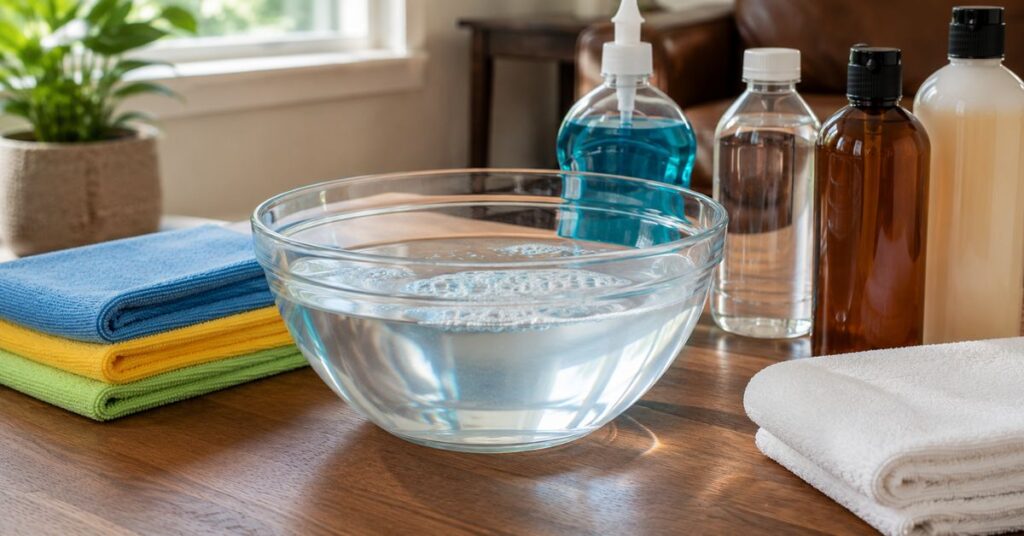
Once the couch is free from loose dirt, it’s time to prepare a cleaner that’s safe for leather. One of the biggest mistakes people make when learning how to clean a leather couch is using strong household cleaners. Products designed for kitchens or bathrooms often contain chemicals that strip away the leather’s protective finish.
For routine cleaning, mix two cups of distilled water with three to five drops of mild dish soap. Stir the mixture gently until the soap is evenly distributed. If your couch needs a deeper clean, you can use a commercial leather cleaner that is specifically designed for furniture. Whichever option you choose, never mix different cleaning products together, as chemical reactions may damage the leather.
Remember that more soap doesn’t mean better cleaning. A mild solution is all that’s needed to remove everyday dirt and oils without harming the material.
Step 3: Clean the Leather One Section at a Time
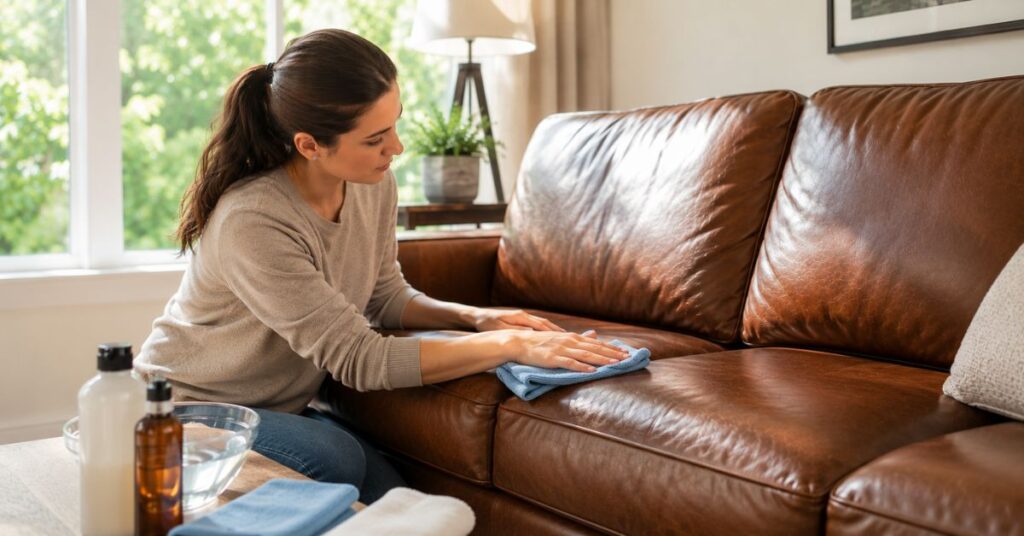
The most important part of how to clean a leather couch is applying the cleaner correctly. Instead of spraying the solution directly onto the leather, dip a clean microfiber cloth into the mixture and wring it out thoroughly. The cloth should feel slightly damp but never dripping wet.
Start at the top of the couch and work your way downward. Wipe each section using gentle circular motions, allowing the cloth to lift away dirt without excessive rubbing. Focus on areas that receive the most daily use, such as the armrests, headrests, seat cushions, and reclining handles. These areas often collect natural body oils that can dull the leather over time.
Take your time and clean one small section before moving to the next. This approach ensures even cleaning and prevents moisture from sitting on the leather for too long.
Practical Example
Imagine you’ve hosted a family movie night. The armrests may have fingerprints from buttery popcorn, while the seat cushions have collected dust and clothing fibers. Cleaning one section at a time allows you to pay extra attention to these high-contact areas without missing spots elsewhere on the couch.
Step 4: Treat Stains with Care
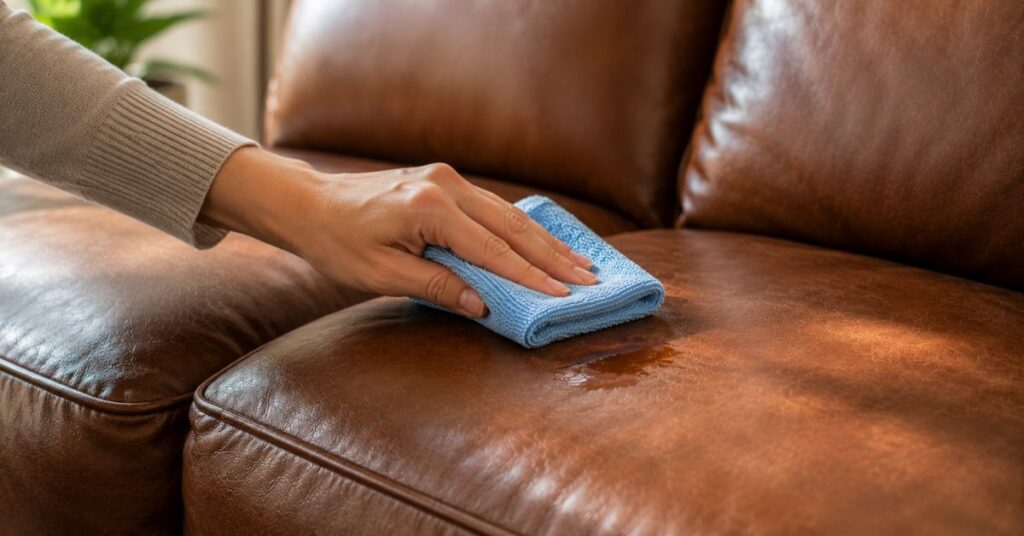
Not every stain requires the same approach. While regular cleaning removes dust and everyday grime, stubborn stains need a little extra attention. However, patience is far more effective than aggressive scrubbing.
Food spills should be blotted immediately with a dry microfiber cloth before wiping the area with your cleaning solution. Grease stains often improve if they’re left alone after gently blotting, as leather can naturally absorb some oils over time. Fresh mud should be allowed to dry completely before it’s brushed away, while ink stains may require a leather-safe ink remover recommended by the furniture manufacturer.
Whenever you’re dealing with a stain, work from the outside edge toward the center. This prevents the stain from spreading further across the leather. Never scrub vigorously or use abrasive pads, as they can permanently damage the finish.
⚠️ Warning
Never use bleach, acetone, nail polish remover, ammonia, rubbing alcohol (unless specifically recommended for a particular stain), or all-purpose household cleaners on leather furniture. These products can remove the protective coating, fade the color, and cause irreversible damage. Always read the product label and test any cleaner on a hidden area first.
Step 5: Remove Any Remaining Cleaner
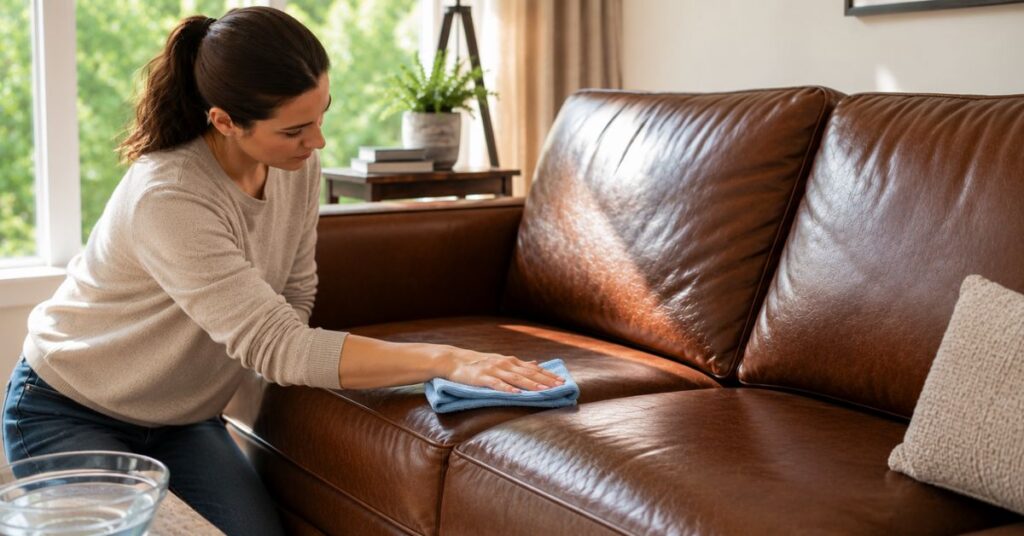
After you’ve cleaned the entire couch, it’s important to remove any leftover cleaning solution. Even gentle soap can leave a slight residue if it isn’t wiped away completely.
Take another clean microfiber cloth, dampen it lightly with distilled water, and wipe every section of the couch once more. The cloth should be only slightly damp, not wet. This final wipe removes any remaining soap while leaving the leather feeling clean and fresh.
As you work, immediately dry each section with a soft towel. Removing excess moisture quickly helps preserve the leather’s protective finish.
Step 6: Allow the Leather to Dry Naturally
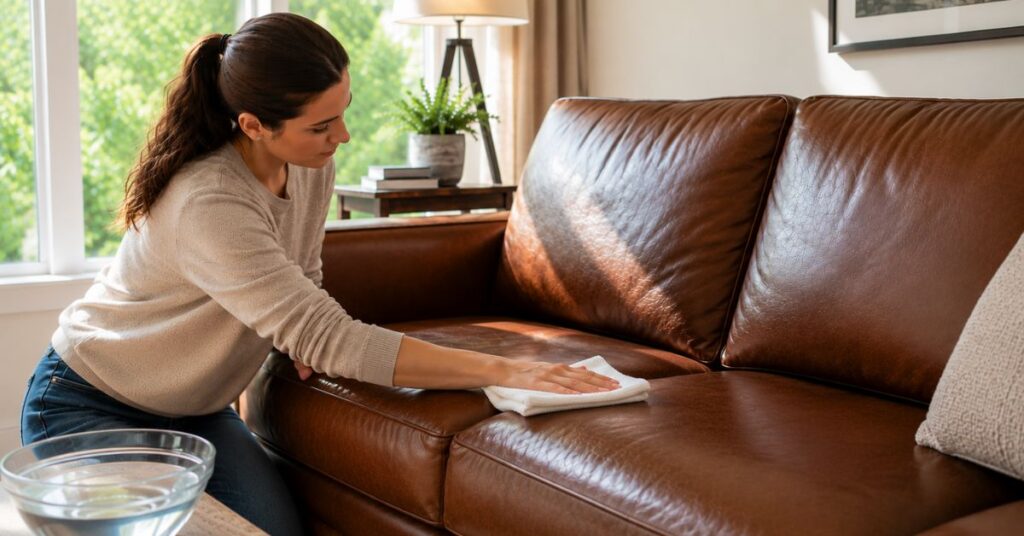
Drying is just as important as cleaning. Leather should always dry naturally at room temperature instead of being exposed to artificial heat.
Use a clean, dry microfiber towel to gently pat the surface and absorb any remaining moisture. Once you’ve finished, leave the couch in a well-ventilated room and allow it to air dry completely. Resist the temptation to speed up the process with a hair dryer, space heater, or direct sunlight, as excessive heat can remove natural oils from the leather and increase the risk of cracking.
💡 Did You Know?
Leather naturally contains oils that help keep it soft and flexible. High temperatures cause these oils to evaporate more quickly, which is one of the main reasons leather becomes stiff and develops cracks over time.
Step 7: Condition the Leather for Lasting Protection
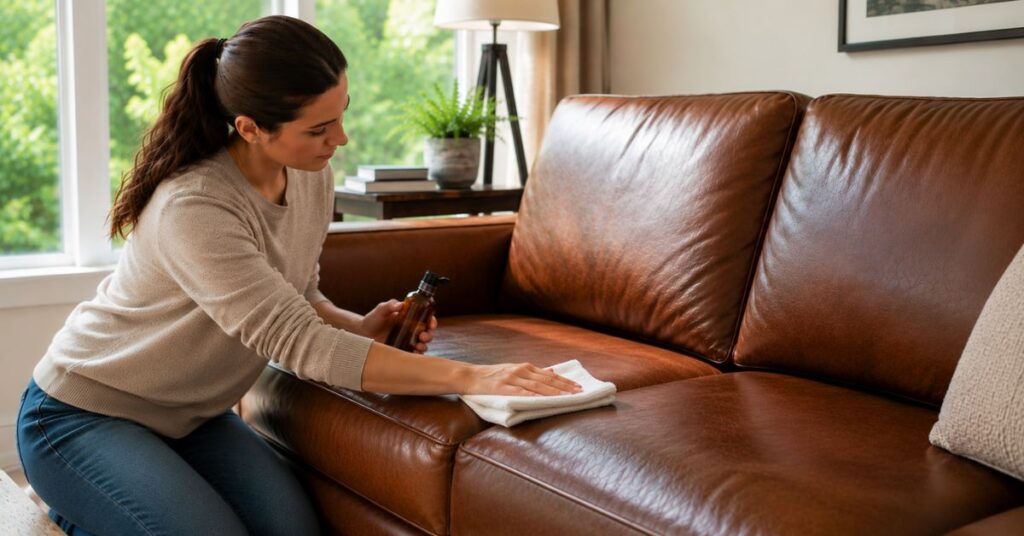
The final step in how to clean a leather couch is conditioning the leather. While cleaning removes dirt and oils, conditioning restores moisture and helps the leather remain soft and flexible.
Once the couch is completely dry, apply a small amount of leather conditioner to a clean microfiber cloth. Rub it gently into the leather using light circular motions, covering one section at a time. Allow the conditioner to absorb according to the manufacturer’s instructions before lightly buffing the surface with a dry cloth.
Most leather couches only need conditioning every six to twelve months. However, if your furniture is exposed to heavy daily use, dry indoor air, or direct sunlight, you may need to condition it a little more often.
A properly conditioned leather couch not only feels softer but also develops greater resistance to cracking, fading, and everyday wear.
⭐ Pro Tip
Professional housekeepers apply conditioner in thin, even layers rather than using large amounts at once. Too much conditioner can leave the surface feeling sticky and attract more dust, while a light application keeps the leather looking natural and well-maintained.
Best Natural Cleaning Methods
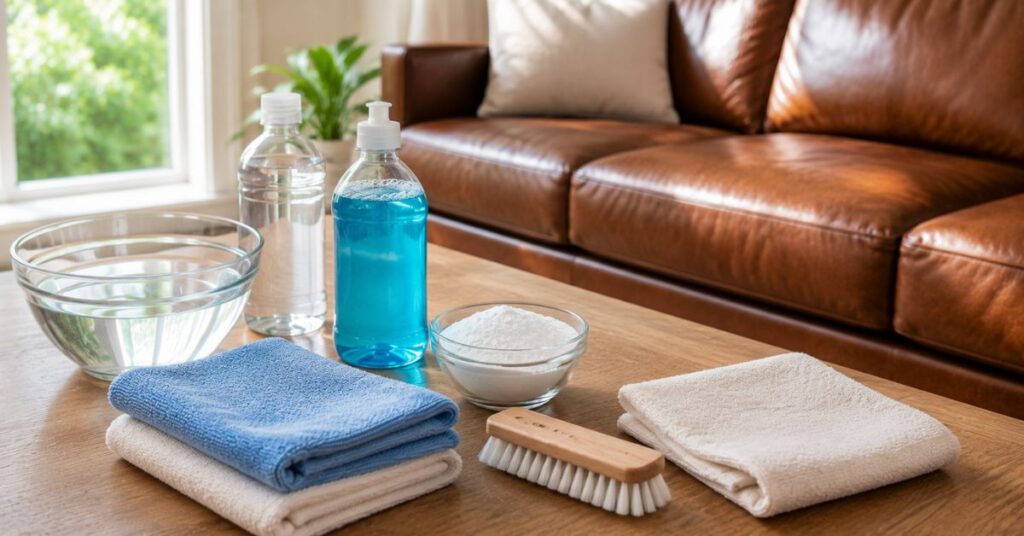
Many homeowners prefer natural cleaning solutions because they’re affordable and made with ingredients they already have at home. While DIY methods can work well for routine maintenance, it’s important to remember that leather is a natural material with a protective finish that can be damaged by harsh or acidic substances. If you’re exploring how to clean a leather couch using natural products, choose gentle methods and avoid experimenting with ingredients that haven’t been recommended for leather care.
One of the safest homemade cleaners is a simple mixture of distilled water and a few drops of mild dish soap. This solution is effective for removing everyday dust, fingerprints, light body oils, and surface dirt without stripping the leather’s finish. Lightly dampen a microfiber cloth with the solution, wring it out thoroughly, and wipe the leather using gentle circular motions. Follow up by wiping the surface with another cloth dampened with clean distilled water to remove any soap residue, then dry the couch immediately with a soft towel.
If your couch only has a thin layer of dust or a few fingerprints, you may not need soap at all. A microfiber cloth slightly dampened with distilled water is often enough for quick touch-up cleaning. This method works especially well as part of a weekly housekeeping routine and reduces the need for frequent deep cleaning.
For fresh grease stains, baking soda can be surprisingly effective. Instead of trying to scrub the grease away, gently blot the excess with a dry cloth and sprinkle a small amount of baking soda over the affected area. Let it sit for several hours or overnight so it can absorb the oil naturally, then remove the powder with a soft brush or vacuum. Avoid rubbing the baking soda into the leather, as this can damage the finish.
Although vinegar is often mentioned in online DIY cleaning guides, it should be used with caution. While some manufacturers approve highly diluted vinegar for certain finished leather types, others specifically advise against it because its acidity may dry out the leather over time. For that reason, a pH-balanced leather cleaner is usually the safer option. Whenever you’re unsure, follow the furniture manufacturer’s recommendations rather than relying on general internet advice.
Natural Cleaning Methods Comparison
| Cleaning Method | Best For | Recommended for Most Finished Leather |
| Distilled water | Light dust and fingerprints | ✅ Yes |
| Mild dish soap + distilled water | Routine cleaning | ✅ Yes |
| Baking soda | Fresh grease stains | ✅ Yes (limited use) |
| Diluted white vinegar | Some finished leather only | ⚠️ Use with caution |
| Lemon juice | General leather cleaning | ❌ Not recommended |
⚠️ Warning
Never use lemon juice, bleach, ammonia, hydrogen peroxide, abrasive powders, or strong disinfectants on leather furniture. These products can strip away the protective finish, cause discoloration, and dry out the leather. Even when using natural cleaners, always test the product on a hidden area before cleaning the entire couch.
Best Commercial Leather Cleaners
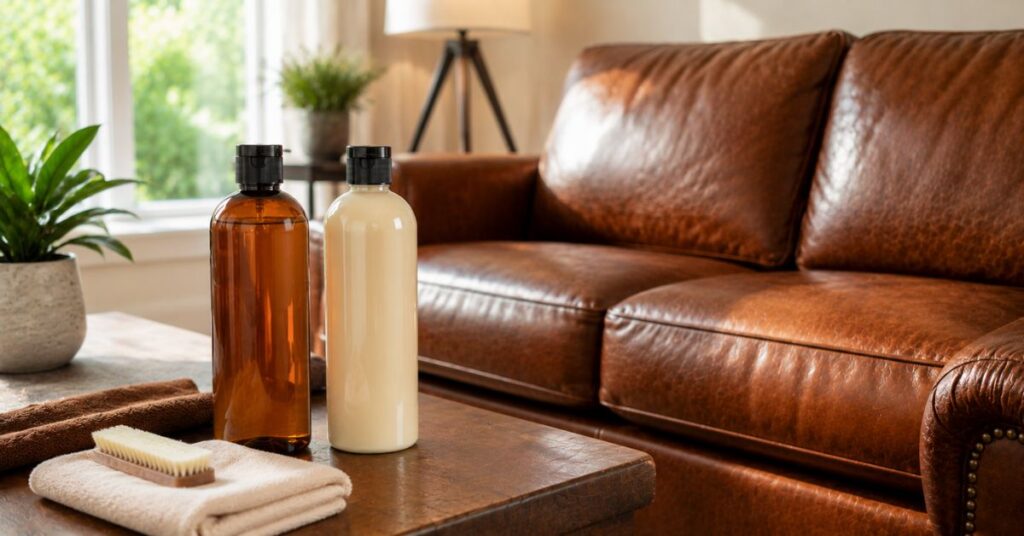
While homemade solutions are ideal for regular maintenance, commercial leather cleaners are often the better choice when your couch needs a more thorough cleaning. These products are specially formulated to remove built-up dirt and oils while protecting the leather’s finish. If you’re serious about learning how to clean a leather couch the same way professionals do, investing in a quality leather cleaner is worthwhile.
When shopping for a leather cleaner, look for one that is clearly labeled for leather furniture rather than shoes or automotive interiors. Choose products that are pH-balanced, free from bleach and ammonia, and designed to leave no sticky residue. Reading the manufacturer’s instructions before use is essential, as application methods can vary between products.
Many leather care brands also offer matching conditioners. Using both products together can help remove dirt while replacing the natural moisture that leather gradually loses over time.
DIY Cleaner vs. Commercial Leather Cleaner
| Feature | DIY Soap Solution | Commercial Leather Cleaner |
| Weekly maintenance | ⭐⭐⭐⭐⭐ | ⭐⭐⭐⭐⭐ |
| Deep cleaning | ⭐⭐⭐ | ⭐⭐⭐⭐⭐ |
| Removes body oils | ⭐⭐⭐ | ⭐⭐⭐⭐⭐ |
| Easy to prepare | ⭐⭐⭐⭐⭐ | ⭐⭐⭐⭐ |
| Leather protection | ⭐⭐⭐ | ⭐⭐⭐⭐⭐ |
Regardless of which cleaner you choose, remember that using more product won’t produce better results. A light, even application is usually enough to clean the leather effectively.
Common Mistakes to Avoid
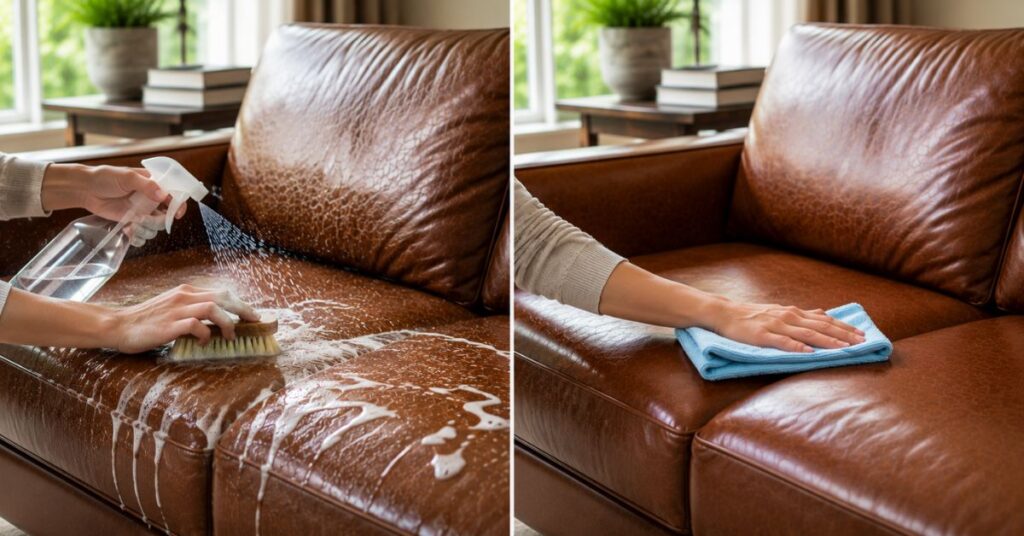
Even people who know how to clean a leather couch sometimes make small mistakes that shorten the life of their furniture. Fortunately, most of these problems are easy to avoid.
One of the biggest mistakes is using too much water. Leather isn’t designed to be soaked, and excess moisture can seep beneath the surface, leading to water stains, mold, unpleasant odors, or damage to the padding. Always use a slightly damp microfiber cloth rather than spraying liquid directly onto the couch.
Another common mistake is scrubbing aggressively. When a stain doesn’t disappear immediately, many people instinctively apply more pressure. Unfortunately, this can wear away the leather’s protective coating. Gentle circular motions and a little patience usually produce better results.
Skipping the vacuuming step is another frequent error. Tiny crumbs and dust particles trapped in the seams can scratch the leather while you’re wiping it. Vacuuming first removes this abrasive debris and makes cleaning much safer.
Household cleaners designed for glass, kitchens, bathrooms, or floors should never be used on leather furniture. Many contain strong chemicals that may permanently damage the finish. Similarly, forgetting to condition the leather after regular cleaning can cause it to dry out over time, increasing the likelihood of cracking.
Finally, avoid placing leather furniture in direct sunlight or next to heating vents and fireplaces. Excessive heat and UV exposure accelerate fading and reduce the leather’s natural flexibility.
FAQs
1. What is the safest way to clean a leather couch?
The safest method is to vacuum the couch first, then wipe it gently with a microfiber cloth dampened with distilled water and a few drops of mild dish soap or a leather cleaner made specifically for furniture. If you’re learning how to clean a leather couch, always avoid soaking the leather and test any product on a hidden area before cleaning the entire surface.
2. Can I use vinegar to clean a leather couch?
It depends on the type of leather. Some homeowners use a diluted vinegar solution on certain finished leather couches, but vinegar can dry out or damage other leather finishes. It’s generally safer to use a pH-balanced leather cleaner or a mild soap solution. Always check the manufacturer’s care instructions and test the product on an inconspicuous area first.
3. How often should I clean my leather couch?
Dust your leather couch every week and vacuum the seams every one to two weeks. Wipe it with a gentle cleaner every one to three months, depending on how often it’s used. For most homes, conditioning every six to twelve months helps keep the leather soft and protected.
4. Can I use baby wipes on leather furniture?
No. Although baby wipes seem gentle, many contain chemicals, moisturizers, or preservatives that can damage the protective finish on leather. It’s better to use a clean microfiber cloth with a cleaner designed for leather furniture.
5. What’s the best way to remove spills from a leather couch?
Blot spills immediately with a clean, dry microfiber cloth. Avoid rubbing, as this can spread the liquid or push it deeper into the leather. Once the spill is removed, wipe the area gently with a slightly damp cloth and dry it thoroughly.
6. Why is my leather couch cracking?
Leather often cracks because it becomes too dry or is exposed to excessive sunlight, heat, or harsh cleaning products. Regular cleaning, proper conditioning, and keeping the couch away from direct heat sources can help prevent cracking.
7. When should I call a professional leather cleaner?
Consider professional cleaning or repair if your couch has:
- Large ink stains
- Deep scratches
- Mold or mildew
- Significant fading
- Peeling finish
- Cracked leather
- Antique or premium leather upholstery
Professional restoration is often the safest choice for expensive furniture or severe damage.
Conclusion
A leather couch is more than just a piece of furniture—it’s an investment that can last for many years with the right care. Knowing how to clean a leather couch properly helps preserve its appearance, protect the finish, and reduce the risk of expensive repairs.
The key is to keep the process simple. Remove dust regularly, clean with gentle products, dry the surface thoroughly, and condition the leather every six to twelve months. These small habits go a long way toward keeping your couch soft, comfortable, and attractive.
Remember that not every leather couch is the same. Always read the manufacturer’s care instructions before trying a new cleaner, and test every product on a hidden area first. Avoid harsh chemicals, excessive water, and direct heat, as these can permanently damage the leather.
If your couch develops deep stains, major cracks, or extensive wear, professional cleaning or restoration may be the best option. Expert care can often restore the appearance of leather while preventing further damage.
At TrueHousekeeping.com, our goal is to provide practical housekeeping advice you can trust. Whether you’re caring for a brand-new sectional or restoring a well-loved family sofa, following these proven techniques will help keep your leather furniture looking its best for years to come.
With a little routine maintenance and the right cleaning methods, your leather couch can continue to be one of the most comfortable and stylish features in your home.






Leave a Reply