
Keeping your dishwasher clean is just as important as washing your dishes. While many homeowners assume the appliance cleans itself every time it runs, food particles, grease, soap scum, hard water minerals, and mold slowly build up inside the machine. Over time, this buildup affects cleaning performance, causes unpleasant odors, and may even shorten the lifespan of your dishwasher.
If you’ve been wondering how to clean a dishwasher, you’ve come to the right place. This comprehensive guide from True Housekeeping explains everything you need to know, from daily maintenance to deep cleaning techniques recommended by cleaning professionals. Whether your dishwasher smells bad, leaves white residue on dishes, or simply isn’t cleaning as well as it used to, this guide will help restore it to peak performance.
By following these proven methods, you’ll enjoy cleaner dishes, a fresher kitchen, lower maintenance costs, and a dishwasher that lasts for years.
Why Cleaning Your Dishwasher Matters
Many homeowners don’t realize that their dishwasher is constantly exposed to grease, food scraps, detergent residue, minerals from hard water, and bacteria. Even though hot water flows through the appliance during every wash cycle, these contaminants gradually accumulate in hidden areas.
Learning how to clean a dishwasher properly helps prevent these problems before they become expensive repairs.
A clean dishwasher offers several benefits:
- Better cleaning performance
- Fresher-smelling dishes
- Improved water drainage
- Lower energy consumption
- Longer appliance lifespan
- Reduced mold and bacteria growth
- Fewer repair costs
When neglected, dishwashers can develop unpleasant odors, clogged filters, blocked spray arms, and mineral deposits that reduce water pressure.
At True Housekeeping, we always recommend treating your dishwasher like any other kitchen appliance; it needs routine maintenance to perform its best.
Signs Your Dishwasher Needs Cleaning
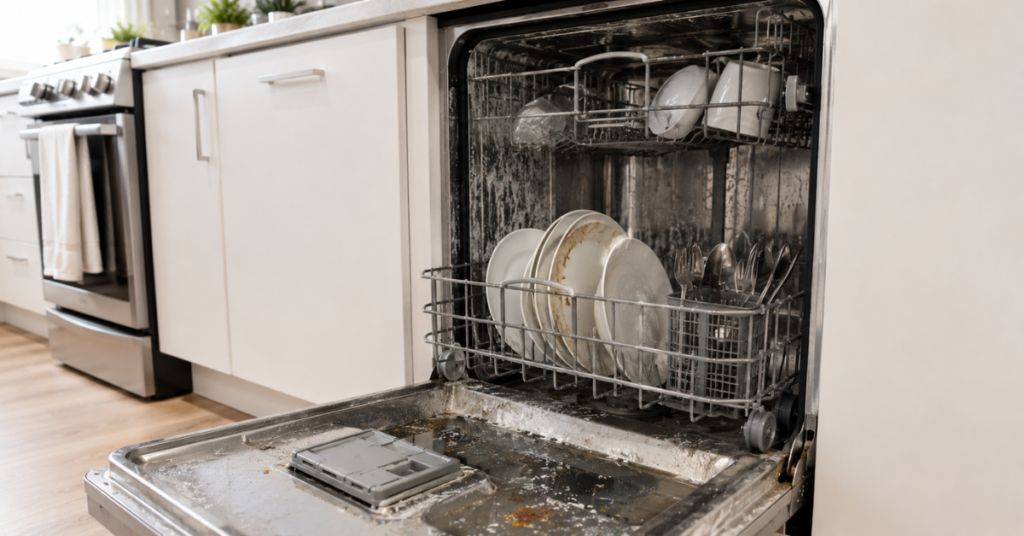
Not sure if it’s time for a deep clean?
Here are the most common warning signs.
Bad Smell Coming from the Dishwasher
Clean a Dishwasher: One of the earliest signs is a musty or sour odor when you open the door. Food particles trapped inside the filter or drain are usually responsible.
Cloudy or Dirty Dishes
If dishes come out with grease, cloudy spots, or food residue, the dishwasher may no longer be cleaning efficiently.
White Mineral Deposits
Hard water leaves behind calcium and lime deposits inside the tub and on dishes.
Standing Water
Water collecting at the bottom usually indicates a clogged filter or blocked drain.
Mold Around the Door Seal
The rubber gasket traps moisture, creating the perfect environment for mildew.
Recognizing these issues early makes how to clean a dishwasher much easier before serious buildup occurs.
How Often Should You Clean a Dishwasher?
Cleaning frequency depends on how often you use it.
| Dishwasher Usage | Cleaning Frequency |
| Daily | Weekly quick cleaning + Monthly deep cleaning |
| 3–5 times per week | Deep clean every month |
| Once a week | Every 6–8 weeks |
| Rarely | Before and after long storage |
If you have hard water, consider cleaning the dishwasher twice each month to prevent mineral buildup.
Supplies You’ll Need
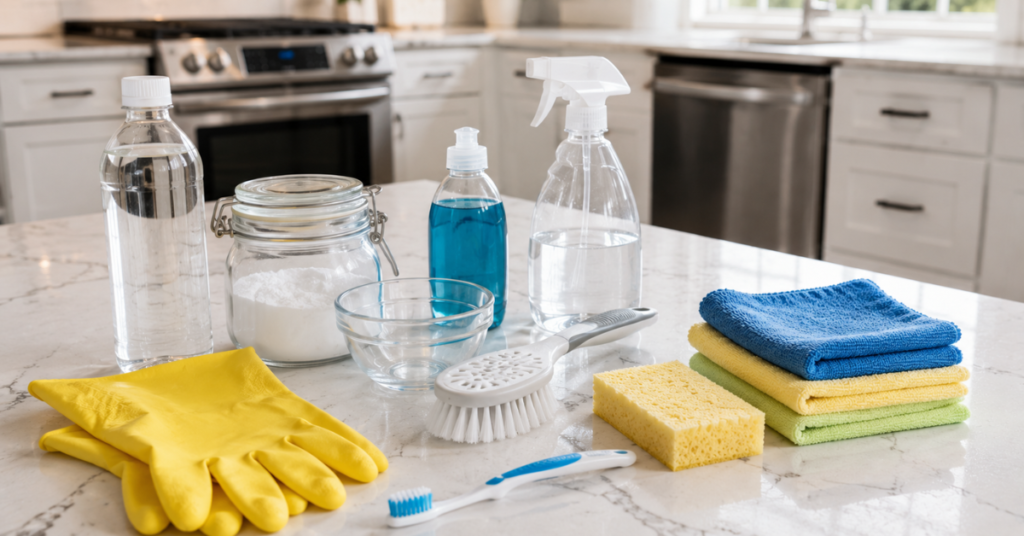
Before starting, gather these supplies.
Cleaning Essentials
- White vinegar
- Baking soda
- Microfiber cloth
- Soft sponge
- Old toothbrush
- Dish soap
- Warm water
- Small bowl
- Toothpick or soft brush
- Rubber gloves
Optional supplies:
- Dishwasher-safe cleaning tablet
- Lemon juice
- Spray bottle
- Soft bottle brush
Avoid steel wool or abrasive scrubbers because they can scratch stainless steel interiors.
Before You Start Cleaning
Before beginning the cleaning process:
- Turn off the dishwasher.
- Remove all dishes.
- Take out removable racks if necessary.
- Read your manufacturer’s instructions.
- Allow the appliance to cool if recently used.
These simple steps make cleaning safer and more effective.
Step 1: Empty the Dishwasher Completely

The first step in how to clean a dishwasher is removing everything inside.
Take out:
- Plates
- Bowls
- Cups
- Silverware baskets
- Large utensils
Check the bottom of the dishwasher for:
- Food scraps
- Broken glass
- Toothpicks
- Paper labels
- Bones
- Plastic pieces
Removing debris first prevents drain blockages later.
Step 2: Remove and Clean the Dishwasher Filter
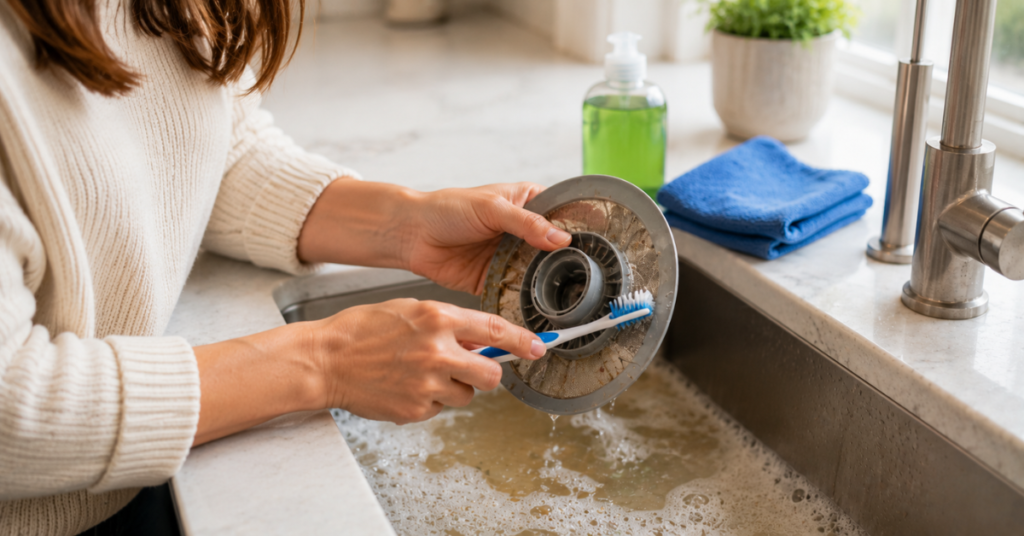
The filter is the most important part of dishwasher maintenance.
It catches food particles during every wash cycle.
Over time, it becomes clogged with:
- Grease
- Food residue
- Soap scum
- Mineral deposits
A dirty filter is one of the biggest reasons people search for how to clean a dishwasher because it directly affects washing performance.
How to Remove the Filter
Most dishwashers have a removable filter at the bottom.
Simply:
- Twist counterclockwise.
- Lift upward.
- Remove carefully.
Some older dishwashers have self-cleaning filters, so consult your owner’s manual if unsure.
Wash the Filter
Fill your sink with warm water.
Add a few drops of dish soap.
Soak the filter for about 15 minutes.
Using a soft toothbrush, gently scrub:
- Mesh screen
- Plastic frame
- Inside corners
- Bottom surface
Never use metal brushes.
They may damage the filter mesh.
Rinse Thoroughly
After scrubbing:
- Rinse under warm running water.
- Remove any remaining grease.
- Check that every opening is clear.
If needed, repeat the cleaning process until the filter looks completely clean.
Inspect for Damage
While cleaning, inspect the filter for:
- Cracks
- Torn mesh
- Broken plastic
- Loose seals
Damaged filters should be replaced rather than repaired.
A clean filter dramatically improves dishwasher performance.
Step 3: Clean the Filter Housing and Drain Area
After removing the filter, you’ll notice debris inside the filter housing.
Use a damp microfiber cloth to wipe away:
- Grease
- Food residue
- Soap buildup
- Standing water
Next, inspect the drain area carefully.
Common debris includes:
- Rice
- Seeds
- Pasta
- Broken glass
- Vegetable peels
- Small bones
Use paper towels or gloves to remove larger debris.
Never force anything down the drain.
Eliminate Hidden Buildup
Dip an old toothbrush into warm soapy water.
Gently scrub around:
- Drain opening
- Filter housing
- Bottom edges
- Small crevices
This area often contains grease that causes unpleasant odors.
Cleaning it thoroughly is an important part of learning how to clean a dishwasher correctly.
Step 4: Wipe Down the Interior Walls
Although the dishwasher washes itself during cycles, grease and detergent residue often stick to the interior.
Using a microfiber cloth dipped in warm soapy water, wipe:
- Side walls
- Ceiling
- Bottom tub
- Corners
- Rack supports
Pay extra attention to hidden corners where moisture collects.
Avoid using bleach inside stainless steel dishwashers unless recommended by the manufacturer.
Remove Stubborn Grease
If grease doesn’t wipe away easily:
Mix:
- 2 cups warm water
- A few drops of dish soap
Use a soft sponge to loosen stubborn residue.
Avoid abrasive pads that can scratch the finish.
Step 5: Clean the Spray Arms
Spray arms distribute water during every wash cycle.
When their tiny holes become clogged, water pressure drops significantly.
Food particles, hard water minerals, and grease often block these openings.
Cleaning them is one of the most overlooked steps in how to clean a dishwasher, yet it has one of the biggest impacts on cleaning performance.
In the next part, we’ll cover how to remove and clean the spray arms, run a vinegar cleaning cycle, use baking soda to eliminate odors and stains, clean the door gasket, avoid common mistakes, maintain your dishwasher for years, answer frequently asked questions, and wrap up with a professional conclusion for True Housekeeping.
Step 5: Clean the Spray Arms Thoroughly
The spray arms are responsible for distributing water evenly throughout your dishwasher. Over time, tiny food particles, grease, detergent residue, and hard water minerals can clog the spray holes, reducing water pressure and leaving dishes dirty.
If you’re learning how to clean a dishwasher, never skip this step because clogged spray arms are one of the most common reasons for poor cleaning performance.
Remove the Spray Arms
Every dishwasher model is slightly different.
Most spray arms can be removed by:
- Unscrewing the center cap
- Twisting the locking mechanism
- Pulling upward gently
Refer to your dishwasher manual if you’re unsure.
Never force the spray arms off, as some models use locking clips that can break.
Clear Every Spray Hole
Hold each spray arm under warm running water.
Use a toothpick, wooden skewer, or soft plastic pick to gently remove debris from every hole.
Avoid using metal needles because they can enlarge or damage the openings.
Common blockages include:
- Rice grains
- Seeds
- Grease buildup
- Hard water deposits
- Soap residue
Rotate the spray arm while cleaning to ensure every opening is clear.
Wash the Spray Arms
Prepare a sink filled with:
- Warm water
- A few drops of dish soap
Allow the spray arms to soak for about 15–20 minutes.
After soaking:
- Scrub gently with a soft toothbrush.
- Rinse thoroughly.
- Shake out any trapped water.
- Check each opening again.
Properly cleaned spray arms restore strong water pressure and significantly improve washing performance.
Reinstall Carefully
After drying the spray arms:
- Place them back in their original position.
- Tighten the locking mechanism.
- Spin each arm by hand.
They should rotate freely without rubbing against the racks.
This simple check ensures your dishwasher will work efficiently after cleaning.
Step 6: Run a White Vinegar Cleaning Cycle
One of the most effective ways to remove grease, odors, soap scum, and mineral buildup is by using white vinegar.
Professional cleaners often recommend vinegar because it naturally dissolves many of the deposits that accumulate inside a dishwasher.
If you’re researching how to clean a dishwasher, you’ll find vinegar recommended in almost every expert cleaning guide and for good reason.
Why White Vinegar Works
White vinegar helps:
- Remove grease
- Dissolve hard water deposits
- Break down soap scum
- Neutralize unpleasant odors
- Reduce bacteria buildup
- Freshen the interior
It’s inexpensive, widely available, and environmentally friendly.
How to Run a Vinegar Cycle
Follow these steps:
- Place one dishwasher-safe cup or bowl on the top rack.
- Fill it with approximately two cups of white vinegar.
- Leave the dishwasher otherwise empty.
- Select the hottest wash cycle available.
- Start the cycle.
As the hot water circulates, the vinegar will reach every corner of the appliance.
It will naturally loosen grease and mineral deposits throughout the tub, spray arms, and drain system.
What Happens During the Cycle?
During the hot wash:
- Vinegar softens limescale.
- Grease begins to dissolve.
- Odors are neutralized.
- Soap residue loosens.
- Interior surfaces become cleaner.
When the cycle finishes, open the door and allow the dishwasher to air dry for several minutes.
You’ll immediately notice a fresher smell.
Step 7: Remove Odors and Stains with Baking Soda
After completing the vinegar cycle, baking soda provides another level of deep cleaning.
It naturally removes lingering odors while gently polishing interior surfaces.
This combination is considered one of the safest and most effective methods for how to clean a dishwasher naturally.
Sprinkle Baking Soda
After the dishwasher has cooled slightly:
Sprinkle approximately one cup of baking soda evenly across the bottom of the dishwasher.
Pay attention to areas with visible staining.
Run a Short Hot Cycle
Select a short wash cycle using hot water.
The baking soda will:
- Remove light stains.
- Neutralize remaining odors.
- Brighten the stainless steel interior.
- Help loosen stubborn residue.
When finished, wipe away any remaining powder with a damp microfiber cloth.
Step 8: Clean the Door Gasket
Many people forget the rubber door seal.
Unfortunately, this area traps:
- Moisture
- Grease
- Mold
- Food particles
Ignoring it often causes unpleasant smells.
Prepare a Gentle Cleaning Solution
Mix:
- Warm water
- A few drops of dish soap
Dip a microfiber cloth into the solution.
Wipe the Rubber Seal
Carefully clean:
- Top gasket
- Side seals
- Bottom edge
- Folded rubber areas
For stubborn dirt, use a soft toothbrush.
Never use sharp objects that could tear the rubber.
Dry Completely
After cleaning:
Use a dry microfiber cloth to remove excess moisture.
Keeping the gasket dry helps prevent mold growth.
Step 9: Clean the Dishwasher Door
The inside of the dishwasher door often collects detergent residue and grease.
Although it looks clean at first glance, food particles usually hide around the edges.
Wipe Every Surface
Using warm soapy water:
Clean:
- Door edges
- Hinges
- Handle area
- Control panel edges
- Interior frame
Pay extra attention to the corners.
These hidden areas collect grease over time.
Remove Fingerprints
For stainless steel doors:
Use a clean microfiber cloth.
Wipe in the direction of the stainless steel grain.
Avoid abrasive cleaners that may scratch the finish.
Step 10: Clean the Exterior
Your dishwasher’s exterior deserves attention too.
A clean exterior keeps your kitchen looking polished and professional.
At True Housekeeping, we recommend wiping the outside every week to prevent grease buildup.
Stainless Steel Dishwashers
Use:
- Warm water
- Mild dish soap
- Microfiber cloth
Always wipe with the grain of the steel.
Painted or Plastic Doors
Simply wipe using:
- Warm water
- Mild soap
- Soft cloth
Avoid harsh chemicals that may discolor painted finishes.
Deep Cleaning vs Regular Cleaning
| Regular Cleaning | Deep Cleaning |
| Wipe door weekly | Remove spray arms |
| Empty filter | Deep clean filter |
| Clean visible debris | Vinegar cleaning cycle |
| Check drain | Baking soda treatment |
| Wipe exterior | Clean gasket thoroughly |
| 10–15 minutes | 45–60 minutes |
Natural Cleaning vs Commercial Dishwasher Cleaner
| Natural Method | Commercial Cleaner |
| White vinegar | Dishwasher cleaning tablets |
| Baking soda | Specialized descalers |
| Budget friendly | More expensive |
| Eco-friendly | Chemical-based |
| Readily available | Store purchased |
| Excellent for monthly cleaning | Ideal for heavy mineral buildup |
Common Mistakes People Make
Even after learning how to clean a dishwasher, many homeowners accidentally make mistakes that reduce cleaning effectiveness.
Avoid these common errors:
Using Too Much Detergent
Extra detergent leaves residue inside the dishwasher.
Forgetting the Filter
The filter should never be ignored.
Cleaning it monthly prevents odors and drainage issues.
Ignoring Hard Water Deposits
Hard water minerals gradually reduce performance.
Monthly vinegar treatments help prevent buildup.
Never Cleaning the Spray Arms
Blocked spray holes reduce water pressure and leave dishes dirty.
Using Bleach Incorrectly
Bleach should not be used inside most stainless steel dishwashers unless the manufacturer specifically recommends it.
Leaving Food Scraps Behind
Large food particles should always be removed before running the dishwasher.
Doing so extends the life of the filter and improves cleaning results.
Closing the Door Immediately After Every Wash
Allow the dishwasher to air dry by leaving the door slightly open after each cycle.
This reduces moisture buildup and helps prevent mold growth.
Expert Dishwasher Maintenance Tips
Cleaning your dishwasher once isn’t enough to keep it performing at its best. Regular maintenance prevents costly repairs, improves cleaning performance, and extends the appliance’s lifespan.
At True Housekeeping, we recommend following a simple maintenance routine rather than waiting until your dishwasher develops unpleasant odors or stops cleaning effectively.
If you consistently follow these maintenance tips, you’ll rarely need an intensive deep cleaning.
1. Scrape Food Off Dishes
Many people believe a dishwasher can handle everything left on plates.
While modern dishwashers are powerful, large food scraps can clog:
- The filter
- Spray arms
- Drain
- Pump
There’s no need to pre-wash dishes completely, but removing large food particles helps your dishwasher work much more efficiently.
2. Clean the Filter Every Month
The filter is the heart of the dishwasher.
Even if your dishes appear clean, grease and food particles slowly collect inside it.
Cleaning the filter once every month is one of the easiest ways to avoid expensive repairs.
This simple habit also improves washing performance.
3. Run Hot Water Before Starting
Before starting your dishwasher, let your kitchen faucet run until the water becomes hot.
This allows the dishwasher to begin its cycle with hot water immediately, improving grease removal and detergent performance.
4. Use the Right Dishwasher Detergent
Using low-quality detergent often leaves:
- White residue
- Cloudy glasses
- Soap buildup
- Poor cleaning results
Choose a high-quality detergent designed specifically for your dishwasher model.
5. Don’t Overload the Dishwasher
Overloading blocks water circulation.
Proper spacing allows spray arms to reach every dish.
Always leave enough space between plates, bowls, and cups.
6. Inspect Spray Arms Regularly
Even after learning how to clean a dishwasher, many homeowners forget to inspect spray arms every few weeks.
Blocked holes reduce cleaning power dramatically.
A quick inspection only takes a few minutes.
7. Leave the Door Slightly Open
After every wash cycle:
Leave the dishwasher door open for 20–30 minutes.
This helps:
- Prevent mold
- Reduce odors
- Dry the interior naturally
8. Wipe the Door Seal Weekly
The rubber gasket traps moisture every day.
Wipe it once a week using a damp microfiber cloth.
This prevents mold and mildew growth.
Monthly Dishwasher Cleaning Checklist
Use this checklist to keep your dishwasher in excellent condition.
| Task | Frequency |
| Empty food debris | After every wash |
| Wipe door edges | Weekly |
| Clean door gasket | Weekly |
| Wash filter | Monthly |
| Clean spray arms | Monthly |
| Run vinegar cycle | Monthly |
| Run baking soda cycle | Monthly |
| Inspect drain | Monthly |
| Deep clean entire dishwasher | Every 2–3 months |
Following this schedule makes cleaning a dishwasher much easier because dirt never has a chance to build up.
How to Remove Hard Water Stains
Hard water leaves behind white mineral deposits inside the dishwasher.
These stains commonly appear on:
- Stainless steel walls
- Spray arms
- Heating element
- Glassware
Solution
Run an empty hot cycle using white vinegar.
For stubborn stains:
- Apply baking soda to a damp cloth.
- Gently scrub the affected area.
- Rinse thoroughly.
Repeat if necessary.
How to Eliminate Dishwasher Odors
If your dishwasher still smells bad after cleaning, check these areas:
- Filter
- Drain
- Door gasket
- Spray arms
- Bottom corners
Most unpleasant odors come from trapped food particles.
Running a monthly vinegar cycle keeps odors away.
Dishwasher Cleaning Mistakes to Avoid
Avoid these mistakes:
- Using bleach inside stainless steel dishwashers (unless approved by the manufacturer)
- Using abrasive steel wool
- Ignoring the filter
- Mixing vinegar and bleach
- Forgetting the spray arms
- Overusing detergent
- Skipping monthly maintenance
These simple precautions will help your dishwasher last much longer.
FAQs
1. How often should I clean my dishwasher?
For most households, clean the filter every month and run a deep cleaning cycle with white vinegar and baking soda once a month. If you use your dishwasher daily or have hard water, you may need to clean it more frequently.
2. Can I use vinegar to clean my dishwasher?
Yes. White vinegar is an effective natural cleaner that helps dissolve grease, soap scum, and hard water deposits while eliminating unpleasant odors.
3. Is baking soda safe for dishwashers?
Yes. Baking soda is safe for most dishwashers and works well for removing odors and light stains after a vinegar cleaning cycle.
4. Why does my dishwasher smell bad?
Bad odors are usually caused by trapped food particles, grease buildup, mold, or a dirty filter. Cleaning these areas regularly will help keep your dishwasher smelling fresh.
5. Can I use bleach to clean my dishwasher?
Avoid using bleach in stainless steel dishwashers unless the manufacturer specifically recommends it. Bleach may damage stainless steel components.
6. Why are my dishes still dirty after washing?
Common causes include:
- Clogged spray arms
- Dirty filter
- Overloaded dishwasher
- Low-quality detergent
- Hard water buildup
Cleaning the dishwasher thoroughly often restores its performance.
7. How long does it take to deep clean a dishwasher?
A complete deep cleaning usually takes between 45 and 60 minutes, depending on the amount of buildup.
8. Do dishwasher cleaning tablets work?
Yes. Commercial dishwasher cleaning tablets can remove grease and mineral deposits effectively. However, white vinegar and baking soda are affordable natural alternatives for regular maintenance.
9. Should I clean the dishwasher even if it looks clean?
Absolutely. Hidden areas such as the filter, drain, spray arms, and door gasket collect grease and food particles even when the interior appears clean.
10. What is the best way to keep a dishwasher clean?
The best approach is to remove food debris after each use, clean the filter monthly, wipe the door gasket weekly, and run a monthly vinegar and baking soda cleaning cycle.
Final Thoughts
Knowing how to clean a dishwasher is one of the simplest ways to improve your kitchen’s cleanliness and keep your appliance performing like new. Although dishwashers are designed to wash dishes every day, they still require regular maintenance to remove grease, food residue, soap scum, and hard water deposits that build up over time.
By following the step-by-step methods in this guide, you can restore cleaning performance, eliminate unpleasant odors, reduce the risk of costly repairs, and extend the life of your appliance. Small maintenance tasks—such as cleaning the filter, inspecting the spray arms, wiping the door gasket, and running a monthly vinegar cycle can make a significant difference.
At True Housekeeping, our goal is to provide practical, easy-to-follow cleaning advice that helps you maintain a healthier and more organized home. Whether you’re tackling your dishwasher, kitchen cabinets, garbage disposal, or other household cleaning tasks, regular care is always more effective than waiting for problems to develop.
Make dishwasher maintenance part of your monthly cleaning routine, and you’ll enjoy cleaner dishes, better performance, and a fresher kitchen every day.