
Set-in yellow stains on white fabric can be frustrating, especially when they have been sitting for weeks or have survived several washes. These stains commonly appear around the underarms, collars, and other areas where sweat, body oils, deodorant, and detergent residue build up over time. Fortunately, you don’t always need harsh chlorine bleach to make white clothes look fresh again.
There are several gentle and effective ways to remove old yellow stains using common household ingredients. Baking soda, white vinegar, hydrogen peroxide, lemon juice, and dish soap can help loosen buildup and brighten fabric when used correctly. The best method depends on the fabric type, how old the stain is, and whether the clothing has already been treated with other products.
In this guide, you’ll learn how to remove set-in yellow stains from white fabric without bleach using simple step-by-step methods. You’ll also discover which ingredients to avoid, how to test a treatment safely, and how to prevent yellow stains from returning.
What are sweat stains and how do we get them?
Sweat stains are discolored marks that commonly appear on clothing, especially around the underarms, collar, and areas that come into frequent contact with the skin. Fresh sweat itself is mostly water and salt, so it is usually clear. However, when sweat mixes with body oils, dead skin cells, deodorant, and antiperspirant ingredients, it can leave behind yellow, gray, or slightly brown marks. White and light-colored clothing tends to show these stains more clearly.
Sweat stains develop when moisture and residue remain on fabric for an extended period. If a sweaty shirt is left in a laundry basket before washing, the residue can become more deeply absorbed into the fibers. Repeated washing without properly treating the affected area may also allow buildup to remain. Over time, heat from a dryer can make stubborn stains more difficult to remove by setting the residue into the fabric.
Several factors can contribute to sweat stains, including heavy sweating, hot weather, physical activity, tight clothing, and frequent use of aluminum-based antiperspirants. Some fabrics, particularly synthetic materials such as polyester, may also hold onto body oils and odors more easily than natural fibers.
The best way to deal with sweat stains is to treat them as soon as possible. Pre-treating the affected area before washing can help loosen buildup and prevent it from becoming deeply set. For older yellow stains, gentle household treatments such as baking soda, diluted hydrogen peroxide, or white vinegar may help, depending on the fabric. Always check the care label and test a treatment on an inconspicuous area first.
How to Prevent Armpit Sweat Stains
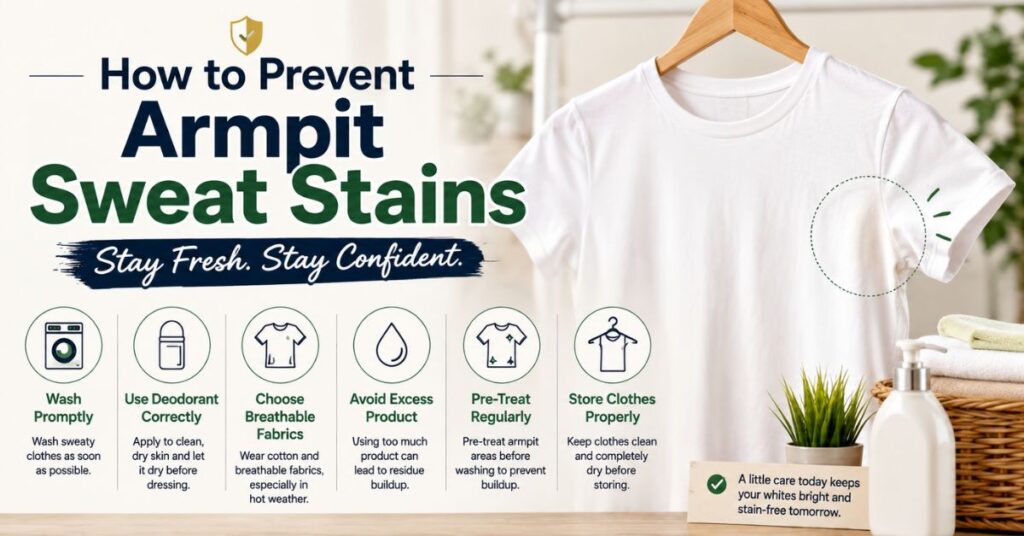
Preventing armpit sweat stains is easier than removing old, set-in marks. Wash sweaty clothes as soon as possible instead of leaving them in a laundry basket for several days. Allow deodorant or antiperspirant to dry completely before getting dressed, as product residue can combine with sweat and create yellow buildup. Choose breathable fabrics such as cotton when possible, especially during hot weather. Avoid applying excessive amounts of deodorant, and consider products that are less likely to leave visible residue. Pre-treat underarm areas regularly with a gentle stain remover before washing to prevent buildup from becoming stubborn.
How Often To Clean White Clothes
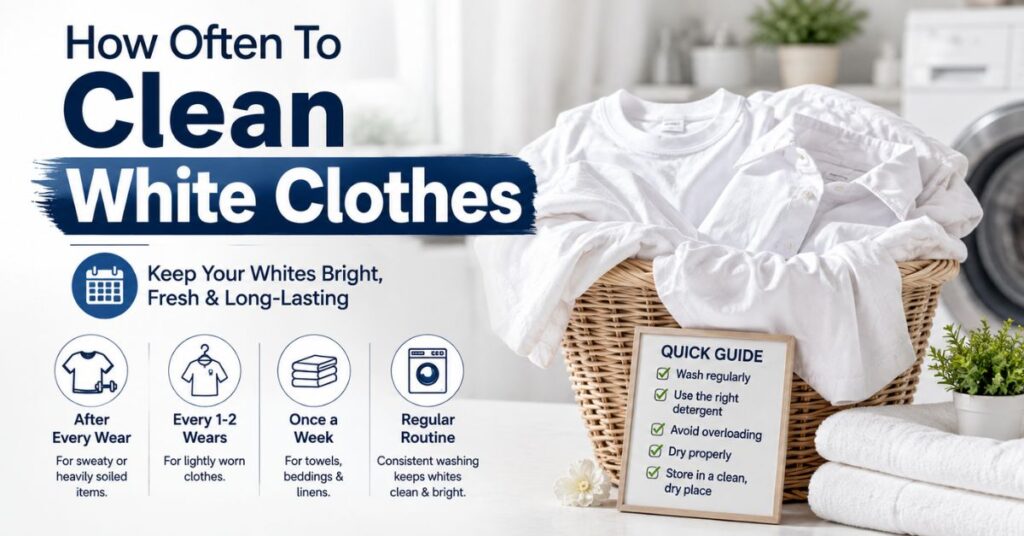
White clothes should generally be washed after each wear, especially if they have been exposed to sweat, deodorant, or body oils. However, lightly worn items such as jackets or sweaters may not need washing after every use. Regular washing helps prevent sweat and residue from building up and turning yellow over time. For clothes that are frequently stained around the underarms or collar, treating these areas before washing can make a big difference. Always follow the care label and choose a suitable washing temperature for the fabric to keep white clothes fresh without causing unnecessary damage.
Considerations Before Getting Started
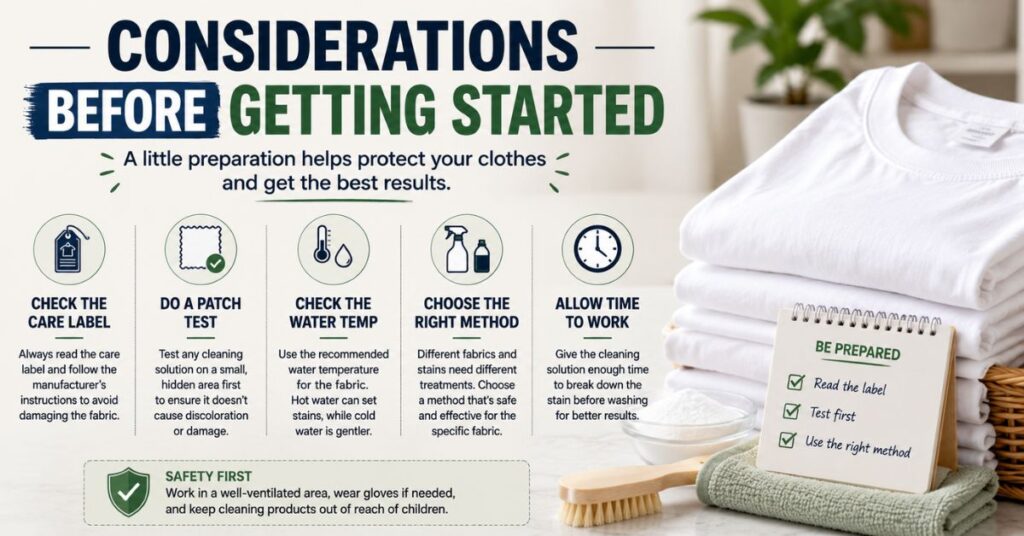
Before treating, remove set-in yellow stains, check the fabric care label, and test your chosen solution on a hidden area. Avoid mixing cleaning ingredients, especially vinegar with bleach. Consider the stain’s age, fabric type, and previous treatments. Always use gentle methods first to protect delicate white fabrics from damage.
What You Need
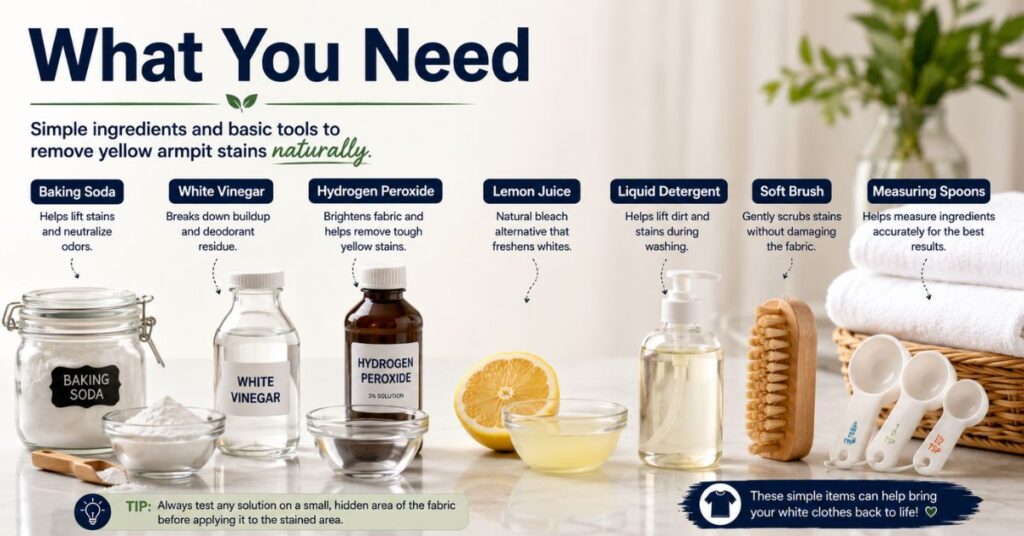
- Baking-soda
- Vinegar
- Lemon
- Peroxide
- Detergent
- Water
- Bowl
- Brush
How To Remove Yellow Stains With Baking Soda
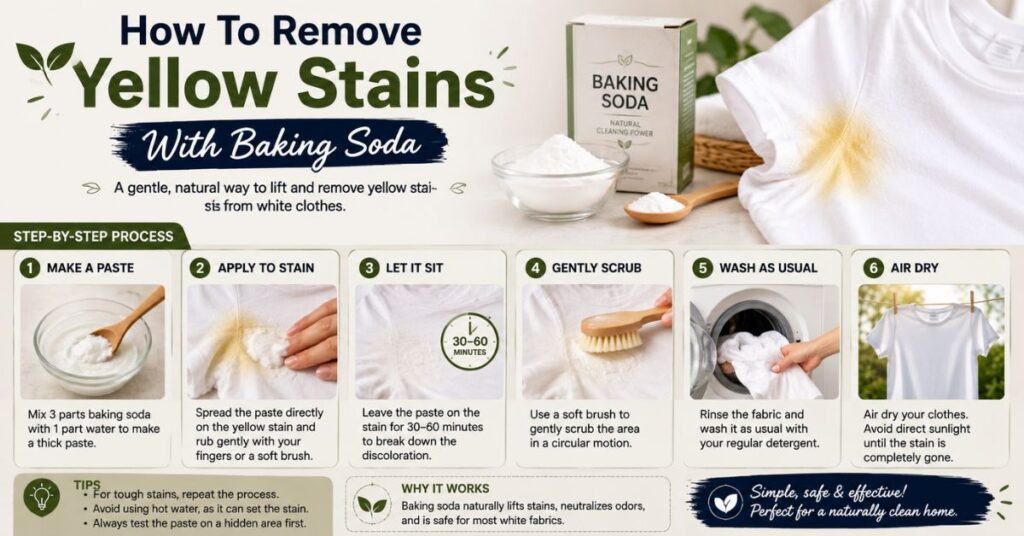
Baking soda is a simple and gentle option for tackling yellow stains on white fabric. It helps loosen sweat, body oils, and deodorant residue without relying on chlorine bleach. For best results, make a thick paste and allow it enough time to work before washing.
- Mix 3 tablespoons of baking soda with a small amount of water.
- Apply the paste directly to the yellow stain.
- Gently rub the area with a soft toothbrush.
- Leave it on for 30–60 minutes.
- Rinse the fabric with cool or lukewarm water.
- Wash the clothing according to its care label.
- Check the stain before drying and repeat if needed.
How To Remove Yellow Stains With Hydrogen Peroxide
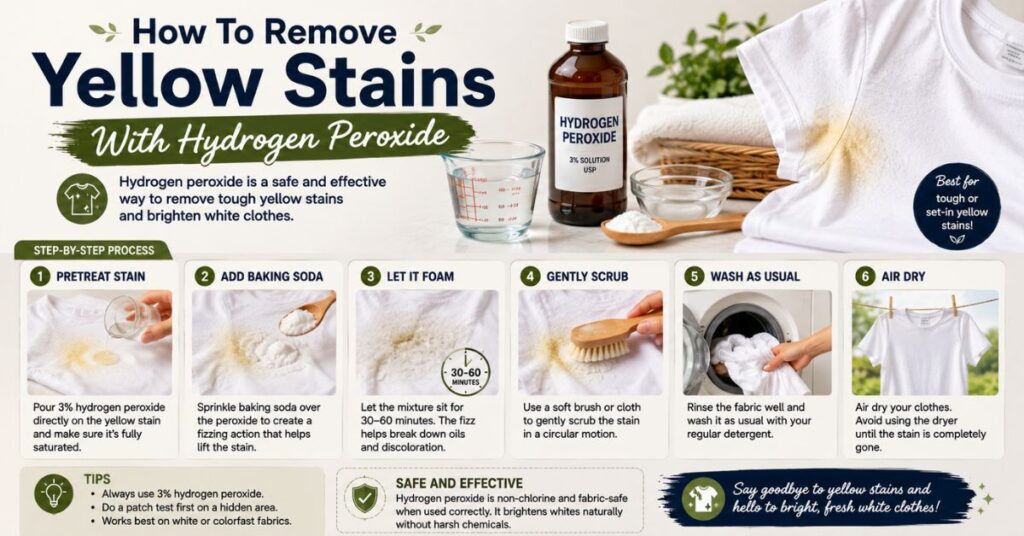
Hydrogen peroxide can help brighten white fabric and break down stubborn yellow buildup caused by sweat and body oils. Use a low-strength solution and always test it on a hidden area first. This method works best on washable, colorfast white fabrics.
- Mix 1 part 3% hydrogen peroxide with 2 parts water.
- Apply the solution to the stained area.
- Gently rub with a soft brush.
- Let it sit for 15–30 minutes.
- Rinse thoroughly with cool water.
- Wash normally with laundry detergent.
- Air-dry and check the stain before repeating.
How To Remove Yellow Stains With White Vinegar
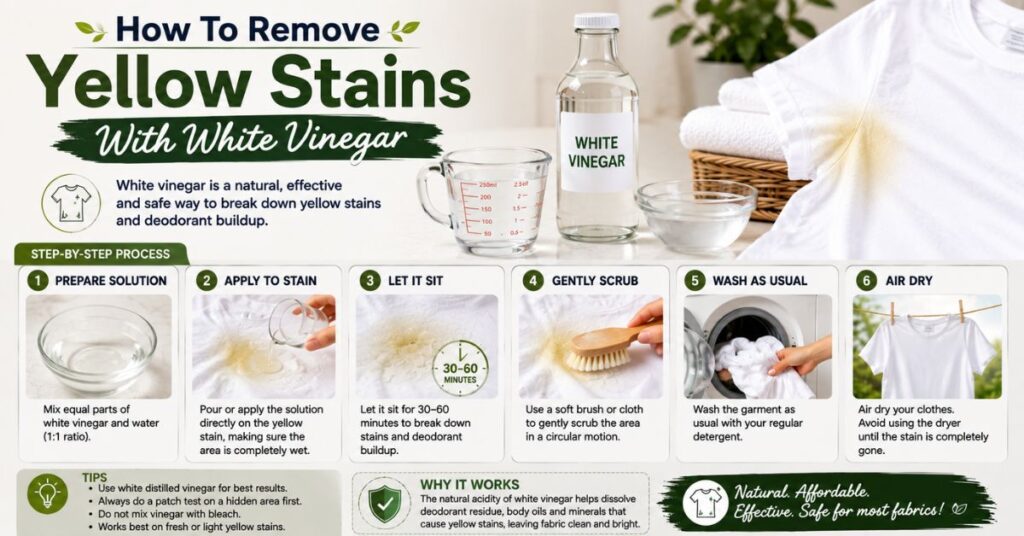
White vinegar can help loosen sweat, body oils, and detergent residue that cause yellow stains on white fabric. It is a useful option for freshening clothes without chlorine bleach. For best results, use plain white distilled vinegar and avoid mixing it with bleach or other cleaning chemicals.
- Mix 1 cup of white vinegar with 3 cups of water.
- Soak the stained area for 30 minutes.
- Gently rub the fabric with your fingers.
- Rinse thoroughly with cool water.
- Add detergent and wash as usual.
- Check the stain before drying.
- Repeat the treatment if necessary.
How To Remove Yellow Stains With Lemon Juice
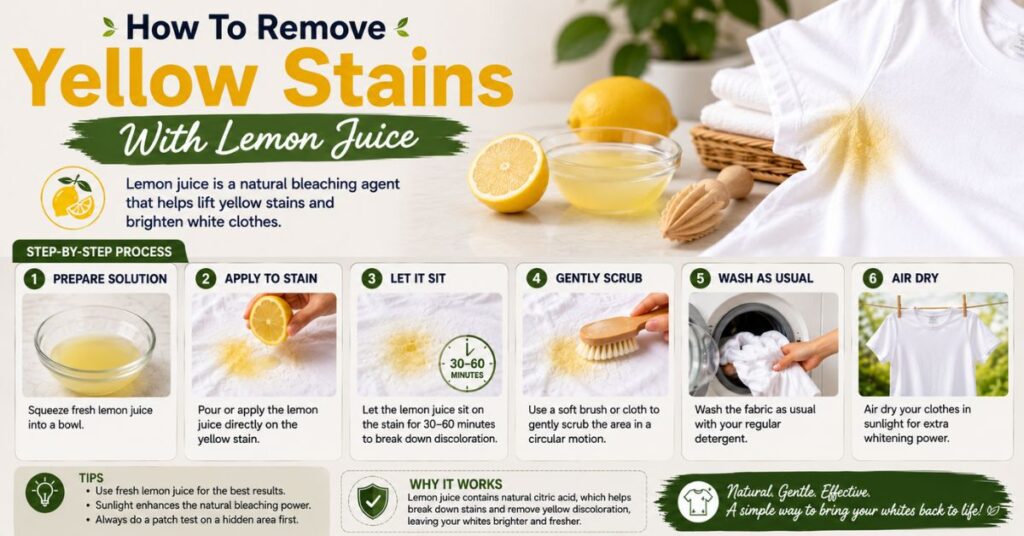
Lemon juice is a natural option for helping brighten white fabric and loosen yellow sweat stains. Its mild acidity can help break down some residue, while sunlight may provide additional brightening. However, lemon juice can affect delicate fabrics, so always test a small hidden area first.
- Squeeze fresh lemon juice over the yellow stain.
- Gently rub the juice into the fabric.
- Leave it for 20–30 minutes.
- Place the fabric in indirect or mild sunlight.
- Rinse thoroughly with cool water.
- Wash with your regular laundry detergent.
- Check the stain before putting the clothing in the dryer.
- Repeat the process if the yellow mark remains.
What About Bleach For Yellow Stains?
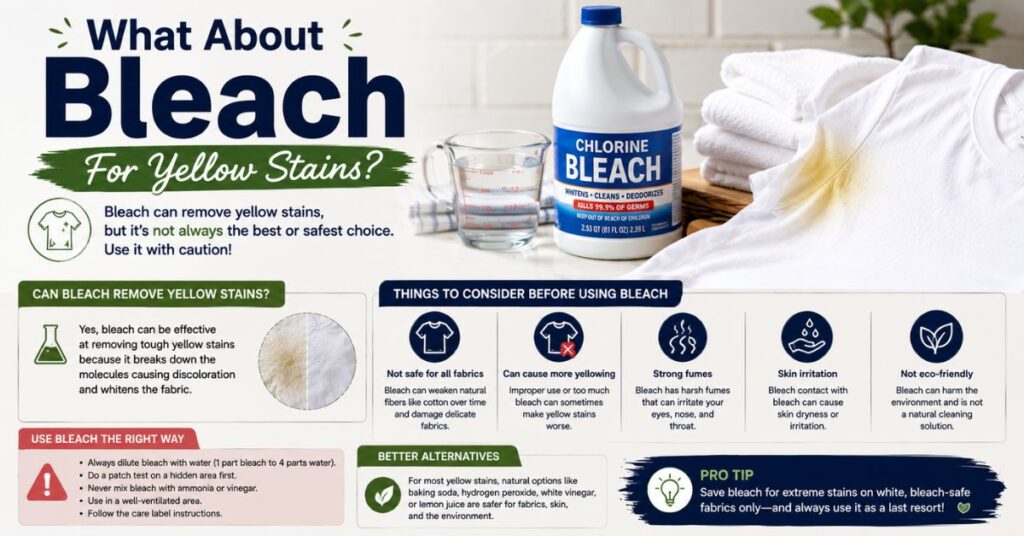
Bleach may seem like the quickest solution for yellow stains on white clothes, but it is not always the best choice. Chlorine bleach can sometimes make certain sweat and deodorant stains look darker or more yellow because it can react with proteins, body oils, and residue trapped in the fabric. It may also weaken fibers when used too often. For these reasons, it is usually better to try gentler stain-removal methods first, especially for set-in yellow marks.
- Check the care label: Make sure the fabric can safely handle bleach.
- Never mix chemicals: Do not combine bleach with vinegar, ammonia, or other cleaners.
- Dilute properly: Follow the bleach manufacturer’s instructions carefully.
- Use sparingly: Frequent bleach use can weaken white fabrics.
- Test first: Apply a diluted solution to an inconspicuous area.
- Rinse thoroughly: Remove all bleach residue after treatment.
- Avoid delicate fabrics: Do not use chlorine bleach on wool, silk, or other fabrics that prohibit it.
If you decide to use bleach, choose the appropriate type and follow the product instructions rather than applying concentrated bleach directly to the stain. For many yellow sweat stains, oxygen-based whitening products can be a gentler alternative. Always rinse and wash the garment thoroughly after treatment, and never dry the clothing until you are sure the stain has disappeared.
Tips To Keep White Clothes Clean Longer
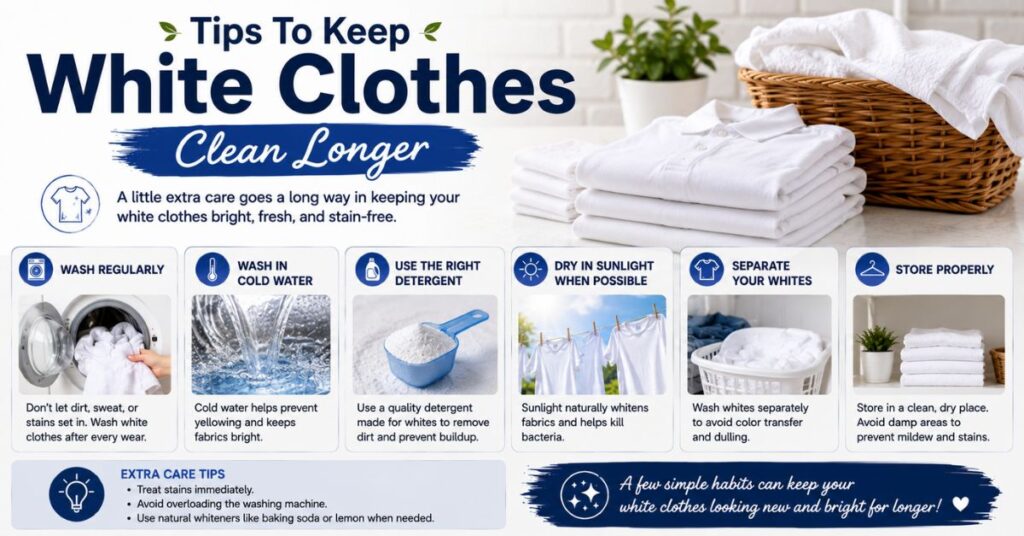
Keeping white clothes bright requires simple, consistent care. Wash sweaty clothes promptly instead of letting stains sit for several days. Avoid using too much detergent, as residue can build up on fabric. Treat underarm and collar stains before washing, and follow the care label for water temperature. Whenever possible, air-dry white clothes and avoid storing them while damp. Regular care can help prevent stubborn yellow stains and keep whites looking fresh.
Go To Bed Clean
Going to bed with clean skin can help reduce sweat, body oils, and deodorant residue transferring onto white bedding and clothing. Take a quick shower, wash your underarms, and remove excess skincare products before sleeping. Clean skin can help keep fabrics fresher and reduce stubborn buildup over time.
Use Natural Fabric Softeners
Natural fabric softeners can help keep white clothes feeling fresh without leaving heavy chemical residue. A small amount of white vinegar added to the washing machine’s rinse cycle can help reduce detergent buildup and soften fabrics. Avoid using too much, and never mix vinegar with chlorine bleach. Always follow your garment’s care instructions.
Reconsider Clothing Storage
Proper storage can help prevent white clothes from developing yellow stains while they are not being worn. Make sure garments are completely clean and dry before folding them away. Store white clothing in a cool, dry, well-ventilated place away from direct sunlight and humidity. Avoid overcrowding drawers or closets, as poor airflow can encourage musty odors and residue buildup. Breathable cotton storage bags are a better choice than plastic for long-term storage.
Use Products As Directed
Always use stain removers, detergents, and fabric-care products exactly as directed on their labels. Using too much product does not necessarily clean clothes better and may leave residue that causes dullness or buildup. Check the recommended amount, water temperature, soaking time, and fabric restrictions before use. Never combine different cleaning products unless the label specifically says it is safe.
How To Remove Yellow Stains From Different Fabric Types
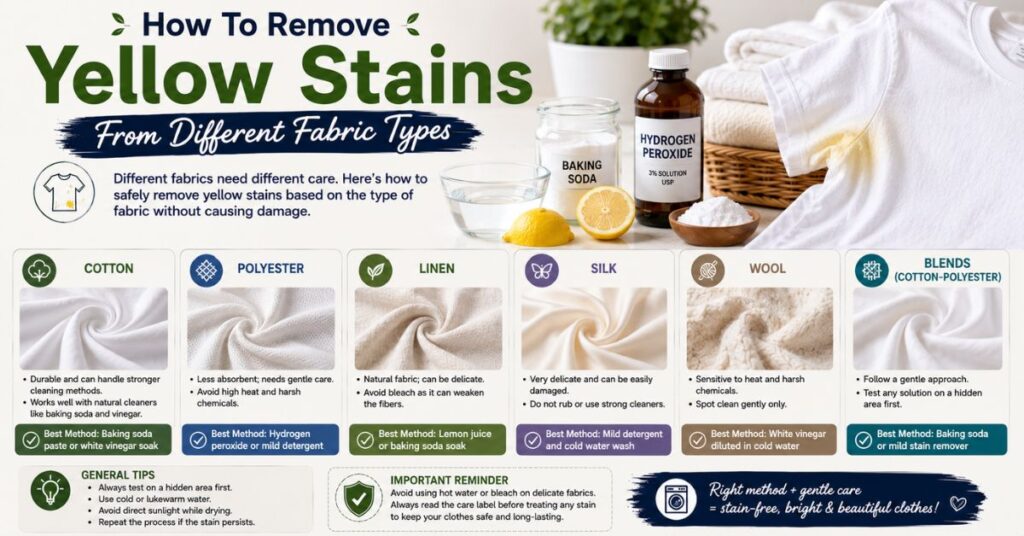
Different fabrics react differently to stain-removal ingredients, so the safest method depends on the material. Before treating any yellow stain, check the care label and test your chosen solution on a small, hidden area. Use gentle methods on delicate fabrics and avoid strong chemicals unless the manufacturer recommends them.
- Cotton: Apply a baking soda paste to the stain, leave it for 30–60 minutes, then wash according to the care label.
- Polyester: Use mild liquid detergent and cool or lukewarm water. Avoid excessive heat because it can make stains harder to remove.
- Linen: Treat gently with diluted white vinegar or mild detergent. Avoid aggressive scrubbing that may damage the fibers.
- Rayon: Use a small amount of mild detergent and cool water. Avoid soaking for long periods because rayon can become weaker when wet.
- Nylon: Apply diluted detergent to the affected area and gently rub it before washing. Avoid high heat.
- Spandex: Use mild detergent and cool water. Do not use chlorine bleach, which can damage elastic fibers.
- Silk: Avoid homemade acidic or abrasive treatments. Use a detergent specifically made for silk and follow the care label carefully.
- Wool: Do not use harsh stain removers. Use a wool-safe detergent and cool water, and avoid vigorous rubbing or twisting.
- Blended Fabrics: Identify the dominant or most delicate fiber and choose the gentlest suitable treatment. Always follow the garment’s care instructions.
Common Mistakes That Make Yellow Stains Worse
Removing yellow stains can become more difficult when the wrong cleaning methods are used. Some common laundry mistakes can push sweat, deodorant, and body-oil residue deeper into fabric or cause discoloration. Avoiding these errors can make stain removal more effective and help protect white clothes from unnecessary damage.
- Using chlorine bleach: It can sometimes make sweat stains appear darker or more yellow.
- Using too much detergent: Excess detergent may leave residue that attracts dirt and buildup.
- Applying heat too soon: A dryer can set an untreated stain deeper into the fabric.
- Scrubbing too aggressively: Hard scrubbing can damage delicate fibers and weaken the fabric.
- Leaving sweaty clothes for too long: Old sweat residue becomes harder to remove.
- Mixing cleaning products: Combining chemicals can damage fabric and create dangerous fumes.
- Skipping a patch test: Always test a new treatment on a hidden area first.
FAQs
1. Can yellow sweat stains be removed without bleach?
Yes, yellow sweat stains can often be treated without bleach using baking soda, hydrogen peroxide, white vinegar, or lemon juice.
2. How do you remove old yellow stains from white clothes?
Apply a suitable stain treatment, let it sit for a short period, then wash according to the fabric care label. Repeat if necessary.
3. Does baking soda remove yellow armpit stains?
Yes, baking soda can help loosen sweat, body oils, and deodorant buildup from white fabric.
4. How can I prevent yellow armpit stains?
Wash sweaty clothes promptly, use deodorant correctly, and pre-treat underarm areas before washing when needed.
5. Is bleach good for removing yellow sweat stains?
Bleach is not always the best option because it can sometimes make sweat stains appear more yellow and may weaken fabric with frequent use.
Conclusion
Set-in yellow stains can make white clothes look old, but you don’t always need harsh bleach to restore their fresh appearance. Simple ingredients such as baking soda, hydrogen peroxide, white vinegar, and lemon juice can help loosen sweat, body oils, and deodorant buildup when used correctly. Always check the fabric care label and test any treatment before applying it to a larger area. Preventing stains is also easier with regular washing, proper clothing storage, and timely stain treatment. At True Housekeeping, we believe simple cleaning methods can make everyday home care easier. With the right approach, your white clothes can stay cleaner and brighter for longer.