
How to Remove Oil Stains from Clothes
Oil stains are among the most common and frustrating laundry problems. Whether you’ve spilled cooking oil while making dinner, dropped pizza on your shirt, splashed salad dressing on your favorite blouse, or got motor oil on your work clothes, these stains can seem impossible to remove. Unlike water-based stains, oil penetrates deep into fabric fibers and doesn’t wash away with water alone.
The good news is that most oil stains can be removed successfully if you use the right method. In many cases, you don’t need expensive stain removers. Everyday household products like dish soap, baking soda, cornstarch, and liquid laundry detergent can effectively lift grease from fabric when used correctly.
In this complete guide, you’ll learn how to remove fresh oil stains, dried grease stains, cooking oil, butter, olive oil, and even motor oil from different types of clothing. You’ll also discover which methods work best for cotton, denim, polyester, silk, and wool, along with expert laundry tips to keep your clothes looking like new.
How to Remove Oil Stains from Clothes?
Oil stains behave differently from coffee, juice, or mud stains because oil doesn’t mix with water. Instead, it sticks to fabric fibers and traps dirt over time. If the garment is washed incorrectly or placed in a hot dryer before the stain is completely removed, the grease can become permanently set into the fabric.
Several factors make oil stains difficult to remove:
- Oil repels water, making regular washing less effective.
- Thick grease penetrates deep into clothing fibers.
- Heat from a dryer can permanently set the stain.
- Older stains are harder to break down than fresh ones.
- Delicate fabrics require gentle cleaning methods to prevent damage.
Understanding how oil interacts with fabric helps you choose the most effective stain-removal method.
Act Quickly for the Best Results
The sooner you treat an oil stain, the easier it is to remove. Fresh stains usually come out much more easily than stains that have dried or been washed.
As soon as the spill happens:
- Blot away as much excess oil as possible.
- Don’t rub the stain.
- Apply an absorbent powder such as baking soda or cornstarch.
- Treat the stain before washing the garment.
Even if you don’t have time to wash the clothing immediately, removing the excess grease right away can prevent the stain from becoming permanent.
Supplies You’ll Need
Most oil stains can be treated using products you probably already have at home.
Essential Supplies
- Grease-cutting liquid dish soap
- Baking soda
- Cornstarch or baby powder
- Liquid laundry detergent
- Soft toothbrush
- Microfiber cloth
- Paper towels
- Warm water
- Small bowl
- Soft sponge
Optional Supplies
- Enzyme stain remover
- Oxygen-based bleach (color-safe)
- Laundry stain brush
- Mesh laundry bag for delicate fabrics
Step 1: Blot the Excess Oil
Never start by pouring water onto a fresh oil stain.
Instead, use a clean paper towel, microfiber cloth, or napkin to blot the stain gently.
Press lightly to absorb the oil without spreading it further.
Avoid rubbing because rubbing forces grease deeper into the fabric fibers, making it much harder to remove later.
Continue blotting until no more oil transfers to the towel.
Step 2: Sprinkle Baking Soda or Cornstarch
Once you’ve removed as much oil as possible, cover the stained area completely with an absorbent powder.
Good options include:
- Baking soda
- Cornstarch
- Baby powder
- Talcum powder
Allow the powder to sit on the stain for at least 30 minutes.
For larger or darker stains, leave it for one hour.
As the powder absorbs grease, you may notice it becoming clumpy or changing color. This is a sign that it’s drawing oil out of the fabric.
Brush away the powder using a soft toothbrush before moving to the next step.
Method 1: Remove Oil Stains Using Dish Soap
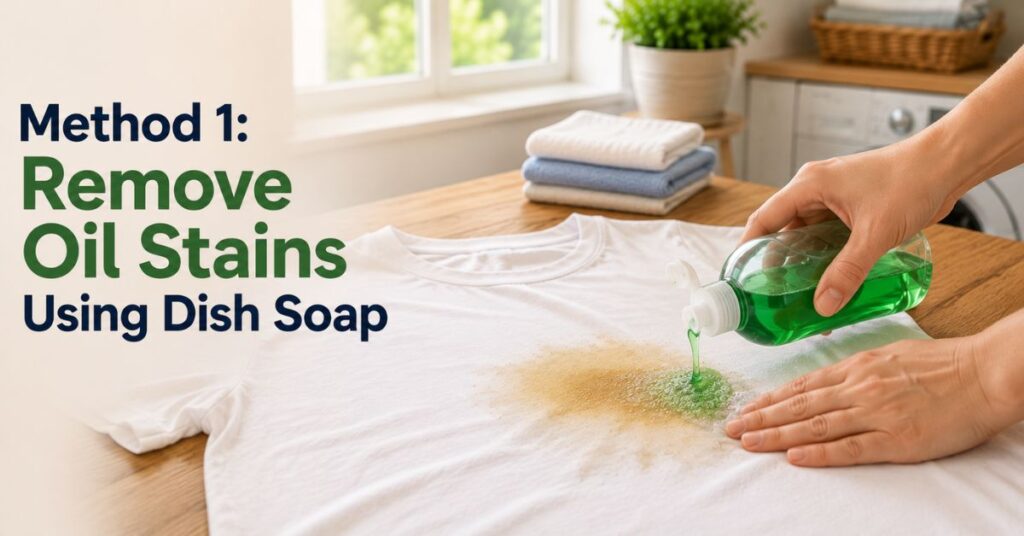
Dish soap is one of the best products for removing grease because it’s specifically designed to break down oils on dishes—and it works just as well on clothing.
Step 1
Apply a few drops of grease-cutting dish soap directly onto the stain.
There’s no need to dilute it.
Step 2
Using your fingers or a soft toothbrush, gently work the soap into the stained area with small circular motions.
Don’t scrub aggressively, especially on delicate fabrics.
Step 3
Let the soap sit for 10 to 15 minutes.
This gives the grease-fighting ingredients time to loosen the oil.
Step 4
Rinse with warm water.
If the stain has lightened but is still visible, repeat the process once more.
Step 5
Wash the garment with your regular liquid laundry detergent according to the care label.
Always air-dry the clothing first. If the stain is still present after washing, repeat the treatment before using a dryer.
Method 2: Baking Soda and Dish Soap Combination
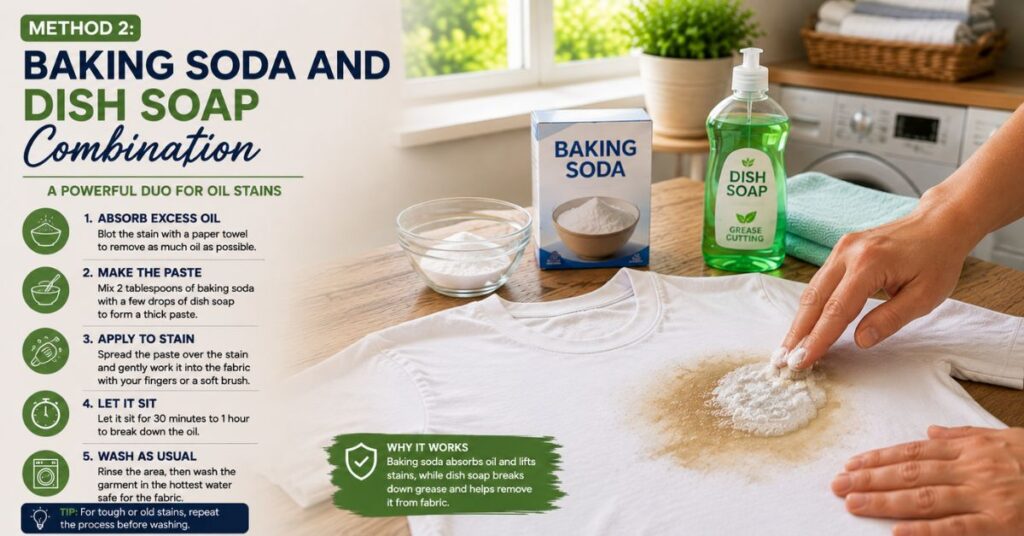
For stubborn cooking oil stains, combining baking soda with dish soap often gives even better results.
Instructions
- Blot the stain.
- Cover it with baking soda.
- Leave for 30–60 minutes.
- Brush away the powder.
- Apply dish soap.
- Gently scrub using a soft toothbrush.
- Leave for 15 minutes.
- Wash normally.
This method is especially effective for:
- Vegetable oil
- Olive oil
- Butter
- Pizza grease
- Salad dressing
- Fried food stains
Method 3: Liquid Laundry Detergent Treatment
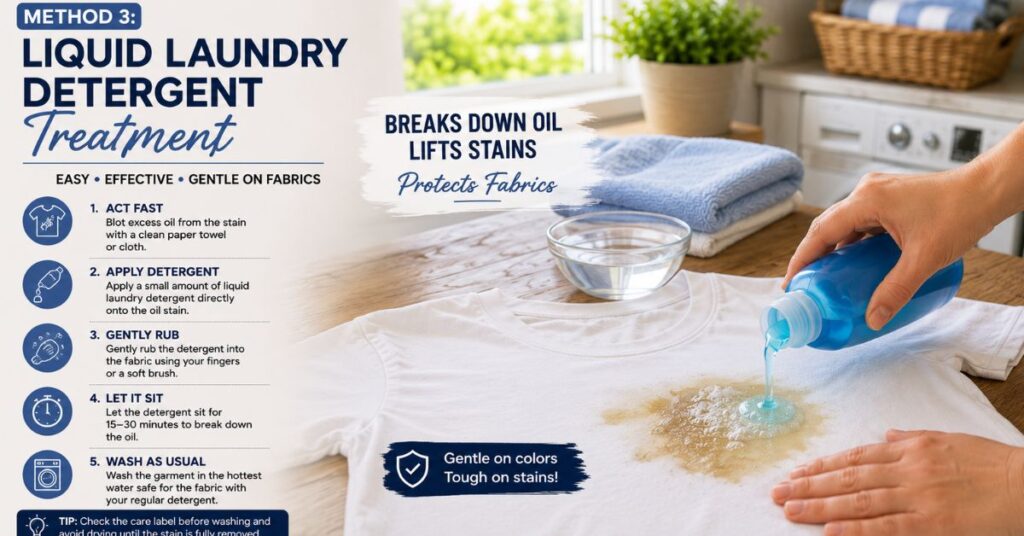
If the stain remains after using dish soap, treat it again with a concentrated liquid laundry detergent.
Liquid detergents contain surfactants and enzymes that help break down grease left behind after the initial treatment.
Steps
- Pour a small amount of detergent directly onto the stain.
- Massage it gently into the fabric.
- Let it sit for 20 minutes.
- Wash using the warmest water that’s safe for the fabric.
- Check the stain before drying.
For heavily stained clothing, repeat the process instead of increasing the water temperature.
Can You Remove Dried Oil Stains?
Yes. Although dried stains are more difficult to remove, they aren’t always permanent.
The key is patience.
Instead of washing repeatedly, follow these steps:
- Apply baking soda to absorb remaining grease.
- Brush away the powder.
- Use dish soap to break down the oil.
- Apply liquid detergent.
- Wash the garment.
- Inspect before drying.
Some dried stains may require two or three treatments before they disappear completely.
Which Fabrics Need Special Care?
Different fabrics react differently to stain-removal methods.
| Fabric Type | Recommended Treatment |
| Cotton | Dish soap + liquid detergent |
| Polyester | Baking soda + dish soap |
| Denim | Warm water + detergent |
| Linen | Cornstarch + mild detergent |
| Silk | Cornstarch + hand washing |
| Wool | Gentle wool detergent only |
Always read the care label before using hot water or stain-removal products.
Pro Tips for Better Results
- Treat stains as soon as possible.
- Never use the dryer until you’re sure the stain is gone.
- Test any stain remover on a hidden area first.
- Avoid chlorine bleach on colored clothing unless the label says it’s safe.
- Air-drying helps you check whether the stain has been completely removed.
Method 4: How to Remove Old Oil Stains from Clothes
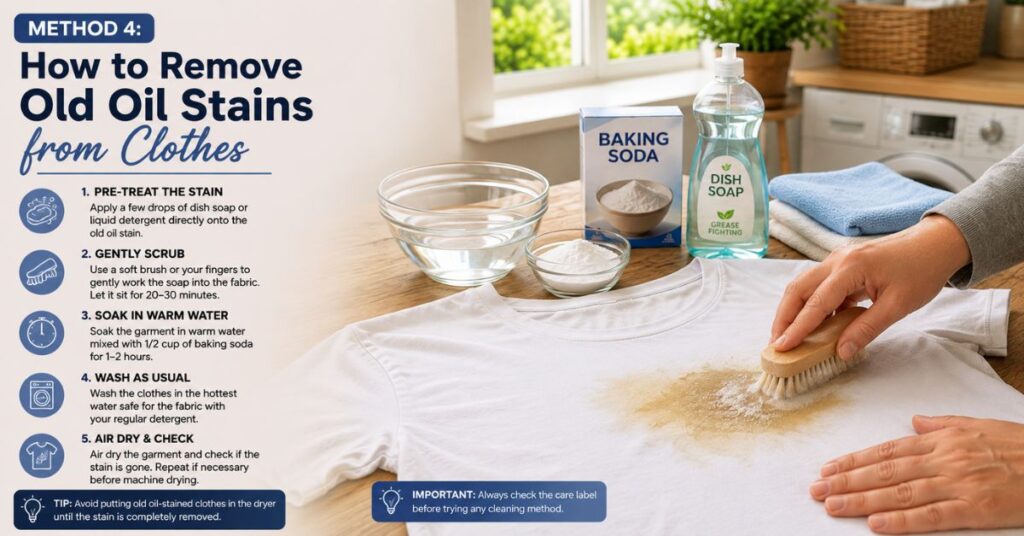
Old oil stains can be more stubborn because the grease has already settled deep into the fabric fibers. If the clothing has been washed or accidentally dried, don’t throw it away just yet. With the right treatment, many old stains can still be removed.
Step 1: Scrape Off Any Dried Residue
If the stain has hardened, gently scrape away any dried residue using:
- A spoon
- A butter knife
- A plastic scraper
Avoid using sharp objects that could damage the fabric.
Step 2: Apply Baking Soda
Cover the stained area with a thick layer of baking soda.
Let it sit for:
- 1 hour for moderate stains
- Overnight for stubborn stains
Baking soda absorbs grease trapped inside the fabric fibers.
Step 3: Brush Away the Powder
Use a soft toothbrush to remove the baking soda.
If the powder has turned yellow or clumped together, it has absorbed some of the oil.
Step 4: Treat with Dish Soap
Apply a generous amount of grease-cutting dish soap directly to the stain.
Massage it gently using your fingers or a soft toothbrush.
Allow it to sit for 20 minutes.
Step 5: Wash the Garment
Wash the clothing according to its care label.
Before drying, inspect the stain carefully under good lighting.
If you still see traces of oil, repeat the treatment instead of using the dryer.
Method 5: How to Remove Cooking Oil Stains
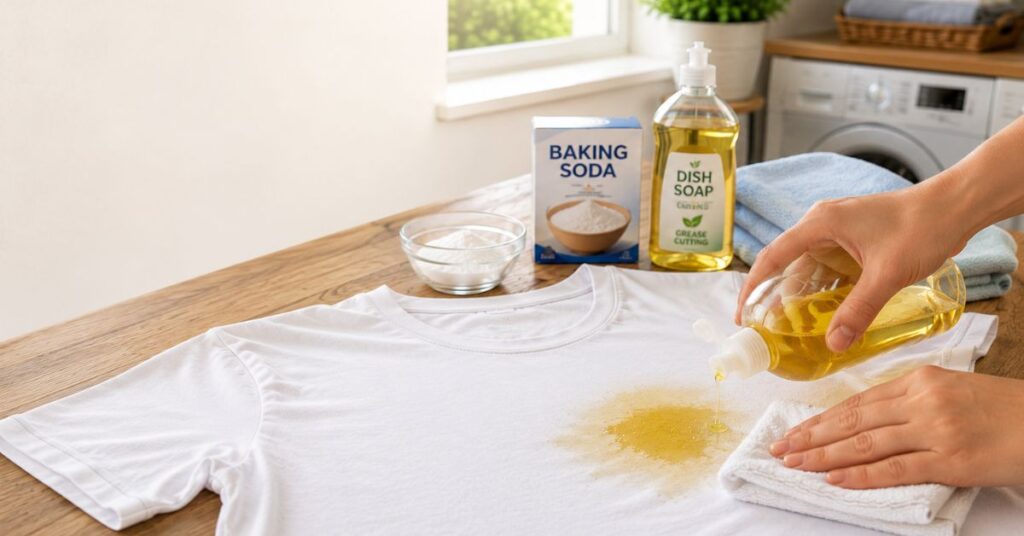
Cooking oil stains are one of the most common household laundry problems.
Whether you’ve spilled:
- Vegetable oil
- Sunflower oil
- Canola oil
- Coconut oil
- Peanut oil
- Sesame oil
the removal process is almost the same.
Best Cleaning Method
- Blot the excess oil.
- Sprinkle baking soda.
- Wait 30–60 minutes.
- Brush away the powder.
- Apply dish soap.
- Leave for 15 minutes.
- Wash with liquid laundry detergent.
Fresh cooking oil stains usually come out after one treatment if handled quickly.
Method 6: How to Remove Olive Oil Stains
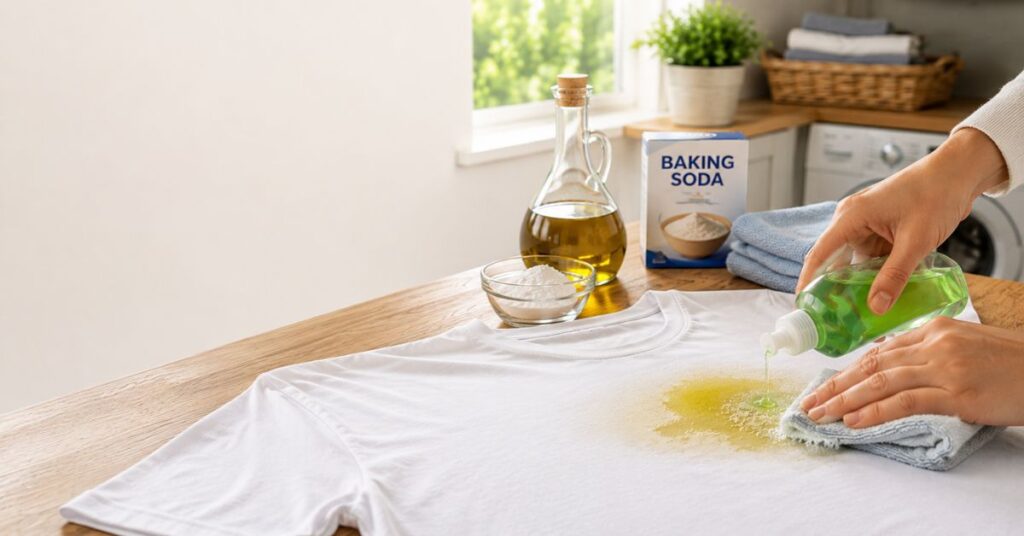
Olive oil often leaves dark patches on light-colored fabrics because it penetrates quickly.
Steps
- Blot immediately with a paper towel.
- Cover the stain with cornstarch or baking soda.
- Wait for 30–45 minutes.
- Remove the powder.
- Apply dish soap.
- Let it sit for 15 minutes.
- Wash as usual.
For linen tablecloths and cotton shirts, repeating the process may be necessary for larger spills.
Method 7: How to Remove Butter and Grease Stains
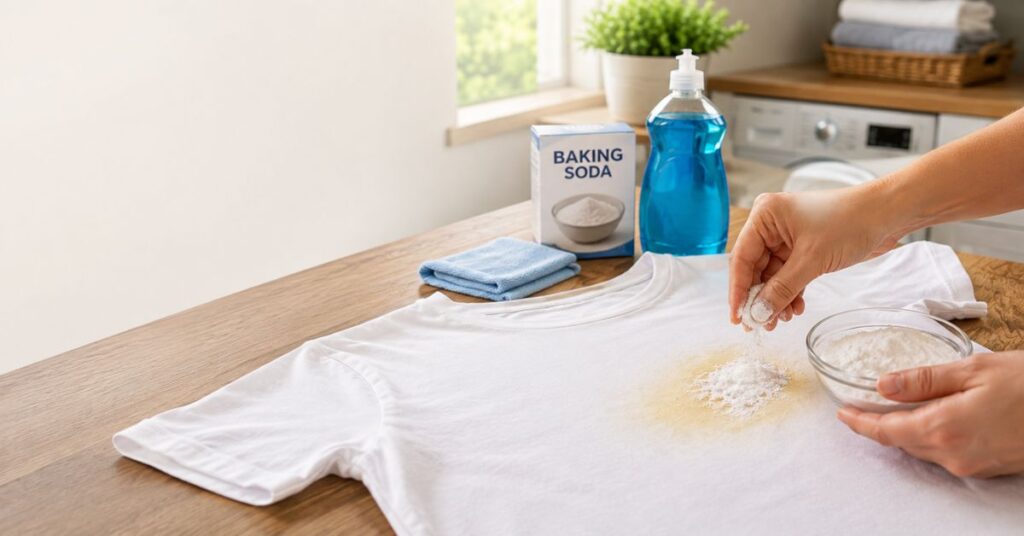
Butter contains both fat and milk proteins, making it slightly more difficult to remove than plain cooking oil.
Follow These Steps
- Lift away any remaining butter with a spoon.
- Sprinkle baking soda.
- Wait 30 minutes.
- Brush off the powder.
- Apply dish soap.
- Rub gently.
- Wash using liquid detergent.
This method also works well for grease from:
- Pizza
- Burgers
- French fries
- Fried chicken
- Bacon
- Fast food
Method 8: How to Remove Motor Oil Stains
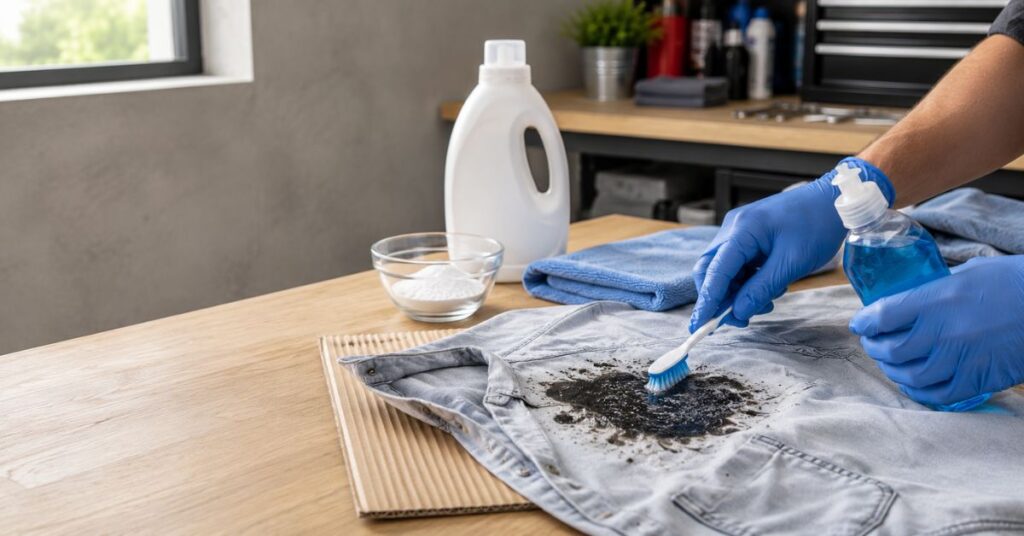
Motor oil contains petroleum-based ingredients that require a stronger cleaning approach than food oils.
Supplies
- Heavy-duty dish soap
- Baking soda
- Liquid laundry detergent
- Soft brush
Step 1
Place cardboard or an old towel behind the stained area to prevent the oil from spreading through the fabric.
Step 2
Blot away as much oil as possible.
Never rub the stain.
Step 3
Cover the stain completely with baking soda.
Leave it for at least one hour.
Step 4
Brush away the baking soda.
Step 5
Apply dish soap generously.
Use a soft toothbrush to work it into the stain.
Step 6
Leave it for 20–30 minutes
Step 7
Wash the clothing separately using the warmest water that is safe for the fabric.
Heavy motor oil stains may require two or three treatments.
Laundry Tip: Wash heavily soiled work clothes separately to prevent grease from transferring to other garments.
Method 9: White Vinegar for Oil Stains
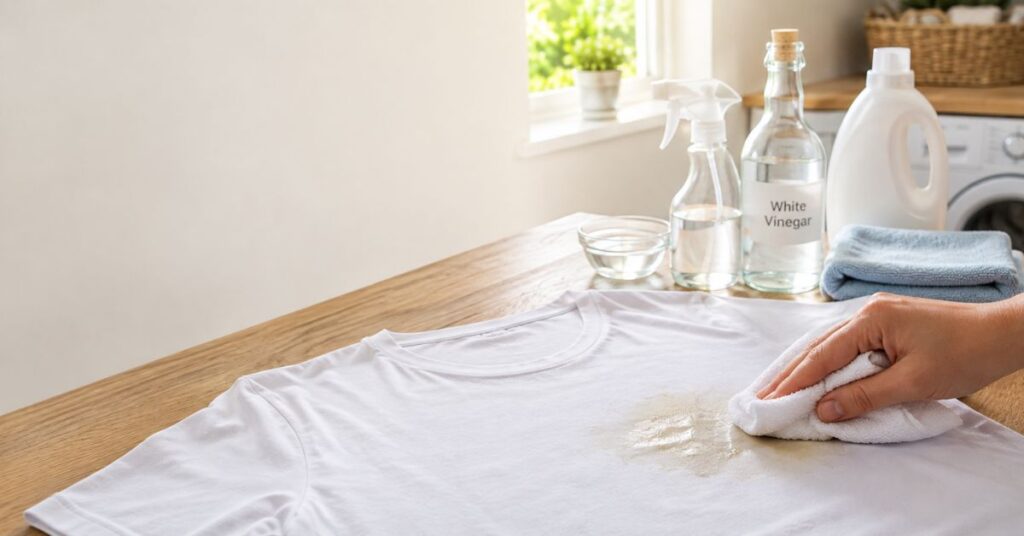
White vinegar isn’t powerful enough to dissolve grease by itself, but it can help remove detergent residue and freshen fabric after the main stain has been treated.
How to Use White Vinegar
- Mix 1 part white vinegar with 2 parts water.
- Dip a clean cloth into the solution.
- Gently blot the treated area.
- Rinse with clean water.
- Wash the garment normally.
Never mix vinegar with bleach, as this can create harmful fumes.
Method 10: Remove Oil Stains with Chalk
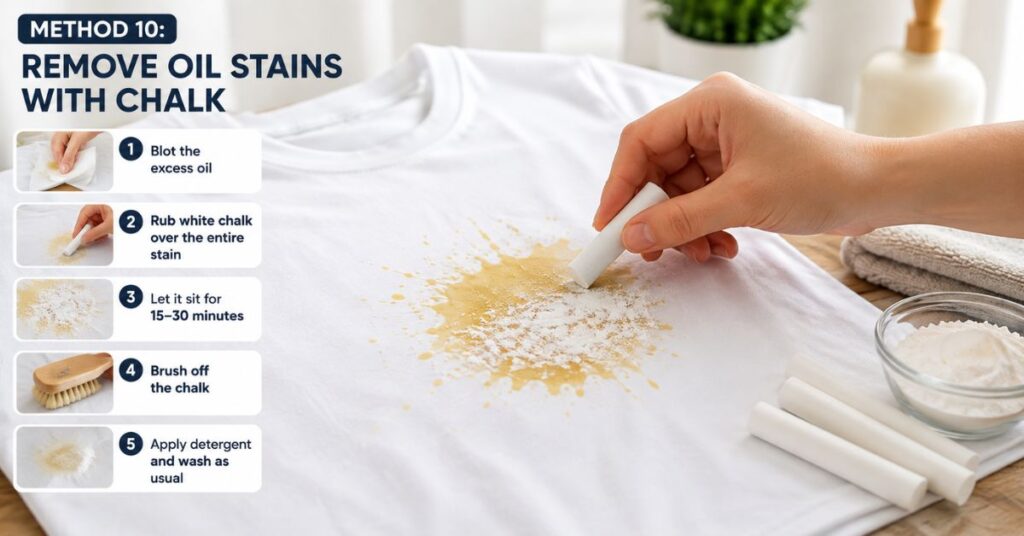
Chalk is a simple and effective solution for treating small, fresh oil stains, especially on cotton and lightweight fabrics. The porous texture of white chalk helps absorb grease before it sinks deeper into the fibers. To use this method, gently blot any excess oil with a paper towel, then rub white chalk over the entire stain until it’s fully covered. Let the chalk sit for 15–30 minutes so it can absorb the oil. Brush off the chalk with a soft cloth or toothbrush, then apply a few drops of liquid laundry detergent and wash the garment according to the care label. This method works best on fresh stains rather than old or dried grease marks.
Common Mistakes That Make Oil Stains Worse
Many stains become permanent because of simple mistakes during washing.
1. Using the Dryer Too Soon
Heat can permanently set any remaining grease into the fabric.
Always air-dry first and inspect the stain.
2. Waiting Too Long
Fresh stains are much easier to remove than stains that have been sitting for several days.
Treat the stain as soon as possible.
3. Rubbing the Stain Aggressively
Scrubbing hard forces grease deeper into the fibers and may damage delicate fabrics.
Gentle rubbing is enough.
4. Skipping the Absorbent Powder
Baking soda or cornstarch absorbs a large amount of grease before washing, making the cleaning process much more effective.
5. Using Too Much Detergent
More detergent doesn’t always mean better cleaning.
Excess detergent can leave residue that traps dirt and may require extra rinsing.
Use the recommended amount for your load size.
6. Ignoring the Fabric Care Label
Different fabrics require different cleaning methods.
For example:
- Silk should be hand-washed with a gentle detergent.
- Wool needs cool water and special wool detergent.
- Cotton can usually handle warmer water.
- Polyester often responds well to dish soap and liquid detergent.
Reading the care label helps prevent shrinking, fading, or fabric damage.
Expert Laundry Tips
Professional cleaners recommend these simple habits to make stain removal easier:
- Keep a small bottle of dish soap in your laundry room.
- Store baking soda with your laundry supplies.
- Pretreat stains before every wash.
- Check garments under bright light before drying.
- Wash heavily stained items separately.
- Avoid overloading the washing machine so detergent can work effectively.
- Use the correct water temperature recommended for the fabric.
These small habits can help extend the life of your clothes and improve your laundry results.
How to Remove Oil Stains from Different Types of Fabrics
Not every fabric reacts the same way to stain-removal methods. Choosing the right technique helps remove the stain while protecting the material from damage.
1. Cotton Clothes
Cotton is one of the easiest fabrics to clean because it’s durable and can usually tolerate warm water.
Best Method:
- Blot the excess oil.
- Sprinkle baking soda for 30–60 minutes.
- Brush it off.
- Apply grease-cutting dish soap.
- Wash with liquid laundry detergent.
- Air-dry before using the dryer.
2. Polyester Clothes
Polyester resists stains better than natural fibers, but oil can still cling to the surface.
Cleaning Steps:
- Remove excess grease.
- Apply dish soap directly to the stain.
- Let it sit for 15–20 minutes.
- Wash in warm water if the care label allows.
- Repeat the treatment if needed.
3. Denim and Jeans
Denim is thick, allowing you to scrub a little more firmly without damaging the fabric.
Best Method:
- Sprinkle baking soda.
- Leave it for one hour.
- Brush it away.
- Apply dish soap.
- Gently scrub with a soft toothbrush.
- Wash with heavy-duty laundry detergent.
- Air-dry and inspect before machine drying.
4. Silk
Silk requires extra care because harsh chemicals and scrubbing can weaken the fibers.
Recommended Method:
- Sprinkle cornstarch over the stain.
- Let it absorb the oil for one hour.
- Brush it away gently.
- Hand-wash using a silk-safe detergent.
- Lay flat to dry.
If the stain remains, consider professional dry cleaning instead of repeated home treatments.
5. Wool
Wool absorbs oil quickly but can shrink if exposed to hot water.
Steps:
- Blot the stain gently.
- Cover it with cornstarch.
- Leave it for one hour.
- Brush off the powder.
- Wash by hand using a wool-safe detergent.
- Dry flat on a clean towel.
How to Prevent Oil Stains in the Future
Although accidents happen, a few simple habits can reduce the chances of getting oil on your clothes.
Wear an Apron While Cooking
An apron protects your clothing from splashes of cooking oil, butter, and grease.
Treat Stains Immediately
The faster you act, the easier the stain is to remove.
Keep Laundry Essentials Ready
Store these items in your laundry room:
- Baking soda
- Dish soap
- Liquid laundry detergent
- Soft toothbrush
- Microfiber cloth
Having these supplies nearby makes quick treatment much easier.
Inspect Clothes Before Drying
Many people don’t notice a faint stain until after using the dryer.
Always check the stained area under good lighting before exposing it to heat.
Read the Care Label
Every garment has different washing instructions. Following the label helps prevent shrinking, fading, and fabric damage.
FAQs
Can old oil stains be removed from clothes?
Yes. Old oil stains can often be removed by treating them with baking soda, grease-cutting dish soap, and liquid laundry detergent. Some stains may require more than one treatment.
Does baking soda remove grease stains?
Yes. Baking soda absorbs excess grease from fabric, making it easier for dish soap and detergent to remove the remaining oil.
Can I use vinegar to remove oil stains?
White vinegar works best as a follow-up rinse after treating the stain with dish soap. It isn’t strong enough to dissolve heavy grease by itself.
Should I use hot or cold water?
Always follow the garment’s care label. In general, use the warmest water that is safe for the fabric. Delicate materials like silk and wool usually require cool or lukewarm water.
Is dish soap better than laundry detergent for oil stains?
Dish soap is excellent for breaking down grease during pre-treatment, while laundry detergent helps remove the loosened oil during the wash cycle. Using both together often gives the best results.
Can I iron clothes with an oil stain?
No. Heat from an iron can permanently set the stain into the fabric. Make sure the stain is completely gone before ironing.
Final Thoughts
Oil stains may seem difficult to remove, but they don’t have to ruin your favorite clothes. The key is to act quickly, avoid rubbing the stain, and use products that are designed to break down grease. Simple household ingredients like baking soda, cornstarch, and grease-cutting dish soap can be surprisingly effective when used correctly.
If the stain doesn’t disappear after the first wash, don’t lose hope. Repeat the treatment and allow the garment to air-dry before checking the results. Patience is often the difference between saving a favorite shirt and replacing it.
By following the methods in this guide, you’ll be able to tackle everything from fresh cooking oil spills to stubborn grease stains while keeping your clothes clean, fresh, and looking their best.