
How to Clean a Fabric Sofa at Home: Your fabric sofa is one of the most frequently used pieces of furniture in your home. Whether you’re watching TV, reading a book, entertaining guests, or relaxing after a long day, your couch experiences daily wear and tear. Over time, dust, pet hair, food crumbs, body oils, spills, and stains can build up on the fabric, making your sofa look dull and unhygienic.
The good news is that you don’t always need professional upholstery cleaning. With the right cleaning methods and a little patience, you can safely clean your fabric sofa at home and restore its fresh appearance.
In this complete guide, you’ll learn exactly how to clean a fabric sofa step by step, remove common stains, eliminate odors, and keep your upholstery looking like new for years.
Why You Should Clean Your Fabric Sofa Regularly
Many homeowners vacuum their floors every week but forget to vacuum their sofas. Since sofas collect dust just like carpets, regular cleaning is essential.
Cleaning your sofa regularly helps:
- Remove dust and allergens
- Improve indoor air quality
- Eliminate unpleasant odors
- Prevent stains from becoming permanent
- Extend the lifespan of the upholstery
- Keep your living room looking clean and inviting
Experts recommend vacuuming your sofa weekly and performing a deep cleaning every 6–12 months, depending on how often it’s used.
Know Your Sofa Fabric Before Cleaning
Before applying any cleaner, identify the cleaning code on your sofa’s care tag. Using the wrong cleaning solution can permanently damage the fabric.
| Cleaning Code | Meaning | Safe Cleaning Method |
| W | Water-based cleaner only | Mild soap and water |
| S | Solvent-based cleaner only | Upholstery solvent |
| WS | Water or solvent cleaner | Either method |
| X | Vacuum only | Professional cleaning recommended |
Tip: The care tag is usually located underneath the cushions or beneath the sofa.
Supplies You’ll Need
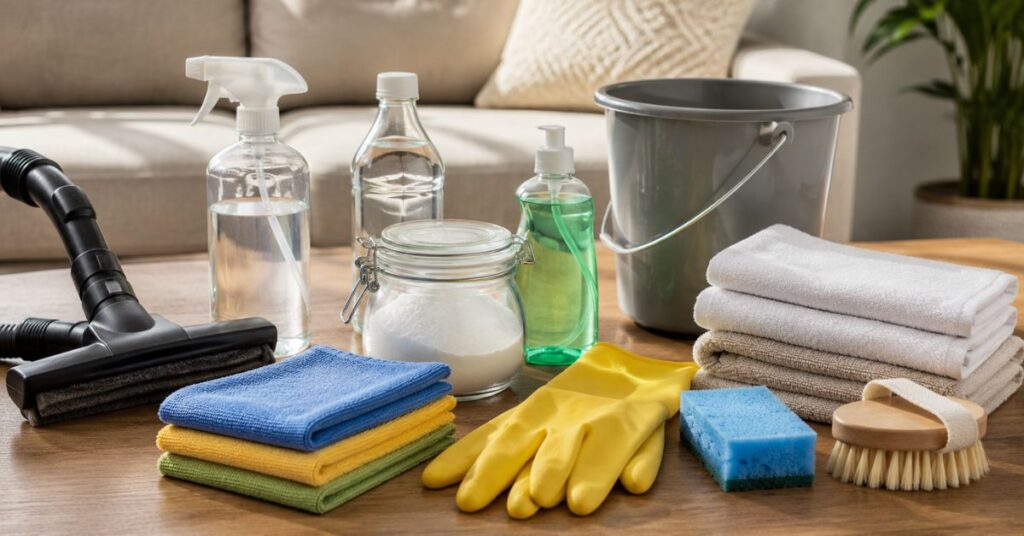
Gather everything before starting.
Basic Cleaning Supplies
- Vacuum cleaner with upholstery attachment
- Soft-bristle brush
- Microfiber cloths
- Spray bottle
- Mild dish soap
- Warm water
- White vinegar
- Baking soda
- Small bucket
- Soft sponge
- Rubber gloves
- Dry towels
Optional supplies include:
- Upholstery cleaner
- Fabric stain remover
- Steam cleaner (if allowed by the manufacturer)
Step 1: Remove Everything from the Sofa
Start by clearing the sofa completely.
Remove:
- Throw pillows
- Blankets
- Cushions
- Toys
- Loose decorations
Check between the cushions for:
- Coins
- Food crumbs
- Hairpins
- Dust
- Pet hair
This allows you to properly clean every hidden area.
Step 2: Vacuum the Entire Sofa Thoroughly
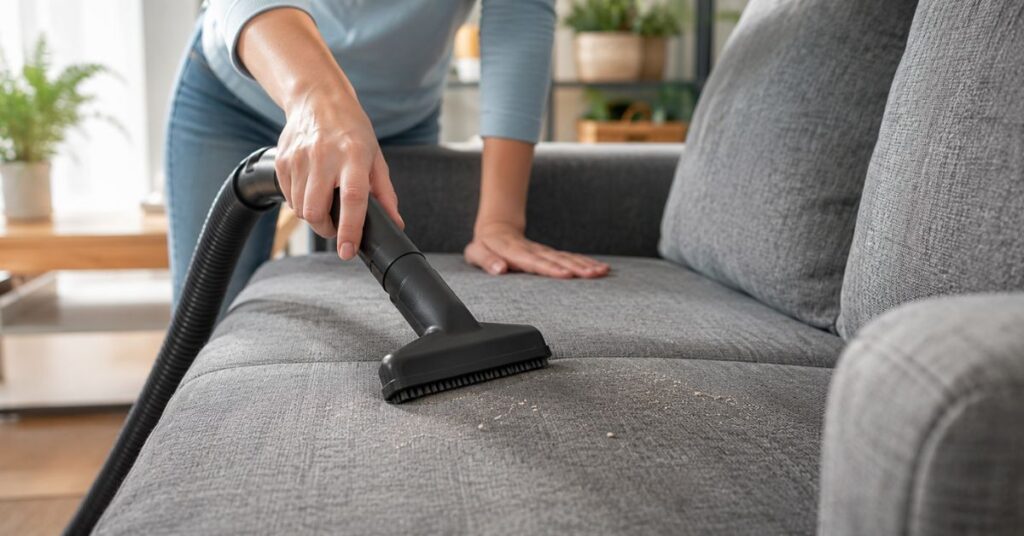
Vacuuming removes loose dirt before wet cleaning.
Work from top to bottom.
Don’t forget:
- Seat cushions
- Back cushions
- Armrests
- Under cushions
- Between cushions
- Corners
- Seams
- Crevices
- Back of the sofa
- Base of the sofa
Use the crevice attachment for tight spaces.
If you own pets, use a pet hair attachment or a rubber brush to lift stubborn fur.
Pro Tip: Vacuum slowly. Moving too quickly leaves dirt behind.
Step 3: Brush Away Embedded Dust
Even after vacuuming, some dirt stays trapped in the fabric fibers.
Use a clean, soft-bristle upholstery brush.
Brush gently in one direction.
This helps loosen:
- Fine dust
- Dried dirt
- Hair
- Surface debris
Vacuum once more after brushing.
Step 4: Read the Cleaning Instructions Carefully
Before using any cleaning product, read:
- Manufacturer’s instructions
- Care label
- Upholstery cleaner directions
Never assume every fabric is water-safe.
Some materials, such as velvet or silk blends, require special care.
Ignoring the cleaning code may result in:
- Water stains
- Color fading
- Fabric shrinkage
- Permanent damage
Step 5: Spot Test First
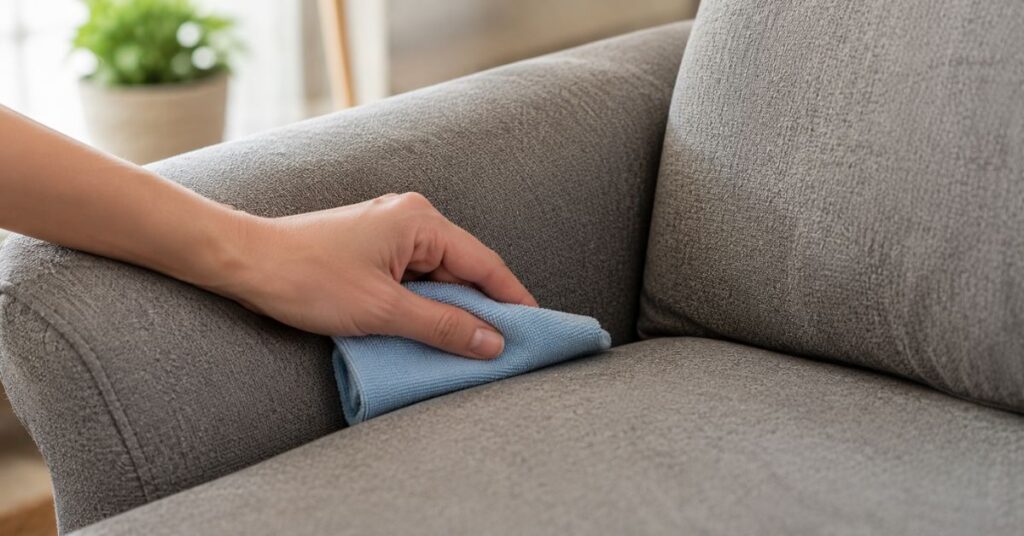
Never clean the entire sofa without testing.
Choose a hidden area like:
- Back corner
- Under a cushion
- Bottom edge
Apply a small amount of cleaner.
Wait 15–20 minutes.
Check for:
- Color bleeding
- Fabric damage
- Water marks
- Shrinkage
If everything looks normal, continue cleaning.
Homemade Fabric Sofa Cleaning Solution
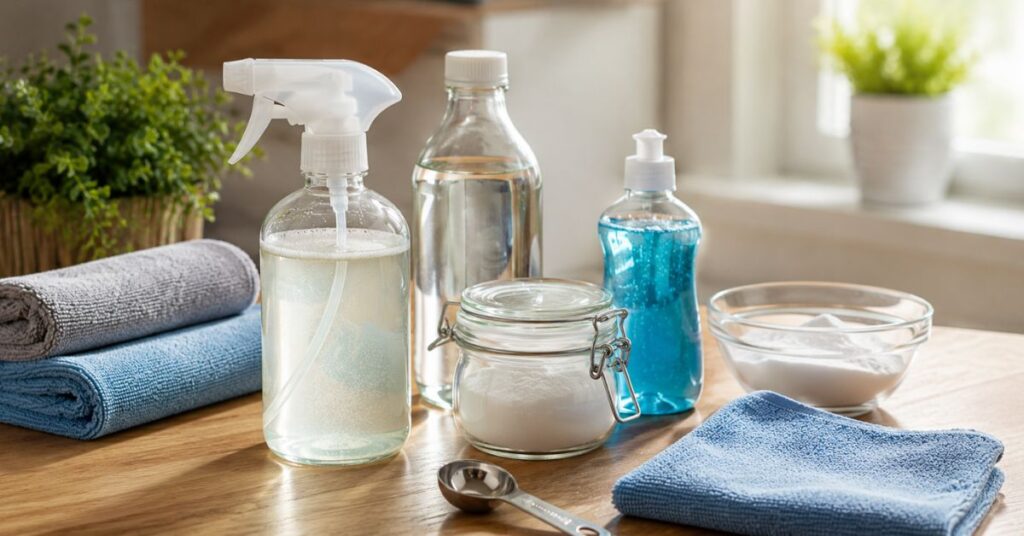
If your sofa allows water-based cleaning, you can make an effective DIY cleaner.
Ingredients
- 2 cups warm water
- 1 teaspoon mild dish soap
- 1 tablespoon white vinegar
Mix gently in a spray bottle.
Avoid creating too many soap bubbles.
Alternative Natural Cleaner
For light cleaning, mix:
- Warm water
- White vinegar (equal parts)
This solution helps remove:
- Light dirt
- Mild stains
- Odors
Step 6: Clean One Small Section at a Time
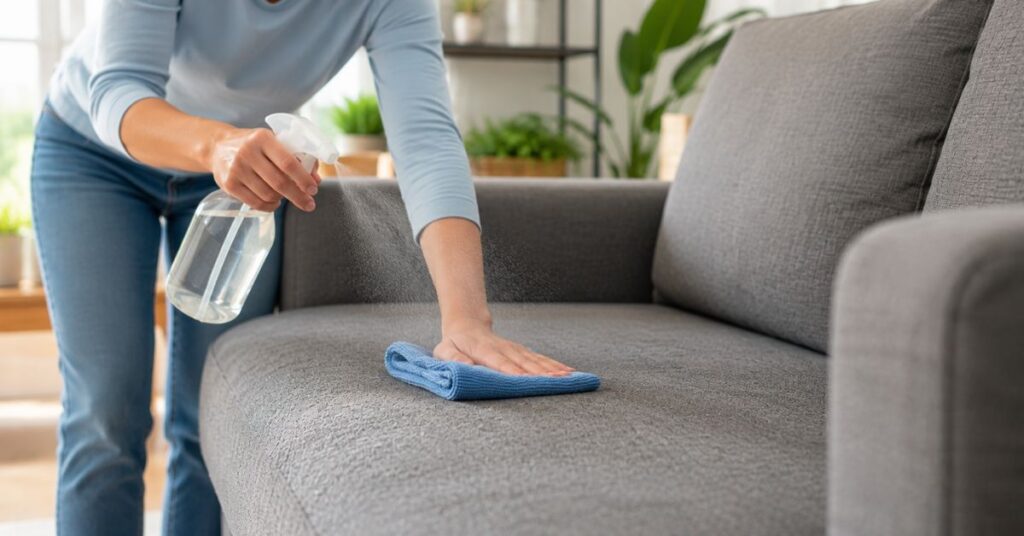
Never soak the entire sofa.
Instead:
- Spray a small amount of cleaner onto a microfiber cloth.
- Gently wipe the fabric.
- Work in circular motions.
- Clean one section before moving to the next.
Avoid excessive moisture.
Too much water can leave stains or encourage mold growth inside the cushions.
Step 7: Remove Surface Dirt
Focus on areas with heavy use.
Examples include:
- Seat cushions
- Armrests
- Headrests
These spots often collect:
- Body oils
- Sweat
- Skin cells
- Dust
Use gentle pressure while wiping.
Never scrub aggressively.
Step 8: Use a Soft Brush for Deeper Cleaning
For textured upholstery, use a soft brush after applying the cleaner.
Brush lightly.
This helps lift dirt trapped deep within the fibers.
Avoid using hard brushes because they may:
- Fray the fabric
- Damage fibers
- Create fuzz
Step 9: Wipe Away Soap Residue
After cleaning, dampen another microfiber cloth with plain water.
Wring it well.
Wipe the cleaned area to remove leftover soap.
Soap residue attracts more dirt over time, so don’t skip this step.
Step 10: Blot Excess Moisture
Use a clean, dry towel.
Press gently onto the fabric.
Avoid rubbing.
Blotting removes excess moisture without damaging the upholstery.
Common Mistakes to Avoid While Cleaning
Many homeowners accidentally damage their sofas by making simple mistakes.
Avoid these common errors:
- Using bleach
- Over-wetting the fabric
- Skipping the patch test
- Scrubbing aggressively
- Mixing multiple cleaning chemicals
- Ignoring manufacturer instructions
- Drying with high heat
- Using colored towels that may bleed dye
Signs Your Sofa Needs a Deep Cleaning
If you notice any of these signs, it’s time for a thorough cleaning:
- Lingering odors
- Visible stains
- Dust buildup
- Pet hair accumulation
- Allergy symptoms after sitting
- Dull-looking fabric
- Sticky armrests
- Darkened seat cushions
Regular maintenance prevents these problems from becoming worse.
Quick Cleaning Checklist
Before moving on to stain removal and deep cleaning, make sure you’ve completed these tasks:
| Task | Completed |
| Removed cushions | ✔ |
| Vacuumed entire sofa | ✔ |
| Brushed upholstery | ✔ |
| Checked cleaning code | ✔ |
| Spot tested cleaner | ✔ |
| Mixed cleaning solution | ✔ |
| Cleaned section by section | ✔ |
| Removed soap residue | ✔ |
| Blotted excess moisture | ✔ |
Deep Cleaning a Fabric Sofa at Home
Regular surface cleaning keeps your sofa looking tidy, but over time, dirt, body oils, allergens, and odors settle deep into the upholstery. A deep clean removes this hidden buildup and refreshes the entire sofa.
Always make sure your sofa’s care tag allows water or steam cleaning before starting.
Step 11: Deep Clean the Fabric
Once you’ve vacuumed and spot-cleaned the sofa, it’s time for a deeper clean.
Method 1: Using Mild Soap
Mix:
- 2 cups warm water
- 1 teaspoon mild dish soap
Lightly dampen a microfiber cloth with the solution and wipe the sofa one section at a time.
Avoid soaking the fabric.
Method 2: Using Upholstery Cleaner
Commercial upholstery cleaners are designed to remove embedded dirt while protecting the fabric.
When using one:
- Read the manufacturer’s instructions.
- Apply only the recommended amount.
- Use a soft cloth or sponge.
- Wipe away any residue with a damp microfiber cloth.
Step 12: Remove Tough Stains
Some stains need special treatment. The sooner you clean them, the easier they are to remove.
Coffee Stains
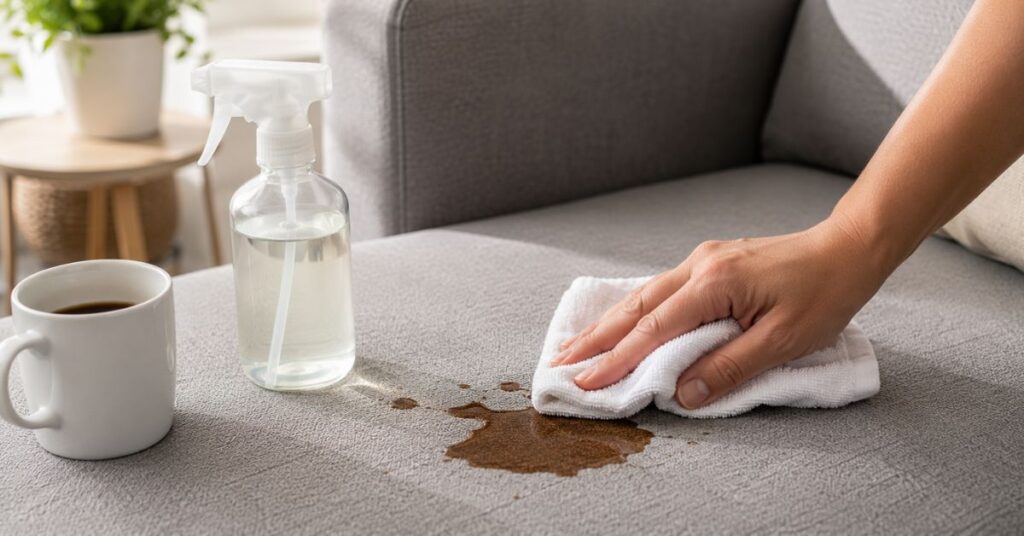
Coffee contains tannins that quickly stain upholstery.
What You’ll Need
- Warm water
- Mild dish soap
- White vinegar
- Clean microfiber cloth
Steps
- Blot the spill immediately.
- Mix warm water with a few drops of dish soap.
- Add a small splash of white vinegar.
- Dab the stain gently.
- Blot with a dry cloth.
- Repeat until the stain disappears.
Never scrub, as this can spread the stain deeper into the fibers.
Tea Stains
Tea stains respond well to the same method used for coffee.
For older stains:
- Apply the cleaning solution.
- Let it sit for 5 minutes.
- Blot gently.
- Rinse with a damp cloth.
Red Wine Stains
Red wine stains are easier to remove while still wet.
Steps
- Blot immediately.
- Sprinkle baking soda over the stain.
- Allow it to absorb moisture for 20–30 minutes.
- Vacuum the baking soda.
- Clean with a vinegar-and-water solution.
Grease Stains
Grease should never be cleaned with water first.
Instead:
- Sprinkle baking soda or cornstarch over the stain.
- Wait 20 minutes.
- Vacuum the powder.
- Clean with mild dish soap.
- Blot dry.
Ink Stains
Ink spreads easily, so work carefully.
Lightly dampen a cotton swab with rubbing alcohol and gently dab the stain.
Never pour alcohol directly onto the sofa.
Blot with a clean cloth until the ink lifts.
Chocolate Stains
Allow melted chocolate to harden first.
Then:
- Scrape away the excess with a plastic spoon.
- Apply mild soapy water.
- Blot gently.
- Dry with a towel.
Pet Stains
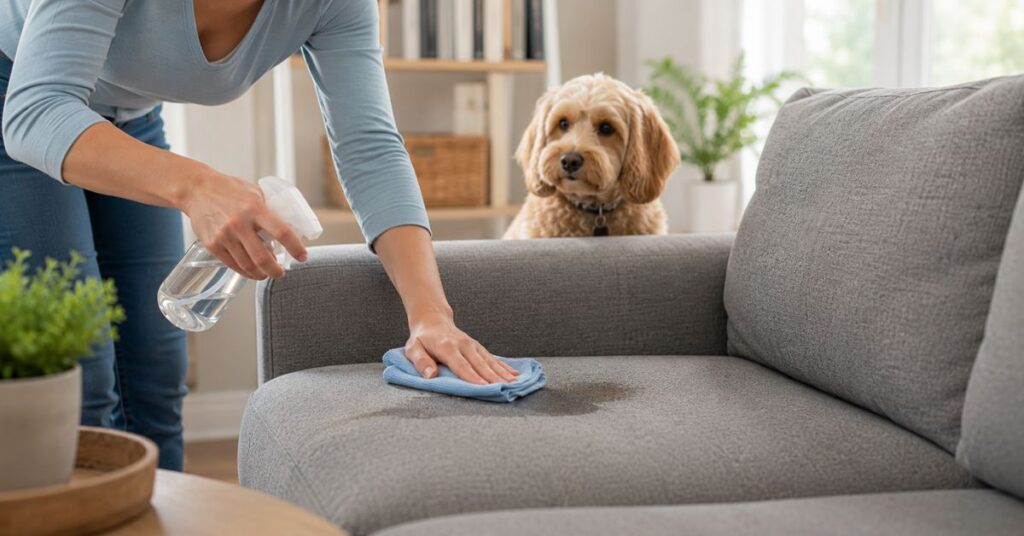
Pet accidents require both stain removal and odor control.
Cleaning Solution
Mix:
- 2 cups warm water
- 1 cup white vinegar
- 1 tablespoon mild dish soap
Blot the stain, apply the solution, then blot again.
Finish by sprinkling baking soda over the area once it’s slightly damp.
Allow it to dry before vacuuming.
Removing Odors Naturally
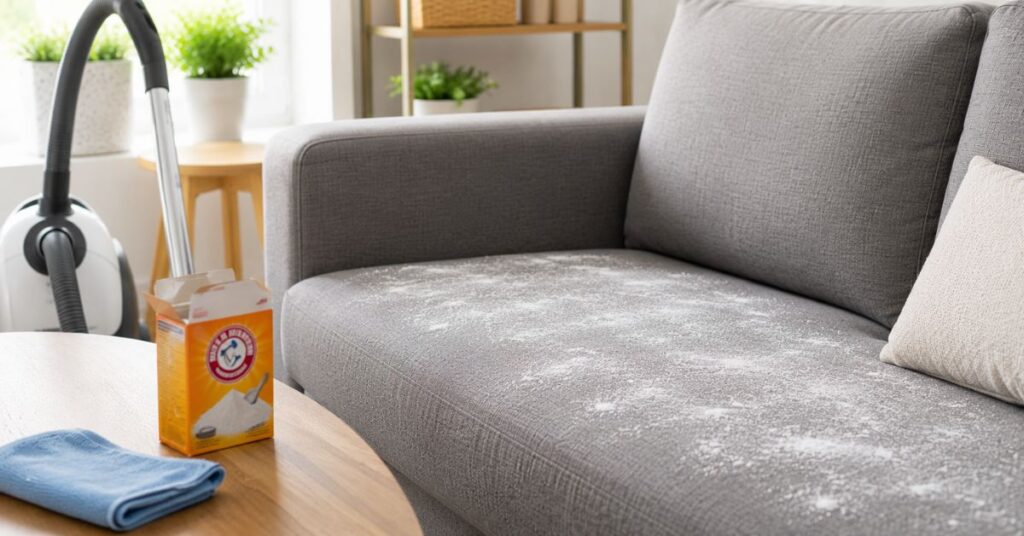
Even if your sofa looks clean, trapped odors can remain.
Common causes include:
- Pets
- Smoke
- Food
- Sweat
- Humidity
Fortunately, natural deodorizing methods work well.
Baking Soda Method
Baking soda absorbs odors without damaging most upholstery fabrics.
Steps
- Sprinkle a generous layer over the sofa.
- Leave it for at least one hour.
- For strong odors, leave it overnight.
- Vacuum thoroughly.
This method is excellent for removing pet and food smells.
White Vinegar Spray
Mix equal parts:
- White vinegar
- Water
Lightly mist the sofa.
Don’t saturate the fabric.
The vinegar smell disappears as it dries, taking many unwanted odors with it.
Steam Cleaning a Fabric Sofa
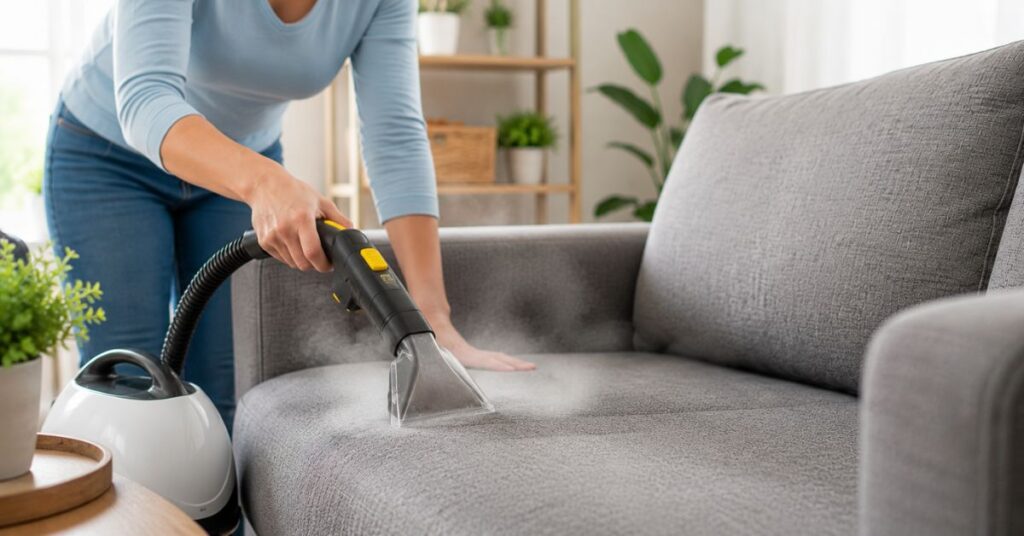
Steam cleaning removes deep dirt while using minimal chemicals.
However, not every sofa is suitable for steam cleaning.
Only use steam if the manufacturer’s label allows it.
Benefits of Steam Cleaning
- Kills many bacteria
- Removes allergens
- Breaks down oils
- Freshens upholstery
- Reduces odors
- Uses little detergent
How to Steam Clean
- Vacuum thoroughly.
- Fill the steam cleaner with clean water.
- Test a hidden area.
- Work slowly in overlapping passes.
- Avoid holding the steam in one place for too long.
- Allow the sofa to dry completely.
Cleaning Different Types of Fabric Sofas

Different upholstery materials require different cleaning methods.
Cotton Fabric
Cotton is soft but absorbs stains easily.
Best cleaning method:
- Mild soap
- Warm water
- Gentle blotting
Avoid soaking the fabric.
Linen Fabric
Linen wrinkles and shrinks more easily than many fabrics.
Use:
- Minimal moisture
- Gentle cloth
- Mild upholstery cleaner
Never scrub aggressively.
Polyester Fabric
Polyester is one of the easiest upholstery fabrics to clean.
It resists:
- Wrinkles
- Water
- Everyday stains
Use:
- Mild soap
- Water
- Microfiber cloth
Microfiber Sofa
Microfiber is durable and stain-resistant.
Depending on the cleaning code:
- Water-based cleaner (W)
- Solvent cleaner (S)
Use a soft brush after cleaning to restore the fabric texture.
Velvet Sofa
Velvet needs extra care.
Avoid soaking it.
Instead:
- Use a dry upholstery cleaner if recommended.
- Brush gently with a velvet brush after cleaning.
Chenille Sofa
Chenille has delicate fibers.
Clean carefully using:
- Low-moisture cleaning
- Gentle cloth
- Soft brush
Avoid excessive rubbing.
How Often Should You Clean Your Sofa?
Cleaning frequency depends on your household.
| Household Type | Vacuum | Deep Clean |
| Single adult | Weekly | Every 12 months |
| Family with children | Twice weekly | Every 6 months |
| Pet owners | 2–3 times weekly | Every 3–6 months |
| Allergy sufferers | Twice weekly | Every 6 months |
Can You Use a Carpet Cleaner on a Sofa?
Sometimes.
Only if:
- The manufacturer allows it.
- The machine includes an upholstery attachment.
- The cleaner is safe for fabric furniture.
Always test a hidden spot first.
Can You Use Laundry Detergent?
It is generally not recommended.
Laundry detergents often leave residue that attracts dirt and may discolor upholstery.
A mild dish soap or a dedicated upholstery cleaner is a safer choice.
When Should You Hire a Professional?
DIY cleaning works well for routine maintenance, but some situations call for expert help.
Consider professional cleaning if:
- The sofa has large, old stains.
- Water damage has occurred.
- Mold is present.
- The fabric is silk or another delicate material.
- The care tag is marked X.
- Strong odors remain after cleaning.
Professional cleaners use specialized equipment that can clean deeply while minimizing the risk of damage.
Deep Cleaning Checklist
Before moving on to drying and maintenance, confirm you’ve completed these tasks:
| Task | Done |
| Deep cleaned upholstery | ✔ |
| Removed stains | ✔ |
| Deodorized fabric | ✔ |
| Steam cleaned (if safe) | ✔ |
| Cleaned cushions | ✔ |
| Wiped away residue | ✔ |
| Removed excess moisture | ✔ |
Step 13: Let the Sofa Dry Completely
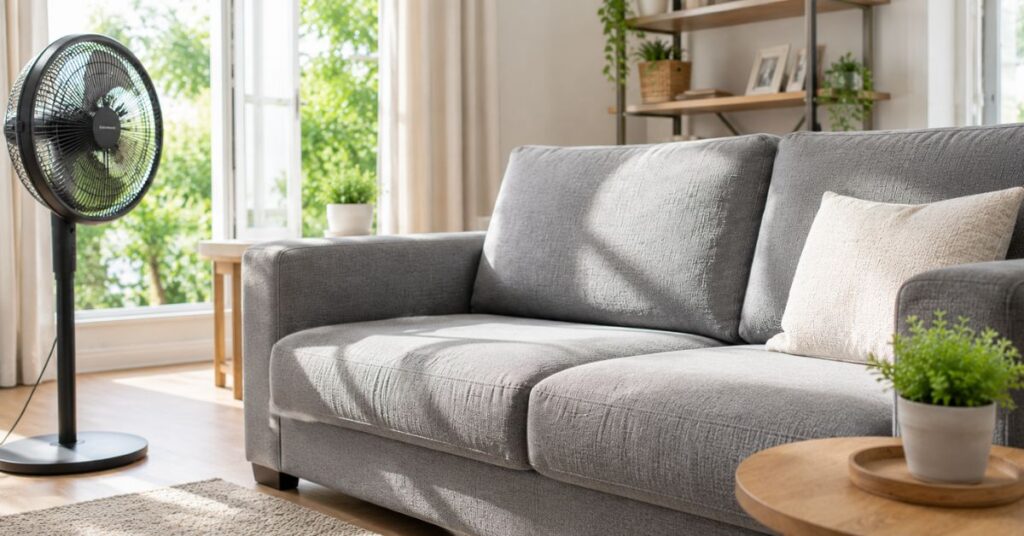
Proper drying is just as important as cleaning. Even if your sofa looks clean, trapped moisture inside the cushions can lead to mold, mildew, and unpleasant odors.
Best Drying Methods
- Open windows to improve airflow.
- Turn on ceiling or standing fans.
- Use a dehumidifier if the room is humid.
- Stand cushions upright so air can circulate on all sides.
- Rotate cushions halfway through the drying process.
Avoid sitting on the sofa until it’s completely dry.
Tip: Most fabric sofas take 4–12 hours to dry, depending on the fabric type, humidity, and how much moisture was used.
Step 14: Restore the Fabric Texture
Some fabrics may feel stiff or look flattened after cleaning.
To restore their appearance:
- Brush the upholstery gently with a soft-bristle brush.
- Brush in the direction of the fabric nap.
- Fluff and rotate removable cushions.
For microfiber sofas, use a dry soft brush to restore the original texture after the fabric has dried.
Step 15: Vacuum One More Time
Once the sofa is completely dry:
- Vacuum the entire surface.
- Remove any remaining baking soda residue.
- Pick up lint and loose fibers.
- Freshen the upholstery.
This final vacuum gives your sofa a professionally cleaned appearance.
How to Keep Your Fabric Sofa Clean Longer
Cleaning your sofa doesn’t have to become a monthly deep-cleaning project. A few simple habits can keep it looking fresh year-round.
Vacuum Weekly
Weekly vacuuming removes:
- Dust
- Pet hair
- Food crumbs
- Dirt
- Allergens
Regular vacuuming prevents dirt from becoming embedded in the fabric.
Rotate Cushions
Rotate and flip removable cushions every few weeks.
Benefits include:
- Even wear
- Better support
- Longer cushion life
- Improved appearance
Clean Spills Immediately
Fresh stains are much easier to remove than dried ones.
When a spill occurs:
- Blot immediately.
- Don’t rub.
- Use the correct cleaning method.
- Allow the area to dry completely.
Quick action prevents permanent staining.
Keep Pets Groomed
If you have pets:
- Brush them regularly.
- Wipe dirty paws before they jump onto furniture.
- Use washable furniture covers if needed.
This reduces hair, dirt, and odors on your sofa.
Avoid Eating on the Sofa
Food crumbs often fall into seams and cushions, attracting insects and causing unpleasant odors.
If you regularly eat in the living room, vacuum more frequently.
Use Armrest Covers
Armrests collect body oils, lotions, sweat, and dirt faster than other parts of the sofa.
Washable armrest covers help protect these high-contact areas.
Protect Your Sofa from Sunlight
Direct sunlight can fade upholstery over time.
To prevent fading:
- Close curtains during peak sunlight.
- Use blinds.
- Rearrange furniture if possible.
- Apply UV-filtering window film if necessary.
Cleaning Schedule for Fabric Sofas
| Task | Frequency |
| Remove crumbs | Daily |
| Vacuum upholstery | Once a week |
| Brush fabric | Every two weeks |
| Spot clean stains | Immediately |
| Deodorize with baking soda | Once a month |
| Deep clean | Every 6–12 months |
| Professional cleaning | Every 12–24 months |
Mistakes to Avoid
Many fabric sofas are damaged by incorrect cleaning methods rather than everyday use.
Avoid these common mistakes:
Using Too Much Water
Excess moisture can cause:
- Mold
- Mildew
- Water stains
- Cushion damage
Scrubbing Hard
Aggressive scrubbing may:
- Damage fibers
- Fade colors
- Distort fabric texture
Always blot or wipe gently.
Ignoring the Care Tag
The manufacturer’s cleaning code is there for a reason.
Using the wrong cleaner can permanently damage the upholstery.
Using Bleach
Bleach may discolor fabric and weaken the fibers.
Avoid it unless the manufacturer specifically recommends it.
Mixing Cleaning Products
Combining different household cleaners can create harmful fumes or damage fabrics.
Stick to one cleaning solution at a time.
Skipping the Patch Test
Always test a cleaner on a hidden area before treating the entire sofa.
This simple step can prevent expensive mistakes.
FAQs
Can I clean my fabric sofa with vinegar?
Yes. White vinegar mixed with water works well for removing light stains and neutralizing odors on many water-safe fabrics. Always test it on a hidden area first.
How often should I deep clean my sofa?
Most homes benefit from deep cleaning every 6 to 12 months. Homes with pets, children, or allergy sufferers may need more frequent cleaning.
Is baking soda safe for fabric sofas?
Yes. Baking soda is generally safe for most upholstery fabrics and is excellent for absorbing odors. Vacuum it thoroughly after use.
Can I use a steam cleaner on any fabric sofa?
No. Only use a steam cleaner if the care label indicates that steam or water-based cleaning is safe.
What’s the fastest way to dry a fabric sofa?
Increase airflow with fans, open windows, and a dehumidifier. Avoid using high heat from a hair dryer, as it may damage certain fabrics.
Can I remove old stains myself?
Many older stains can be lightened with proper stain-removal techniques, but deeply set stains may require professional upholstery cleaning.
Final Thoughts
Learning how to clean a fabric sofa at home is a valuable skill that can help you maintain a cleaner, healthier, and more inviting living space. With regular vacuuming, prompt stain removal, and occasional deep cleaning, you can extend the life of your sofa and keep it looking its best for years.
The key is to identify your sofa’s cleaning code, use the appropriate cleaning methods, and avoid excessive moisture or harsh chemicals. Consistent maintenance not only improves appearance but also helps reduce allergens, odors, and everyday wear.
By following the steps in this guide, you can confidently care for your fabric sofa without the cost of frequent professional cleaning.