
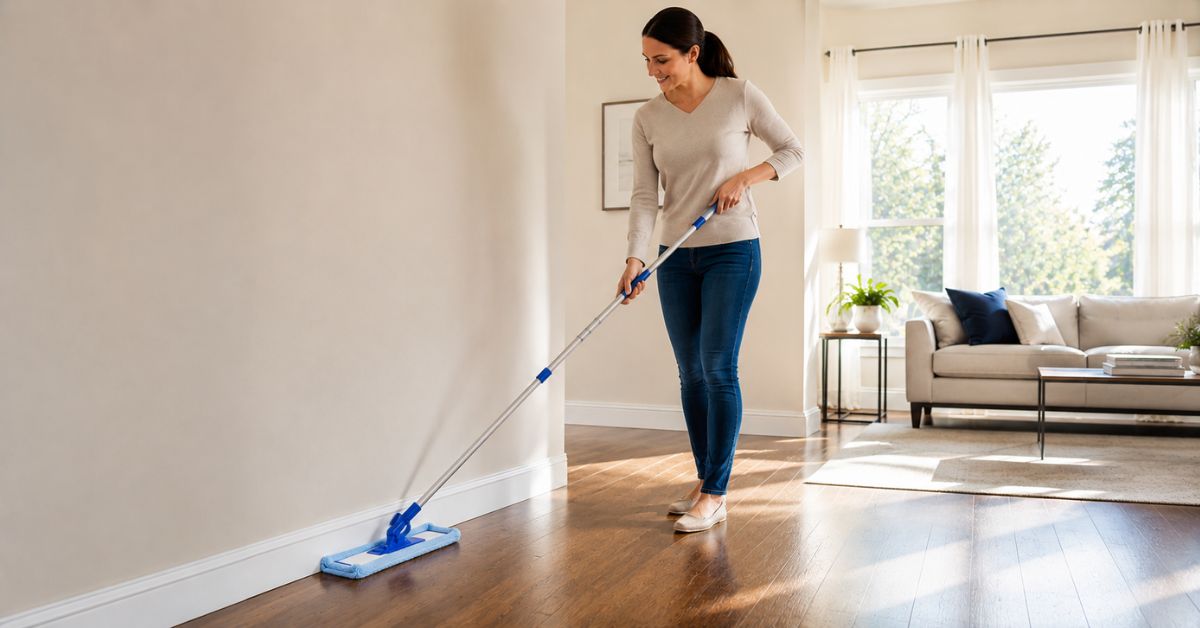
How to Clean Baseboards Without Bending. Cleaning baseboards is one of those household chores that many people put off because it often means kneeling, crouching, or bending for long periods. Unfortunately, baseboards collect dust, pet hair, dirt, and scuff marks faster than most people realize. Dirty baseboards can make an otherwise spotless room look neglected.
The good news is that you don’t have to strain your back every time you clean them. With the right tools and techniques, you can clean baseboards efficiently while standing comfortably.
In this guide, you’ll learn how to clean baseboards without bending using simple household tools, safe cleaning solutions, and professional cleaning tips that save both time and effort.
Quick Answer
The easiest way to clean baseboards without bending is to use a long-handled microfiber duster, flat mop, sponge mop, or an extendable cleaning tool. These tools allow you to remove dust and light dirt while standing upright. For stubborn stains, attach a damp microfiber cloth to a flat mop or use a long-handled scrub pad with a gentle cleaning solution.
Why Baseboards Get Dirty So Quickly
Baseboards sit close to the floor, making them a magnet for everyday debris. Dust naturally settles downward, while air circulation, foot traffic, and pets continually move dirt around your home.
Common causes include:
- Household dust
- Pet hair and dander
- Shoe scuffs
- Vacuum cleaner marks
- Cooking grease (especially in kitchens)
- Moisture and mildew in bathrooms
- Sticky fingerprints near doorways
Ignoring these areas for months allows dirt to build up, making cleaning much harder later.
Why You Should Clean Baseboards Regularly
Many homeowners focus on floors, countertops, and furniture while forgetting the trim around the room. Regular baseboard cleaning offers several benefits.
Keeps Your Home Looking Cleaner
Even freshly vacuumed floors can appear dirty when dusty baseboards frame the room.
Improves Indoor Air Quality
Dust trapped along baseboards can become airborne whenever someone walks through the room or turns on a fan. Removing this buildup helps reduce household dust.
Prevents Permanent Stains
The longer dirt, grease, and grime remain on painted trim, the more difficult they become to remove without damaging the finish.
Extends the Life of Painted Baseboards
Routine cleaning prevents grime from wearing away paint or protective finishes, reducing the need for repainting.
Makes Deep Cleaning Easier
When baseboards are maintained regularly, seasonal deep cleaning becomes much faster.
Best Tools to Clean Baseboards Without Bending
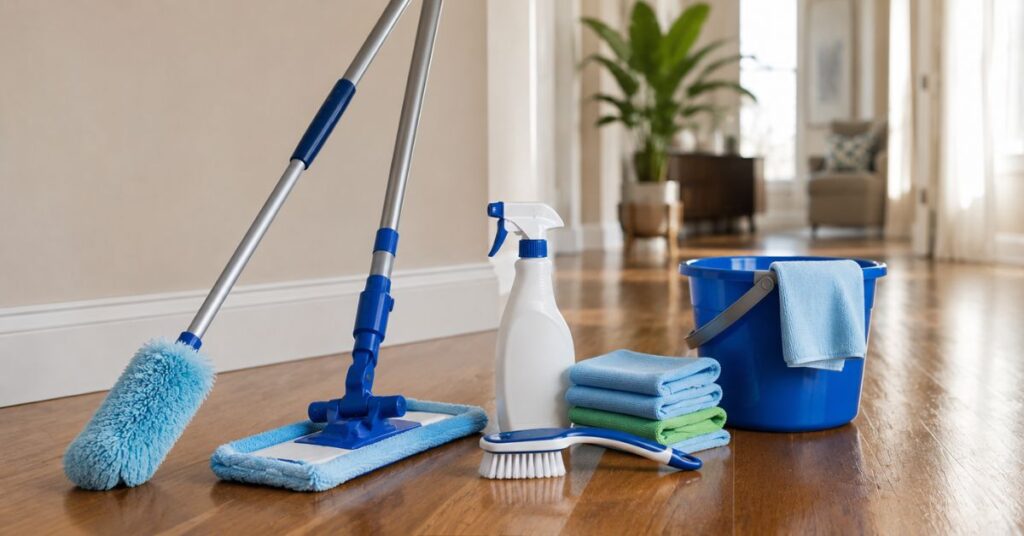
You don’t need expensive equipment. Most homeowners already own several tools that work perfectly.
| Tool | Best For |
| Long-handled microfiber duster | Weekly dust removal |
| Flat microfiber mop | Damp cleaning painted baseboards |
| Sponge mop | Cleaning textured trim |
| Extendable dusting wand | Corners and hard-to-reach areas |
| Spray bottle | Applying mild cleaning solution |
| Microfiber cloth | Gentle stain removal |
| Soft-bristle brush with long handle | Stubborn dirt in grooves |
Using microfiber tools is ideal because they trap dust instead of spreading it around the room.
Best Cleaning Solutions
The safest cleaner depends on your baseboard material. Painted wood, MDF, vinyl, and PVC all benefit from gentle products.
Recommended cleaning solutions include:
- Warm water
- A few drops of mild dish soap
- White vinegar diluted with water (only for sealed surfaces)
- Commercial multi-surface cleaner labeled safe for painted trim
- Magic eraser for light scuff marks (use gently and test first)
Avoid harsh chemicals such as bleach, ammonia, or abrasive powders, which may damage paint or finishes.
Method 1: Clean Baseboards with a Long-Handled Microfiber Duster
This is the fastest method for routine maintenance.
Step 1: Start in One Corner
Begin at one end of the room and work your way around to avoid missing sections.
Step 2: Dust the Top Edge
Run the microfiber duster along the top edge of each baseboard using light pressure.
Step 3: Clean the Front Surface
Move the duster down the face of the baseboard to capture loose dust, cobwebs, and pet hair.
Step 4: Finish the Corners
Use the flexible head of the duster to reach inside corners and behind furniture whenever possible.
This entire process usually takes less than ten minutes for an average-sized room.
Method 2: Use a Flat Microfiber Mop for Deeper Cleaning
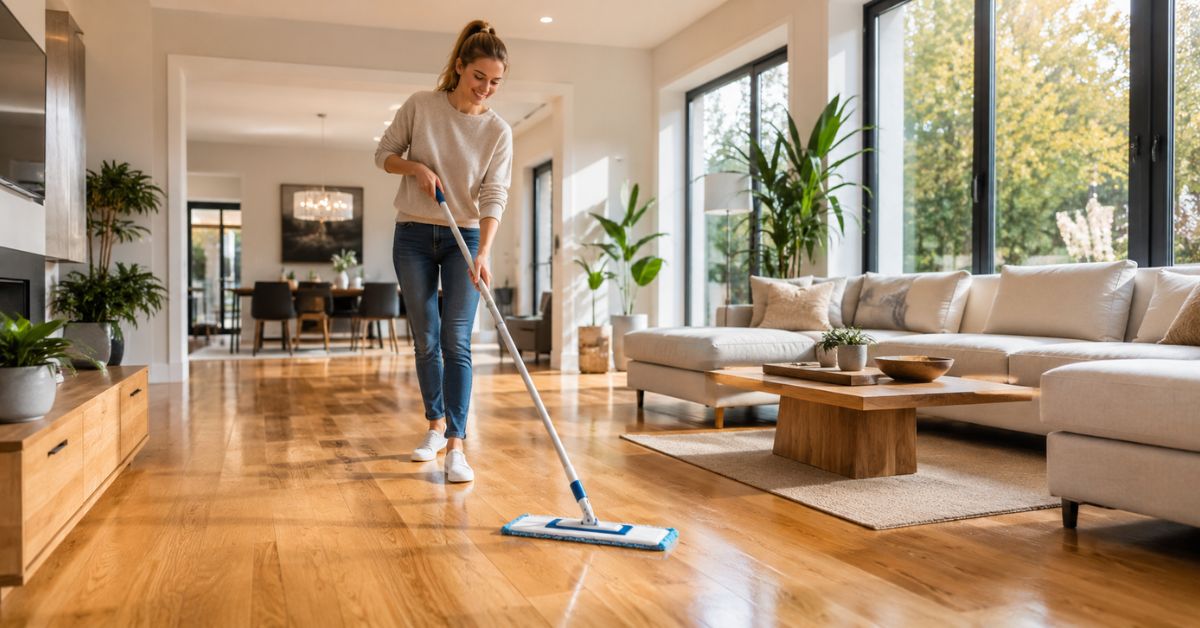
A flat mop works exceptionally well because its large cleaning pad covers more surface area while allowing you to remain standing.
Step 1: Prepare the Cleaning Solution
Fill a spray bottle with warm water and a few drops of mild dish soap.
Step 2: Lightly Spray the Mop Pad
Avoid soaking the pad. Excess water may damage painted wood or MDF baseboards.
Step 3: Wipe the Baseboards
Glide the mop slowly along the trim using gentle pressure. Let the microfiber lift away dust and grime.
Step 4: Dry if Needed
If any moisture remains, go over the area with a dry microfiber pad.
This method is ideal for monthly cleaning and removes fingerprints, light grease, and everyday dirt without requiring you to bend.
Step-by-Step Deep Cleaning Guide for Baseboards Without Bending
If your baseboards haven’t been cleaned in months, a quick dusting may not be enough. Dirt, grease, and scuff marks can build up over time, especially in high-traffic areas like hallways, kitchens, and entryways. The following deep-cleaning method helps restore your baseboards while allowing you to stay in a comfortable standing position.
Step 1: Remove Loose Dust First
Never wipe dirty baseboards with a wet cloth before dusting. Moisture mixes with dust and creates muddy streaks that are harder to remove.
Use one of these tools:
- Long-handled microfiber duster
- Extendable dusting wand
- Vacuum cleaner with a soft brush attachment and extension wand
Work around the room in one direction so you don’t miss any sections.
Step 2: Prepare a Gentle Cleaning Solution
Most painted baseboards only need a mild cleaner.
Mix:
- 1 quart (1 liter) warm water
- 2–3 drops of mild dish soap
For greasy kitchen baseboards, add a small splash of white vinegar if the surface is sealed. Avoid using vinegar on natural wood or unsealed finishes, as it can damage them over time.
Step 3: Attach a Damp Microfiber Cloth to a Flat Mop
Instead of kneeling, wrap a clean microfiber cloth around the head of a flat mop or use a microfiber mop pad.
Lightly dampen the cloth with your cleaning solution. It should be moist, not dripping wet.
Slowly wipe each section of the baseboard using gentle pressure. Move from one end of the room to the other to ensure even cleaning.
Step 4: Remove Scuff Marks
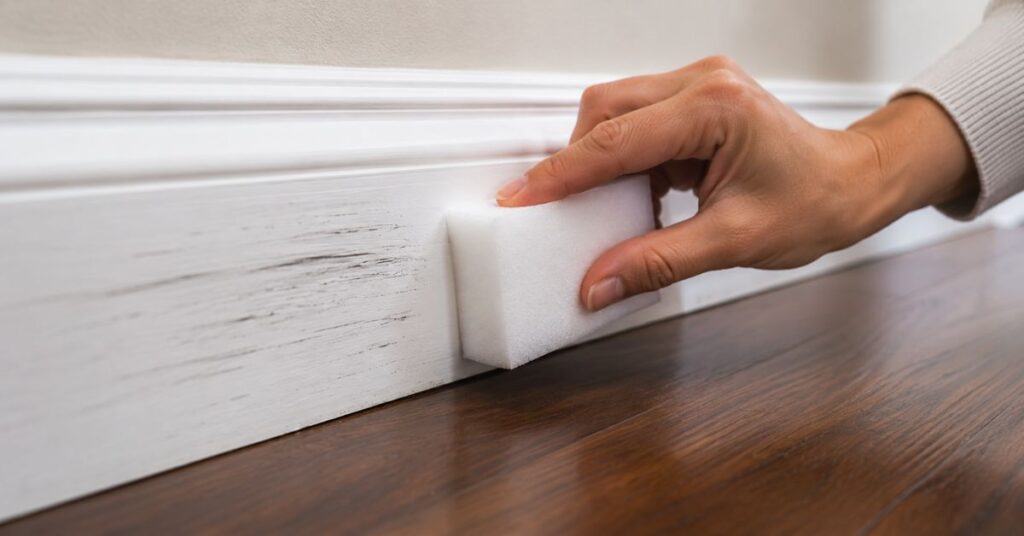
Black shoe marks and vacuum scuffs are common on white baseboards.
Try these methods:
- Rub gently with a damp microfiber cloth.
- Use a melamine foam sponge (magic eraser) with very light pressure.
- Wipe the area dry immediately after cleaning.
Always test the sponge on an inconspicuous spot first, as excessive rubbing can dull or remove paint.
Step 5: Clean Corners and Decorative Trim
Detailed molding often collects extra dust.
Use:
- A long-handled soft-bristle brush
- An old soft toothbrush attached to an extension tool if available
- A microfiber detailing cloth
Work gently into grooves without scrubbing aggressively.
Step 6: Dry the Baseboards
Although only a small amount of water should be used, it’s still a good idea to dry painted baseboards with a clean microfiber cloth or dry mop pad.
This helps prevent water spots and protects painted surfaces.
How to Clean Different Types of Baseboards
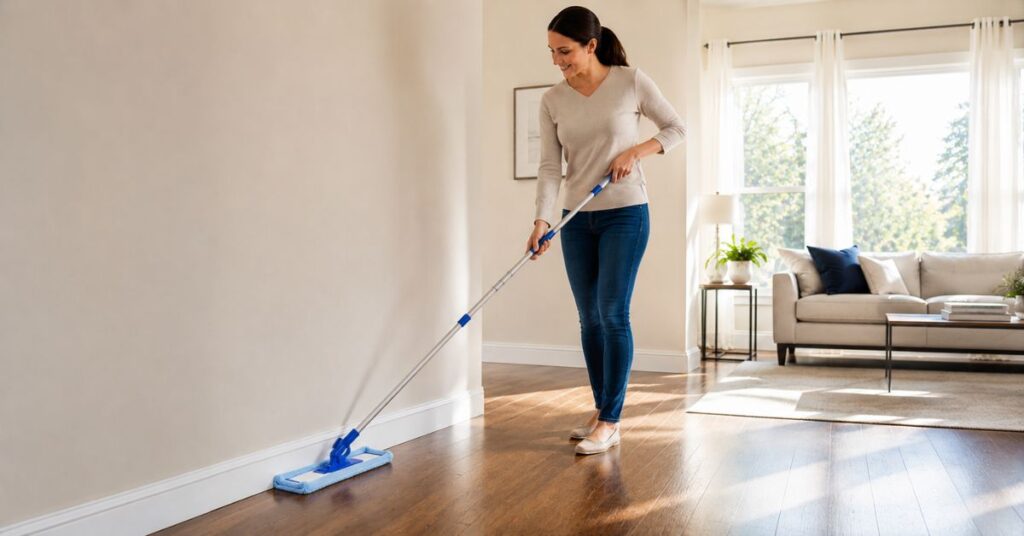
Not every baseboard should be cleaned the same way. Knowing the material helps prevent accidental damage.
Painted Wood Baseboards
Painted wood is common in many homes.
Best cleaner:
- Warm water
- Mild dish soap
- Microfiber cloth
Avoid soaking the wood, as excessive moisture can cause swelling or peeling paint.
MDF Baseboards
Medium-density fiberboard (MDF) is affordable but sensitive to water.
Use:
- Barely damp microfiber cloth
- Dry immediately after wiping
Never allow water to seep into joints or damaged paint.
Vinyl Baseboards
Vinyl is moisture resistant and easy to clean.
Safe options include:
- Mild soap
- Water
- Multi-surface cleaner
Avoid abrasive scrubbers that may scratch the finish.
PVC Baseboards
PVC trim is durable and ideal for bathrooms or basements.
Clean with:
- Warm water
- Dish soap
- Soft microfiber cloth
PVC handles moisture well but should still be dried for the best appearance.
Natural Wood Baseboards
Natural wood requires extra care to protect its finish.
Use:
- Wood-safe cleaner
- Slightly damp microfiber cloth
Never use vinegar, bleach, or abrasive cleaners on natural wood.
Common Mistakes to Avoid
Many homeowners accidentally damage their baseboards by using the wrong cleaning methods.
Avoid these mistakes:
Using Too Much Water
Excess moisture can cause painted wood and MDF to swell, warp, or peel.
Scrubbing Too Hard
Aggressive scrubbing may remove paint or leave dull spots.
Using Harsh Chemicals
Avoid bleach, ammonia, acetone, or strong solvents unless recommended by the manufacturer.
Skipping Regular Dusting
Dust buildup turns into sticky grime over time, making future cleaning much harder.
Forgetting to Dry Painted Trim
Leaving moisture behind may damage paint or leave streaks.
Expert Tips for Faster Cleaning
Professional cleaners use simple tricks to make baseboard cleaning easier.
- Dust baseboards every week with a microfiber duster.
- Deep clean once every one to two months.
- Vacuum floors before cleaning baseboards.
- Clean one room at a time instead of the whole house.
- Replace dirty microfiber pads as they become soiled.
- Use washable microfiber pads to save money.
- Move lightweight furniture only when necessary.
- Clean baseboards during your regular floor-cleaning routine.
How to Clean Baseboards Without Bending?
The ideal cleaning schedule depends on your home and lifestyle.
| Area | Recommended Cleaning Frequency |
| Bedrooms | Every 4–6 weeks |
| Living Room | Every 3–4 weeks |
| Hallways | Every 2–3 weeks |
| Kitchen | Every 2 weeks |
| Bathroom | Every 2–3 weeks |
| Homes with Pets | Weekly dusting and monthly deep cleaning |
| Allergy-Prone Homes | Weekly |
Regular maintenance prevents heavy buildup and reduces the time needed for deep cleaning.
Final Expert Tips
Want to make baseboard cleaning even easier? These professional housekeeping tips will help you save time while keeping your trim looking spotless year-round.
- Dust baseboards before vacuuming or mopping your floors.
- Use microfiber instead of paper towels because it traps dust rather than spreading it.
- Clean one room at a time to avoid missing sections.
- Wipe up spills and scuff marks as soon as you notice them.
- Place entry mats at exterior doors to reduce dirt tracked into your home.
- Trim your pets’ nails to help prevent scratches on painted baseboards.
- Use furniture pads on chairs and tables to minimize scuff marks.
- Inspect baseboards during your monthly cleaning routine for chipped paint or signs of moisture damage.
- Keep a long-handled microfiber duster in your cleaning closet for quick weekly touch-ups.
Baseboard Cleaning Checklist
Use this simple checklist every time you clean your baseboards.
Weekly
- Dust baseboards with a long-handled microfiber duster.
- Remove pet hair and cobwebs.
- Check for new scuff marks.
Monthly
- Wipe baseboards with a damp microfiber mop.
- Remove fingerprints and light stains.
- Clean corners and decorative molding.
- Dry the trim with a clean microfiber cloth.
Every 3–6 Months
- Perform a deep cleaning.
- Touch up chipped paint if needed.
- Inspect for mold, mildew, or water damage.
- Check caulk lines for cracks.
Conclusion
Learning how to clean baseboards without bending can make one of the most overlooked household chores faster, easier, and far more comfortable. By using long-handled microfiber dusters, flat mops, and gentle cleaning solutions, you can remove dust, pet hair, grease, and scuff marks while protecting your back and knees.
Regular maintenance is the key to keeping baseboards looking freshly painted. A few minutes of weekly dusting and a monthly deep clean can prevent stubborn grime from building up, improve the overall appearance of your home, and even help reduce indoor dust.
With the simple methods shared in this guide, you’ll spend less time cleaning and enjoy cleaner, brighter rooms with far less effort.
FAQs
What is the easiest way to clean baseboards without bending?
The easiest method is to use a long-handled microfiber duster or a flat microfiber mop. These tools let you clean while standing, reducing strain on your back and knees.
How to Clean Baseboards Without Bending?
Dust baseboards weekly and deep clean them every one to two months. Homes with pets, children, or allergies may benefit from more frequent cleaning.
Can I use a Swiffer to clean baseboards?
Yes. A Swiffer or similar flat microfiber mop works well for removing dust and light dirt from painted, vinyl, and PVC baseboards.
What cleaner is safe for painted baseboards?
Warm water mixed with a few drops of mild dish soap is one of the safest and most effective cleaning solutions for painted baseboards.
Can vinegar damage baseboards?
Diluted vinegar is generally safe for sealed painted or vinyl baseboards but should not be used on unfinished or natural wood because it may damage the finish over time.
What’s the fastest way to remove scuff marks?
A damp microfiber cloth usually removes light scuffs. For stubborn marks, gently use a melamine foam sponge (magic eraser) after testing it on a hidden area first.










Leave a Reply