
How to Clean a Microwave Naturally
A microwave is one of the most frequently used appliances in any kitchen. From reheating leftovers and melting butter to preparing quick snacks, it handles countless daily tasks. However, with regular use, food splatters, grease, sauce stains, and unpleasant odors can quickly build up inside the appliance. If these messes are ignored, they can become difficult to remove and may even affect the taste and smell of your food.
Many people reach for harsh chemical cleaners to tackle stubborn microwave stains, but these products often contain strong ingredients that leave behind unpleasant fumes or residues. Since your microwave comes into direct contact with food, using natural cleaning methods is a safer and healthier choice.
The good news is that you don’t need expensive cleaning products to restore your microwave. Simple household ingredients like lemon, white vinegar, baking soda, and warm water can effectively loosen grease, remove stains, eliminate odors, and leave your microwave sparkling clean, all without harmful chemicals.
In this comprehensive guide, you’ll learn exactly how to clean a microwave naturally using proven methods that are safe, affordable, and environmentally friendly. Whether you’re dealing with burnt food, stubborn grease, or lingering smells, these step-by-step techniques will help you clean your microwave with confidence.
Why You Should Clean Your Microwave Regularly
Cleaning your microwave isn’t just about appearance. A dirty microwave can affect hygiene, performance, and even food quality.
Regular cleaning helps you:
- Prevent bacteria from growing on food residue.
- Remove unpleasant cooking odors.
- Avoid smoke caused by burnt food particles.
- Improve microwave efficiency.
- Extend the lifespan of your appliance.
- Keep your kitchen looking clean and fresh.
Even if your microwave doesn’t look dirty, invisible grease and food particles can build up over time. A quick natural cleaning every week can prevent deep stains and make future cleaning much easier.
Benefits of Cleaning Your Microwave Naturally
Natural cleaning methods offer several advantages over commercial chemical cleaners.
Safe Around Food
Since microwaves heat food directly, using food-safe ingredients like lemon and vinegar reduces the risk of chemical residue coming into contact with meals.
Eco-Friendly
Natural ingredients are biodegradable and produce less environmental waste than many commercial cleaning sprays.
Budget-Friendly
Most homeowners already have lemon, vinegar, baking soda, or dish soap in their kitchen, making natural cleaning an inexpensive option.
No Strong Chemical Smell
Unlike many store-bought cleaners, natural ingredients leave behind a fresh, clean scent instead of overpowering chemical odors.
Gentle on Microwave Surfaces
Natural cleaners effectively dissolve grease without damaging the microwave’s interior coating when used correctly.
What You’ll Need
Before you begin, gather a few simple household supplies.
Ingredients
- White vinegar
- Fresh lemon
- Baking soda
- Warm water
- Mild dish soap (optional)
Cleaning Tools
- Microwave-safe bowl
- Microfiber cloth
- Soft sponge
- Soft toothbrush (for corners)
- Paper towels
- Spray bottle (optional)
Avoid using steel wool, abrasive scrubbers, or harsh scouring powders, as they can scratch the microwave’s interior.
Before You Start Cleaning
Follow these simple safety tips before cleaning:
- Unplug the microwave if you’re cleaning the exterior thoroughly.
- Remove the glass turntable and roller ring.
- Never spray cleaning solution directly into the microwave vents.
- Use only microwave-safe bowls for steam cleaning.
- Allow hot steam to cool slightly before opening the microwave door.
These precautions help ensure both your safety and the longevity of your appliance.
The Best Way to Clean a Microwave Naturally
Steam cleaning is one of the easiest and most effective natural methods because it softens dried food residue without heavy scrubbing.
The basic process is simple:
- Fill a microwave-safe bowl with water.
- Add a natural cleaning ingredient such as lemon or vinegar.
- Microwave the mixture until steam forms.
- Let the steam sit for several minutes.
- Wipe away loosened grease and stains.
Let’s look at the most effective methods in detail.
If you enjoy natural cleaning methods, don’t miss our guide on 20 Unexpected Uses of Toothpaste at Home.
Method 1: How to Clean a Microwave Naturally
with Lemon
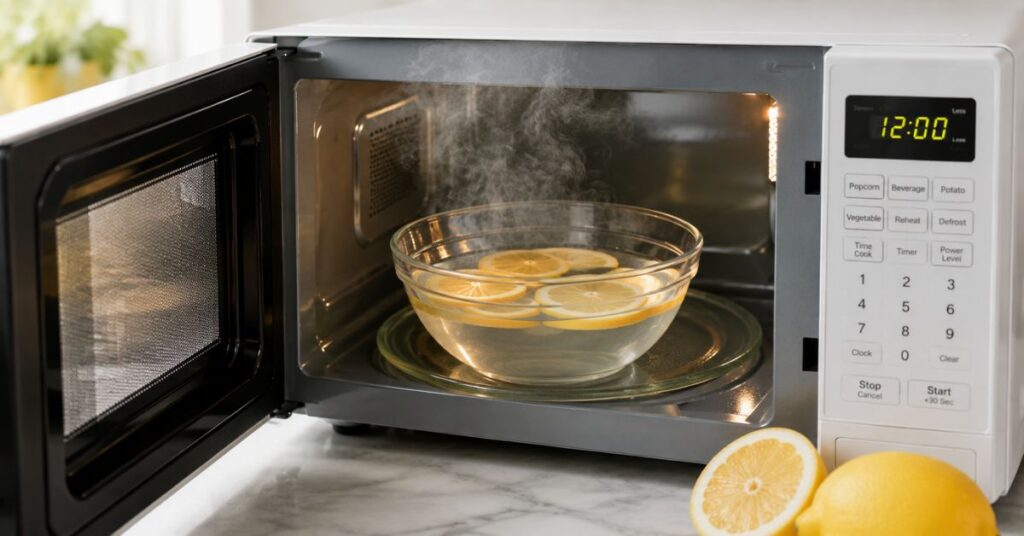
Lemon is one of the best natural microwave cleaners because its citric acid helps break down grease while leaving behind a pleasant fresh scent.
Why Lemon Works
The natural acids found in lemons dissolve grease, loosen food residue, and neutralize odors without using harsh chemicals.
You’ll Need
- 1 fresh lemon
- 1 cup water
- Microwave-safe bowl
- Microfiber cloth
Step-by-Step Instructions
Step 1
Cut one lemon in half.
Squeeze both halves into a microwave-safe bowl filled with one cup of water.
Place the lemon halves into the bowl as well.
Step 2
Put the bowl inside the microwave.
Heat on High for 3–5 minutes, or until the water begins to boil and steam fills the microwave.
Step 3
Once the timer ends, do not open the microwave immediately.
Allow the steam to remain inside for another 5 minutes.
This softens dried food splatters and grease, making them much easier to wipe away.
Step 4
Carefully remove the hot bowl using oven mitts or a thick kitchen towel.
Step 5
Use a damp microfiber cloth to wipe the ceiling, walls, door, and floor of the microwave.
Most stains should come off effortlessly.
Step 6
If you notice stubborn spots, dip the cloth into the warm lemon water and gently rub the affected area.
Expert Tip
For microwaves with heavy grease buildup, sprinkle a small amount of baking soda onto your damp cloth after steam cleaning. The combination of steam and mild abrasion can help lift tougher stains without damaging the interior surface.
You may also like our Easy Homemade Garlic Butter Recipe for a quick and delicious kitchen staple.
Method 2: How to Clean a Microwave Naturally with White Vinegar
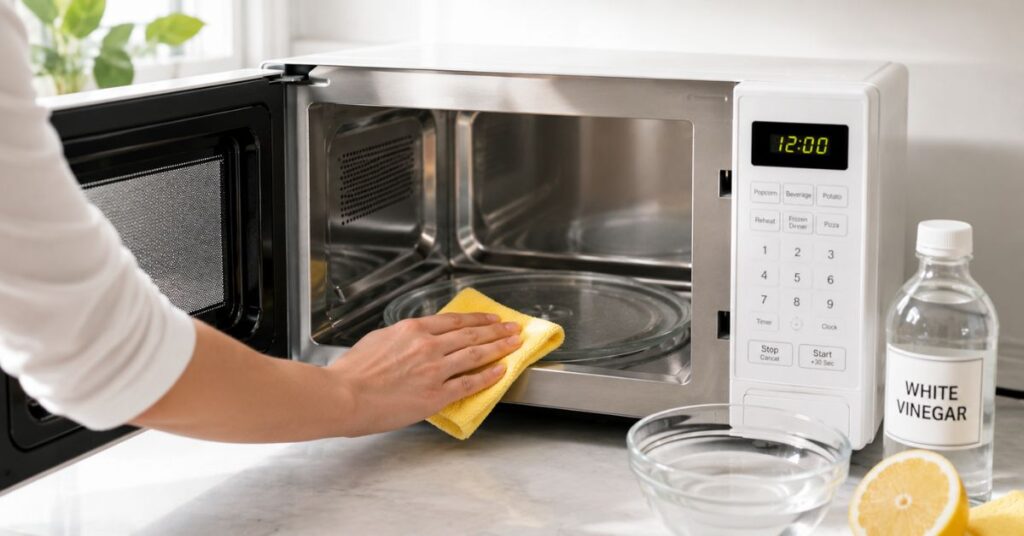
White vinegar is one of the most effective natural cleaners because its mild acidity breaks down grease, softens dried food splatters, removes stains, and neutralizes unpleasant odors. It’s especially useful if your microwave hasn’t been cleaned in a while.
Why Vinegar Works
White vinegar contains acetic acid, which naturally dissolves grease and loosens stubborn food residue without damaging your microwave’s interior.
You’ll Need
- 1 cup water
- 2 tablespoons white vinegar
- Microwave-safe bowl
- Microfiber cloth
Step-by-Step Instructions
Step 1
Pour one cup of water into a microwave-safe bowl.
Add two tablespoons of white vinegar and stir gently.
Step 2
Place the bowl inside the microwave.
Heat on High for 4–5 minutes until the mixture begins producing steam.
Step 3
Leave the microwave door closed for another 5–10 minutes after heating.
The steam will soften dried grease and baked-on food particles.
Step 4
Carefully remove the bowl.
Wipe every surface using a clean microfiber cloth.
Step 5
If stubborn stains remain, dip your cloth into the warm vinegar solution and gently scrub until clean.
Pro Tip
Don’t worry if you notice a slight vinegar smell during cleaning. It disappears quickly after wiping the microwave and leaving the door open for a few minutes.
Method 3: How to Clean a Microwave Naturally
with Baking Soda
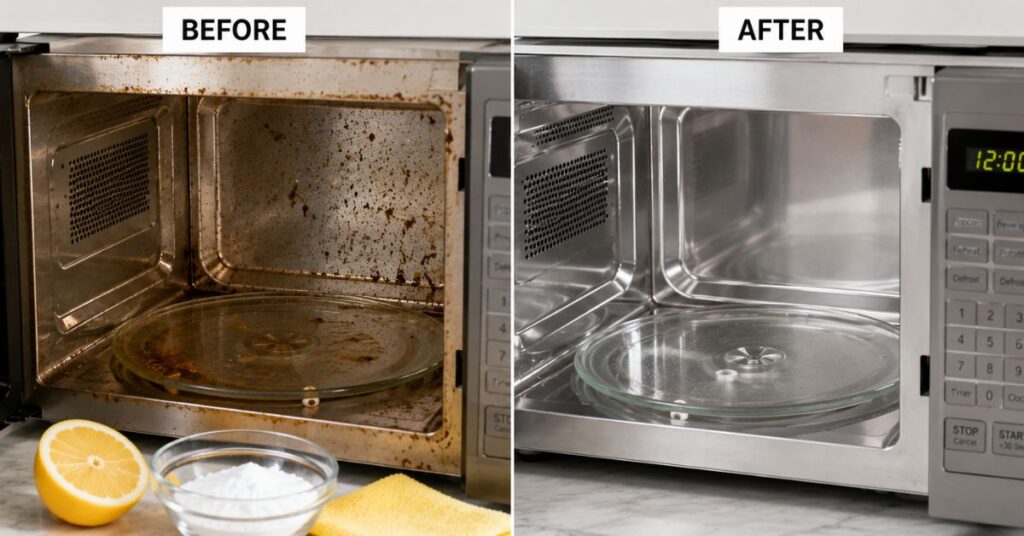
Baking soda is perfect for removing stubborn stains, burnt food residue, and greasy spots without scratching delicate surfaces.
Why Baking Soda Works
Baking soda is a mild abrasive that lifts stains while neutralizing unpleasant odors. Unlike harsh scrubbing powders, it cleans safely without damaging the microwave’s finish.
You’ll Need
- 2 tablespoons baking soda
- Warm water
- Small bowl
- Soft sponge
Step-by-Step Instructions
Step 1
Mix baking soda with a small amount of warm water until it forms a thick paste.
Step 2
Apply the paste directly onto stubborn stains and greasy areas.
Step 3
Allow it to sit for 10–15 minutes.
Step 4
Using a damp sponge, gently scrub the stained area.
Step 5
Wipe away any remaining baking soda with a clean damp cloth.
Best For
- Burnt food stains
- Yellow discoloration
- Dried sauces
- Greasy corners
- Sticky spills
Method 4: Steam Clean Your Microwave with Dish Soap
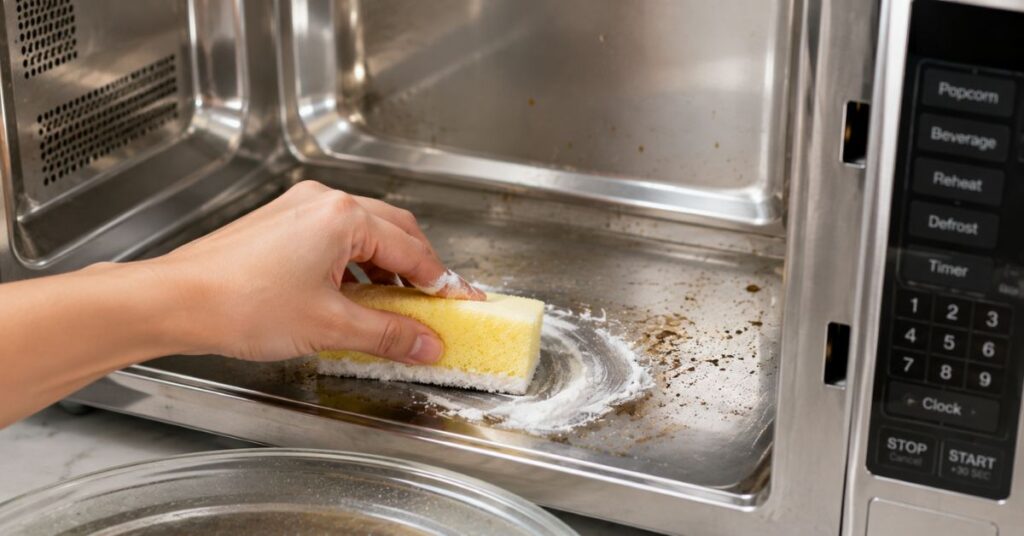
If your microwave mainly has grease instead of burnt stains, a small amount of dish soap can help dissolve oily residue.
You’ll Need
- 2 cups warm water
- A few drops of mild dish soap
- Microwave-safe bowl
Instructions
- Mix warm water with a few drops of dish soap.
- Microwave for about 3 minutes.
- Let the steam remain inside for another 5 minutes.
- Wipe all surfaces clean.
This method works especially well after cooking bacon, butter, cheese, or oily leftovers.
Method 5: Freshen Your Microwave with Essential Oils
After cleaning, you can naturally freshen your microwave using essential oils.
Recommended Oils
- Lemon
- Orange
- Lavender
- Tea Tree
- Peppermint
Add only 2–3 drops to warm water.
Heat for two minutes, then wipe the interior for a fresh, pleasant scent.
How to Remove Burnt Food from a Microwave Naturally
Burnt food is one of the hardest messes to clean because it sticks tightly to the microwave walls.
Fortunately, you don’t need harsh chemicals.
Step 1
Steam the microwave using either the lemon or vinegar method.
Step 2
Allow the steam to soften the burnt residue for at least 10 minutes.
Step 3
Apply baking soda paste directly to the burnt spots.
Step 4
Let it sit for another 15 minutes.
Step 5
Use a soft sponge or microfiber cloth to gently scrub.
Avoid metal scrubbers, as they may permanently scratch the interior coating.
How to Remove Grease from Inside the Microwave
Grease often builds up on:
- Ceiling
- Side walls
- Around the vents
- Door edges
Easy Natural Grease Removal
Mix:
- 1 cup warm water
- 2 tablespoons white vinegar
- 1 teaspoon dish soap
Dip a microfiber cloth into the solution and wipe greasy areas.
For heavy buildup, let the solution sit for a few minutes before wiping.
How to Remove Bad Odors Naturally
Microwaves often trap odors from foods like:
- Fish
- Garlic
- Curry
- Popcorn
- Cheese
- Burnt leftovers
Natural deodorizers work surprisingly well.
Option 1: Lemon
Steam sliced lemons in water for five minutes.
Option 2: Baking Soda
Leave an open bowl of baking soda inside the unplugged microwave overnight.
It naturally absorbs odors.
Option 3: Coffee Grounds
Place dry coffee grounds in a small bowl overnight.
Coffee effectively neutralizes lingering smells.
Option 4: Activated Charcoal
Activated charcoal is excellent for removing persistent odors without adding fragrance.
Deep Cleaning the Microwave Turntable
The glass turntable collects grease, spills, and food residue every day.
Cleaning Steps
- Remove the glass plate.
- Wash it with warm, soapy water.
- Use baking soda paste for stubborn stains.
- Rinse thoroughly.
- Dry completely before replacing it.
If your turntable is dishwasher-safe, you can also wash it in the dishwasher.
Cleaning the Roller Ring
Don’t forget the roller ring underneath the turntable.
Food crumbs often collect around the wheels.
Wash it in warm, soapy water.
Use an old toothbrush to clean around the rollers before reinstalling it.
Expert Cleaning Tip
Instead of waiting until your microwave looks dirty, wipe away fresh splatters immediately after cooking. Fresh spills come off in seconds, while dried food can require much more effort to remove later.
How to Clean the Microwave Door Naturally
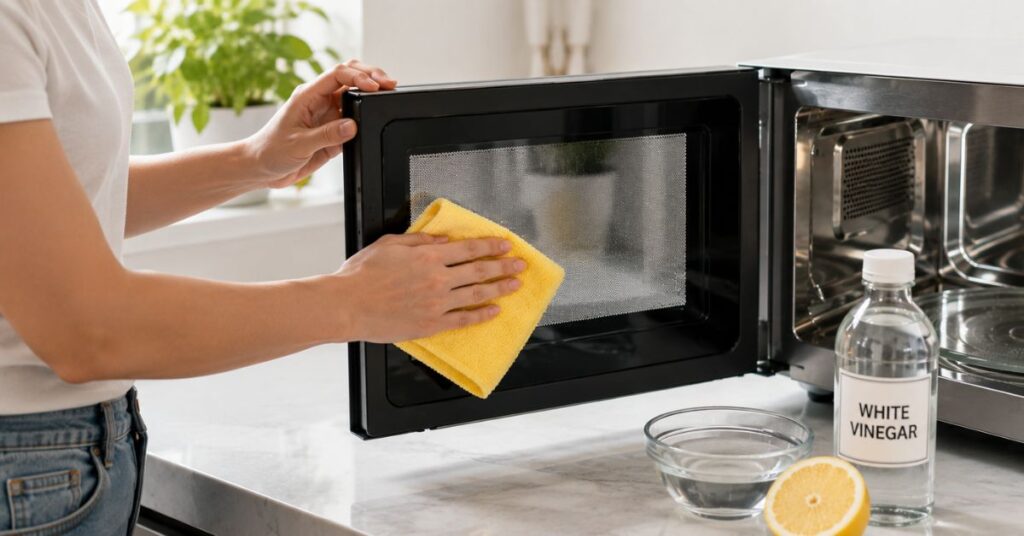
The microwave door is touched multiple times every day, making it one of the dirtiest parts of the appliance. Food splatters, fingerprints, grease, and dust can quickly accumulate on both the inside and outside of the door. Keeping it clean not only improves hygiene but also helps you clearly see your food while it’s cooking.
Cleaning the Inside of the Door
You’ll Need
- Warm water
- White vinegar
- Microfiber cloth
- Soft sponge
Instructions
- Mix equal parts warm water and white vinegar in a bowl.
- Dip a microfiber cloth into the solution and wring out the excess liquid.
- Wipe the entire inside of the door, paying special attention to greasy areas.
- For dried food residue, place the damp cloth over the stain for two to three minutes before wiping.
- Dry the door with a clean towel.
Cleaning the Outside of the Door
The exterior door collects fingerprints, cooking grease, and dust.
Steps
- Spray the vinegar solution onto your cloth (never directly onto the microwave).
- Wipe the entire front surface.
- Polish with a dry microfiber cloth for a streak-free shine.
Don’t Forget the Door Seal
The rubber seal around the microwave door helps keep heat inside during operation.
Food crumbs often hide in this area.
Use a damp cloth or a soft toothbrush to gently clean around the seal without pulling or damaging it.
How to Clean Microwave Vents Safely
Microwave vents remove excess heat and moisture during cooking. Over time, grease and dust can clog them.
Instructions
- Unplug the microwave.
- Use a dry microfiber cloth to remove loose dust.
- Wipe the vent gently with a cloth dampened in warm, soapy water.
- Dry thoroughly before plugging the microwave back in.
Important: Never pour water directly into the vents or use excessive moisture.
How to Clean the Microwave Control Panel
The control panel is touched constantly and often becomes sticky from cooking oils and fingerprints.
Steps
- Turn off or unplug the microwave.
- Dampen a microfiber cloth with warm water.
- Add one drop of mild dish soap if needed.
- Wipe the buttons gently.
- Dry immediately with a clean cloth.
Avoid using abrasive cleaners or spraying liquid directly onto the control panel, as moisture can damage the electronics.
How to Clean the Microwave Exterior
The outside of your microwave deserves regular cleaning too, especially if it’s located near the stove where grease can settle.
Stainless Steel Microwaves
Mix:
- 1 cup warm water
- 1 tablespoon white vinegar
Wipe in the direction of the stainless steel grain to prevent streaks.
For extra shine, buff with a dry microfiber cloth.
Painted or Plastic Microwaves
Use warm water with a few drops of mild dish soap.
Avoid harsh scrubbing pads that may scratch the finish.
How to Remove Stubborn Microwave Stains
Some stains require a little extra attention.
Method 1: Baking Soda Paste
Apply baking soda paste to the stain.
Leave it for 15 minutes.
Wipe clean with a damp cloth.
Method 2: Lemon Steam
Steam fresh lemon slices for five minutes.
The steam softens dried stains, making them easy to wipe away.
Method 3: Vinegar Soak
Dip a cloth in a warm vinegar solution.
Place it directly over stubborn stains for several minutes before wiping.
Common Microwave Cleaning Mistakes
Avoid these mistakes to keep your microwave in excellent condition.
1. Using Bleach
Bleach contains strong chemicals that are unnecessary for microwave cleaning and can leave behind harmful residues.
2. Using Steel Wool
Steel wool can scratch the interior coating permanently.
Always use a soft sponge or microfiber cloth.
3. Spraying Cleaner Directly Inside
Never spray liquid directly into vents, control panels, or electrical components.
Always spray onto a cloth first.
4. Ignoring Food Spills
Fresh spills are easy to remove.
Old spills become stubborn stains that require much more effort.
5. Forgetting the Turntable
Many people clean only the inside walls while forgetting the removable glass plate.
Wash it regularly for the best hygiene.
6. Not Cleaning the Door Seal
A dirty door seal can trap food particles and unpleasant odors.
Clean it weekly.
7. Using Abrasive Scrubbers
Harsh scrubbing tools can damage painted surfaces and protective coatings.
Choose soft cloths instead.
Weekly Microwave Cleaning Routine
A simple weekly routine prevents heavy grease buildup.
Every Day
- Wipe fresh spills immediately.
- Leave the microwave door open for a minute after cooking to reduce moisture.
Every Week
- Steam clean with lemon or vinegar.
- Wash the glass turntable.
- Wipe the exterior.
- Clean the control panel.
Every Month
- Deep clean the entire microwave.
- Clean vents.
- Inspect the door seal.
- Remove stubborn stains.
- Deodorize with baking soda.
Expert Tips for Keeping Your Microwave Clean Longer
Professional cleaners recommend these simple habits:
- Always cover food with a microwave-safe lid to prevent splatters.
- Use microwave-safe containers only.
- Avoid overheating sauces, soups, and greasy foods.
- Clean spills while they’re still warm.
- Steam clean once a week, even if the microwave looks clean.
- Replace cracked microwave-safe containers that may leak food.
Following these habits can significantly reduce cleaning time and keep your microwave looking new.
Microwave Cleaning Safety Tips
Although natural cleaning methods are generally safe, following a few precautions will help protect both you and your appliance.
Always Use Microwave-Safe Containers
Never heat metal bowls or containers with metallic trim. Always use microwave-safe glass or ceramic bowls when steaming lemon, vinegar, or water.
Handle Hot Bowls Carefully
After steaming, the bowl and water will be extremely hot. Use oven mitts or a thick kitchen towel to remove it safely.
Never Mix Vinegar with Bleach
While vinegar is an excellent natural cleaner, it should never be mixed with bleach or other chemical cleaners, as this can produce harmful fumes.
Avoid Excess Water Around Electronics
Keep moisture away from the control panel, vents, and electrical components. Always apply cleaning solution to a cloth rather than spraying it directly onto the microwave.
Let the Microwave Cool Before Deep Cleaning
If you’ve just finished cooking, allow the appliance to cool for a few minutes before starting a thorough cleaning session.
FAQs
1. What is the best natural way to clean a microwave?
The easiest and most effective method is to steam a bowl of water mixed with fresh lemon or white vinegar for 3–5 minutes. The steam loosens grease and food residue, making it easy to wipe the interior clean.
2. Can I clean a microwave with only vinegar?
Yes. White vinegar is one of the safest and most effective natural cleaners. It removes grease, softens dried food, and helps eliminate unpleasant odors.
3. Is baking soda safe for microwave cleaning?
Absolutely. Baking soda is a gentle abrasive that removes stubborn stains without scratching the microwave’s interior when used with a soft sponge or cloth.
4. How often should I clean my microwave?
For most households:
- Wipe spills immediately after cooking.
- Perform a light cleaning once a week.
- Deep clean the microwave once a month.
If you use your microwave multiple times a day, you may need to clean it more frequently.
5. How do I remove burnt food from my microwave naturally?
Steam the microwave with lemon or vinegar first to soften the residue. Then apply a baking soda paste to the burnt areas, let it sit for 10–15 minutes, and gently wipe clean.
6. How can I remove bad smells from my microwave?
Steam fresh lemon slices, place an open bowl of baking soda inside overnight, or leave a bowl of dry coffee grounds in the microwave to naturally absorb odors.
7. Can I use lemon instead of vinegar?
Yes. Lemon is a great natural alternative that cuts through grease while leaving a fresh citrus scent.
8. Should I use commercial microwave cleaners?
Natural ingredients like lemon, vinegar, and baking soda are usually sufficient for regular cleaning. Commercial cleaners should only be used according to the manufacturer’s instructions and never inside a hot microwave.
Final Thoughts
Learning how to clean a microwave naturally is one of the easiest ways to keep your kitchen cleaner, healthier, and more environmentally friendly. With simple household ingredients like lemon, white vinegar, and baking soda, you can remove grease, eliminate stubborn stains, and freshen your microwave without exposing your family to harsh chemicals.
The key is consistency. A quick wipe after each use and a weekly steam-cleaning routine can prevent stubborn buildup and extend the life of your microwave. By adopting these natural cleaning habits, you’ll spend less time scrubbing and enjoy a fresh, spotless appliance every day.
Whether you prefer the refreshing scent of lemon, the grease-cutting power of vinegar, or the stain-removing ability of baking soda, these natural methods are affordable, effective, and safe for everyday use.