
Written by Farheen Gull | Published on True Housekeeping
Tomatoes are one of the most rewarding vegetables to grow at home. A single healthy tomato plant can provide plenty of fresh fruit throughout the growing season, but choosing the right type can make a big difference in how successful your garden becomes.
Walk into a garden center, and you may find dozens of tomato choices. Some produce tiny, sweet fruits, while others grow large tomatoes that are perfect for sandwiches. Some are better for sauces, and others are valued for their unique colors and old-fashioned flavor.
The good news is that you do not need to try every variety to find the right tomato for your garden. Understanding the main tomato types can help you choose plants based on your space, climate, cooking habits, and gardening experience.
In this guide, we will look at five popular tomato types: cherry, Roma, beefsteak, heirloom, and grape tomatoes. You will learn what makes each type different, how to use it, where it grows best, and what to consider before planting.
Why Choosing the Right Tomato Type Matters
Not every tomato plant grows in the same way. Some plants stay relatively compact, while others can become large vines that need sturdy supports. Fruit size, flavor, harvest time, disease resistance, and intended use can also vary considerably.
Before buying tomato plants or seeds, think about what you want from your garden.
Do you want tomatoes for fresh salads? Cherry tomatoes may be ideal. If homemade pasta sauce is your goal, Roma tomatoes could be a better choice. Gardeners who love thick slices on sandwiches may prefer beefsteak tomatoes.
Your available growing space matters, too. A gardener with a small patio may need a compact variety that performs well in a container, while someone with a large backyard garden may have enough room for vigorous plants.
Another important consideration is the difference between determinate and indeterminate tomatoes.
Determinate tomato plants generally grow to a more limited size and produce much of their crop over a shorter period. They can be useful for containers, smaller gardens, or gardeners who want a concentrated harvest.
Indeterminate tomato plants continue growing and producing fruit throughout much of the season when conditions are favorable. They usually require more space and support, such as a strong cage, trellis, or stake.
When choosing a tomato, check the plant label for its growth habit rather than assuming all tomatoes grow the same way.
1. Cherry Tomatoes
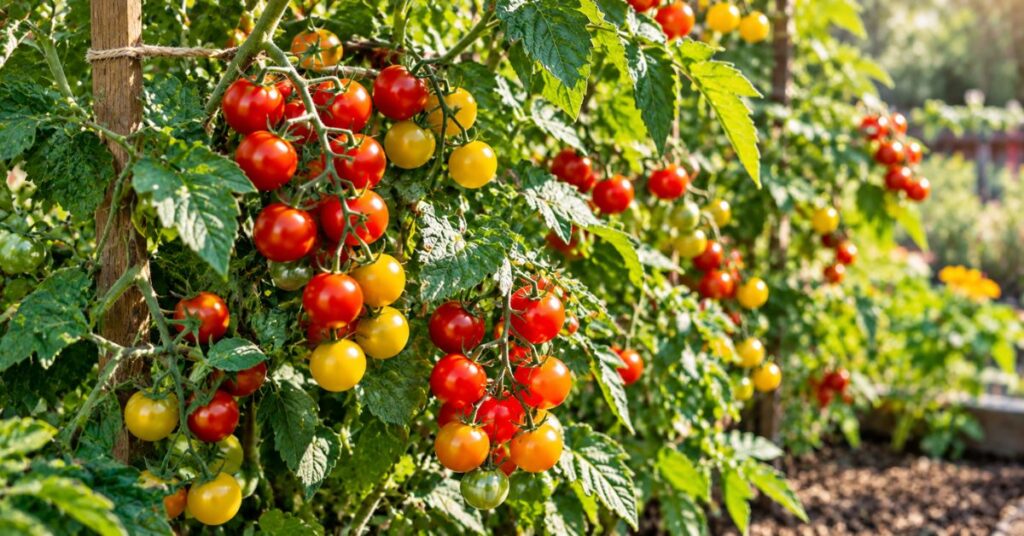
Cherry tomatoes are among the easiest and most enjoyable tomatoes for home gardeners. Their small, round fruits are often sweet, juicy, and perfect for eating straight from the plant.
They are especially popular with families because you do not need to slice or prepare them before eating. Simply wash them and enjoy them as a snack.
Cherry tomatoes can also add color and flavor to salads, pasta dishes, sandwiches, appetizers, and roasted vegetable meals.
Why Grow Cherry Tomatoes?
One of the biggest advantages of cherry tomatoes is their productivity. A healthy plant can produce a large number of small fruits during the growing season.
Many cherry tomato plants are indeterminate, meaning they can continue producing new fruit as the plant grows. This makes them a great option if you want a steady supply rather than one large harvest.
Because the fruits are small, they may also ripen more quickly than very large tomato varieties.
Best Uses for Cherry Tomatoes
Cherry tomatoes are excellent for:
- Fresh snacking
- Green salads
- Pasta salads
- Sandwiches
- Skewers and appetizers
- Roasting
- Sheet-pan dinners
- Homemade salsa
You can also roast cherry tomatoes with olive oil, garlic, herbs, and a little salt for a simple side dish.
Are Cherry Tomatoes Good for Containers?
Yes. Certain compact cherry tomato varieties are particularly suitable for containers and patios.
However, even container-grown tomatoes need enough sunlight, water, nutrients, and support. Choose a container large enough for the variety you are growing, and make sure it has drainage holes.
Things to Remember
Cherry tomato plants can become surprisingly large. A small fruit does not necessarily mean a small plant.
If you have limited space, look for a compact or patio-friendly variety and check the mature plant size before planting.
2. Roma Tomatoes
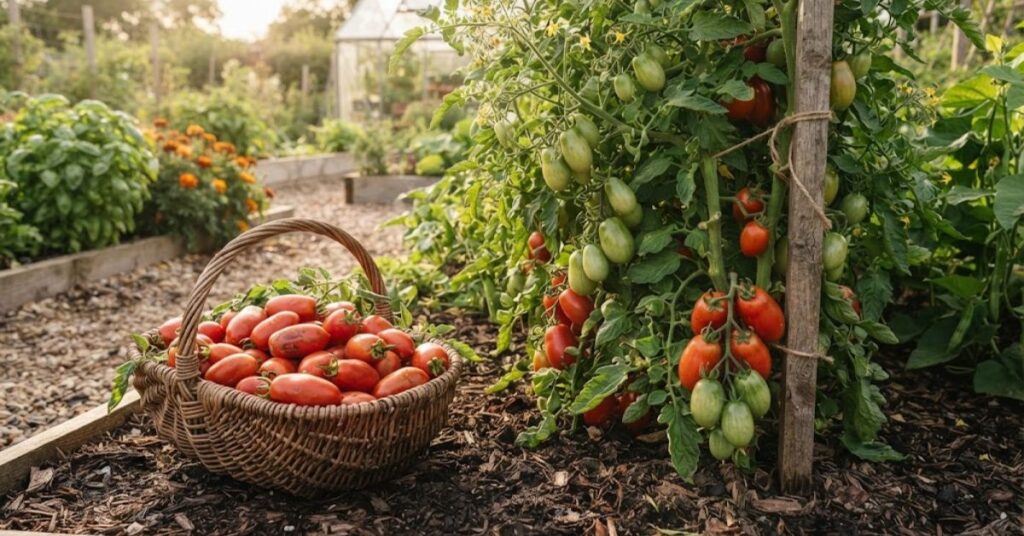
Roma tomatoes are a favorite among gardeners who enjoy cooking. These tomatoes are typically oval or elongated and are widely used for sauces, soups, pastes, and other cooked dishes.
They generally have a meaty texture and fewer seeds and less juice than many slicing tomatoes, which makes them useful when you want a thicker tomato-based sauce.
Why Grow Roma Tomatoes?
If your garden is partly designed around cooking, Roma tomatoes can be an excellent choice.
Their relatively firm flesh works well for recipes that require tomatoes to be cooked down. You can use them for homemade marinara sauce, tomato soup, salsa, pasta dishes, casseroles, and more.
They can also be preserved through appropriate home-canning methods when using tested recipes and safe procedures.
Best Uses for Roma Tomatoes
Roma tomatoes are especially useful for:
- Tomato sauce
- Marinara
- Tomato paste
- Soups
- Salsa
- Pasta dishes
- Roasted tomato recipes
- Canning and preservation
Their shape can also make them easier to prepare because there is often plenty of usable flesh.
Growing Roma Tomatoes
Roma tomatoes need the same basic conditions as other tomatoes: plenty of sunlight, fertile soil, consistent moisture, and good air circulation.
Choose a location that receives several hours of direct sunlight each day. Tomatoes generally perform best when they receive abundant sunlight during the growing season.
Avoid constantly wet soil. Tomatoes need regular moisture, but poorly drained soil can create root problems.
A layer of organic mulch around the base of the plant can help reduce moisture loss and limit soil splashing onto the leaves.
Who Should Choose Roma Tomatoes?
Choose Roma tomatoes if you:
- Cook tomato sauces regularly
- Want tomatoes for soups and pasta
- Plan to preserve part of your harvest
- Prefer meaty tomatoes
- Want a versatile cooking tomato
For gardeners who love homemade Italian-style meals, Roma tomatoes are a particularly useful addition to the garden.
3. Beefsteak Tomatoes
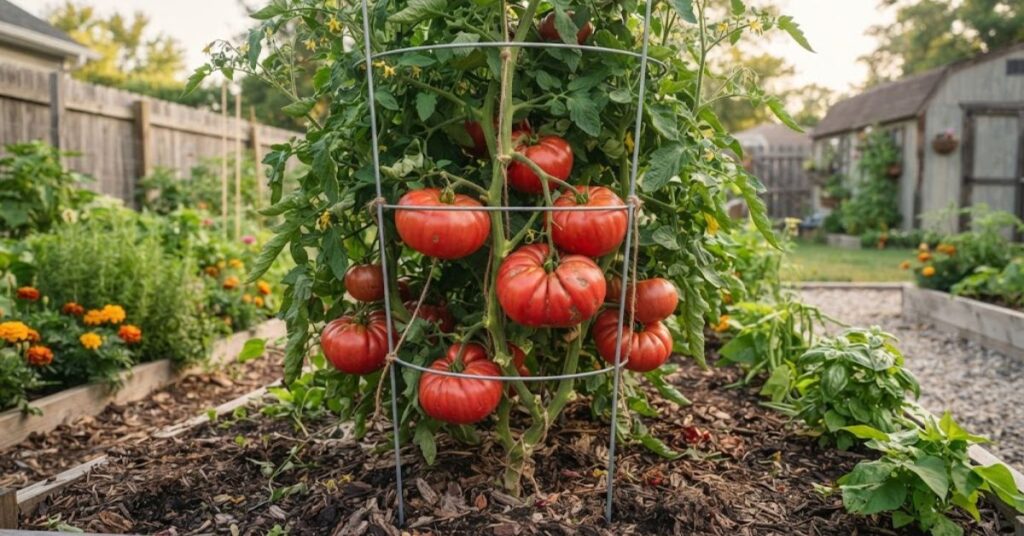
If your dream tomato is large, juicy, and perfect for thick slices, beefsteak tomatoes deserve a place on your list.
Beefsteak tomatoes are known for producing large fruits. Depending on the variety and growing conditions, some can become very heavy, so strong plant support is important.
Why Grow Beefsteak Tomatoes?
Beefsteak tomatoes are classic slicing tomatoes.
Their large size makes them ideal for sandwiches, burgers, salads, tomato toast, and other fresh dishes where you want a substantial slice.
A homegrown beefsteak tomato can taste very different from a tomato that has been harvested early for commercial transportation.
Best Uses for Beefsteak Tomatoes
Try beefsteak tomatoes in:
- Burgers
- Sandwiches
- BLTs
- Caprese salad
- Tomato toast
- Fresh salads
- Tomato and cheese plates
- Fresh salsa
Because they are juicy, they can also make excellent toppings for grilled foods.
What Do Beefsteak Tomatoes Need?
Large tomato plants need good support. A weak cage may bend or collapse under the weight of a mature plant and its fruit.
Use a sturdy tomato cage, trellis, or stake system appropriate for the variety.
Beefsteak tomatoes also benefit from consistent watering. Large fruit can develop problems when plants experience major swings between very dry and very wet conditions.
Mulching the soil can help maintain more consistent moisture.
Are Beefsteak Tomatoes Good for Beginners?
They can be, but they may require a little more attention than compact varieties.
Because the fruits are large, supporting the plant and maintaining consistent growing conditions becomes especially important.
If you are new to gardening, you can still grow beefsteak tomatoes. Just choose a suitable location and be prepared to provide sturdy support.
4. Heirloom Tomatoes
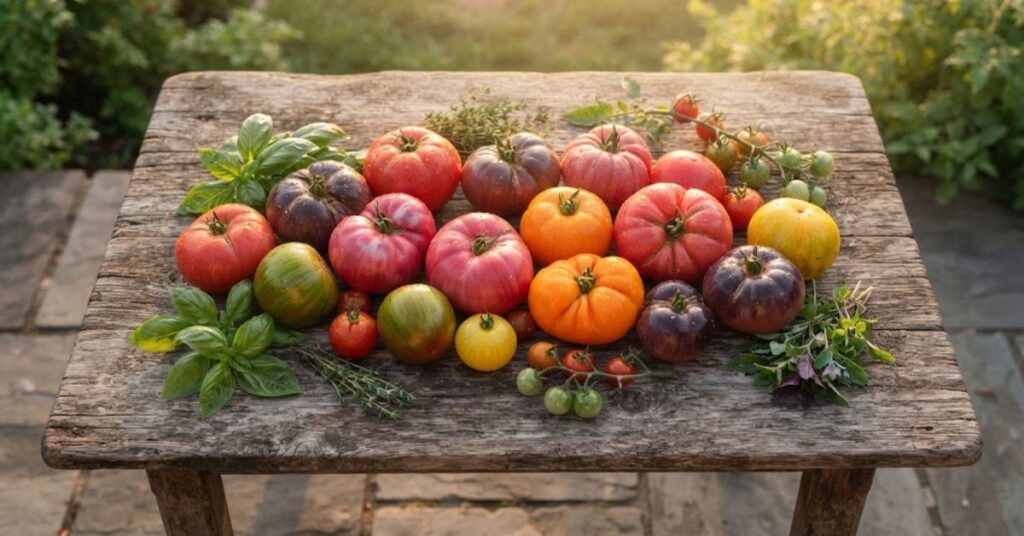
Heirloom tomatoes are popular among gardeners who value unusual colors, shapes, and distinctive flavors.
Unlike a single tomato variety with one standard appearance, heirloom tomatoes include many different traditional varieties. They may be red, pink, orange, yellow, green, purple, or multicolored.
Some have smooth round shapes, while others can be ribbed, flattened, or irregular.
Why Grow Heirloom Tomatoes?
The biggest attraction is often flavor and variety.
Gardeners who enjoy exploring different tastes may love growing several heirloom varieties in the same garden.
Heirlooms can also make a vegetable garden more visually interesting.
Imagine a salad containing tomatoes in several colors rather than only standard red tomatoes. The result can be both beautiful and delicious.
Best Uses for Heirloom Tomatoes
Heirloom tomatoes are excellent for:
- Fresh salads
- Sandwiches
- Tomato toast
- Caprese-style salads
- Fresh tomato plates
- Salsas
- Summer appetizers
Because many heirloom varieties are prized for fresh eating, they are often best enjoyed soon after harvest.
What Should Gardeners Know?
Some heirloom varieties may be more susceptible to certain diseases or environmental problems than modern varieties bred with specific disease resistance.
That does not mean you should avoid them. It simply means that choosing a suitable variety for your area and providing good garden care can be important.
Good spacing is especially helpful. Give plants enough room for air movement, avoid repeatedly wetting the foliage when watering, and remove damaged or diseased plant material promptly.
Are Heirloom Tomatoes Worth Growing?
Absolutely, especially if flavor and garden diversity are priorities.
You can even grow one heirloom plant alongside a more disease-resistant or compact variety. This gives you both variety and practicality.
5. Grape Tomatoes
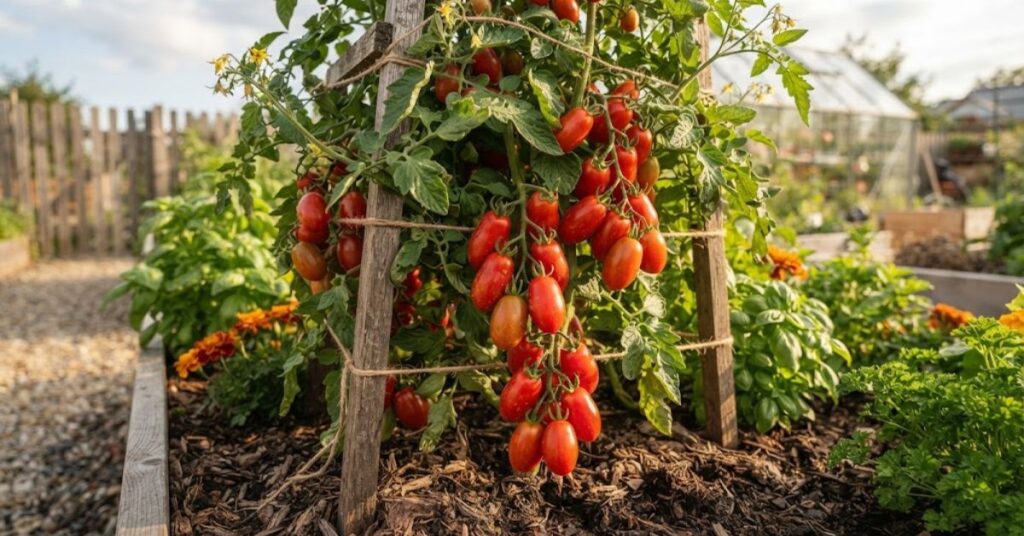
Grape tomatoes are small, elongated tomatoes that are generally firm and convenient for fresh eating.
They are similar to cherry tomatoes in size but usually have a more oval or grape-like shape.
Their firm texture makes them particularly useful for lunch boxes, salads, snacks, and cooking.
Why Grow Grape Tomatoes?
Grape tomatoes can be very productive and easy to use.
Because they are small, you can add them to meals without much preparation. They are also convenient for packed lunches and quick snacks.
Their relatively firm texture can help them hold their shape in salads better than softer tomatoes.
Best Uses for Grape Tomatoes
Use grape tomatoes for:
- Salads
- Snacking
- Lunch boxes
- Pasta salads
- Roasting
- Skewers
- Fresh salsa
- Quick side dishes
Roasting grape tomatoes with olive oil and herbs can bring out their natural sweetness.
Growing Grape Tomatoes
Like other tomatoes, grape tomatoes need sunlight, regular moisture, fertile soil, and good air circulation.
Many varieties have a vigorous growth habit, so check the seed packet or plant label before planting.
If the plant is indeterminate, provide support early. Waiting until the plant becomes large can make it harder to train the stems without damaging them.
How to Choose the Best Tomato Type for Your Garden
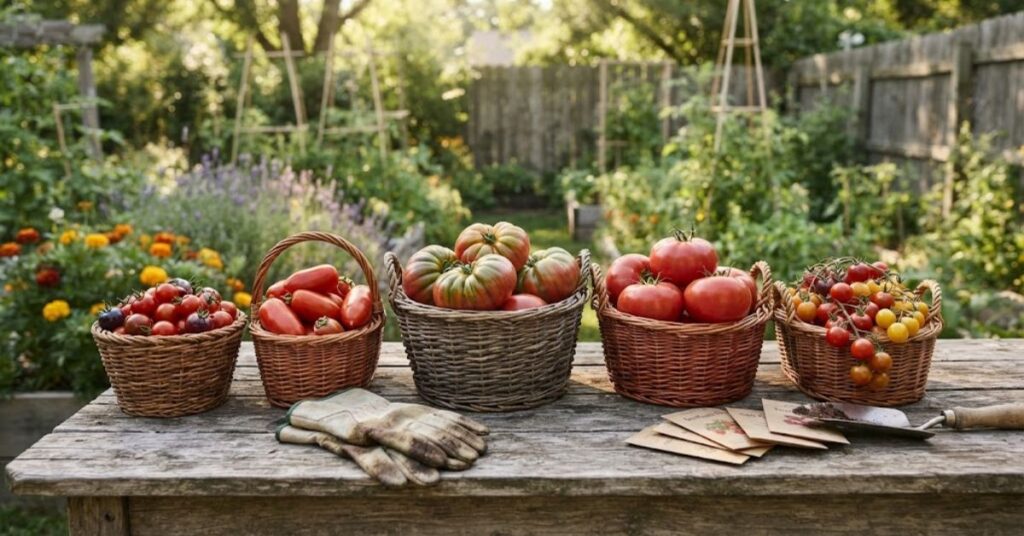
Choosing between tomato types becomes much easier when you start with your gardening goals.
Choose Cherry Tomatoes for Snacking
If you want tomatoes that you can pick and eat directly from the garden, cherry tomatoes are an excellent choice.
They are also useful when you want lots of small tomatoes for salads and quick meals.
Choose Roma Tomatoes for Cooking
If your main goal is tomato sauce, soup, salsa, or preservation, Roma tomatoes are worth considering.
Their meaty texture makes them especially useful in cooked recipes.
Choose Beefsteak Tomatoes for Sandwiches
If thick slices are what you want, beefsteak tomatoes are a natural choice.
They can provide large, juicy slices for sandwiches, burgers, and summer salads.
Choose Heirloom Tomatoes for Flavor and Variety
If you enjoy experimenting with different colors, shapes, and flavors, heirloom tomatoes can make your garden much more interesting.
Choose Grape Tomatoes for Versatility
Grape tomatoes are convenient for salads, snacks, roasting, and lunch boxes.
They are a practical option for gardeners who want small tomatoes with plenty of everyday uses.
Determinate vs. Indeterminate Tomatoes
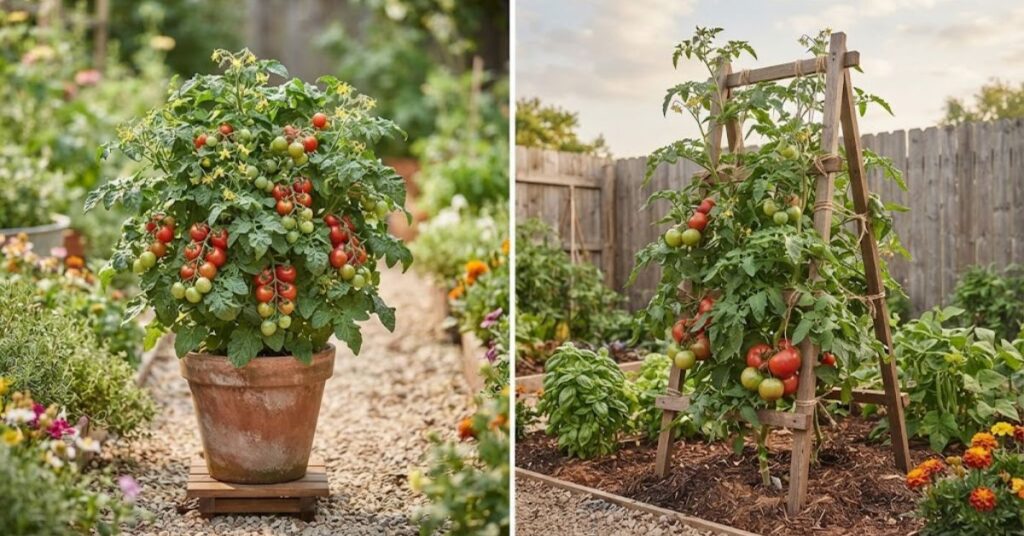
Before buying tomato plants, there is another important decision to make: determinate or indeterminate.
Determinate Tomatoes
Determinate tomatoes generally have a more compact growth pattern and produce much of their crop during a relatively concentrated period.
They can be useful for:
- Containers
- Small gardens
- Gardeners who want a concentrated harvest
- Preserving a large amount of tomatoes at once
Indeterminate Tomatoes
Indeterminate tomatoes continue growing and producing fruit throughout much of the season under suitable conditions.
They are often better suited to gardeners who want tomatoes over a longer harvest period.
However, they usually need more space and stronger support.
Neither type is automatically better. The right choice depends on your garden and goals.
How Much Sun Do Tomato Plants Need?
Tomatoes are sun-loving plants.
Choose a location that receives plenty of direct sunlight. A sunny garden can help plants produce healthy growth and a good fruit crop.
Before planting, observe your garden throughout the day. A location that looks sunny in the morning may become shaded later by a building, wall, fence, or tree.
If you are growing tomatoes in containers, remember that you can move the containers if necessary, although large plants become increasingly difficult to relocate.
How to Prepare Soil for Tomatoes
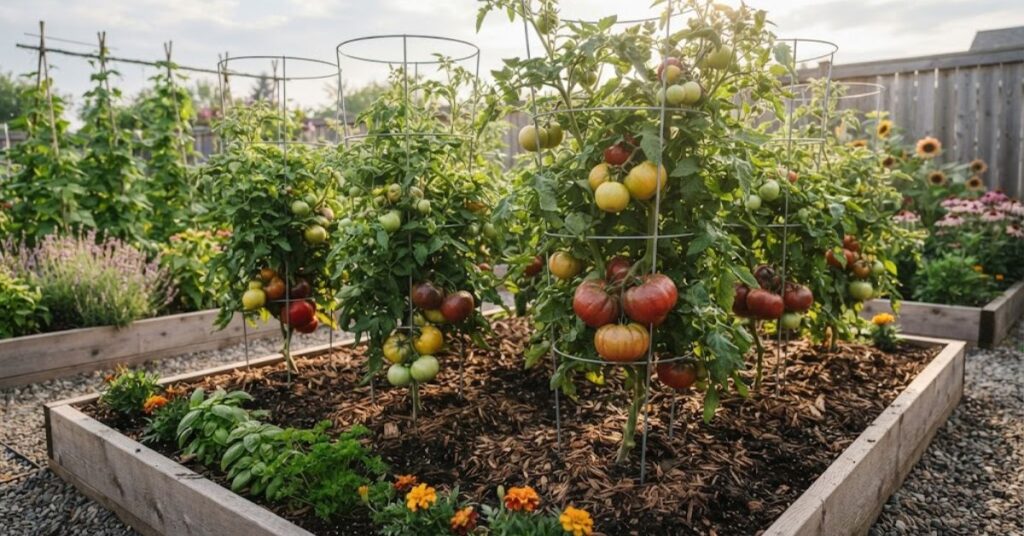
Healthy soil gives tomato plants a strong foundation.
Before planting, loosen compacted soil and add suitable organic matter if needed. A soil test can help you understand the existing soil conditions and whether amendments are necessary.
Avoid adding large amounts of fertilizer without knowing what your soil needs. Too much nitrogen can encourage leafy growth while reducing the balance between vegetative growth and fruit production.
Good drainage is also important.
Tomato roots need moisture, but standing water around the roots can create problems.
Watering Tomato Plants Correctly
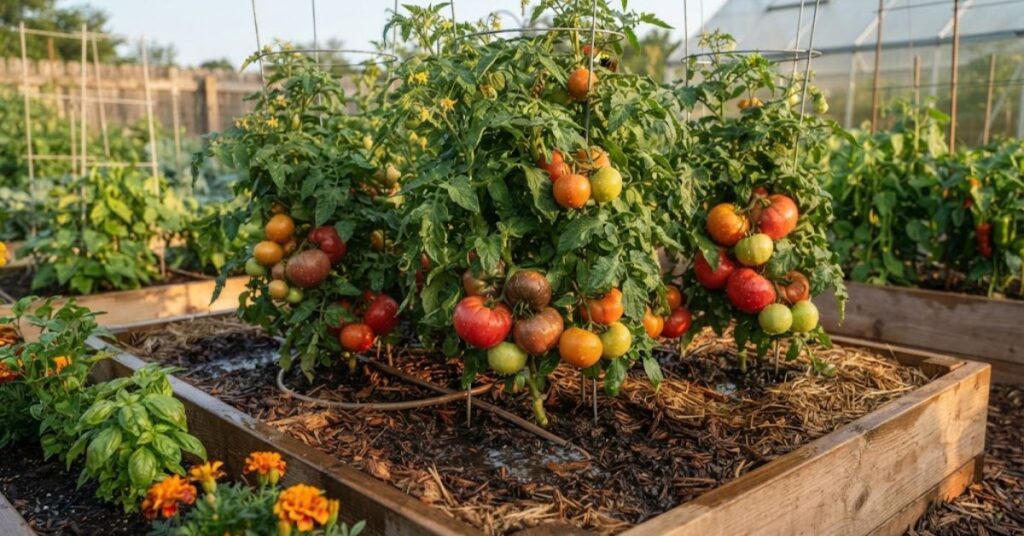
Tomatoes need consistent moisture, especially during flowering and fruit development.
The goal is not to keep the soil constantly soaked. Instead, provide regular watering while allowing excess water to drain away.
Water near the base of the plant rather than repeatedly spraying the leaves.
A layer of mulch can help the soil retain moisture and reduce rapid changes in soil moisture.
If you grow tomatoes in containers, monitor them more frequently because containers can dry out faster than garden soil.
Supporting Tomato Plants
Tomato support should not be an afterthought.
Install cages, stakes, or trellises according to the needs of your chosen variety.
Supporting plants keeps fruit and foliage off the ground, improves garden organization, and can make harvesting easier.
Large indeterminate varieties usually need particularly strong support.
If you are planting several tomato plants, leave enough space between them for air circulation. Crowded plants can create a humid environment around the foliage.
Common Tomato Growing Mistakes to Avoid
Even an easy vegetable can struggle when a few basic needs are overlooked.
Planting Too Early
Tomatoes are warm-season plants. Planting them too early into cold conditions can slow growth or damage young plants.
Follow local planting guidance for your area and consider the weather rather than relying only on a calendar date.
Choosing the Wrong Size for Your Space
A vigorous tomato plant can quickly outgrow a small container or crowded garden bed.
Always check mature plant size before buying.
Inconsistent Watering
Allowing plants to become extremely dry and then soaking them heavily can stress the plant and contribute to fruit problems.
Try to maintain more consistent soil moisture.
Weak Support
A large plant loaded with tomatoes can put considerable pressure on a support system.
Install sturdy supports early.
Poor Air Circulation
Planting tomatoes too close together can restrict airflow.
Give plants adequate space based on their mature size.
Ignoring the Plant Label
The label contains valuable information about growth habit, mature size, disease resistance, and expected fruit characteristics.
Read it before planting.
Can You Grow Different Tomato Types Together?
Yes, you can grow several tomato types in the same garden.
In fact, growing different types can give you a more useful harvest.
For example, you might plant:
- Cherry tomatoes for snacks
- Roma tomatoes for sauces
- Beefsteak tomatoes for sandwiches
- Heirlooms for fresh salads
- Grape tomatoes for lunches and roasting
This approach gives you tomatoes for different purposes throughout the season.
Just make sure each plant has enough room, sunlight, water, and support.
Which Tomato Type Is Best for Beginners?
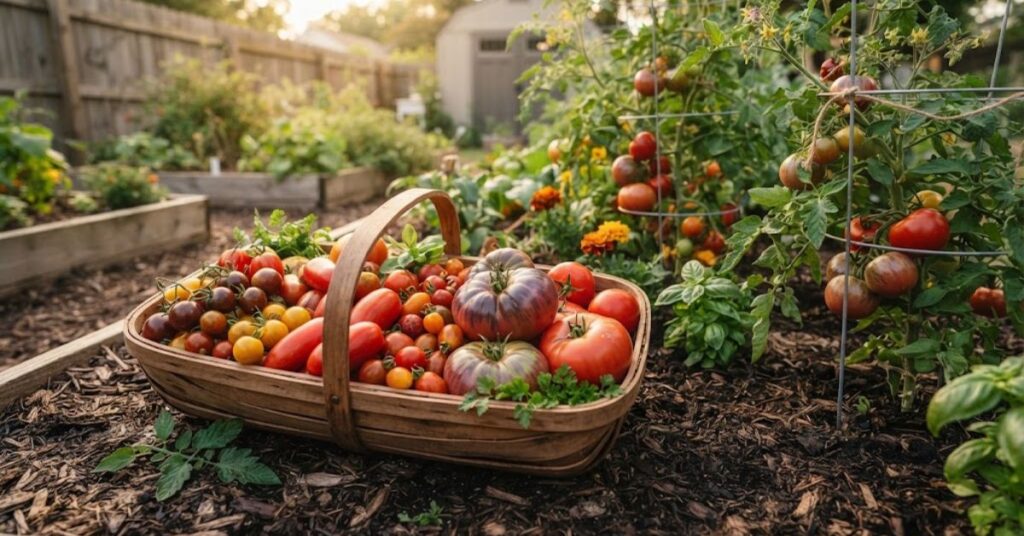
There is no single perfect tomato for every beginner.
However, cherry tomatoes are often an appealing starting point because they produce many small fruits and can be very rewarding.
Compact varieties can also be a practical choice if you are growing tomatoes in containers.
If you have plenty of garden space and want large tomatoes for sandwiches, you can try beefsteaks. Just be prepared to provide proper support and consistent care.
For cooking-focused gardeners, Roma tomatoes are an excellent option.
The best beginner tomato is ultimately the one that matches your space and what you actually want to eat.
Final Thoughts
Choosing the right tomato type can make your garden more productive and enjoyable.
Cherry tomatoes are excellent for snacking and salads. Roma tomatoes are useful for sauces and cooking. Beefsteak tomatoes are ideal for thick, juicy slices. Heirloom tomatoes offer interesting colors and distinctive flavors, while grape tomatoes provide a convenient option for salads, snacks, and roasting.
You do not have to choose only one.
Growing two or three different types can give you a harvest that works for everything from breakfast sandwiches to homemade pasta sauce.
Before planting, consider your available space, sunlight, container size, preferred foods, and the growth habit of the variety you want. With the right tomato plants and consistent care, even a small home garden can provide a rewarding summer harvest.
At True Housekeeping, we believe that a healthy home can begin outside in the garden. Growing your own vegetables not only gives you fresh ingredients but can also make everyday meals more satisfying and connected to the seasons.
Frequently Asked Questions
1. What are the five main tomato types to grow?
Five popular types are cherry, Roma, beefsteak, heirloom, and grape tomatoes. Each has different characteristics and is suited to different culinary and gardening purposes.
2. Which tomato type is easiest to grow?
Cherry tomatoes can be a rewarding choice for beginners because they often produce many small fruits. Compact varieties can also work well for gardeners with limited space.
3. Which tomatoes are best for sauce?
Roma tomatoes are commonly used for sauces because they tend to have meaty flesh and less juice than many slicing tomatoes.
4. Which tomatoes are best for sandwiches?
Beefsteak tomatoes are excellent for sandwiches because they can produce large, juicy slices.
5. Can tomatoes grow in containers?
Yes. Many tomatoes can be grown in containers, but the container should be appropriately sized and have good drainage. Compact or patio varieties are especially useful for small spaces.
6. Do tomato plants need support?
Many tomato plants benefit from support. Stakes, cages, or trellises can keep plants upright and make harvesting easier.
7. How much sunlight do tomatoes need?
Tomatoes generally perform best in a location with plenty of direct sunlight. Check the needs of your particular variety and your local growing conditions.
8. What is the difference between determinate and indeterminate tomatoes?
Determinate tomatoes generally have a more limited growth habit and produce a concentrated crop. Indeterminate tomatoes continue growing and producing fruit over a longer period and usually require more space and support.
9. Can I grow several tomato types in one garden?
Yes. Growing several types can give you tomatoes for different purposes, such as snacking, salads, sauces, and sandwiches.
10. When should I plant tomatoes?
Tomatoes should generally be planted after the danger of damaging cold has passed and when local growing conditions are suitable. The exact timing depends on your climate and location.