
Makeup can help you look polished and confident, but it can leave frustrating stains on your favorite clothes. Foundation around a shirt collar, lipstick on a blouse, or mascara on a sleeve can quickly turn a clean outfit into a laundry problem.
The good news is that most makeup stains can be removed at home if you treat them correctly. The key is to act quickly, avoid rubbing the stain deeper into the fabric, and choose a cleaning method that matches the type of makeup and fabric.
In this guide, True Housekeeping explains how to remove makeup stains from clothes using simple household products and practical laundry techniques. Whether you are dealing with foundation, lipstick, mascara, concealer, powder, or blush, these methods can help restore your clothes.
how to remove makeup stains from clothes
Makeup stains can be challenging because many cosmetic products contain oils, waxes, pigments, and other ingredients designed to stay on your skin for hours.
Liquid foundation and concealer may contain oils that cling to fabric fibers. Lipstick often contains wax and strong pigments. Waterproof mascara is especially stubborn because it is designed to resist water.
This is why simply throwing a makeup-stained item into the washing machine does not always work.
Before washing the garment, it is usually better to loosen and treat the stain first.
What to Do Before Treating a Makeup Stain
Before reaching for a cleaning product, check the garment’s care label. Some fabrics require special care and should not be treated with strong cleaners.
Next, remove any excess makeup from the surface.
If the makeup is still wet, gently blot it with a clean paper towel or cloth. Do not rub it back and forth because this can spread the stain.
If the makeup has dried, carefully lift away loose powder or dried product using a spoon, dull knife, or soft brush.
Always test a cleaning solution on a small, hidden area of the garment first. This is especially important for dark, colored, delicate, or expensive clothing.
9 Easy Ways to Remove Makeup Stains From Clothes
Different cosmetics require slightly different approaches. Try the method that best matches the makeup stain you are dealing with.
1. Use Dish Soap for Liquid Foundation
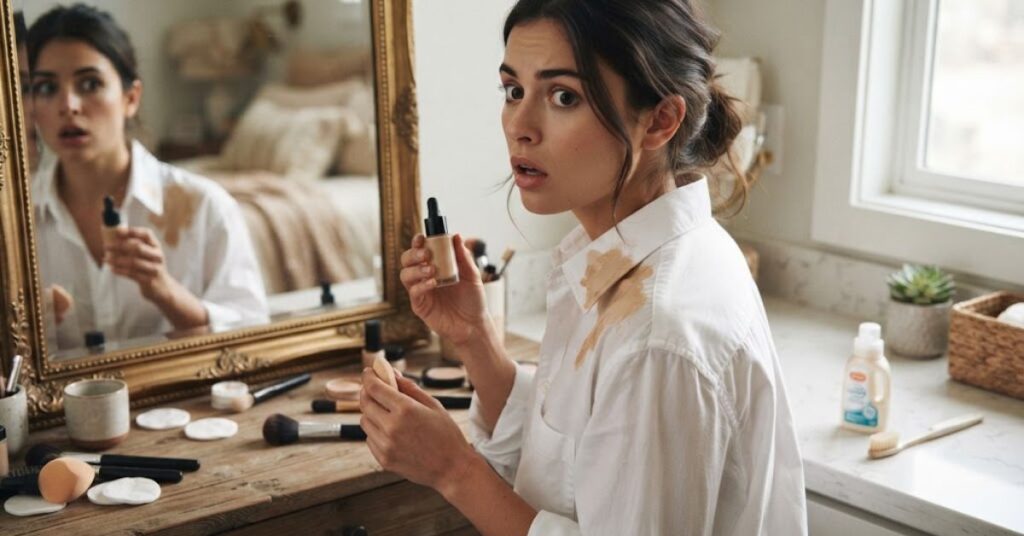
Liquid foundation is one of the most common makeup stains on clothing. Because many foundations contain oily ingredients, a small amount of grease-cutting dish soap can be helpful.
Start by scraping or blotting away excess foundation.
Place a clean towel behind the stained area. Apply a small amount of liquid dish soap directly to the stain.
Gently work the soap into the fabric with your fingers or a soft toothbrush. Let it sit for about 10 to 15 minutes.
Rinse the area with cool or lukewarm water, depending on the garment’s care instructions. Then wash the clothing normally.
Check the stain before putting the garment in the dryer. Heat can make a remaining stain much harder to remove.
2. Try Liquid Laundry Detergent on Concealer
Concealer can leave concentrated marks because it is often thicker than foundation.
Apply a small amount of liquid laundry detergent directly to the stain. Gently massage the detergent into the fabric.
Allow it to sit for around 10 minutes. Rinse thoroughly and wash according to the care label.
For an older concealer stain, you may need to repeat the treatment before washing.
Do not immediately increase the amount of detergent if the stain does not disappear. Too much product can make rinsing more difficult.
3. Remove Lipstick With Dish Soap

Lipstick can be particularly stubborn because it often contains both pigment and wax or oils.
First, gently scrape off any excess lipstick without pushing it farther into the fabric.
Place the stained section face down on a clean white towel. Apply a small amount of dish soap to the back of the stain.
Gently dab or work the soap into the fabric. Rinse and repeat if necessary.
Once the stain has lifted, wash the garment according to its care label.
For delicate clothing, avoid aggressive scrubbing because it can damage the fibers.
4. Treat Mascara With Liquid Laundry Detergent

Mascara can leave dark black or brown marks that become more noticeable on light-colored clothing.
Start by removing any dried mascara particles with a soft brush or the edge of a spoon.
Apply liquid laundry detergent to the stain. Gently work it into the fabric and let it sit for several minutes.
Rinse thoroughly and wash the garment.
Waterproof mascara may require more than one treatment because it is designed to resist moisture.
If the stain remains after washing, treat it again before drying.
5. Use a Soft Brush for Powder Makeup
Powder foundation, blush, and eyeshadow are usually easier to remove than oily liquid cosmetics.
The first step is to remove loose powder without adding water. Shake the garment gently or use a soft, clean brush.
If pigment remains, apply a small amount of liquid laundry detergent to the area.
Gently blot the stain and rinse with cool water.
Avoid rubbing loose powder into the fabric before treatment. Adding water immediately can sometimes turn loose cosmetic powder into a more concentrated stain.
6. Use Dish Soap for Cream Blush
Cream blush can behave similarly to foundation because it may contain oils and waxes.
Remove excess product carefully. Then apply a small amount of dish soap to the stain.
Work it gently into the fabric and let it sit for approximately 10 minutes.
Rinse thoroughly before washing.
If the garment is white and the stain leaves a faint colored mark, you can consider a suitable oxygen-based laundry stain remover, provided the care label allows it.
7. Try an Alcohol-Based Cleaner for Some Makeup Stains
Some makeup stains can respond to a small amount of rubbing alcohol, particularly certain cosmetic pigments and products.
However, this method requires caution.
First, check the fabric and test the alcohol on an inconspicuous area. Apply a small amount to a clean cloth rather than pouring it directly over the garment.
Gently blot the stain from the outside toward the center.
Once the stain begins to lift, rinse the area thoroughly and wash the garment according to its care instructions.
Do not use rubbing alcohol on a delicate fabric without checking whether it is appropriate. It can affect some dyes, finishes, and synthetic materials.
8. Use an Oxygen-Based Stain Remover for Washable Clothes
An oxygen-based stain remover can be useful for stubborn makeup stains on washable clothing.
Follow the product’s label instructions carefully. Some products are designed for soaking, while others are intended for direct stain treatment.
Do not assume that every stain remover is safe for every fabric. Check the garment’s care label and the product directions first.
This method can be especially useful when a stain has already been treated once but a faint cosmetic shadow remains.
9. Repeat the Treatment Instead of Using More Cleaner
Sometimes the best way to remove a stubborn makeup stain is simply to repeat the correct treatment.
A common mistake is to use a large amount of cleaning product because the stain does not disappear immediately.
More cleaner does not necessarily mean better results.
Instead, treat the stain gently, rinse it, and inspect the fabric. If necessary, repeat the process before washing or drying.
Several gentle treatments are often safer for clothing than one aggressive treatment.
How to Remove Old Makeup Stains From Clothes
Fresh stains are usually easier to remove, but an old makeup stain is not necessarily permanent.
Start by checking whether the stain has been exposed to heat. If the garment has already gone through a hot dryer, the stain may be more difficult to remove.
Apply liquid laundry detergent or another suitable stain treatment to the affected area.
Gently work the product into the fibers and allow it to sit according to the product instructions.
Rinse and wash the garment.
If the stain remains, repeat the process before using the dryer.
For white or colorfast washable fabrics, an oxygen-based stain remover may also be an option if the product and garment care label permit it.
How to Remove Makeup From White Clothes
White clothing can make makeup stains look especially obvious.
The most important step is to avoid drying the garment until you are sure the stain is gone.
For foundation and concealer, start with liquid laundry detergent or dish soap.
For lipstick, use a small amount of dish soap and gently treat the affected area.
For stubborn stains on washable white clothing, an oxygen-based stain remover may help.
Always follow the product directions and check the garment label.
Avoid automatically reaching for chlorine bleach. It is not suitable for every fabric, and using it incorrectly can damage clothing or make certain stains more difficult to remove.
How to Remove Makeup From Colored Clothes
Colored clothing needs a little more care because aggressive cleaning products can affect dyes.
Always test your chosen treatment in a hidden area first.
Use a small amount of liquid laundry detergent or dish soap for many fresh makeup stains.
Avoid excessive rubbing, especially on dark or delicate fabrics.
If you use a commercial stain remover, make sure it is suitable for colored clothing and follow its instructions carefully.
How to Remove Makeup From Delicate Fabrics
Silk, wool, lace, velvet, and other delicate fabrics require extra caution.
Do not aggressively scrub these materials.
Check the care label before treating the stain. If the garment is labeled dry clean only, professional cleaning may be the safest option.
For expensive or sentimental clothing, it is often better to take the garment to a professional cleaner rather than experimenting with household products.
Tell the cleaner what type of makeup caused the stain and whether you have already tried any treatment.
What Not to Do When Removing Makeup Stains
Knowing what to avoid can be just as important as knowing what to use.
Don’t Rub the Stain Aggressively
Rubbing can push makeup deeper into fabric fibers and spread the stain to a larger area.
Blot or gently work the cleaning product into the stain instead.
Don’t Put the Garment in the Dryer Too Soon
Heat can set some stains.
After washing, inspect the garment under good lighting. If you can still see makeup, treat it again before drying.
Don’t Use Too Much Cleaning Product
Using excessive detergent, dish soap, or stain remover can leave residue and make rinsing difficult.
Start with a small amount and increase treatment only when necessary.
Don’t Mix Cleaning Products
Never mix different cleaning chemicals unless the product directions specifically say they are compatible.
Combining household cleaners can create dangerous fumes or unexpected chemical reactions.
Don’t Skip the Care Label
A stain-removal method that works on cotton may not be suitable for silk or another delicate fabric.
The care label should always be your starting point.
How to Prevent Makeup Stains on Clothes
Removing makeup stains is useful, but preventing them can save even more time.
One simple trick is to put your clothing on after you finish applying makeup. This reduces the chance of foundation, powder, or lipstick touching your shirt.
If you need to get dressed first, place a clean towel or makeup cloth over your clothing while applying cosmetics.
Be careful around collars and necklines because these areas frequently come into contact with foundation.
Clean makeup brushes regularly as well. Dirty brushes can transfer excess product and increase the chance of getting makeup on your clothes.
You can also keep a small stain-removal pen or clean cloth nearby when getting ready. Treating a fresh mark quickly is often easier than dealing with an old stain later.
Can You Remove Makeup Stains Without Washing the Whole Garment?
Sometimes, yes.
If the garment cannot be washed immediately, you can spot-treat the affected area.
First, remove excess makeup. Then gently blot the area with a clean cloth.
Apply a small amount of an appropriate cleaning solution and work only on the stained section.
Avoid soaking the entire garment unless the cleaning method calls for it.
Once you have time, wash the garment according to the care instructions.
Spot treatment is particularly useful when you accidentally stain a jacket, coat, or clothing item that you do not want to wash immediately.
How to Tell if a Makeup Stain Is Completely Gone
A stain may appear less noticeable when the fabric is wet, so inspect the garment after rinsing and before drying.
Hold the clothing under bright natural or indoor light.
Look at the stained area from different angles.
If you can still see a colored, oily, or dark mark, repeat the treatment.
Only place the garment in the dryer once the stain has disappeared as much as possible.
If you accidentally dry a garment while a stain is still visible, don’t panic. Let the fabric cool completely and try treating the stain again.
FAQs
What is the fastest way to remove foundation from clothes?
For many washable fabrics, blot the excess foundation first and then treat the stain with a small amount of dish soap or liquid laundry detergent. Gently work it into the fabric, rinse, and wash according to the care label.
Can makeup stains come out of clothes?
Yes. Many makeup stains can be removed successfully, especially when treated before washing and drying. Older or heat-set stains may require repeated treatment.
Does dish soap remove makeup stains?
Dish soap can be helpful for many makeup stains, particularly products containing oils or waxes. Use a small amount and test it on the fabric first.
Should I use hot water on makeup stains?
Not always. The safest water temperature depends on the fabric and stain. Check the garment’s care label and cleaning-product instructions before using hot water.
Can I remove lipstick from a white shirt?
Yes. Remove excess lipstick, apply a small amount of dish soap or another suitable stain treatment, gently work it into the fabric, rinse, and wash according to the care label.
How do you remove waterproof mascara from clothes?
Waterproof mascara can be stubborn because it is designed to resist water. Try liquid laundry detergent or another fabric-safe stain treatment, then wash according to the care label. Repeat the treatment if needed.
What should I do if makeup has already gone through the dryer?
The stain may be more difficult to remove, but it is still worth treating. Apply an appropriate stain treatment, let it work according to the instructions, rinse, and wash again. Avoid additional heat until the stain is gone.
Can rubbing alcohol remove makeup stains?
Rubbing alcohol can help with some cosmetic pigments, but it should be used carefully. Test it on a hidden area first because it may affect certain dyes or fabrics.
How do I remove makeup from delicate clothing?
Check the care label first. Avoid aggressive rubbing and strong household cleaners. For dry-clean-only, expensive, or highly delicate clothing, professional cleaning is usually the safer choice.
Final Thoughts
Makeup stains can be annoying, but they do not automatically mean that a favorite shirt or blouse is ruined. The most important thing is to treat the stain before it has time to set.
Start by removing excess makeup without rubbing it deeper into the fabric. Then choose a gentle treatment based on the type of cosmetic and the garment’s care instructions.
Dish soap and liquid laundry detergent can be useful for many everyday makeup stains, while more stubborn marks may require repeated treatment or a suitable commercial stain remover.
Most importantly, avoid putting a stained garment in the dryer until you are confident the mark is gone. With quick action and the right approach, you can keep your clothes looking clean and fresh for longer.
At True Housekeeping, we believe everyday cleaning does not have to be complicated. A few simple techniques can make frustrating household problems much easier to handle.