
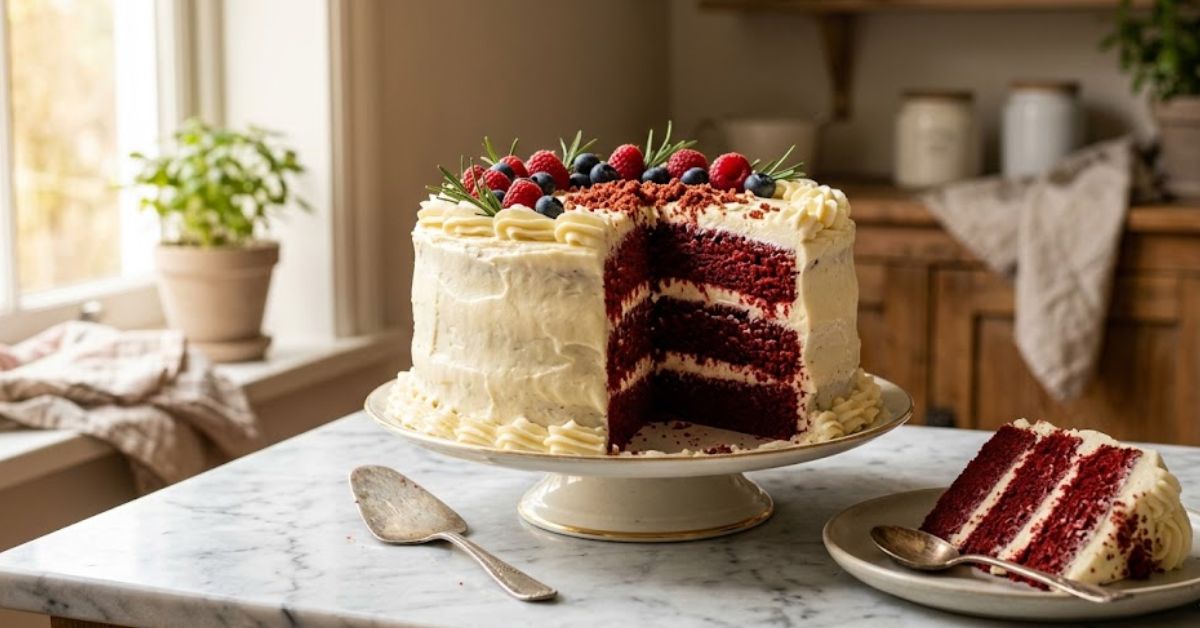
What Makes This Classic Dessert So Special
Red velvet cake is one of those desserts that instantly stands out the moment you see it. With its deep red color, soft texture, and creamy white frosting, it feels more luxurious than an ordinary chocolate cake. But what exactly makes it so special, and why do so many people struggle to get that perfect bakery-style result at home?
The truth is, red velvet cake is not just about color; it’s about balance, texture, and flavor. It sits somewhere between chocolate and vanilla, with a slight tanginess that comes from ingredients like buttermilk and vinegar. When done right, it has a soft, moist crumb and a rich cream cheese frosting that melts in your mouth.
In this detailed guide, we’ll explore everything about red velvet dessert, from its history and ingredients to baking techniques, common mistakes, and expert tips to make it perfect every time.
Red Velvet Cake: What Makes It Unique?
Red velvet cake is not your typical chocolate cake. While it does contain cocoa powder, the amount is very small, giving it a subtle chocolate flavor rather than a strong one. The real magic comes from the combination of acidic ingredients and cocoa, which creates a soft, velvety texture.
The signature red color originally resulted from a natural reaction between cocoa powder and acidic ingredients such as buttermilk and vinegar. Today, most recipes use red food coloring to enhance the color and make it more vibrant.
What truly makes velvet cake unique is the combination of:
- Soft and moist crumb texture
- Mild cocoa flavor
- Slight tanginess
- Rich cream cheese frosting
Together, these elements create a dessert that feels light yet indulgent at the same time.
History Behind This Famous Velvet Cake
The history of red velvet cake goes back to the early 20th century, when “velvet cakes” were popular in America. These cakes were known for their soft and fine texture compared to traditional dense cakes.
During the Great Depression, bakers started experimenting with cocoa powder and acidic ingredients, which accidentally created a reddish tint in the cake. Later, food coloring was added to make the color more dramatic and appealing.
One of the most famous moments in red velvet history came from the Waldorf-Astoria Hotel in New York, where the cake gained popularity as a luxury dessert. Since then, it has become a global favorite, especially for celebrations like birthdays, weddings, and Valentine’s Day.
Essential Ingredients for Perfect Texture

The magic of red velvet cake lies in its carefully balanced ingredients. Each one plays an important role in texture, flavor, and appearance.
Flour gives structure, while cocoa powder adds a mild chocolate taste. Buttermilk is essential because it adds moisture and a slight tanginess. Vinegar reacts with baking soda to create a light and fluffy texture. Butter or oil keeps the cake soft, and sugar balances the flavors.
The most noticeable ingredient is red food coloring, which gives the cake its iconic deep red shade. Without it, the cake would appear more brownish-red.
Cream cheese frosting is the classic topping, adding a rich, slightly tangy contrast to the soft cake layers.
Step-by-Step Baking Method

Baking a perfect red velvet cake requires more than just following a recipe. It requires attention to detail and understanding how ingredients interact.
The process usually starts by creaming butter and sugar until light and fluffy. Eggs are then added one at a time, followed by a mixture of dry ingredients and wet ingredients. Buttermilk and vinegar are added carefully to maintain the right consistency.
The batter should be smooth but not overmixed, as overmixing can make the cake dense instead of soft. Once baked, the cake layers should be cooled completely before adding frosting.
A good red velvet cake should have a tender crumb, even texture, and a balanced flavor that is neither too sweet nor too bitter.
The Secret to Moist and Soft Texture

One of the most important qualities of red velvet cake is its moist and velvety texture. This comes from the balance of fat, acidity, and mixing technique.
Buttermilk plays a major role because it tenderizes the flour, while oil or butter keeps the cake soft. Vinegar and baking soda create tiny air bubbles, which make the cake light and fluffy.
Another important factor is baking time. Overbaking can dry out the cake, while underbaking can make it too dense. That’s why it’s important to keep an eye on the oven and check the cake with a toothpick before removing it.
Cream Cheese Frosting Guide

Red velvet cake is incomplete without cream cheese frosting. This frosting is what gives the cake its signature flavor balance.
Made from cream cheese, butter, powdered sugar, and vanilla extract, it has a smooth, creamy texture with a slight tanginess. This tanginess complements the cake’s mild cocoa flavor perfectly.
When spreading frosting, it is important to ensure the cake layers are completely cool. Otherwise, the frosting can melt and lose its structure.
A well-made cream cheese frosting should be thick enough to hold its shape but soft enough to spread easily.
Common Baking Mistakes to Avoid
Many home bakers struggle with red velvet cake because of a few common mistakes.
One of the biggest mistakes is using too much cocoa powder, which makes the cake taste like regular chocolate cake. Another mistake is adding too much food coloring, which can affect the flavor and texture.
Overmixing the batter is also a common issue, leading to a dense and heavy cake instead of a light and fluffy one. Incorrect oven temperature can also ruin the texture, making the cake dry or uneven.
Avoiding these mistakes can significantly improve the final result and bring you closer to bakery-style perfection.
Variations of Red Velvet Cake

While the classic version remains the most popular, there are many creative variations of red velvet cake.
Red velvet cupcakes are a popular option for parties and events because they are easy to serve. Red velvet cheesecakes combine the flavors of cheesecake and red velvet cake for a rich dessert experience. Some people also enjoy red velvet cake pops or layered desserts in jars.
These variations keep the essence of red velvet cake while offering different textures and presentations.
Why Red Velvet Cake Is So Popular Worldwide

Red velvet cake has become a global favorite not just because of its taste, but also because of its visual appeal. The contrast between the deep red cake and white frosting makes it incredibly attractive.
It is often associated with celebrations, romance, and luxury. This emotional connection adds to its popularity, making it more than just a dessert.
Social media has also played a big role in its fame, as its vibrant color makes it highly photogenic and shareable.
Expert Tips for Bakery-Style Results
To consistently make a perfect red velvet cake, a few simple tips can make a big difference.
Always measure ingredients accurately and use room-temperature ingredients for better mixing. Do not skip buttermilk or vinegar, as they are essential for texture. Bake at the correct temperature and avoid opening the oven frequently.
Let the cake cool completely before frosting, and always use high-quality cocoa powder and cream cheese for the best flavor.
These small details can transform your homemade cake from average to bakery-level quality.
Conclusion:
Red velvet cake is more than just a dessert; it is an experience. Its soft texture, subtle chocolate flavor, and creamy frosting make it one of the most loved cakes in the world.
When baked correctly, it delivers a perfect balance of taste and elegance that few other cakes can match. While it may seem complex at first, understanding the ingredients and techniques makes it much easier to master.
Whether you are baking it for a special occasion or just treating yourself, red velvet cake always brings a sense of joy and celebration. With the right approach, you can easily recreate this bakery-style classic in your own kitchen.
FAQs
1. Why is it called red velvet cake?
It is called red velvet cake because of its soft “velvety” texture and its original reddish tint created by cocoa and acidic ingredients.
2. What flavor is red velvet cake?
Red velvet cake has a mild chocolate flavor with a slight tanginess from buttermilk and vinegar.
3. Can I make red velvet cake without food coloring?
Yes, but the cake will look more brownish-red instead of bright red.
4. What frosting goes best with red velvet cake?
Cream cheese frosting is the traditional and most popular choice.
5. Why is my red velvet cake dry?
It may be overbaked or missing enough fat or liquid ingredients like buttermilk or oil.

Credit Card for Beginners USA: Essential Complete Guide to Start Smart in 2026
Credit Card for Beginners USA. If you are new to…


10 Surprising Uses for Rubber Bands Around the House
Have you ever opened a drawer and found a bunch…

Top 10 Uses of Convex Mirror in Your Daily Life (2026 Guide)
Uses of Convex Mirror in Daily Life. Have you ever…

200+ Love Quotes in English (Copy & Paste)
Love is a deep and powerful emotion that connects people…








Leave a Reply