
Keeping your bedroom clean is about more than making the bed or vacuuming the visible floor. One of the most overlooked areas in any home is the space underneath the bed. While it may seem hidden and harmless, this spot quickly becomes a collection point for dust, pet hair, lint, allergens, and forgotten items. Over time, these particles can affect your bedroom’s cleanliness, contribute to poor indoor air quality, and even trigger allergy symptoms.
The best way to clean under the bed is to use the right tools, follow a simple cleaning routine, and prevent dust from building up in the first place. Whether your bed sits high off the floor or has only a few inches of clearance, there are practical methods that make cleaning this hard-to-reach area easier than you might think.
This guide explains how to clean under the bed step by step, remove stubborn dust, organize under-bed storage, and keep your bedroom healthier with professional housekeeping techniques. These easy tips are perfect for homeowners, renters, families, and anyone who wants a fresher living space without spending hours cleaning.
Why Cleaning Under the Bed Should Never Be Ignored
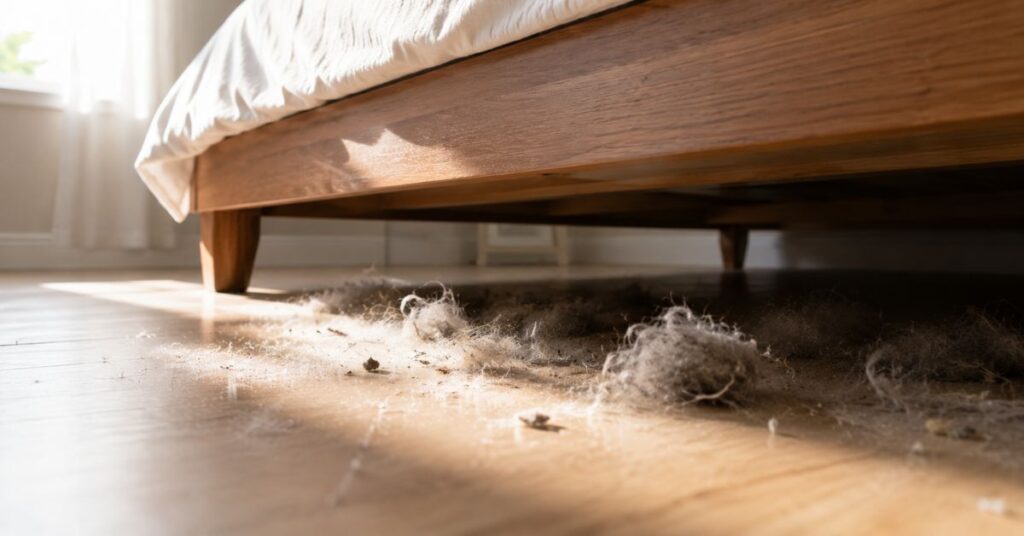
When cleaning a bedroom, most people focus on surfaces they can easily see. Floors, dressers, mirrors, and nightstands receive regular attention, while the area beneath the bed often remains untouched for months. Unfortunately, this hidden space can become one of the largest dust traps in the entire house.
Every time you open a window, use your heating or cooling system, or walk across the carpet, tiny particles move through the air before settling under furniture. Since the space beneath a bed experiences very little foot traffic, dust continues to collect layer after layer.
Regular bedroom dust cleaning offers more benefits than simply making the room look tidy.
Improves Indoor Air Quality
Dust doesn’t stay on the floor forever. Walking around the room, changing bed sheets, or turning on a fan can send tiny particles back into the air. These particles may contain dirt, pollen, fabric fibers, pet dander, and other allergens.
Cleaning beneath the bed helps reduce airborne dust and supports healthier indoor air.
Helps Reduce Allergy Symptoms
Many people don’t realize that hidden dust can worsen allergy symptoms. Sneezing, itchy eyes, and congestion are often linked to dust mites and allergens hiding beneath furniture.
Removing dust regularly helps create a cleaner sleeping environment.
Keeps Pests Away
Dark, quiet spaces can attract insects if crumbs, pet food, or clutter are left underneath the bed. Regular cleaning makes the area less inviting for unwanted pests.
Creates a More Organized Bedroom
Many households use under-bed space for seasonal clothing, shoes, blankets, or storage bins. Cleaning this area allows you to organize belongings and remove items you no longer use.
What Is Hiding Under Your Bed?
You might think only dust collects beneath your bed, but several different materials can build up over time.
Common items found during under-bed dust removal include:
- Dust bunnies
- Pet hair
- Human hair
- Fabric lint
- Dead skin cells
- Pollen
- Small insects
- Cobwebs
- Lost socks
- Children’s toys
- Books and magazines
- Food crumbs
- Wrapping paper
- Empty bottles
- Storage containers covered in dust
If you have pets, the amount of hair and dander can increase significantly within just a few weeks.
Why Dust Builds Up So Quickly
Several factors contribute to hidden dust in the bedroom.
Limited Air Movement
The area beneath a bed has very little airflow. Dust settles there because it isn’t disturbed often.
Fabric Fibers
Blankets, sheets, comforters, rugs, and clothing naturally shed tiny fibers during everyday use.
Dead Skin Cells
Humans shed skin cells every day. Many of these particles settle around the bed, providing food for dust mites.
Open Storage
Cardboard boxes and uncovered storage bins allow dust to settle directly onto stored belongings.
Signs It’s Time to Clean Under the Bed
You don’t always need to look underneath to know it needs attention.
Watch for these signs:
- Dust is visible around the bed frame.
- Allergy symptoms worsen indoors.
- The bedroom smells musty.
- Pet hair collects around furniture.
- You haven’t cleaned underneath for more than a month.
- Robot vacuums avoid the area because of clutter.
- You notice dust when changing bed sheets.
If you recognize several of these signs, it’s probably time for a deep clean under the bed.
Essential Cleaning Tools You’ll Need
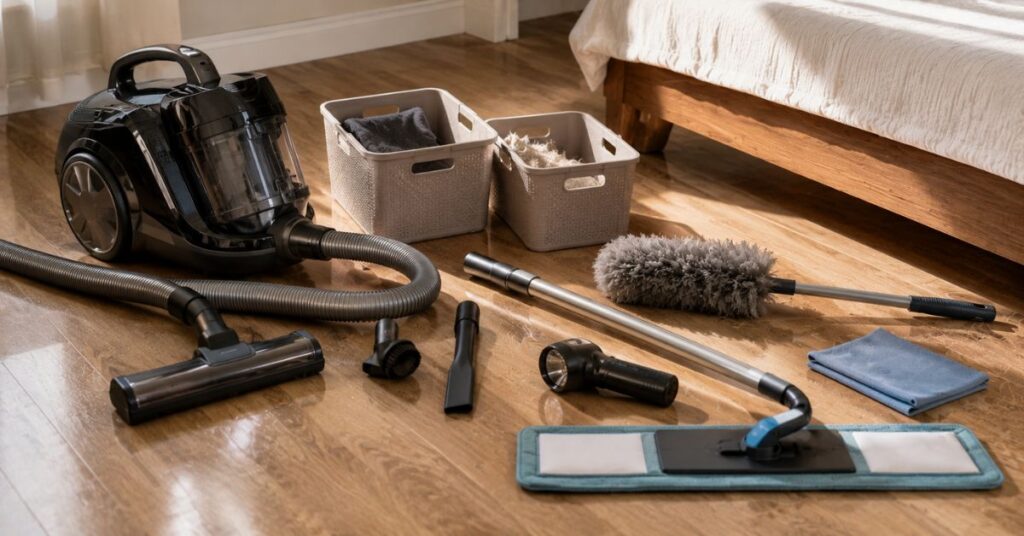
Professional cleaners don’t rely on expensive machines. Instead, they use simple tools that reach tight spaces efficiently while preventing dust from spreading around the room.
| Cleaning Tool | Best Use | Recommended |
| Vacuum with crevice tool | Removes loose dust and debris | ✔ Yes |
| Long-handled duster | Reaches deep under furniture | ✔ Yes |
| Microfiber cloth | Traps fine dust particles | ✔ Yes |
| Flashlight | Helps locate hidden dirt | ✔ Yes |
| Flat microfiber mop | Cleans low-clearance beds | ✔ Yes |
| Extension vacuum wand | Reaches difficult corners | ✔ Yes |
| Face mask | Protects against heavy dust | Optional |
| Knee pads | Makes cleaning comfortable | Optional |
| Plastic storage bins | Keeps stored items dust-free | ✔ Recommended |
Why Microfiber Works Better Than Traditional Dusters
A microfiber cloth attracts and traps dust instead of simply moving it around. This makes it ideal for bedroom deep cleaning, especially in areas where allergens tend to collect.
Unlike feather dusters, microfiber reduces the amount of dust released back into the air.
Choosing the Right Vacuum Attachment
Different vacuum attachments work best for different situations.
- Crevice tool: Reaches narrow gaps and corners.
- Soft brush attachment: Cleans storage containers and delicate surfaces.
- Extension wand: Makes it easier to reach the center of the bed.
- Floor attachment: Removes larger amounts of dust quickly.
Using the correct attachment saves time and improves cleaning results.
Step-by-Step Guide: Best Way to Clean Under the Bed
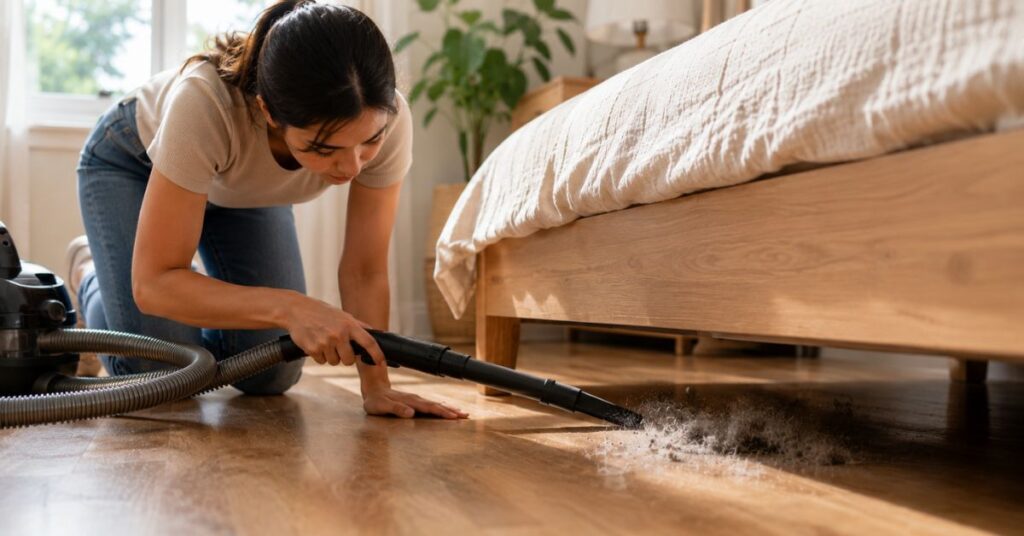
Following a simple process ensures that every part of the area gets cleaned properly.
Step 1: Clear Everything Out
Remove all boxes, baskets, shoes, blankets, and other stored items from underneath the bed.
This gives you full access to the floor and helps you decide which belongings should stay, be donated, or thrown away.
Step 2: Check for Hidden Dirt
Use a flashlight to inspect every corner.
Look for:
- Thick dust buildup
- Cobwebs
- Pet hair
- Insects
- Moisture
- Forgotten objects
Taking a few extra minutes to inspect the area prevents small problems from becoming larger ones.
Step 3: Vacuum the Entire Area
Attach a crevice tool or extension wand to your vacuum.
Start at the farthest corner and slowly work your way toward the edge of the bed.
Vacuum:
- Along the walls
- Around bed legs
- Corners
- Under storage containers
- Bed frame supports
Move slowly so the vacuum can capture fine dust instead of scattering it.
Step 4: Dust the Bed Frame
Dust doesn’t collect only on the floor.
Use a microfiber cloth or long-handled duster to clean:
- Wooden slats
- Metal rails
- Support beams
- Headboard supports
- Bed legs
Removing dust from the frame helps keep the entire bedroom cleaner.
Step 5: Wipe Hard Surfaces
If your bed frame has wooden panels or drawers, wipe them with a slightly damp microfiber cloth.
Avoid using excessive water on wood.
Allow surfaces to dry completely before returning storage items.
Step 6: Clean Storage Containers
Plastic bins, baskets, and organizers also collect dust.
Clean each one before placing it back beneath the bed.
Plastic containers can be wiped with warm water and mild dish soap.
Fabric storage bags should be vacuumed using a soft brush attachment.
Step 7: Organize Before Putting Everything Back
Instead of returning everything to its original place, organize belongings by category.
For example:
- Winter blankets together
- Shoes together
- Holiday decorations together
- Extra bedding together
Leaving small spaces between storage bins allows better airflow and reduces future dust buildup.
How to Clean Under the Bed Without Moving It
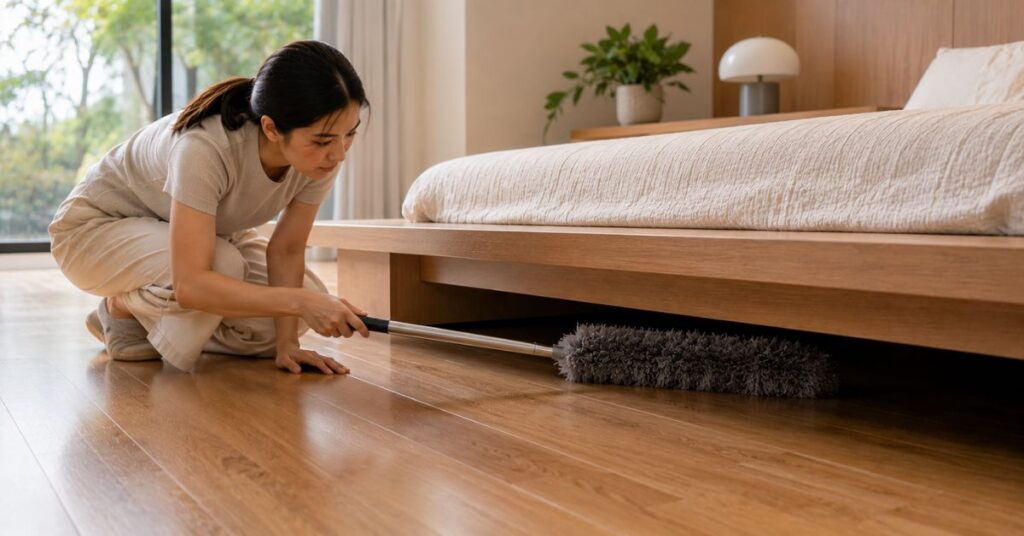
Large beds can be difficult to lift or move, especially if they’re made from solid wood or include built-in storage.
Fortunately, you can still clean underneath effectively.
Use a Long-Handled Duster
An extendable duster reaches far beneath the bed while allowing you to stay standing.
Slide it from multiple sides to collect loose dust.
Vacuum With an Extension Wand
Most modern vacuums include long extension tubes that easily reach the center of the bed without requiring heavy lifting.
Try a Flat Microfiber Mop
For hardwood, laminate, or tile floors, wrap a clean microfiber cloth around a flat mop.
Lightly dampen the cloth and slide it beneath the bed to capture remaining dust.
Let a Robot Vacuum Help
If your bed has enough clearance, a robot vacuum can maintain the area automatically several times each week.
This simple habit significantly reduces long-term dust buildup.
How to Clean Under a Low Bed
Low platform beds provide less space for cleaning, but the task is still manageable with the right approach.
Use Slim Cleaning Tools
Choose tools designed for narrow spaces, including:
- Flexible dusters
- Thin vacuum heads
- Flat microfiber mops
- Extendable cleaning wands
Work From Multiple Sides
Instead of trying to reach everything from one direction, clean from each side of the bed.
This helps ensure every corner receives attention.
Lift the Mattress If Necessary
If the frame is extremely low, removing the mattress temporarily may allow you to shift the frame just enough for a thorough cleaning without risking damage.
How to Clean Under Bed Storage Containers
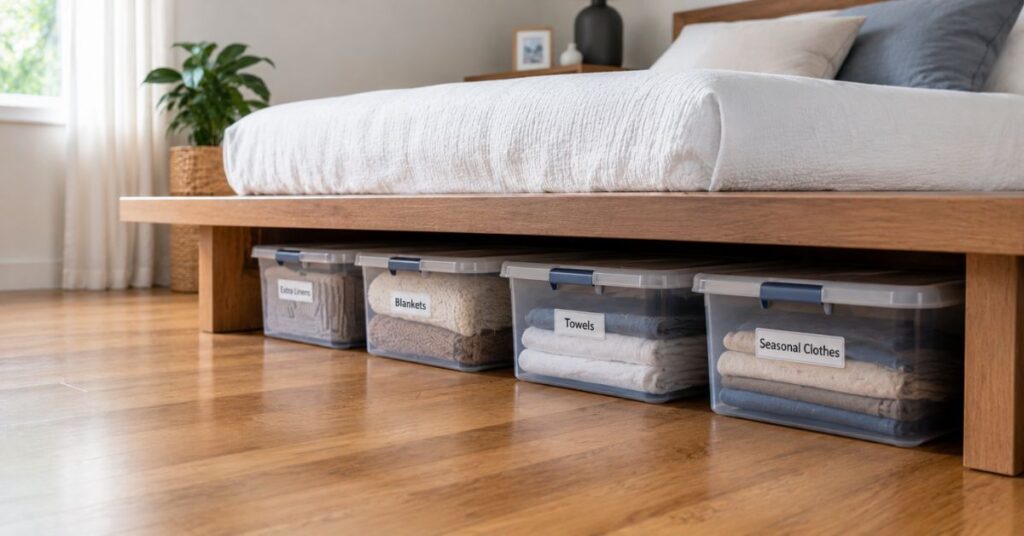
Storage bins help maximize bedroom space, but they also create more surfaces where dust can settle.
For the best results:
- Remove every container from beneath the bed.
- Vacuum the entire floor before cleaning the bins.
- Wipe plastic containers with a damp microfiber cloth.
- Vacuum fabric organizers using a soft brush attachment.
- Check each container for moisture or signs of mold.
- Return only the items you truly need.
- Label containers to make future cleaning and organization easier.
Proper under-bed storage cleaning keeps your belongings protected while reducing hidden dust.
Natural Ways to Reduce Dust Under the Bed
Preventing dust is much easier than removing thick layers after months of neglect.
Simple habits can make a noticeable difference.
Vacuum Every Two to Four Weeks
Regular vacuuming prevents dust from turning into large dust bunnies and helps maintain better bedroom hygiene.
Wash Bedding Weekly
Sheets, blankets, and pillowcases release fibers and skin cells every day. Washing them weekly reduces the amount of dust that settles beneath the bed.
Choose Covered Storage
Plastic bins with secure lids protect seasonal clothing and linens from dust far better than cardboard boxes.
Replace HVAC Filters
Clean air filters trap airborne particles before they settle throughout the bedroom, helping reduce allergens under the bed.
Control Indoor Humidity
Keeping humidity between 30% and 50% helps discourage dust mites while creating a healthier sleeping environment.
Common Mistakes to Avoid When Cleaning Under the Bed
Even people who clean their homes regularly can make small mistakes that reduce the effectiveness of their efforts. Avoiding these common errors will help you keep the area cleaner for longer while protecting your flooring and furniture.
1. Cleaning Only When Dust Is Visible
Dust starts collecting long before you can see it. Waiting until large dust bunnies appear makes the job much harder and allows allergens to spread throughout the room.
Better approach: Vacuum or dust under the bed every two to four weeks.
2. Using a Feather Duster
Traditional feather dusters often move dust from one place to another instead of trapping it.
Choose a microfiber duster because its fibers hold dust until you wash the cloth.
3. Forgetting the Bed Frame
Many people vacuum only the floor while ignoring the frame itself.
Dust also settles on:
- Wooden slats
- Metal rails
- Bed legs
- Storage drawers
- Headboard supports
Cleaning these surfaces prevents dust from falling back onto the floor.
4. Storing Dirty Items
Avoid placing dusty shoes, sports equipment, or unwashed blankets beneath your bed.
Always clean items before returning them to storage.
5. Overloading Under-Bed Storage
Packing every inch with boxes blocks airflow and creates more places for dust to settle.
Leave small gaps between containers whenever possible.
How Often Should You Clean Under the Bed?
The ideal cleaning schedule depends on your lifestyle, pets, allergies, and how much you use the space for storage.
General Recommendation
| Home Type | Cleaning Frequency |
| No pets | Every 4 weeks |
| Pet owners | Every 2 weeks |
| Allergy sufferers | Every 1–2 weeks |
| Homes with children | Every 2–3 weeks |
| Heavy under-bed storage | Every 2 weeks |
If someone in your household has asthma or dust allergies, cleaning more often can help improve indoor air quality.
Weekly and Monthly Under-Bed Cleaning Schedule
| Task | Weekly | Monthly |
| Vacuum around bed | ✅ | ✅ |
| Remove visible dust | ✅ | ✅ |
| Vacuum under the bed | ✅ | |
| Wipe bed frame | ✅ | |
| Clean storage bins | ✅ | |
| Declutter stored items | ✅ | |
| Inspect for pests or moisture | ✅ | |
| Wash under-bed storage bags | Every 2–3 Months |
Following a routine keeps dirt from becoming overwhelming.
Expert Housekeeping Tips for a Dust-Free Bedroom

Professional housekeepers rely on consistent habits rather than deep cleaning only once or twice a year.
Rotate Storage Seasonally
Store only items you currently need. Move seasonal decorations, winter blankets, or holiday clothing elsewhere when not in use.
Keep Storage Containers Closed
Plastic containers with tight-fitting lids protect your belongings while preventing dust from settling inside.
Vacuum Slowly
Moving the vacuum too quickly leaves fine particles behind.
Slow, overlapping strokes remove much more dust.
Wash Microfiber Cloths Correctly
Avoid using fabric softener because it reduces the cloth’s ability to trap dust.
Wash microfiber cloths separately using warm water and mild detergent.
Don’t Forget Air Vents
Dust often enters the bedroom through heating and cooling vents.
Cleaning vents regularly reduces the amount of dust that settles under furniture.
Pro Tip
After vacuuming under the bed, lightly wipe the floor with a damp microfiber mop. This removes the fine layer of dust that vacuums sometimes leave behind and helps keep the area cleaner for longer.
Warning
Never spray large amounts of water or liquid cleaners under wooden bed frames. Excess moisture can damage wood, encourage mold growth, and warp flooring over time.
✔ Quick Under-Bed Cleaning Checklist
Before finishing, make sure you’ve completed these tasks:
- Remove everything from under the bed.
- Vacuum all corners and edges.
- Dust the bed frame.
- Wipe hard surfaces.
- Clean storage containers.
- Throw away unnecessary clutter.
- Return only clean, organized items.
- Check for signs of moisture or pests.
FAQ
1. What is the best way to clean under the bed?
The easiest method is to remove all stored items, vacuum thoroughly using a crevice attachment, dust the bed frame, wipe surfaces with a microfiber cloth, and organize everything before placing it back.
2. How often should I clean under my bed?
Most homes benefit from cleaning every four weeks. Homes with pets, children, or allergy sufferers should clean every one to two weeks.
3. Can I clean under the bed without moving it?
Yes. A long-handled duster, extension vacuum wand, flat microfiber mop, or robot vacuum can reach underneath most beds without moving heavy furniture.
4. Why does so much dust collect under the bed?
Limited airflow, fabric fibers, dead skin cells, and pet hair naturally settle beneath furniture where they remain undisturbed.
5. Is it okay to store items under the bed?
Yes, but use clean plastic containers with lids instead of cardboard boxes or open baskets.
6. Can dust under the bed cause allergies?
Yes. Dust often contains allergens such as dust mites, pollen, pet dander, and mold spores that may trigger allergy symptoms.
7. What’s the best tool for cleaning low beds?
A flat microfiber mop or vacuum with an extension wand works well for beds with limited clearance.
8. Should I vacuum or dust first?
Vacuum first to remove loose debris, then wipe remaining surfaces with a microfiber cloth for the best results.
9. Does a robot vacuum clean under beds effectively?
If your bed has enough clearance, a robot vacuum can significantly reduce dust buildup with regular use.
10. How can I keep dust from coming back?
Vacuum regularly, wash bedding weekly, replace HVAC filters, keep humidity between 30% and 50%, and use covered storage containers.
Final Thoughts

Cleaning beneath your bed may not be the most exciting household chore, but it has a big impact on the cleanliness and comfort of your bedroom. Hidden dust, allergens, and clutter can build up quickly when this space is ignored, making the room feel less fresh and potentially affecting indoor air quality.
By following a simple routine, using the right cleaning tools, and organizing under-bed storage wisely, you can keep this often-forgotten area neat with very little effort. Whether you clean once a month or every two weeks, consistency is the key to preventing heavy dust buildup and maintaining a healthier home.
A cleaner space under your bed means a cleaner bedroom overall—and a more comfortable place to rest every night.