
Remove Hard Water Stains from Shower Glass. Have you ever stepped into your bathroom and noticed cloudy white spots covering your shower door? These stubborn marks are usually hard water stains on shower glass, and they can make even the cleanest bathroom look neglected. The good news is that you don’t need expensive cleaners or endless scrubbing to restore your shower glass to its original shine. With the right cleaning methods and a little consistency, you can remove mineral deposits quickly while preventing them from coming back.
Hard water stains develop when water containing high levels of minerals such as calcium and magnesium evaporates on the glass surface. As the water dries, it leaves behind a layer of mineral deposits that gradually become thicker and harder to remove. Many homeowners mistake these stains for soap scum, but the two are different. Soap scum is caused by soap residue reacting with minerals in water, while hard water stains are purely mineral buildup. Knowing the difference helps you choose the most effective cleaning solution.
Fortunately, removing hard water stains on shower glass doesn’t require harsh chemicals in most cases. Simple household ingredients like white vinegar, baking soda, lemon juice, and warm water can dissolve mineral deposits naturally. Combined with proper cleaning tools such as microfiber cloths and non-scratch sponges, these ingredients can leave your shower glass crystal clear without damaging the surface.
In this guide, you’ll learn why hard water stains form, the best homemade cleaning solutions, professional cleaning methods, mistakes to avoid, and simple habits that keep your shower glass spotless for weeks. Whether your shower door has light water spots or years of stubborn buildup, these step-by-step methods will help restore its shine safely and effectively.
Why Do Hard Water Stains Form on Shower Glass?
Hard water contains dissolved minerals that remain behind whenever water evaporates. Every time you shower, tiny droplets cling to the glass. As these droplets dry, they leave microscopic mineral crystals behind. At first, these deposits are almost invisible, but over time they accumulate into the cloudy white film most homeowners recognize as hard water stains.
Bathrooms create the perfect environment for mineral buildup because they stay warm and humid after every shower. Steam allows water droplets to remain on the glass longer, giving minerals more time to settle. If the shower door isn’t dried after use, new layers continue forming every day until they become difficult to remove.
Another factor is the amount of minerals in your local water supply. Homes with very hard water experience much faster buildup than those with soft water. Even if you clean regularly, mineral deposits can reappear within days if preventive measures aren’t taken.
Soap residue also contributes to the problem. While soap scum and hard water stains are different, they often mix on shower glass. This combination creates a thicker, stickier layer that traps even more minerals, making the stains appear darker and harder to clean.
Understanding how these stains develop makes it easier to prevent them. Instead of waiting until the glass looks cloudy, removing fresh mineral deposits every week requires much less effort and helps preserve the clarity of the glass.
Signs Your Shower Glass Has Hard Water Stains
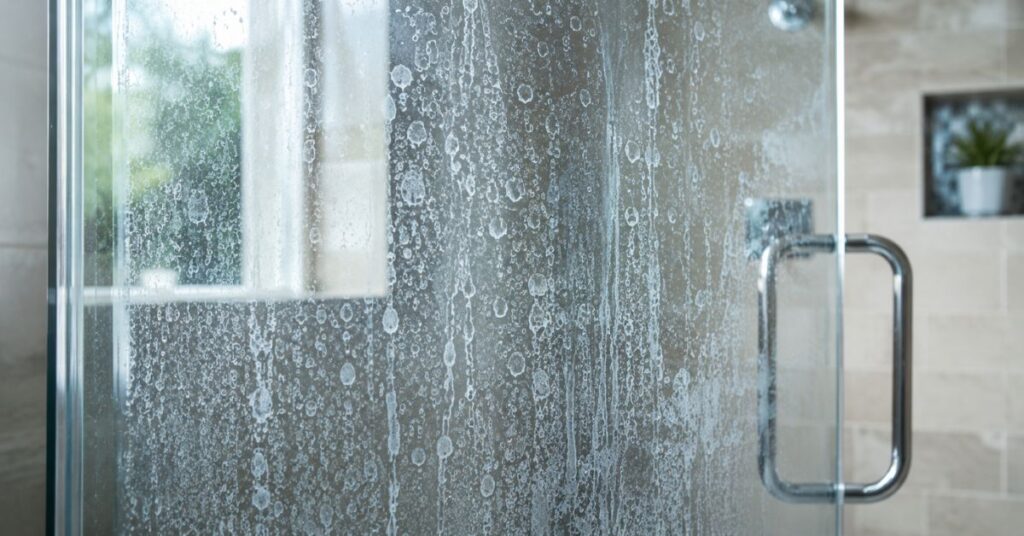
Sometimes homeowners aren’t sure whether they’re dealing with dirt, soap scum, or mineral deposits. Here are the most common signs of hard water stains on shower glass:
- Cloudy white or gray patches
- Chalky spots that don’t wipe away with water
- Rough texture on the glass surface
- Rainbow-like mineral film
- Water spots that return soon after cleaning
- Reduced transparency of the shower door
- White rings around metal fixtures near the glass
- Stubborn buildup that requires more than regular bathroom cleaner
If you notice several of these signs, you’re most likely dealing with hard water stains rather than ordinary dirt.
Supplies You’ll Need
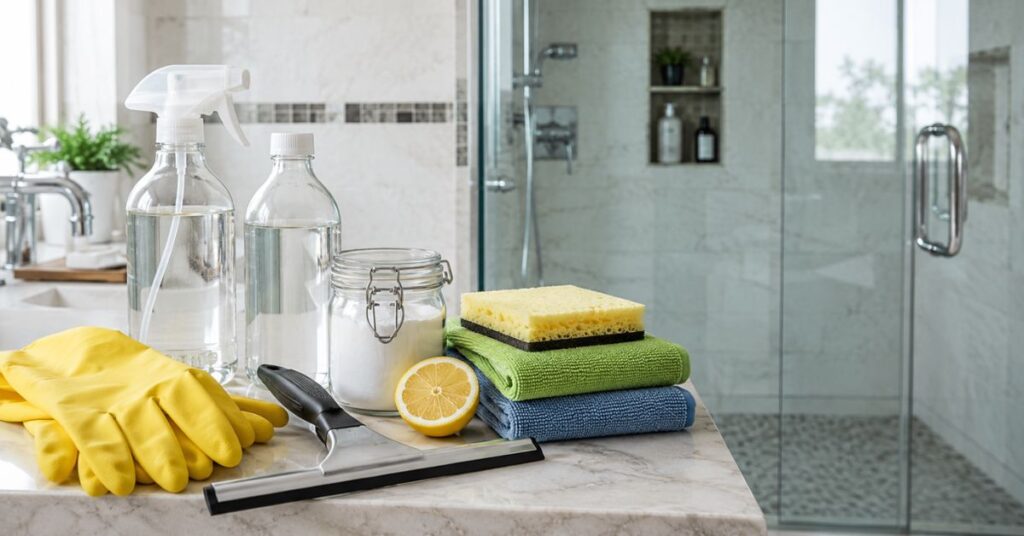
Before starting, gather all the cleaning supplies so the process goes smoothly.
You’ll need:
- White vinegar
- Baking soda
- Warm water
- Spray bottle
- Microfiber cloths
- Non-scratch sponge
- Soft-bristle brush
- Rubber gloves
- Squeegee
- Dish soap (optional)
- Lemon juice (optional)
These inexpensive items can handle most hard water stains without the need for harsh commercial cleaners.
Method 1: Remove Hard Water Stains with White Vinegar
White vinegar is one of the most effective natural cleaners because its mild acidity dissolves calcium and magnesium deposits.
Step 1
Fill a spray bottle with equal parts white vinegar and warm water.
Step 2
Spray the solution generously over the entire shower glass, making sure every stained area is fully covered.
Step 3
Allow the vinegar to sit for 20–30 minutes. This gives the acid enough time to break down the mineral deposits.
Step 4
Use a microfiber cloth or soft sponge to wipe the glass in circular motions.
Step 5
Rinse thoroughly with warm water.
Step 6
Dry the glass immediately with a clean microfiber towel or squeegee to prevent new water spots from forming.
For moderate stains, one treatment is usually enough. Older stains may require repeating the process two or three times.
Why Vinegar Works So Well
The acetic acid in vinegar reacts with calcium deposits, gradually dissolving them without scratching the glass. Unlike abrasive powders or steel wool, vinegar cleans safely while protecting the shower door’s finish.
It also helps remove light soap scum, making it one of the best all-purpose natural bathroom cleaners.
Method 2: Remove Hard Water Stains with Baking Soda Paste
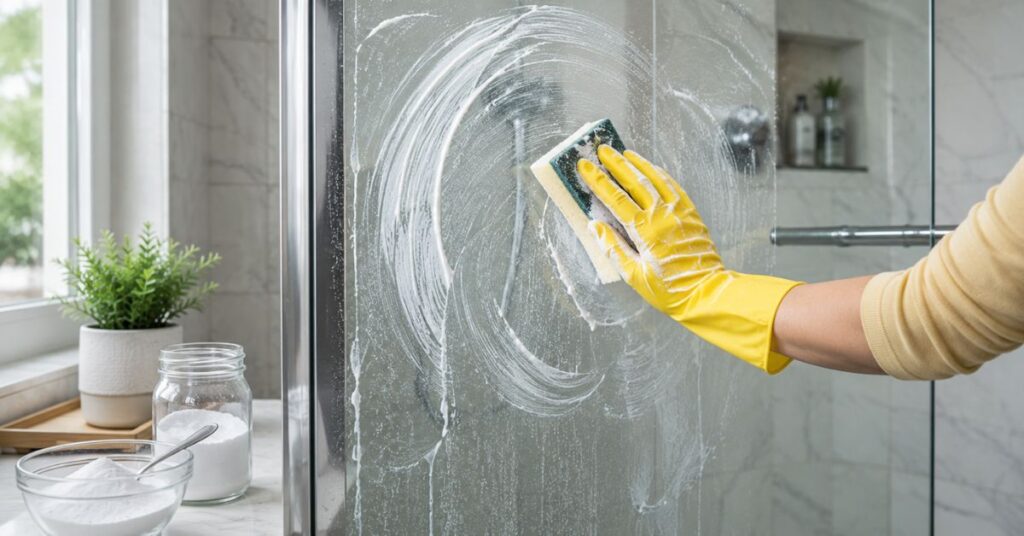
If vinegar alone doesn’t completely remove hard water stains on shower glass, baking soda can provide the extra cleaning power you need. Baking soda is a mild abrasive that helps lift stubborn mineral deposits without scratching tempered shower glass when used correctly. When combined with vinegar, it creates a powerful cleaning combination that breaks down years of buildup while remaining safe for most shower doors.
Step 1: Make the Paste
Mix about ½ cup of baking soda with a few tablespoons of water until it forms a thick, spreadable paste. The consistency should be similar to toothpaste—not too runny or too dry.
Step 2: Apply to the Glass
After spraying the shower glass with white vinegar, spread the baking soda paste over the stained areas using a soft sponge or microfiber cloth. Focus on the cloudiest spots where mineral deposits are thickest.
Step 3: Let It Sit
Allow the paste to remain on the glass for 15–20 minutes. During this time, the baking soda loosens stubborn deposits while the vinegar continues dissolving minerals underneath.
Step 4: Scrub Gently
Using a non-scratch sponge, gently scrub the surface in small circular motions. Avoid using excessive force, as gentle pressure is usually enough once the cleaner has done its job.
Step 5: Rinse and Dry
Rinse the shower glass thoroughly with warm water until all residue is removed. Finish by drying the glass with a clean microfiber cloth or a squeegee. Drying is an important final step because it prevents fresh mineral deposits from forming as the water evaporates.
Method 3: Clean Shower Glass with Lemon Juice
Lemon juice is another excellent natural solution for removing hard water stains on shower glass. Like vinegar, lemons contain natural acids that dissolve mineral deposits while leaving behind a fresh citrus scent. Many homeowners prefer lemon juice because it doesn’t have the strong smell associated with vinegar. While it may take slightly longer to remove severe buildup, it’s an effective option for light to moderate stains and regular maintenance.
Cut a fresh lemon in half and rub it directly over the stained areas. You can also squeeze fresh lemon juice into a spray bottle and apply it generously across the glass. Let the juice sit for about 15–20 minutes before wiping the surface with a damp microfiber cloth. If stains remain, sprinkle a small amount of baking soda onto the cloth and gently polish the glass. Rinse thoroughly with warm water and dry immediately. Regular use of lemon juice once a week can help prevent mineral buildup while keeping your bathroom smelling fresh and clean.
Method 4: Use a Commercial Hard Water Stain Remover
Sometimes natural cleaners aren’t enough, especially if the mineral deposits have been building up for months or years. In these situations, a commercial hard water stain remover can save time and effort. These products are specially formulated to dissolve calcium, lime, and mineral deposits more quickly than household ingredients.
Before using any commercial cleaner, read the manufacturer’s instructions carefully. Wear rubber gloves, ensure the bathroom is well ventilated, and avoid mixing commercial cleaners with vinegar, bleach, or ammonia. Spray the cleaner evenly across the shower glass and allow it to sit for the recommended amount of time. Use a soft sponge or microfiber cloth to wipe away the loosened deposits, then rinse thoroughly with clean water.
Always choose products labeled as safe for glass surfaces. Harsh acidic cleaners designed for stone or concrete should never be used on shower glass because they may damage protective coatings or surrounding fixtures. If you’re unsure, test the product on a small hidden area before cleaning the entire door.
How to Remove Years of Built-Up Hard Water Stains
Old mineral deposits often require multiple cleaning sessions rather than one aggressive treatment. Patience is the key to restoring heavily stained shower glass.
Start by soaking the glass with warm vinegar for at least 30 minutes. Covering the surface with vinegar-soaked paper towels helps keep the solution in contact with stubborn deposits for longer. After soaking, apply a baking soda paste and gently scrub with a soft sponge. Rinse and inspect the surface. If stains remain, repeat the process rather than scrubbing harder.
For extremely stubborn buildup, a plastic scraper designed for glass can carefully lift thick mineral deposits after they’ve been softened by vinegar. Never use metal razor blades unless they are specifically recommended by the shower door manufacturer, as they may scratch the glass.
Several gentle cleaning sessions are much safer and often more effective than one aggressive attempt. Most shower doors with years of buildup can be restored with persistence and the right cleaning techniques.
Mistakes to Avoid When Cleaning Shower Glass
Even with the best intentions, many people accidentally damage their shower doors by using the wrong cleaning methods. Avoid these common mistakes to keep your glass looking new.
- Using steel wool or metal scrubbers that scratch the glass.
- Cleaning with highly abrasive powders that dull the surface.
- Mixing bleach with vinegar or other acidic cleaners.
- Letting cleaning products dry completely on the glass.
- Ignoring the edges and corners where mineral deposits often collect.
- Forgetting to rinse away cleaning residue.
- Allowing water to air dry after cleaning instead of wiping it dry.
- Waiting months before cleaning heavy mineral buildup.
Avoiding these mistakes not only protects the glass but also makes future cleaning much easier.
How to Prevent Hard Water Stains on Shower Glass
The easiest way to deal with hard water stains on shower glass is to stop them from forming in the first place. Prevention requires only a few minutes after each shower and can save hours of scrubbing later.
Use a squeegee to remove water from the glass immediately after every shower. This simple habit removes most of the water before it has a chance to evaporate and leave mineral deposits behind. Follow up with a microfiber cloth if necessary to remove any remaining droplets.
Clean your shower glass once a week using vinegar or a mild glass cleaner, even if it looks clean. Regular maintenance prevents minerals from building into thick layers. Improving bathroom ventilation by running the exhaust fan also helps reduce moisture and speeds up drying.
If your home has very hard water, installing a water softener can significantly reduce mineral deposits throughout the house. While this is a larger investment, it protects not only your shower glass but also faucets, appliances, and plumbing fixtures.
Best Cleaning Schedule for Crystal-Clear Shower Glass
Keeping your shower glass spotless doesn’t require hours of work. A simple cleaning routine can prevent hard water stains on shower glass from becoming a major problem. Instead of waiting until the glass looks cloudy, regular maintenance keeps mineral deposits from building up and makes every cleaning session faster and easier.
Here’s an easy schedule you can follow:
| Task | Frequency |
| Use a squeegee after every shower | Daily |
| Wipe glass with a microfiber cloth | Every 2–3 days |
| Clean with vinegar solution | Once a week |
| Deep clean with baking soda and vinegar | Once a month |
| Inspect for stubborn mineral deposits | Every 2–3 months |
Following this routine takes only a few minutes each week but can keep your shower doors looking like new for years.
Extra Tips to Keep Your Shower Glass Sparkling
Small habits can make a huge difference when it comes to preventing mineral buildup. Consider these expert-approved tips:
- Keep a squeegee inside the shower and use it after every shower.
- Open the bathroom window or run the exhaust fan for at least 20 minutes after showering.
- Dry metal fixtures along with the glass to prevent white mineral rings.
- Replace worn-out microfiber cloths regularly for better cleaning results.
- Avoid using bar soap if excessive soap scum is a recurring issue.
- Store homemade vinegar cleaner in a labeled spray bottle for quick weekly cleaning.
- Clean shower tracks and corners regularly because mineral deposits often begin there.
- Never allow standing water to remain on the shower door.
Developing these simple habits can dramatically reduce cleaning time and help maintain a bright, fresh-looking bathroom.
FAQs
Can vinegar damage shower glass?
No. White vinegar is generally safe for standard glass shower doors when used as directed. However, avoid prolonged contact with natural stone surfaces surrounding the shower because vinegar can damage materials like marble, limestone, and travertine.
How often should I clean shower glass?
For most homes, cleaning once a week is enough. If you have very hard water, you may need to wipe down the glass more frequently to prevent mineral deposits from accumulating.
What is the fastest way to remove hard water stains on shower glass?
Spraying a mixture of equal parts white vinegar and warm water, allowing it to sit for 20–30 minutes, and wiping with a microfiber cloth is one of the fastest and most effective methods for light to moderate stains.
Can baking soda scratch glass?
No. Baking soda is a mild abrasive and is generally safe for tempered shower glass when used with a soft sponge or microfiber cloth. Avoid applying excessive pressure or using rough scrubbing pads.
Why do hard water stains keep coming back?
The stains return because mineral-rich water continues to dry on the glass after every shower. Drying the glass with a squeegee or microfiber cloth immediately after use is the best way to prevent new deposits from forming.
Is a commercial cleaner better than vinegar?
Commercial cleaners often work faster on severe mineral buildup, but vinegar is affordable, natural, and highly effective for routine cleaning. Many homeowners use vinegar for weekly maintenance and reserve commercial products for occasional deep cleaning.
Can I use a magic eraser on shower glass?
A magic eraser may remove some stains, but it should be used carefully and according to the manufacturer’s instructions. Test it on a small, inconspicuous area first to ensure it doesn’t affect any protective coating on the glass.
Final Thoughts
Learning how to remove hard water stains on shower glass doesn’t have to involve expensive products or exhausting scrubbing sessions. Most mineral deposits can be removed using simple household ingredients such as white vinegar, baking soda, and lemon juice. When combined with gentle cleaning tools and a consistent maintenance routine, these natural methods can restore cloudy shower doors to a sparkling, streak-free finish.
The key is to address stains before they become severe. Wiping the glass after each shower, cleaning it weekly, and performing a monthly deep clean can prevent heavy mineral buildup and extend the life of your shower door. These small habits save time, reduce frustration, and keep your bathroom looking fresh every day.
Whether you’re dealing with light water spots or years of stubborn deposits, the techniques in this guide provide safe, effective, and budget-friendly solutions. By making shower glass care part of your regular housekeeping routine, you’ll enjoy a cleaner, brighter bathroom and spend far less time scrubbing in the future.