
Why Proper Wood Furniture Cleaning Matters
Wooden furniture is one of the biggest investments in any home. From dining tables and bookshelves to dressers and coffee tables, these pieces are designed to last for years. However, everyday dust, spills, fingerprints, and sunlight can slowly reduce their beauty if they aren’t cared for properly. Learning how to clean wooden furniture without damaging the finish helps protect both the appearance and durability of your furniture.
In this guide, you’ll learn the safest ways to clean wooden furniture, remove common stains, choose the right cleaning products, and maintain the finish for years to come. Whether you have modern furniture or treasured antiques, these practical tips will help you keep every wooden surface looking its best.
Types of Wood Furniture Finishes
Before you start cleaning, it’s important to know what type of finish your furniture has. Different finishes react differently to moisture and cleaning products, so using the right method can prevent unnecessary damage.
Sealed Wood
Sealed wood has a protective coating such as polyurethane, lacquer, or varnish. This is the most common finish found on modern furniture. It resists moisture better than unfinished wood, making it easier to clean with a lightly damp microfiber cloth and a mild soap solution.
Painted Wood
Painted wooden furniture has a layer of paint that protects the surface. While it is generally durable, harsh chemicals and rough scrubbing can cause the paint to chip or fade. Gentle cleaning with a soft cloth is the safest option.
Oiled Wood
Oiled wood has a natural appearance because penetrating oils soak into the wood instead of forming a protective layer on top. This finish requires extra care since excessive water can dry out the wood or leave marks. It also benefits from occasional re-oiling to maintain its rich color.
Unfinished Wood
Unfinished wood has little or no protective coating, making it highly absorbent. It can easily soak up water, oils, and stains, so only minimal moisture should be used during cleaning. A dry microfiber cloth or a slightly damp cloth is usually the safest choice.
Understanding your furniture’s finish is the first step toward choosing the right cleaning method. Once you know what type of wood you’re working with, you can clean it confidently without damaging its natural beauty.
Cleaning Supplies You’ll Need
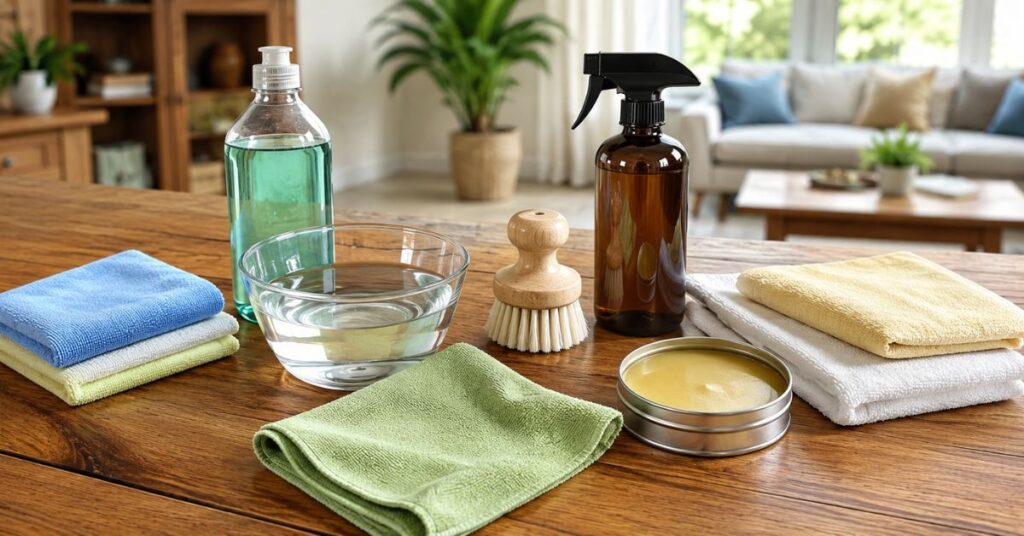
Using the right cleaning supplies is just as important as using the correct technique. Harsh chemicals and rough tools can scratch the surface or strip away the protective finish. Choosing gentle products will help you clean wooden furniture without damaging the finish while keeping it looking polished and well-maintained.
Microfiber Cloth
A microfiber cloth is the best tool for cleaning wooden furniture. Its soft fibers trap dust and dirt without scratching the surface. Unlike paper towels or rough rags, microfiber won’t leave lint behind or create tiny scratches. Keep one cloth for dusting and another for drying after cleaning.
Mild Dish Soap
A few drops of mild dish soap mixed with warm water are enough to remove everyday dirt, fingerprints, and light grease. Avoid using strong detergents, bleach, or cleaners that contain ammonia, as they can dull or damage the finish over time.
Warm Water
Warm water helps loosen dirt without being too harsh on the wood. However, the cloth should only be slightly damp, not soaking wet. Too much water can seep into joints and cracks, causing swelling, stains, or warping.
Soft-Bristled Brush
A soft-bristled brush is useful for cleaning carved details, grooves, and decorative edges where dust often collects. Brush gently to avoid scratching the finish while removing trapped debris.
Wood Polish (Optional)
A high-quality wood polish can restore shine and add a protective layer to sealed furniture. However, it should only be used occasionally and according to the manufacturer’s instructions. Applying too much polish can create a sticky buildup that attracts more dust.
Cleaning Products to Avoid
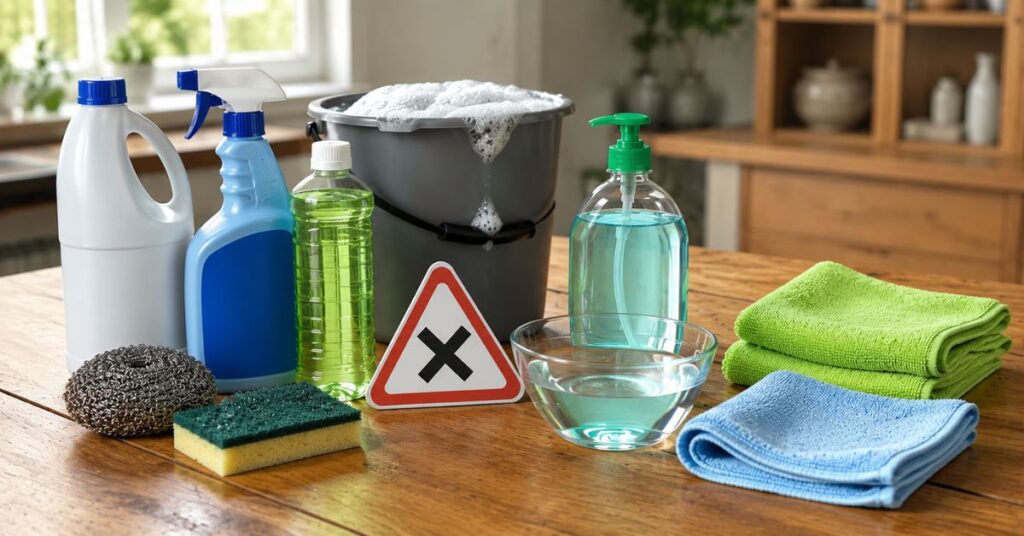
Not every household cleaner is safe for wooden furniture. Some products may seem effective at first but can permanently damage the finish or dry out the wood. Knowing what to avoid is an important part of proper furniture care.
Bleach
Bleach is too harsh for wood surfaces. It can discolor the finish, weaken the protective coating, and leave permanent marks that are difficult to repair.
Ammonia-Based Cleaners
Many glass and multi-purpose cleaners contain ammonia, which can strip away the finish and make wood appear dull. These products should never be used on finished wooden furniture.
Abrasive Scrubbers
Steel wool, scouring pads, and rough brushes can leave visible scratches on wooden surfaces. Always use soft microfiber cloths or gentle brushes instead.
Excess Water
One of the biggest mistakes homeowners make is using too much water while cleaning. Wood naturally absorbs moisture, and excess water can lead to swelling, cracking, peeling finishes, or water stains. Always wipe the surface dry immediately after cleaning.
Silicone-Based Sprays
Some furniture sprays contain silicone that creates a temporary shine but leaves behind a residue. Over time, this buildup attracts dust and makes future refinishing more difficult.
Step-by-Step Guide to Cleaning Wooden Furniture
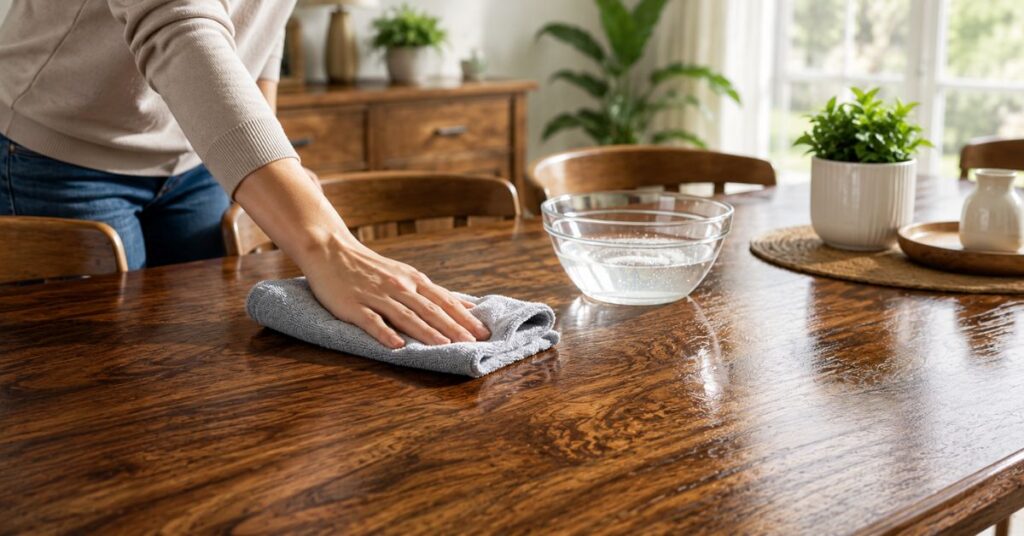
Cleaning wooden furniture properly doesn’t take much time, but following the correct steps helps protect the finish and keeps the surface looking like new.
Step 1: Remove Loose Dust
Start by dusting the entire surface with a clean, dry microfiber cloth. Work in the direction of the wood grain instead of wiping in circles. This removes loose dirt that could scratch the finish during cleaning.
Step 2: Prepare a Gentle Cleaning Solution
Fill a small bowl or bucket with warm water and add just a few drops of mild dish soap. Stir gently until the soap is mixed. Avoid using too much soap because it can leave a residue on the wood.
Step 3: Wipe the Surface Carefully
Dip a microfiber cloth into the solution and wring it out thoroughly. The cloth should feel damp, not wet. Wipe the furniture gently, following the direction of the wood grain. Pay extra attention to areas with fingerprints, grease, or light stains.
Step 4: Clean Small Details
Use a soft-bristled brush or a cotton swab to clean decorative carvings, corners, and narrow grooves where dust often collects. Be gentle to avoid damaging delicate finishes.
Step 5: Dry Immediately
After cleaning, wipe the entire surface with a dry microfiber cloth. Removing leftover moisture helps prevent water spots and keeps the finish in excellent condition.
Step 6: Polish If Needed
If the furniture looks dull, apply a small amount of wood polish designed for your furniture’s finish. Buff gently with a clean microfiber cloth until the surface has an even, natural shine. Avoid over-polishing, as too much product can create buildup.
By following these simple steps, you can safely clean your wooden furniture and preserve its beauty without damaging the finish.
How to Remove Dust from Wooden Furniture
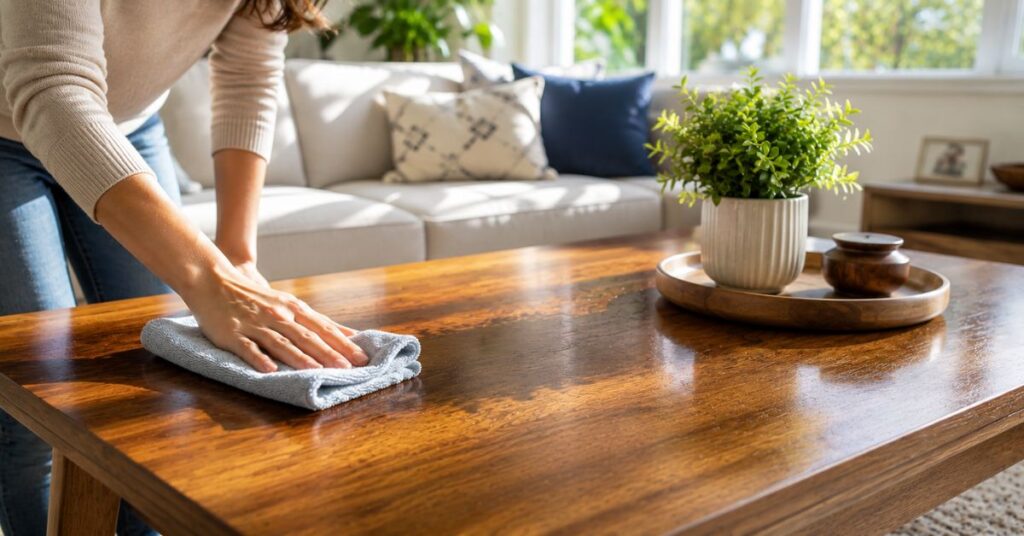
Dust may seem harmless, but it contains tiny particles that can create fine scratches when rubbed across the surface. Regular dusting keeps your furniture looking clean and helps preserve its finish.
Use a clean, dry microfiber cloth to remove dust at least once a week. Wipe gently in the direction of the wood grain instead of using circular motions. For carved details and corners, use a soft-bristled brush to remove dust without scratching the surface.
Avoid feather dusters that simply move dust around rather than trapping it. Also, never spray furniture polish directly onto the wood when dusting, as it can leave a sticky residue over time.
How to Remove Sticky Residue from Wooden Furniture
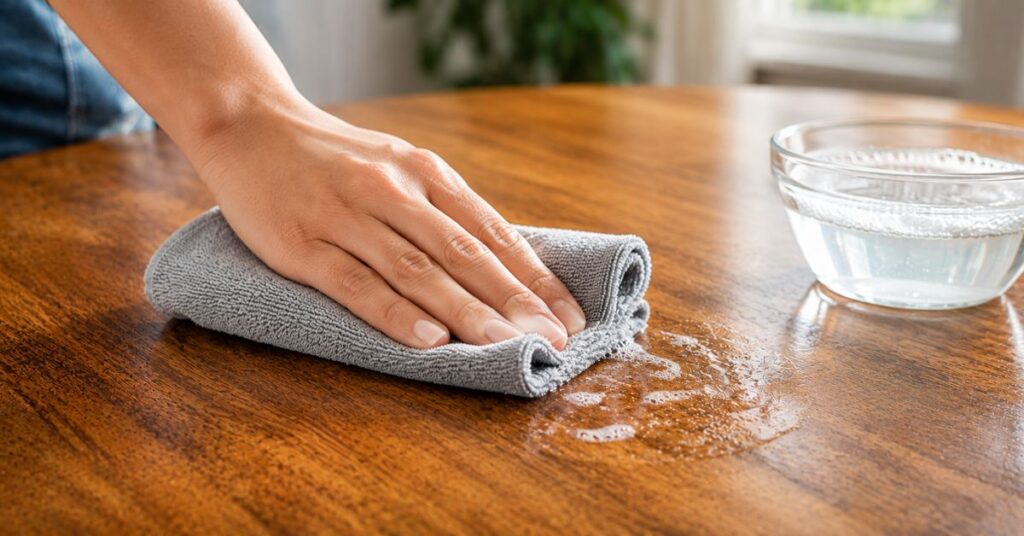
Sticky spots often come from food spills, adhesive labels, drink residue, or furniture polish buildup. Removing them carefully helps protect the finish while restoring the wood’s smooth surface.
Mix a few drops of mild dish soap with warm water and dampen a microfiber cloth. Wipe the sticky area gently until the residue begins to loosen. If needed, let the damp cloth rest on the spot for 20 to 30 seconds before wiping again.
For stubborn residue, apply a small amount of mineral oil to a soft cloth and rub gently. Once the residue is gone, wipe the surface with a clean, damp cloth and dry it immediately. Avoid scraping with sharp objects, as they can permanently scratch the finish.
How to Remove Water Stains from Wooden Furniture
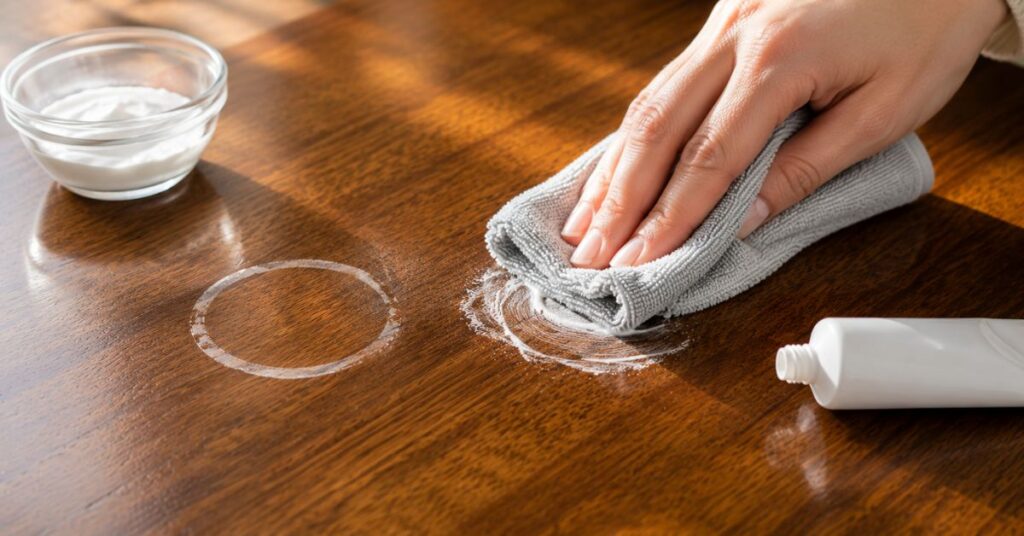
White water rings usually appear when a hot mug or cold glass is placed directly on the wood. These marks affect the finish rather than the wood itself, so they can often be removed with gentle methods.
Start by rubbing the stain lightly with a soft microfiber cloth. If the mark remains, apply a small amount of white, non-gel toothpaste to the stain and gently rub it in the direction of the wood grain using a soft cloth. Wipe away the toothpaste with a slightly damp cloth and dry the area immediately.
For older stains, a mixture of equal parts baking soda and toothpaste can help lift the mark. Always test the method on a hidden area first to make sure it doesn’t affect the finish.
How to Remove Grease and Fingerprints
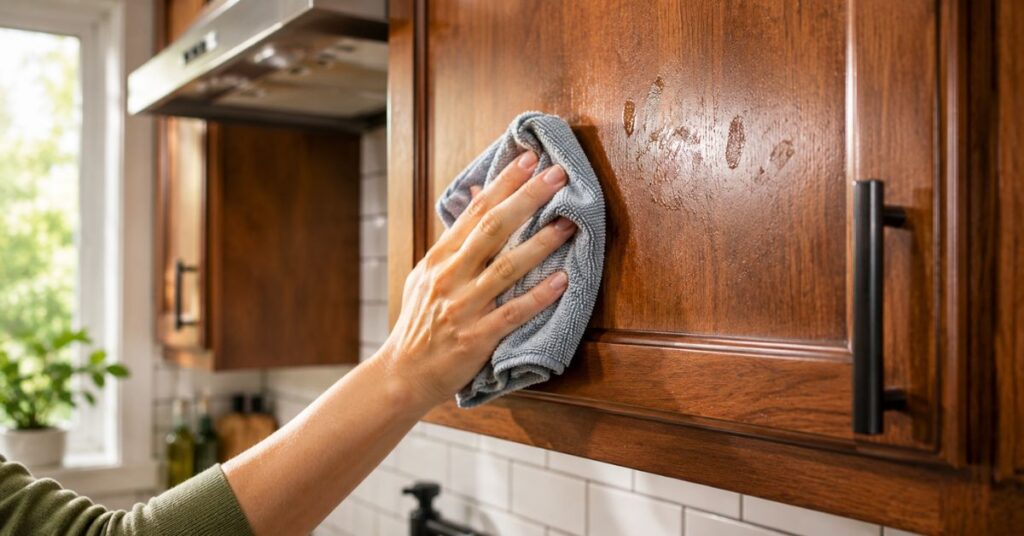
Kitchen tables, dining chairs, and wooden cabinets often collect grease and fingerprints from daily use. If left too long, this buildup can make the surface look dull and attract even more dirt.
Prepare a solution of warm water and a few drops of mild dish soap. Dampen a microfiber cloth, wring it out well, and wipe the greasy area gently. Use another clean, damp cloth to remove any soap residue, then dry the furniture with a soft towel.
Avoid using strong degreasers or all-purpose cleaners that contain ammonia, as they may damage the protective finish.
How to Remove Food and Drink Spills
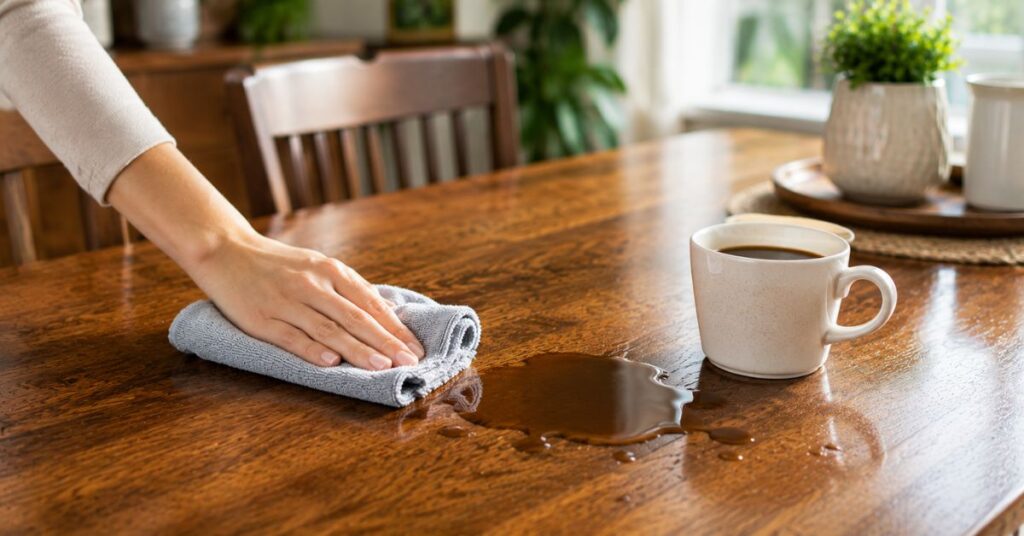
Spills should always be cleaned as soon as possible. Allowing liquids to sit on wooden furniture increases the risk of stains, swelling, or damage to the finish.
Blot the spill immediately with a clean, dry microfiber cloth instead of rubbing it across the surface. If any sticky residue remains, clean it using a damp cloth with a small amount of mild dish soap. Finish by drying the area thoroughly to prevent moisture from soaking into the wood.
How to Remove Ink Marks
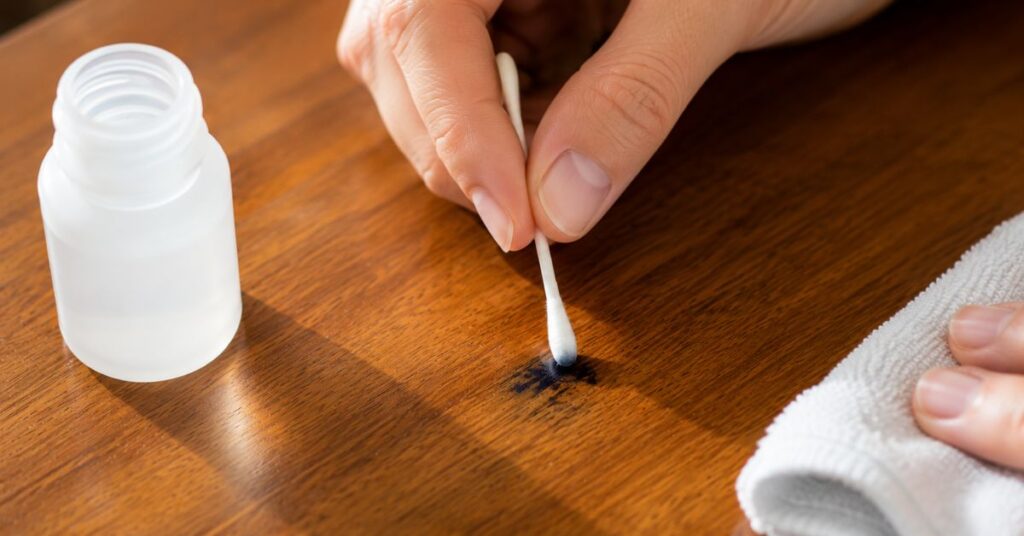
Ink stains can be difficult to remove, but acting quickly improves your chances of success. Fresh stains are much easier to clean than ones that have dried into the finish.
Dampen a cotton swab with a small amount of rubbing alcohol and gently dab the stain without scrubbing. Work slowly and avoid spreading the ink to surrounding areas. Once the stain begins to lift, wipe the area with a damp cloth and dry it immediately.
Always test rubbing alcohol on an inconspicuous spot first, as some finishes may react differently.
How to Remove Crayon and Wax
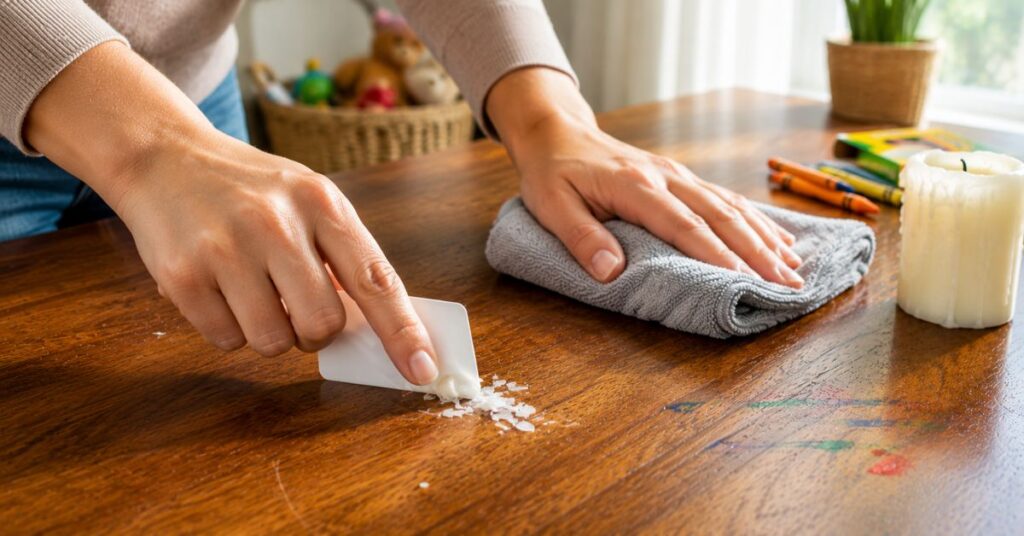
If children accidentally leave crayon or candle wax on wooden furniture, avoid scraping it off with a knife or other sharp object. This can easily scratch the finish.
Allow wax to harden completely, then place a plastic card at a slight angle and gently lift away the excess. Clean any remaining residue with a cloth lightly dampened in warm, soapy water, then dry the surface thoroughly.
For crayon marks, use a small amount of mild dish soap on a microfiber cloth and wipe gently until the marks disappear.
How to Remove Mold and Mildew
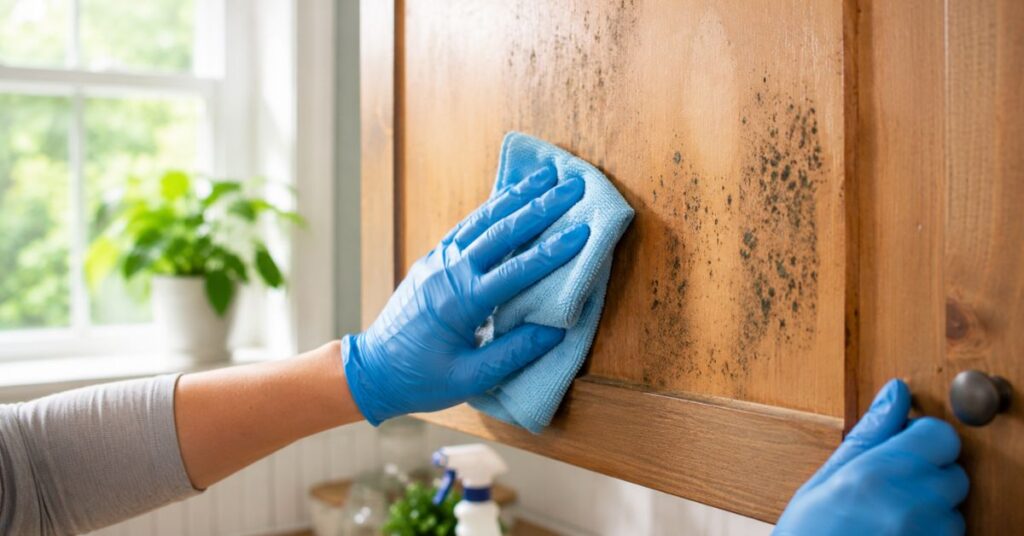
Wooden furniture stored in damp areas can sometimes develop mold or mildew. Cleaning it quickly helps prevent permanent staining and protects the finish.
Move the furniture to a well-ventilated area if possible. Wear gloves and wipe away surface mold with a microfiber cloth lightly dampened with a solution of mild soap and water. Dry the furniture immediately and allow it to air dry completely.
To prevent mold from returning, keep indoor humidity under control and avoid placing wooden furniture in damp, poorly ventilated spaces.
Quick Tips for Stain-Free Wooden Furniture
- Dust wooden furniture every week using a microfiber cloth.
- Clean spills as soon as they happen.
- Always wipe in the direction of the wood grain.
- Use coasters, placemats, and table runners to prevent water rings.
- Never let water sit on wooden surfaces.
- Test any new cleaning product on a hidden area first.
- Dry the furniture immediately after every cleaning session.
By treating stains promptly and using gentle cleaning methods, you can keep your wooden furniture looking clean, polished, and well-protected without damaging its finish.
Natural Homemade Wood Furniture Cleaners

You don’t always need expensive commercial products to keep wooden furniture clean. In fact, a few simple household ingredients can safely remove dirt and restore the wood’s natural beauty. The key is to use these cleaners in moderation and always test them on a hidden area first.
Mild Soap and Warm Water
For routine cleaning, a mixture of warm water and a few drops of mild dish soap is one of the safest options. It removes dust, fingerprints, and light grease without harming most sealed wood finishes.
Dip a microfiber cloth into the solution, wring it out well, and wipe the furniture gently. Follow with a clean, damp cloth to remove any soap residue, then dry the surface immediately with a soft towel.
White Vinegar and Water (Use with Caution)
White vinegar is often recommended as a natural cleaner, but it should be used carefully. Because vinegar is acidic, frequent use can dull or damage certain wood finishes.
If your furniture manufacturer approves vinegar cleaning, mix one part white vinegar with three parts water. Dampen a microfiber cloth with the solution and wipe the surface gently. Never pour vinegar directly onto the wood, and always dry the furniture immediately afterward.
Olive Oil and Lemon Juice Polish
If your wooden furniture has lost some of its shine, a homemade polish can help refresh its appearance.
Mix two tablespoons of olive oil with one tablespoon of fresh lemon juice. Apply a very small amount to a soft microfiber cloth and rub it gently in the direction of the wood grain. Buff with a clean cloth until the surface has a natural shine.
Use this polish only occasionally, as too much oil can leave the surface feeling sticky.
Mineral Oil for Dry Wood
Mineral oil is a good choice for unfinished or oil-finished wood that looks dry. It helps nourish the wood and enhances its natural color without creating a thick surface coating.
Apply a few drops to a soft cloth and spread a thin, even layer over the surface. Allow it to soak in for several minutes before wiping away any excess oil with a clean cloth.
Common Mistakes That Can Damage Wooden Furniture
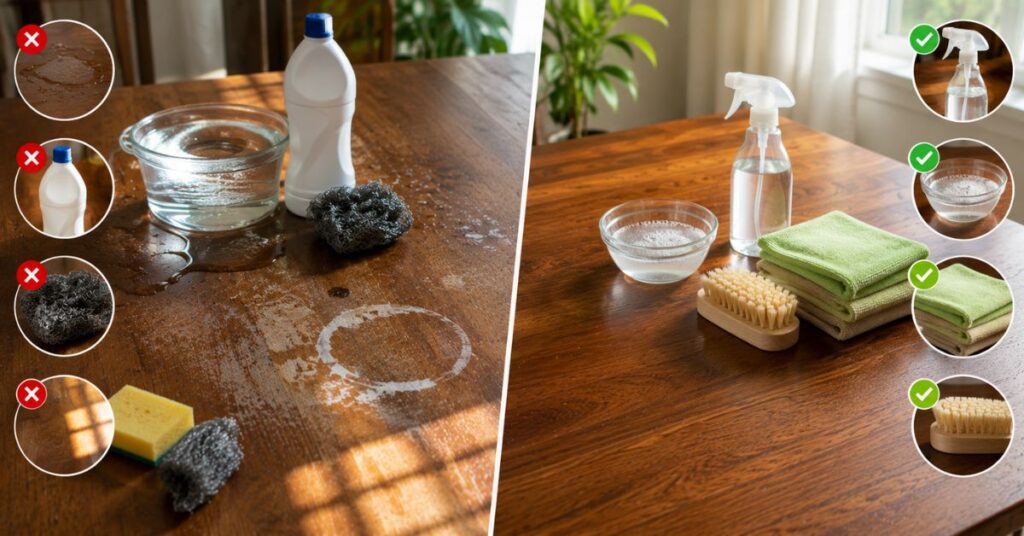
Even with good intentions, many homeowners accidentally damage their furniture by using the wrong cleaning methods. Avoiding these common mistakes will help protect the finish and extend the life of your furniture.
Using Too Much Water
Wood naturally absorbs moisture, and too much water can cause swelling, warping, peeling finishes, and water stains.
Always use a lightly damp microfiber cloth instead of soaking the surface. Dry the furniture immediately after cleaning to prevent moisture from soaking into the wood.
Using Harsh Chemical Cleaners
Bleach, ammonia, strong disinfectants, and all-purpose cleaners can strip away protective finishes and leave the wood looking dull.
Choose mild dish soap or cleaners specifically made for wooden furniture whenever possible.
Scrubbing Too Hard
Using excessive pressure or rough scrubbing pads can create scratches that permanently damage the finish.
Always clean with a soft microfiber cloth and gentle pressure. Let the cleaning solution do the work instead of aggressive scrubbing.
Ignoring Spills
Leaving water, coffee, juice, or other liquids on wooden furniture for long periods increases the risk of stains and finish damage.
Blot spills immediately with a dry cloth and clean the area before the liquid has time to soak into the wood.
Placing Furniture in Direct Sunlight
Long hours of direct sunlight can fade wood finishes and dry out the surface over time.
Place furniture away from windows or use curtains and blinds to reduce prolonged sun exposure.
How to Maintain Wooden Furniture for Years
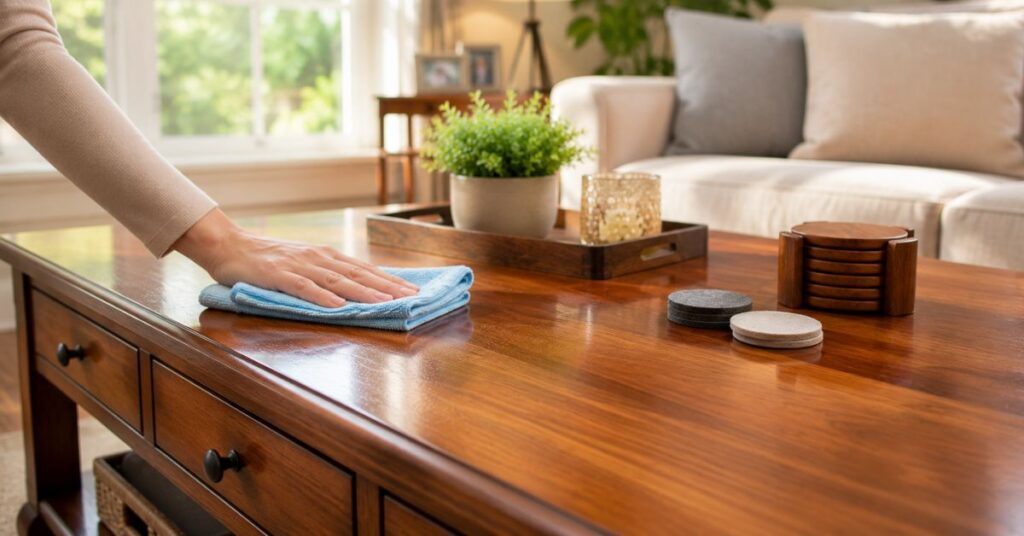
Regular maintenance is much easier than repairing damaged furniture. A few simple habits can keep your wooden furniture looking beautiful for many years.
Dust your furniture every week using a clean microfiber cloth to prevent dirt from building up. Clean spills immediately to avoid stains and water damage. Use coasters under drinks, placemats under hot dishes, and felt pads under decorative items to protect the finish from scratches.
Keep indoor humidity at a moderate level, especially during very dry or humid seasons. Extreme changes in moisture can cause wood to expand or contract, leading to cracks or loose joints.
Finally, inspect your furniture every few months for loose screws, worn finishes, or minor scratches. Addressing small problems early helps prevent larger and more expensive repairs later.
FAQs
Can I use vinegar to clean wooden furniture?
Yes, but only occasionally and only if the furniture’s finish can tolerate it. Vinegar should always be diluted with water and tested on a hidden area first.
Is dish soap safe for wood furniture?
Yes. A few drops of mild dish soap mixed with warm water are safe for most sealed wooden furniture when used with a damp—not wet—microfiber cloth.
How often should I clean wooden furniture?
Dust wooden furniture once a week and perform a deeper cleaning every one to three months, depending on how often the furniture is used.
Can I use furniture polish every week?
No. Overusing furniture polish can create a sticky buildup that attracts dust. Most furniture only needs polishing every few months or according to the manufacturer’s recommendations.
What’s the safest cloth for cleaning wood?
A clean microfiber cloth is the safest choice because it lifts dust and dirt without scratching the finish.
Conclusion
Keeping wooden furniture in excellent condition doesn’t require expensive products or complicated techniques. By using gentle cleaning methods, soft microfiber cloths, and the right cleaning solutions, you can safely clean wooden furniture without damaging the finish and preserve its natural beauty.
Regular dusting, quick spill cleanup, and avoiding harsh chemicals will help protect the finish from everyday wear. With consistent care and a few simple maintenance habits, your wooden furniture can remain beautiful, durable, and functional for many years to come.