
A messy wardrobe can make your entire morning feel more stressful. When clothes are crammed onto hangers, folded items are falling off shelves, and you cannot find the outfit you want, getting dressed can take much longer than it should.
Learning how to organize your wardrobe smartly is not about creating a picture-perfect closet. It is about building a simple system that makes your clothes easy to see, easy to reach, and easy to put away.
The good news is that you do not need a huge walk-in closet or expensive storage products to get started. With a little decluttering, thoughtful grouping, and a few practical storage techniques, even a small wardrobe can become functional and attractive.
Whether you have a compact bedroom closet, a large walk-in wardrobe, or a simple freestanding cupboard, these wardrobe organization ideas can help you create a space that stays neat long after you finish organizing it.
Why Organizing Your Wardrobe Matters
An organized wardrobe can make everyday life surprisingly easier.
When everything has a designated place, you spend less time searching for clothes and less energy deciding where to put them. You can also see what you actually own, which can prevent unnecessary purchases.
A smart wardrobe organization system can help you:
- Find clothes faster
- Make getting dressed easier
- Reduce visible clutter
- Protect clothing from unnecessary damage
- Make better use of limited storage space
- Keep seasonal clothes under control
- Reduce duplicate purchases
- Make laundry easier to put away
- Maintain a cleaner bedroom
- Reduce the stress associated with a cluttered closet
Instead of organizing your wardrobe once and allowing it to become messy again, the goal is to create a system that is easy enough to maintain.
Remove Unused Clothes to Start Fresh
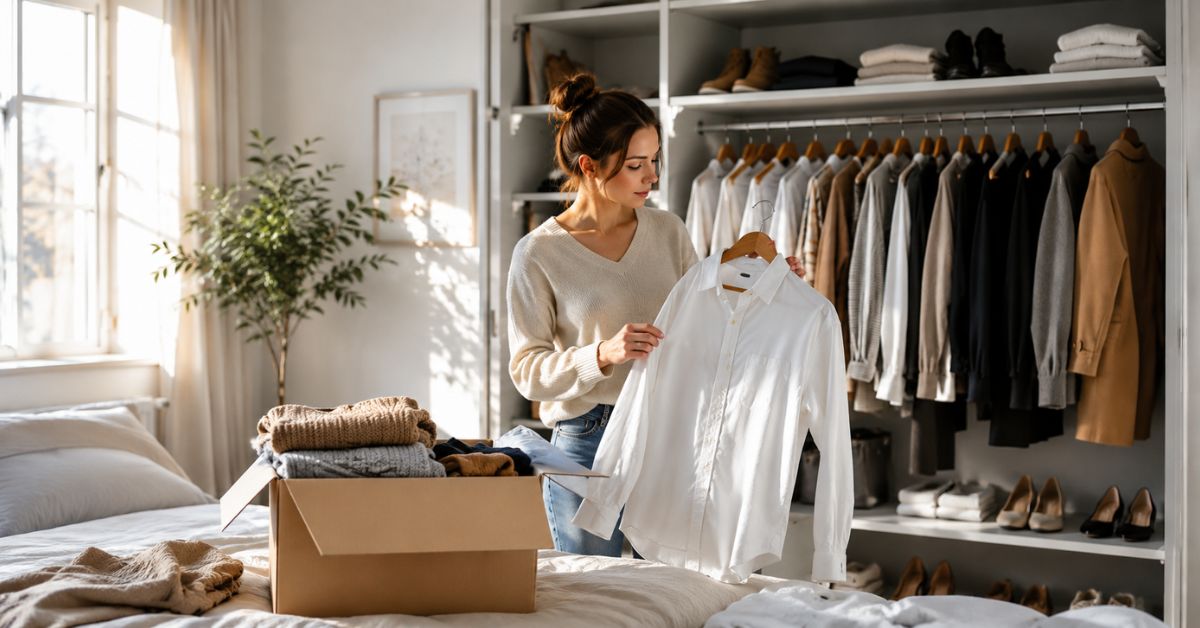
Removing unused clothes is one of the simplest and most effective ways to create a fresh, organised start. Begin by taking everything out of your wardrobe so you can clearly see what you own. As you go through each item, ask yourself whether you have worn it in the past year, if it still fits well, and whether it suits your current style. Separate your clothes into categories such as keep, donate, and discard. Items that are in good condition but no longer needed can be donated, while worn-out or damaged pieces should be responsibly discarded or recycled.
Once you’ve sorted everything, neatly organise the clothes you decide to keep by type or season, making your wardrobe easier to manage and maintain. This process not only creates more physical space but also reduces daily decision-making stress and helps you appreciate the items you truly wear and love. Regularly decluttering your clothes every few months or at the change of seasons ensures your wardrobe stays functional, tidy, and aligned with your lifestyle.
How to Organize Your Wardrobe Smartly Step by Step
Before buying storage boxes or rearranging hangers, start with the clothes themselves.
A wardrobe filled with items you never wear will always be difficult to organize.
Follow these steps to create a practical system.
1. Empty Your Wardrobe Completely
Start by taking everything out.
Remove clothes from shelves, drawers, hanging rails, and storage boxes. Take out shoes and accessories as well if they are stored inside the wardrobe.
This may make the room look messier temporarily, but it gives you a clear picture of what you actually own.
Once the wardrobe is empty, take a few minutes to dust and clean the shelves, corners, drawers, and floor.
Do not put everything back immediately.
First, sort it.
2. Sort Clothes Into Categories
Create broad categories such as:
- T-shirts
- Shirts
- Blouses
- Jeans
- Trousers
- Dresses
- Skirts
- Sweaters
- Jackets
- Workout clothes
- Sleepwear
- Underwear
- Accessories
You can create additional categories depending on your lifestyle.
For example, someone who works in an office may need separate categories for workwear and casual clothing.
Someone who works from home may need more everyday comfortable clothing and less formal wear.
The purpose is to create categories that make sense for your wardrobe.
3. Create Keep, Donate, Sell and Discard Piles
Now examine each item individually.
Create four groups:
Keep: Items you wear and genuinely need.
Donate: Good-condition clothing you no longer use and would like to give away.
Sell: Valuable or desirable items you no longer want but could sell.
Discard or recycle: Damaged, heavily worn, stained, or unusable clothing that should not be donated.
Avoid keeping something simply because you feel guilty about getting rid of it.
Your wardrobe should support your current lifestyle.
4. Ask the Right Decluttering Questions
If you are unsure whether to keep something, ask yourself:
- Have I worn this recently?
- Does it fit comfortably?
- Would I buy this item again today?
- Is it suitable for my current lifestyle?
- Do I have something similar?
- Is it damaged?
- Am I keeping it only because it was expensive?
- Do I actually feel good wearing it?
- Is it worth the storage space it takes?
You do not have to follow a strict “one year” rule for every garment.
Some formal clothing, seasonal items, or special-occasion pieces may naturally be worn less often.
Instead, focus on whether the item has a realistic purpose in your life.
5. Arrange Clothes by Type
Once you know what you are keeping, organize clothes by type.
For example, place all:
- Dresses together
- Shirts together
- T-shirts together
- Pants together
- Jackets together
- Sweaters together
This makes it easier to find what you need.
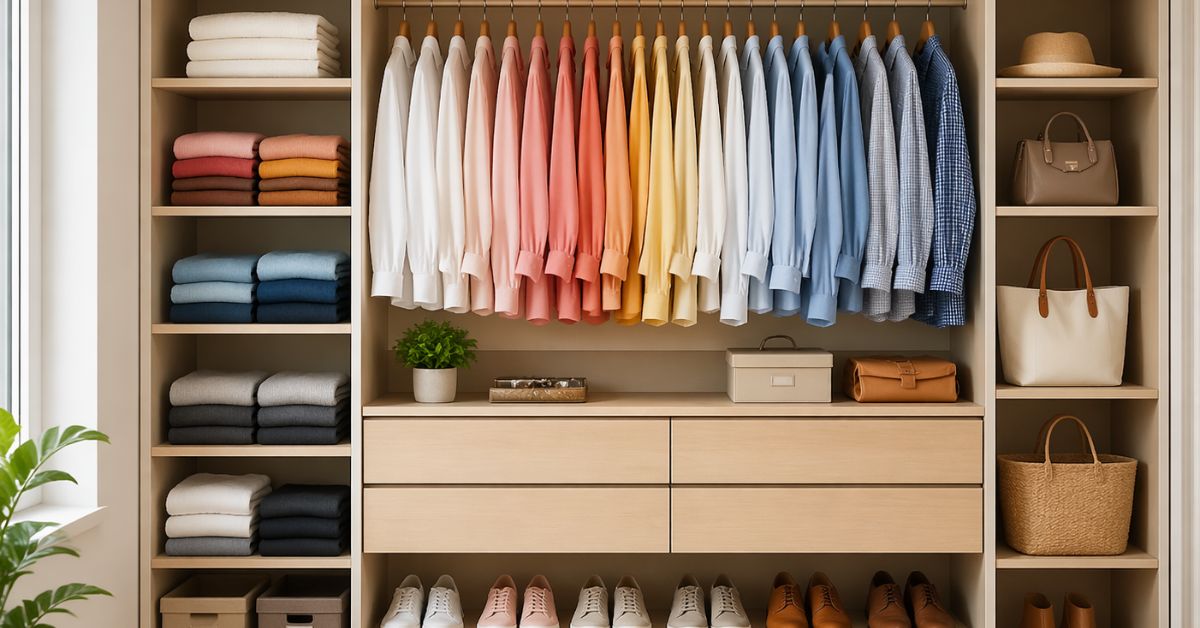
You can take organization one step further by arranging each category by color.
For example, your shirts could progress from white and cream to beige, gray, blue, green, and darker colors.
There is no single correct color system.
Choose whatever makes sense to you.
6. Use Matching Hangers
Matching hangers can instantly make a wardrobe look more organized.
Different hanger shapes and sizes can make clothes hang unevenly and consume more visual space.
Slim, sturdy hangers can create a more uniform appearance while making better use of the hanging rail.
However, do not feel that you need to replace every hanger immediately.
If your existing hangers work well, you can replace them gradually.
Choose hangers appropriate for the garment. Delicate fabrics, heavy coats, trousers, and structured clothing may require different hanger styles.
7. Keep Frequently Worn Clothes at Eye Level
Your most-used clothes should be the easiest to reach.
Keep everyday clothing, work outfits, and frequently worn basics in the most accessible sections of your wardrobe.
Less frequently used pieces can go on higher shelves or toward the back of deeper storage areas.
This simple change can save time every morning.
You should not have to move five items just to reach the shirt you wear three times a week.
8. Use Vertical Folding for Drawers
Traditional stacks can make drawers frustrating.
When clothes are stacked horizontally, the item you want may be at the bottom.
Vertical folding can solve this problem.
Fold T-shirts, casual tops, workout clothing, and similar items into compact rectangles and place them vertically beside one another.
This allows you to see more of your clothes at once.
It can also reduce the temptation to pull everything out when searching for one shirt.
A Simple Vertical Folding Method
- Lay the garment flat.
- Fold one side toward the center.
- Fold the other side over it.
- Fold the garment from bottom to top.
- Adjust the size so it fits your drawer.
- Place it upright beside similar items.
The exact folding method can vary depending on your drawer size.
9. Fold Heavy Sweaters and Jeans Carefully
Not every garment needs to be hung.
Heavy sweaters can stretch when left on hangers for long periods, so folding them may be a better option.
Jeans and thicker trousers can also be folded and stored on shelves or inside drawers.
Keep stacks manageable.
If a stack is too tall, you will disturb the entire pile every time you remove one item.
Instead, create smaller groups.
10. Organize Small Items With Dividers
Small clothing items can quickly turn drawers into chaotic spaces.
Use dividers or small compartments for:
- Socks
- Underwear
- Belts
- Scarves
- Tights
- Accessories
You do not necessarily need expensive organizers.
Simple boxes or appropriately sized containers can also create separate sections.
The important thing is to give small items a defined home.
11. Make the Most of a Small Wardrobe
A small wardrobe does not automatically mean you have to live with clutter.
The key is using vertical and less obvious storage space.
Consider:
- Slim hangers
- Shelf dividers
- Hanging organizers
- Stackable boxes
- Drawer dividers
- Upper shelves
- Under-bed storage
- Hooks where appropriate
- Door-mounted organizers
However, avoid filling every available space just because it exists.
Storage should help you access your belongings—not encourage you to keep things you do not use.
12. Use Storage Boxes and Baskets
Storage boxes can be useful for items that are not needed every day.
Use them for:
- Seasonal clothing
- Special-occasion accessories
- Extra bedding
- Handbags
- Winter accessories
- Sentimental clothing
If you use opaque containers, labels can make finding items much easier.
Clear containers can also be useful because you can see what is inside without opening every box.
Choose containers that fit your available space rather than buying organizers first and trying to make them fit afterward.
13. Store Seasonal Clothing Separately
One of the easiest ways to make a wardrobe feel less crowded is to rotate clothing according to the season.
You do not need thick winter coats taking up valuable space during hot weather.
Similarly, you may not need a large collection of summer dresses taking up the easiest-to-reach section during winter.
At the beginning of a new season:
- Remove clothes that are unlikely to be worn soon.
- Check them for stains or damage.
- Wash or clean them according to their care instructions.
- Fold and store them properly.
- Place current-season clothing in accessible areas.
- Review anything you no longer want before storing it.
This creates an opportunity to declutter several times a year.
14. Use Under-Bed Storage
If your wardrobe is small, look beyond the closet.
The space underneath your bed can be useful for seasonal clothing and other items that do not need daily access.
Use suitable storage containers that protect clothing from dust.
Before storing anything under the bed, make sure the area is clean and dry.
Do not use under-bed storage as an excuse to hide clutter.
If you have not used something for years and have no realistic reason to keep it, storing it under the bed simply moves the clutter somewhere else.
15. Organize Shoes Strategically
Shoes can take up significant wardrobe space.
Instead of allowing them to collect randomly on the floor, organize them by frequency of use.
Keep everyday shoes where they are easy to reach.
Less frequently used footwear can go into boxes or another suitable storage area.
Avoid stacking shoes in a way that damages delicate materials.
If you use shoe boxes, labels or clear containers can make it easier to find a specific pair.
16. Give Handbags and Accessories Their Own Space
Accessories can quickly become a source of wardrobe clutter.
Create separate areas for:
- Handbags
- Belts
- Scarves
- Hats
- Jewelry
- Hair accessories
Use hooks, drawer compartments, small boxes, or shelf organizers according to what fits your wardrobe.
Keep frequently used accessories within easy reach.
Special-occasion pieces can be stored farther away.
17. Create a Small “Frequently Worn” Zone
One smart way to make your wardrobe more efficient is to create a dedicated section for the clothes you wear most often.
This could include:
- Favorite jeans
- Everyday T-shirts
- Work basics
- Comfortable trousers
- Frequently worn jackets
- Everyday dresses
When these pieces are grouped together, you can get dressed faster without searching through your entire wardrobe.
18. Consider a Capsule Wardrobe
A capsule wardrobe is a collection of clothing items that work well together and can create multiple outfits.
You do not have to completely adopt a minimalist wardrobe.
Instead, use the concept to identify your most versatile pieces.
For example, a few neutral tops, comfortable trousers, versatile jeans, a jacket, and several complementary layers can create many combinations.
The benefit is not simply having fewer clothes.
It is having clothes that you actually use.
Decide What to Keep or Donate
Sort clothes into categories by separating them into groups such as keep, donate, sell, and discard. You can also organise kept items by type, season, or colour to make your wardrobe neat and easy to use.
Decluttering Your Wardrobe the Right Way

Decluttering is the foundation of wardrobe organisation. Without removing unnecessary items, it is impossible to maintain a clean space. Start by creating three piles: keep, donate, and discard. This method helps you make quick decisions and prevents overthinking. Decluttering not only frees up space but also helps you focus on clothes that truly suit your style and lifestyle.
Best Wardrobe Organisation Tips for Beginners

If you want to truly master how to organise your wardrobe smartly, you should focus on folding clothes neatly and using proper storage solutions. If you are new to organising, these simple wardrobe organisation tips can make a big difference.
Use Matching Hangers for a Neat Look
Using matching hangers makes your wardrobe look clean, organised, and visually uniform. It saves space, keeps clothes aligned properly, and prevents slipping or damage. This simple change improves overall appearance and makes it easier to find and manage your outfits quickly every day.
Arrange Clothes by Colour and Type
Arrange clothes by colour and type to create a neat and organised wardrobe. First group items like shirts, pants, dresses, and jackets separately. Then sort each group by colour, from light to dark. This method makes it easier to find outfits quickly and gives your wardrobe a clean, stylish look.
Keep Daily Wear Easy to Access
Keep your daily wear easy to access by placing the clothes you use most often in the most reachable part of your wardrobe. Hang or fold items like casual shirts, trousers, or work outfits at eye level so you can grab them quickly without searching. Less frequently used clothes, such as party wear or seasonal outfits, should be stored on higher shelves or in less accessible sections. This simple organisation saves time in your daily routine, reduces stress when choosing outfits, and keeps your wardrobe practical and well-organised.
How to Fold Clothes Neatly for More Space

Learning how to fold clothes neatly is an essential skill for keeping your wardrobe organised. Proper folding techniques can save space and keep your clothes wrinkle-free.
Use the Vertical Folding Method for Drawers
Vertical folding allows you to see all your clothes at once without disturbing the stack. This method is especially useful for drawers.
Stack Jeans and Sweaters Properly
Fold heavier items like jeans and sweaters neatly and stack them evenly to avoid a mess.
Organise Small Items with Dividers
Drawer dividers help organise smaller items like socks and undergarments, making them easy to find.
Smart Storage Solutions for Small Wardrobes
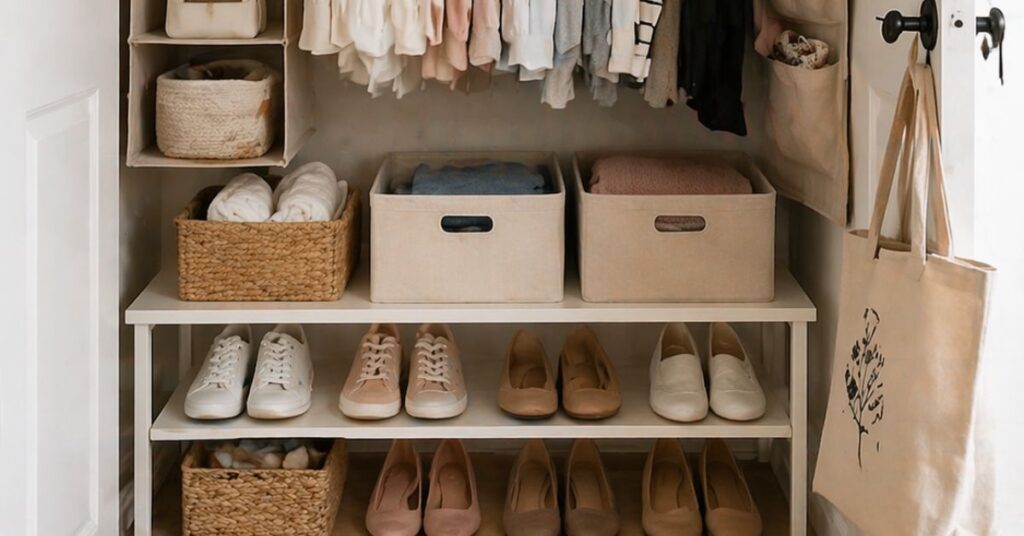
If you have limited space, using smart storage solutions can make your wardrobe more functional.
Use Storage Boxes and Baskets
These are perfect for storing seasonal clothes or accessories that you don’t use daily.
Add Hanging Organisers for Extra Space
Hanging organisers can create extra space for shoes, bags, or folded clothes.
Utilize Under-Bed Storage
Storing off-season clothes under the bed is a great way to free up wardrobe space.
Seasonal Wardrobe Organisation Ideas
Seasonal wardrobe organization helps keep your clothes neat, accessible, and suited to the weather. Start by separating your clothes into seasonal groups like summer, winter, and all-year basics. Store off-season clothing in boxes, vacuum bags, or upper shelves to free up space for current essentials. This makes your wardrobe less crowded and easier to manage.
For the current season, place frequently used items at eye level so they are easy to reach. In summer, keep light fabrics like cotton shirts and dresses accessible, while in winter, prioritize warm sweaters, jackets, and layers. Rotate your wardrobe every few months as the season changes, reviewing items you may no longer need.
Adding labels to storage boxes and using clear containers can also help you quickly find what you need. Seasonal organization not only improves space efficiency but also makes dressing up faster, simpler, and more enjoyable every day.
Tips to Maintain an Organised Wardrobe
Keeping your wardrobe organised requires regular maintenance and good habits.
Do Monthly Decluttering
Set a routine to review your wardrobe every month and remove unnecessary items.
Follow the One-In-One-Out Rule
Whenever you buy a new item, remove an old one. This helps maintain balance in your wardrobe.
Keep Everything in Its Place
Always return clothes to their designated spot after use. This simple habit keeps your wardrobe neat.
Final Thoughts
Learning how to organize your wardrobe smartly is really about creating a system that works with your lifestyle.
Start by removing clothing you no longer use. Then group the pieces you keep by type, organize frequently worn items where they are easy to reach, use practical folding techniques, and make better use of vertical and hidden storage.
You do not need a huge closet, expensive organizers, or a perfectly minimalist wardrobe.
What matters most is that your clothes are easy to see, easy to access, and easy to put away.
Once your wardrobe is organized, maintain it with small habits. Put clothes back after wearing them, review your belongings regularly, rotate seasonal pieces, and avoid allowing new purchases to overwhelm the available space.
A smartly organized wardrobe can save time every morning, reduce clutter, and make your bedroom feel calmer.
Start small.
Choose one shelf, one drawer, or one section today and build from there.
FAQs
What is the best way to organise a wardrobe smartly?
The best way is to declutter, categorise clothes, and use proper storage solutions to keep everything neat and accessible.
How often should I organise my wardrobe?
You should organise your wardrobe at least once every month to keep it clean and clutter-free
.What are the best wardrobe organisation tips for beginners?
Start with matching hangers, sorting clothes by category and colour, and keeping daily wear easily accessible.
How can I fold clothes neatly to save space?
Use vertical folding for T-shirts, stack jeans properly, and use drawer dividers for small items.
How do I maintain an organised wardrobe long-term?
Follow the one-in-one-out rule, return clothes after use, and regularly declutter your wardrobe.




Leave a Reply