
Hotel Room Cleaning Guide: A spotless hotel room is one of the first things guests notice upon arrival. Cleanliness influences comfort, online reviews, repeat bookings, and a hotel’s overall reputation. Whether you manage a luxury resort, boutique hotel, motel, or vacation rental, maintaining high housekeeping standards is essential for delivering an exceptional guest experience.
Hotel Room Cleaning Guide is much more than making the bed or emptying trash bins. Professional housekeeping involves following a structured process to remove dust, dirt, bacteria, and odors, ensuring every room meets quality standards before the next guest checks in.
This guide explains the complete hotel room cleaning process from start to finish. You’ll learn the tools professional housekeepers use, the correct cleaning order, practical tips for improving efficiency, and industry best practices for maintaining consistently clean guest rooms.
What Is Hotel Room Cleaning?
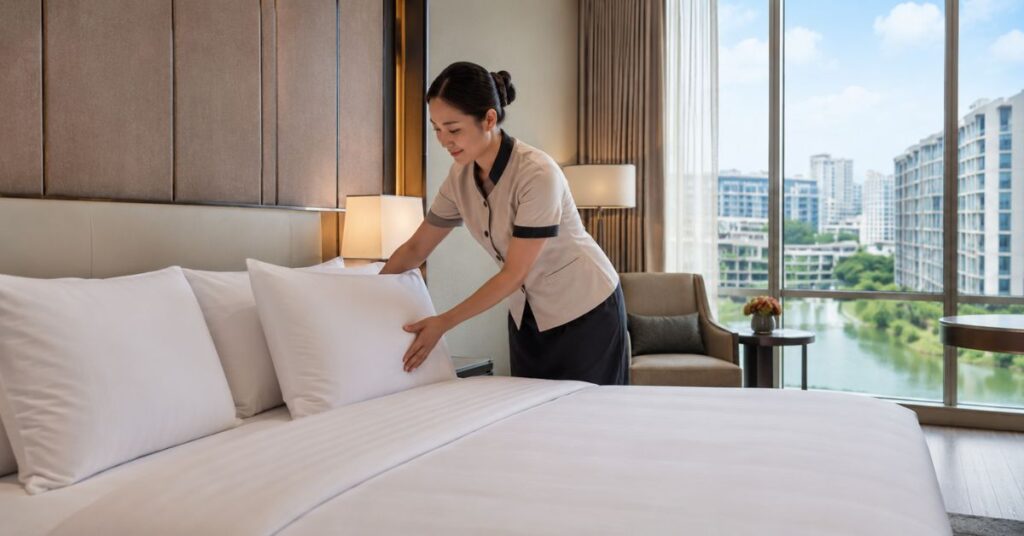
Hotel Room Cleaning Guide is the systematic process of cleaning, sanitizing, organizing, and preparing guest rooms before check-in or during a guest’s stay. It follows established housekeeping procedures to ensure every room is hygienic, comfortable, and ready for occupancy.
Unlike regular home cleaning, hotel housekeeping follows standardized operating procedures (SOPs). Every room is cleaned using the same sequence to maintain consistency, improve efficiency, and reduce the chance of missing important areas.
Professional hotel room cleaning typically includes:
- Changing bed linens
- Sanitizing bathrooms
- Dusting furniture
- Cleaning mirrors and glass
- Vacuuming carpets
- Mopping hard floors
- Restocking guest amenities
- Emptying trash bins
- Inspecting the room for maintenance issues
- Performing a final quality check
The goal is not only to create a visually clean room but also to provide guests with a safe and healthy environment.
Why Hotel Room Cleaning Is So Important
Guests often judge a hotel within moments of entering their room. Even a small oversight such as dust on furniture, water spots on mirrors, or hair in the bathroom can lead to negative reviews.
A consistent cleaning routine provides several important benefits.
Creates Positive First Impressions
Fresh linens, sparkling bathrooms, and organized spaces immediately make guests feel welcomed.
Improves Guest Satisfaction
Clean rooms contribute to better sleep, increased comfort, and a more enjoyable stay.
Reduces Health Risks
Proper cleaning removes bacteria, viruses, allergens, mold, and other contaminants that can affect guest health.
Protects Hotel Reputation
Hotels with consistently clean rooms receive better online reviews and stronger customer loyalty.
Extends Furniture and Equipment Life
Regular maintenance helps carpets, mattresses, furniture, and fixtures stay in good condition for longer.
Supports Higher Occupancy Rates
Guests are more likely to return and recommend hotels that consistently maintain high cleanliness standards.
Hotel Room Cleaning Standards
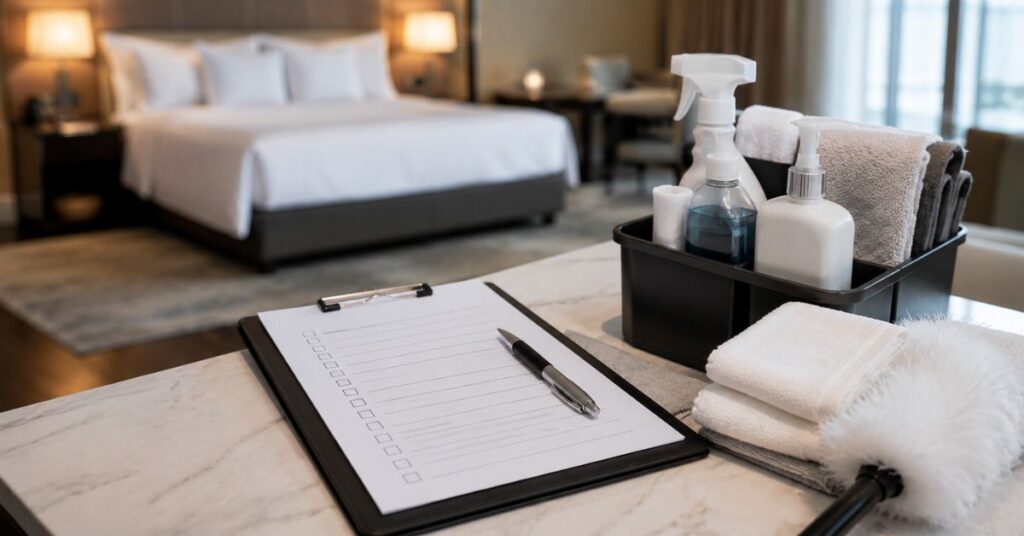
Professional housekeeping teams follow clear standards to ensure every room is cleaned thoroughly and consistently.
These standards generally include:
- No visible dust on furniture or surfaces
- Spot-free mirrors and windows
- Sanitized bathroom fixtures
- Freshly changed linens
- Properly made beds
- Empty trash bins
- Fully stocked guest amenities
- Clean floors without debris
- Pleasant, neutral room scent
- Functional lighting and appliances
Many hotels also use detailed inspection checklists to verify that every cleaning task has been completed before the room is released for new guests.
Essential Hotel Room Cleaning Supplies
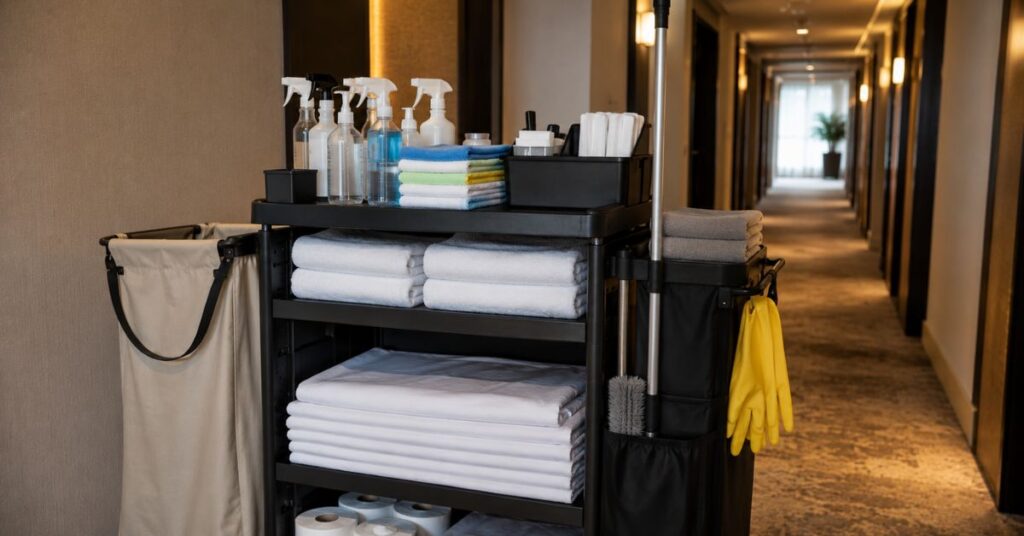
Having the right supplies ready before entering a guest room helps housekeepers work more efficiently and avoid unnecessary trips back to the supply closet.
Cleaning Chemicals
Use cleaning products designed for different surfaces.
Common supplies include:
- Multi-purpose cleaner
- Glass cleaner
- Bathroom disinfectant
- Toilet bowl cleaner
- Floor cleaner
- Wood-safe furniture polish
- Stainless steel cleaner
- Carpet spot remover
Always follow the manufacturer’s instructions and never mix cleaning chemicals.
Cleaning Tools
Professional housekeepers rely on specialized tools to speed up the cleaning process while maintaining high standards.
Essential equipment includes: Hotel Room Cleaning Guide
- Microfiber cloths
- Color-coded cleaning cloths
- Scrub brushes
- Toilet brush
- Mop and bucket
- Flat microfiber mop
- Vacuum cleaner
- Extendable duster
- Spray bottles
- Dustpan and broom
- Rubber gloves
- Trash bags
Keeping tools clean is just as important as cleaning the room itself.
Guest Room Supplies
A housekeeping cart should also be stocked with replacement items such as: Hotel Room Cleaning Guide
- Fresh towels
- Bed sheets
- Pillowcases
- Duvet covers
- Toilet paper
- Facial tissues
- Soap
- Shampoo
- Conditioner
- Body wash
- Coffee and tea supplies
- Drinking cups
- Laundry bags
- Notepads and pens
Restocking everything during one visit saves time and ensures the room is fully prepared for the next guest.
Preparing Before Hotel Room Cleaning Guide
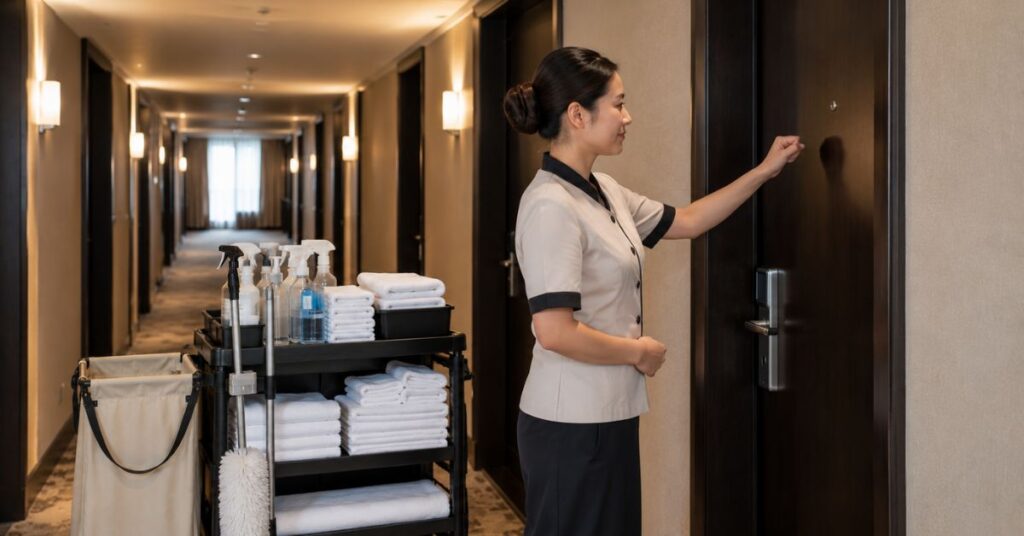
Preparation is an important part of the housekeeping process. Before beginning any cleaning tasks, housekeepers should complete a few essential safety and inspection steps.
Knock and Announce Your Presence
Always knock firmly on the door and announce “Housekeeping.”
Wait several seconds before knocking again. Never enter immediately, even if the room appears vacant.
This protects guest privacy and follows professional hospitality standards.
Open Curtains and Turn On Lights
Once the room is confirmed vacant: Hotel Room Cleaning Guide
- Open curtains or blinds.
- Turn on all lights.
- Improve ventilation by opening windows if permitted.
- Check for unusual odors.
Natural light makes it easier to spot dust, stains, and missed cleaning areas.
Inspect the Room
Before cleaning begins, perform a quick inspection. Hotel Room Cleaning Guide
Look for:
- Forgotten personal belongings
- Maintenance issues
- Damaged furniture
- Burned-out light bulbs
- Water leaks
- Broken fixtures
- Carpet stains
- Excessive dirt
Report maintenance problems immediately so they can be repaired before guest check-in.
Remove Used Linens and Trash
Start by clearing away everything that needs replacing.
Collect:
- Used towels
- Dirty sheets
- Pillowcases
- Bath mats
- Trash from bins
- Empty bottles
- Food containers
Removing clutter first creates more space to clean efficiently. Hotel Room Cleaning Guide
Step-by-Step Hotel Room Cleaning Guide
Professional housekeepers generally clean from top to bottom and from the cleanest areas to the dirtiest areas. This method prevents dust and debris from falling onto already-cleaned surfaces.
Step 1: Strip the Bed
Remove all used bedding carefully.
Take off:
- Pillowcases
- Sheets
- Blanket
- Duvet cover
- Mattress protector (if required)
Check the mattress for:
- Stains
- Damage
- Odors
- Lost guest belongings
Place all dirty linens directly into a laundry bag instead of placing them on the floor.
Step 2: Dust High Surfaces First
Dust always falls downward, so begin cleaning at the highest points.
Dust:
- Ceiling corners
- Air vents
- Light fixtures
- Wall decorations
- Shelves
- Headboards
- Curtain rods
Hotel Room Cleaning Guide: Use an extendable duster to safely reach elevated areas without climbing on furniture.
Step 3: Clean Mirrors and Glass
Spray glass cleaner onto a microfiber cloth rather than directly onto mirrors to prevent overspray.
Clean:
- Bathroom mirrors
- Bedroom mirrors
- Glass tabletops
- Picture frames
- Interior windows (if applicable)
Buff the surface until it is streak-free for a polished appearance.
Step 4: Dust and Wipe Furniture
After high dusting is complete, wipe every surface using a clean microfiber cloth and an appropriate cleaner.
Focus on:
- Nightstands
- Dressers
- Desks
- Chairs
- TV stands
- Lamps
- Shelves
- Headboards
- Window sills
- Telephones
- Remote controls
Hotel Room Cleaning Guide: Pay special attention to high-touch areas, as they collect fingerprints and germs throughout a guest’s stay.
Step 5: Sanitize Frequently Touched Surfaces
Disinfecting high-touch points helps reduce the spread of germs between guests.
Common high-touch areas include:
- Door handles
- Light switches
- Thermostats
- TV remote controls
- Telephone handsets
- Drawer handles
- Closet handles
- Safe keypad
- Coffee maker buttons
- Hair dryer handles
Allow the disinfectant to remain on the surface for the recommended contact time before wiping it away to ensure maximum effectiveness.
Step 6: Clean and Sanitize the Bathroom
The bathroom is one of the most inspected areas of any hotel room. Guests expect every surface to look spotless and feel hygienic. To avoid cross-contamination, always clean from the least dirty surfaces to the most contaminated areas, saving the toilet for last.
Clean the Sink and Vanity
Spray a bathroom-safe disinfectant on the sink, faucet, countertop, and backsplash. Let the cleaner sit for the recommended contact time before wiping it away with a clean microfiber cloth.
Pay attention to:
- Faucet handles
- Soap dishes
- Toothbrush holders
- Countertop edges
- Drain area
- Vanity cabinet fronts
Finish by polishing chrome fixtures until they shine without water spots.
Disinfect the Toilet
Apply toilet bowl cleaner inside the bowl and allow it to work while cleaning the exterior. Wipe the flush handle, lid, seat, tank, and base using a disinfectant.
Use a toilet brush to scrub the inside thoroughly, including under the rim, then flush and perform a final wipe to remove any remaining moisture.
Clean the Shower or Bathtub
Soap scum, shampoo residue, and hard water stains should be removed completely.
Clean:
- Shower walls
- Bathtub
- Shower doors
- Fixtures
- Shelves
- Grab bars
- Showerhead
Rinse all surfaces and dry them with a microfiber cloth to leave a streak-free finish.
Polish Mirrors
Spray glass cleaner onto a microfiber cloth and wipe mirrors using overlapping strokes. Check from different angles to ensure there are no streaks, fingerprints, or lint.
Replace Towels and Bathroom Amenities
Only use freshly laundered linens.
Restock the bathroom with:
- Bath towels
- Hand towels
- Washcloths
- Bath mat
- Toilet paper
- Facial tissues
- Soap
- Shampoo
- Conditioner
- Body wash
- Lotion (if provided)
- Shower cap (if applicable)
Hotel Room Cleaning Guide: Arrange all items neatly according to your hotel’s housekeeping standards.
Step 7: Make the Bed Like a Professional
A perfectly made bed instantly improves the appearance of a hotel room and gives guests confidence that the room has been prepared with care.
Inspect the Mattress
Before adding fresh linens, inspect the mattress for:
- Stains
- Damage
- Odors
- Loose stitching
- Forgotten belongings
Replace the mattress protector if required.
Add Fresh Linens
Hotel Room Cleaning Guide: Use clean, wrinkle-free bedding and make the bed in this order:
- Mattress protector
- Fitted sheet
- Flat sheet
- Blanket (if used)
- Duvet or comforter
Pull each layer tight to create a smooth, crisp appearance.
Arrange Pillows
Hotel Room Cleaning Guide: Insert fresh pillowcases and fluff the pillows before placing them neatly at the head of the bed. Decorative cushions or accent pillows should be positioned consistently according to hotel standards.
Final Bed Inspection
Before moving on, check that:
- Sheets are wrinkle-free.
- Corners are tucked securely.
- Pillows are aligned.
- Bedding is centered.
- No stains or loose threads are visible.
Hotel Room Cleaning Guide: A neatly made bed often becomes the focal point of the room.
Step 8: Clean Furniture and Guest Amenities
Dust may settle again during cleaning, so perform a final wipe of furniture before finishing the room.
Clean and inspect:
- Nightstands
- Desk
- Chairs
- Headboard
- Shelves
- Closet
- Luggage rack
- TV stand
- Lamps
- Window sills
Also sanitize frequently touched guest items such as:
- TV remote
- Telephone
- Alarm clock
- Light switches
- Thermostat
- Coffee machine
- Hair dryer
- Safe keypad
Hotel Room Cleaning Guide: These surfaces are handled by nearly every guest and require extra attention.
Step 9: Restock Room Supplies
A guest should find everything they need immediately upon entering the room.
Replace or replenish:
- Coffee pods
- Tea bags
- Sugar packets
- Creamer
- Bottled water (if provided)
- Drinking glasses
- Mugs
- Ice bucket liner
- Laundry bag
- Stationery
- Pen
- Welcome materials
- Room service menu
- Hotel information booklet
Hotel Room Cleaning Guide: Double-check expiration dates on food and beverage items before restocking.
Step 10: Clean Windows and Glass Surfaces
Fingerprints and smudges are easily noticed in natural light.
Clean:
- Interior windows
- Balcony doors
- Glass tables
- Mirror frames
- Sliding glass doors
Buff each surface with a dry microfiber cloth for a crystal-clear finish.
Step 11: Vacuum Carpets and Upholstery
Always vacuum after dusting so loose dirt is removed from the floor.
Vacuum:
- Carpet
- Area rugs
- Under the bed
- Around furniture legs
- Closet floor
- Upholstered chairs
- Sofa cushions (if present)
Move lightweight furniture when possible to reach hidden dust and debris.
Step 12: Mop Hard Floors
For rooms with tile, vinyl, laminate, or hardwood flooring, mop after vacuuming or sweeping.
Pay attention to:
- Bathroom floor
- Entryway
- Around the bed
- Under the desk
- Closet
- Corners
Allow floors to dry completely before guests enter the room.
Step 13: Empty and Sanitize Trash Bins
Remove all trash, including recycling where applicable.
After emptying:
- Wipe the inside of the bin.
- Disinfect the exterior.
- Insert a fresh liner.
- Return the bin to its designated location.
Even a clean room can leave a poor impression if the trash bin is overlooked.
Step 14: Eliminate Odors
Hotel Room Cleaning Guide: A hotel room should smell fresh but not overpowering.
Instead of masking odors with heavy fragrances:
- Improve ventilation.
- Remove the source of odors.
- Clean soft furnishings thoroughly.
- Empty trash promptly.
- Replace damp linens immediately.
If your hotel uses air fresheners, apply them lightly to maintain a pleasant, neutral scent.
Final Room Inspection
Before marking the room as ready, complete a thorough walkthrough.
Confirm that:
- The bed is neatly made.
- Bathroom surfaces are sanitized.
- Mirrors are streak-free.
- Furniture is dust-free.
- Amenities are fully stocked.
- Floors are clean.
- Trash has been removed.
- Lights are working.
- Curtains operate properly.
- Air conditioning and heating function correctly.
- No maintenance issues are visible.
- The room smells fresh and clean.
Inspect the room from the perspective of a guest entering for the first time. Small details often make the biggest difference.
Complete Hotel Room Cleaning Checklist
Hotel Room Cleaning Guide: Use this checklist to ensure every room meets professional housekeeping standards.
Preparation
- Knock and announce housekeeping.
- Open curtains and turn on lights.
- Inspect for damage or forgotten items.
- Remove trash.
- Strip used linens.
Bedroom
- Dust high surfaces.
- Clean mirrors.
- Wipe furniture.
- Sanitize high-touch areas.
- Make the bed with fresh linens.
- Restock guest supplies.
Bathroom
- Clean sink and vanity.
- Disinfect toilet.
- Scrub shower or bathtub.
- Polish mirrors.
- Replace towels.
- Refill toiletries.
Floors
- Vacuum carpets.
- Sweep if necessary.
- Mop hard floors.
Finishing Touches
- Empty trash bins.
- Check appliances.
- Inspect lighting.
- Adjust room temperature if needed.
- Perform a final quality inspection.
Hotel Room Cleaning Guide: Following the same checklist for every room helps maintain consistency, improves efficiency, and ensures guests receive the same high standard of cleanliness every time they stay.
Hotel Room Deep Cleaning Schedule
Routine housekeeping removes everyday dirt, but deep cleaning targets areas that are often missed during daily service.
A well-planned schedule helps maintain hygiene and prevents long-term wear.
Daily Tasks
These tasks should be completed every time a room is serviced.
- Make the bed with fresh linens when required.
- Sanitize the bathroom.
- Empty trash bins.
- Dust furniture.
- Vacuum carpets.
- Mop hard floors.
- Replenish guest amenities.
- Disinfect high-touch surfaces.
- Inspect the room before checkout.
Weekly Tasks
Weekly cleaning focuses on areas that collect hidden dust and grime.
Examples include:
- Dust ceiling corners.
- Clean air vents.
- Vacuum under heavy furniture.
- Polish wooden furniture.
- Wipe baseboards.
- Spot-clean walls.
- Sanitize trash bins thoroughly.
- Deep clean coffee makers and kettles.
Monthly Tasks
Monthly deep cleaning helps preserve room quality.
Tasks include:
- Shampoo carpets.
- Steam clean upholstery.
- Wash curtains.
- Rotate mattresses.
- Clean behind furniture.
- Polish metal fixtures.
- Wash windows inside and outside where possible.
- Remove hard water buildup.
- Inspect grout and tile.
Seasonal Tasks
Several times each year, hotels should schedule major maintenance and deep cleaning projects.
These may include:
- Deep-clean mattresses.
- Replace worn linens.
- Repaint damaged walls.
- Inspect HVAC systems.
- Clean ventilation ducts.
- Polish stone surfaces.
- Replace damaged furniture.
- Conduct preventive maintenance inspections.
A structured cleaning schedule reduces costly repairs and keeps guest rooms looking their best year-round.
Best Practices for Professional Hotel Housekeeping
Professional housekeepers follow consistent methods to improve efficiency while maintaining high cleaning standards.
Clean from Top to Bottom
Dust naturally falls downward. Always begin with high surfaces before cleaning furniture and floors.
This prevents already-cleaned areas from becoming dirty again.
Work from Clean Areas to Dirty Areas
Start with the bedroom before cleaning the bathroom.
Within the bathroom, clean the sink and vanity before the toilet to reduce the risk of spreading germs.
Use Color-Coded Cleaning Cloths
Assign different cloth colors for different areas.
For example:
- Blue for glass
- Yellow for general surfaces
- Green for guest room furniture
- Red for toilets and bathroom fixtures
This simple system helps prevent cross-contamination.
Follow Standard Operating Procedures (SOPs)
Every room should be cleaned using the same sequence.
Standardized procedures:
- Improve consistency
- Reduce training time
- Increase productivity
- Minimize missed tasks
- Simplify inspections
Replace Cleaning Cloths Frequently
Dirty microfiber cloths spread dust instead of removing it.
Switch to clean cloths throughout the cleaning process, especially after disinfecting bathrooms.
Check Every Corner Before Leaving
Perform one final walkthrough before marking the room as ready.
Look for:
- Fingerprints
- Dust
- Hair
- Wrinkled bedding
- Water spots
- Missing amenities
- Burned-out light bulbs
Guests often notice details that housekeepers may overlook without a final inspection.
Common Hotel Room Cleaning Mistakes to Avoid
Hotel Room Cleaning Guide: Even experienced housekeeping staff can make small mistakes that affect guest satisfaction.
Avoid these common errors.
Rushing Through the Room
Cleaning too quickly increases the likelihood of missing dust, stains, or damaged items.
A systematic approach is faster in the long run because it reduces the need for rework.
Ignoring High-Touch Surfaces
Door handles, remote controls, light switches, telephones, and thermostats should always be disinfected.
These are among the most frequently touched items in every guest room.
Using Too Much Cleaning Product
More cleaner does not always produce better results.
Excess chemicals can leave residue, damage surfaces, and create strong odors that guests may find unpleasant.
Forgetting Hidden Areas
Dust often collects in places that are easy to overlook.
Remember to inspect:
- Under the bed
- Behind furniture
- Closet shelves
- Air vents
- Window tracks
- Curtain tops
- Baseboards
Mixing Cleaning Chemicals
Never combine cleaning products unless the manufacturer specifically states it is safe.
Some chemical combinations can release dangerous fumes and damage surfaces.
Skipping Equipment Maintenance
Vacuums, mops, and cleaning carts require regular maintenance.
Dirty equipment reduces cleaning performance and may spread dirt from one room to another.
Eco-Friendly Hotel Room Cleaning Tips
Hotel Room Cleaning Guide: Many hotels are adopting sustainable housekeeping practices to reduce environmental impact without sacrificing cleanliness.
Consider these eco-friendly strategies:
- Use biodegradable cleaning products.
- Choose reusable microfiber cloths.
- Reduce single-use plastics where possible.
- Install refillable toiletry dispensers.
- Wash linens only when necessary for stayover guests.
- Use energy-efficient vacuum cleaners.
- Conserve water during cleaning.
- Recycle paper, plastic, and glass responsibly.
- Purchase concentrated cleaning solutions to reduce packaging waste.
Sustainable housekeeping can lower operating costs while meeting the expectations of environmentally conscious travelers.
Time-Saving Tips for Hotel Housekeepers
Efficiency is essential, especially during busy check-out periods.
Professional housekeepers often save time by following these techniques.
Organize the Cleaning Cart
Keep supplies arranged in the same order every day so items are easy to find.
Complete One Task Before Starting Another
Finish dusting before moving to the bathroom rather than switching between multiple jobs.
This reduces unnecessary movement.
Carry Extra Supplies
Having additional towels, linens, and toiletries on the cart minimizes trips back to the storage room.
Inspect While Cleaning
Look for maintenance issues as you clean instead of performing a separate inspection later.
Follow the Same Cleaning Sequence
Repeating the same routine in every room increases speed and reduces mistakes.
Why a Room Inspection Is Essential
Before a room is released for check-in, a supervisor or housekeeping staff member should complete a final inspection.
This inspection confirms:
- Every cleaning task has been completed.
- Amenities are fully stocked.
- Furniture is properly arranged.
- Maintenance issues have been reported.
- The room meets hotel cleanliness standards.
Quality inspections help maintain consistency across every guest room and reduce the chance of guest complaints.
Conclusion
Hotel Room Cleaning Guide is one of the most important responsibilities in the hospitality industry. A clean, organized, and well-maintained room creates a positive first impression, improves guest satisfaction, and strengthens a hotel’s reputation.
By following a structured housekeeping process—from preparing the room and sanitizing bathrooms to making beds, restocking amenities, vacuuming floors, and completing a final inspection housekeeping teams can consistently deliver high-quality results.
Daily maintenance, regular deep cleaning, proper staff training, and detailed quality checks all contribute to safer, cleaner, and more comfortable accommodations. Whether you manage a large hotel, a boutique property, or a vacation rental, investing in professional housekeeping practices helps create memorable guest experiences and supports long-term business success.
FAQs
1. How long does it take to clean a hotel room?
Hotel Room Cleaning Guide: A standard occupied room usually takes 20 to 30 minutes, while a checkout room may require 30 to 45 minutes, depending on its size and condition.
2. What is the correct order for cleaning a hotel room?
Hotel Room Cleaning Guide: The recommended order is to prepare the room, remove trash and used linens, dust high surfaces, clean the bedroom, sanitize the bathroom, make the bed, vacuum or mop the floors, restock amenities, and perform a final inspection.
3. How often should hotel rooms be deep cleaned?
Hotel Room Cleaning Guide: Most hotels schedule deep cleaning every month, with additional seasonal maintenance for carpets, upholstery, mattresses, and ventilation systems.
4. Why should housekeepers clean from top to bottom?
Hotel Room Cleaning Guide: Cleaning from top to bottom prevents dust and debris from falling onto already-cleaned surfaces, making the process more efficient.
5. What are high-touch surfaces in a hotel room?
Hotel Room Cleaning Guide: High-touch surfaces include door handles, light switches, TV remotes, telephones, thermostats, faucet handles, cabinet pulls, elevator buttons (outside rooms), and coffee machine controls.
6. What cleaning supplies are essential for hotel housekeeping?
Hotel Room Cleaning Guide: Essential supplies include microfiber cloths, disinfectants, glass cleaner, bathroom cleaner, toilet cleaner, mop, vacuum cleaner, gloves, trash bags, and fresh linens.
7. How can hotels improve housekeeping efficiency?
Hotel Room Cleaning Guide: Hotels can improve efficiency by following standardized cleaning procedures, organizing housekeeping carts, using cleaning checklists, providing regular staff training, and conducting routine quality inspections.
8. Why is hotel room cleanliness important?
Hotel Room Cleaning Guide: Clean rooms help protect guest health, improve comfort, encourage positive reviews, increase repeat bookings, and strengthen a hotel’s reputation.