
A mattress can look clean on the surface while slowly collecting sweat, body oils, dead skin cells, and odors underneath the sheets. Over time, this can leave yellow or brownish stains that are especially noticeable on white or light-colored mattresses.
The good news is that you usually do not need expensive professional cleaning products to freshen a stained mattress. With a few simple household supplies and the right cleaning method, you can reduce sweat stains, remove unpleasant odors, and keep your mattress feeling fresher.
In this guide, you will learn how to get sweat stains out of a mattress, including methods for fresh stains, old yellow stains, odors, and deeper buildup. You will also learn how to dry your mattress properly and how to prevent sweat stains from coming back.
Why Do Sweat Stains Appear on a Mattress?
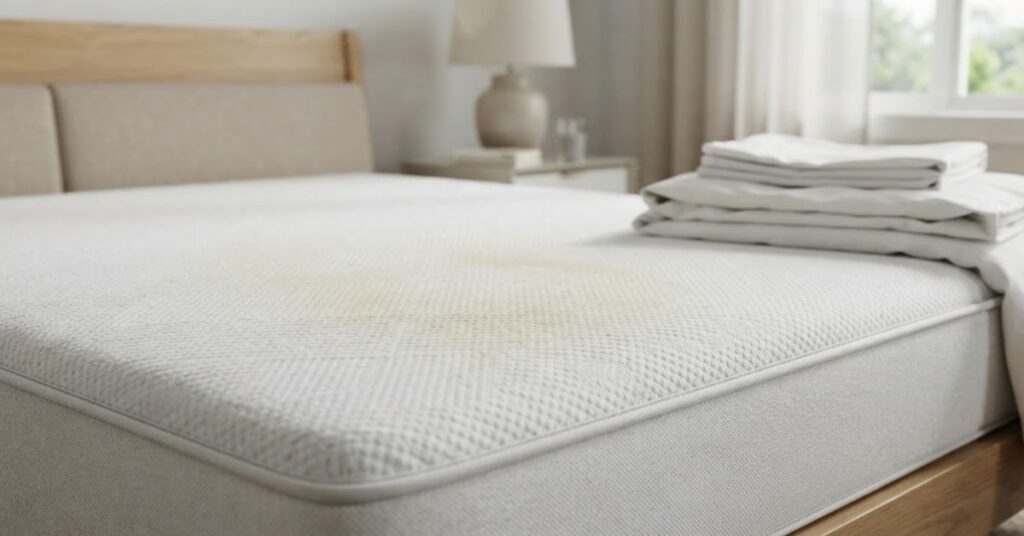
Sweat stains develop because your body naturally releases moisture while you sleep. Even if you shower regularly, some sweat, body oils, and skin cells can transfer through pajamas and sheets.
A mattress absorbs this moisture over time. When the moisture dries, it can leave behind yellowish marks.
Several factors can make mattress stains worse, including:
- Sleeping hot at night
- Heavy sweating
- Warm bedrooms
- Thick blankets
- Poor mattress ventilation
- Not washing bedding regularly
- Sleeping directly on the mattress without a protector
- Humidity in the room
Sweat itself is mostly water and salt, but body oils and other substances can contribute to discoloration and odor.
If stains are allowed to build up for months or years, they can become more difficult to remove. That is why treating visible stains early is usually easier than waiting until they become deeply set.
Before You Clean Your Mattress
Before using any cleaning solution, check the mattress care label.
Some mattresses have specific cleaning instructions, especially memory foam, latex, hybrid, and specialty mattresses. Avoid soaking any mattress because excessive moisture can become trapped inside the material.
You should also test your chosen cleaning solution on a small, hidden area first.
What You Will Need
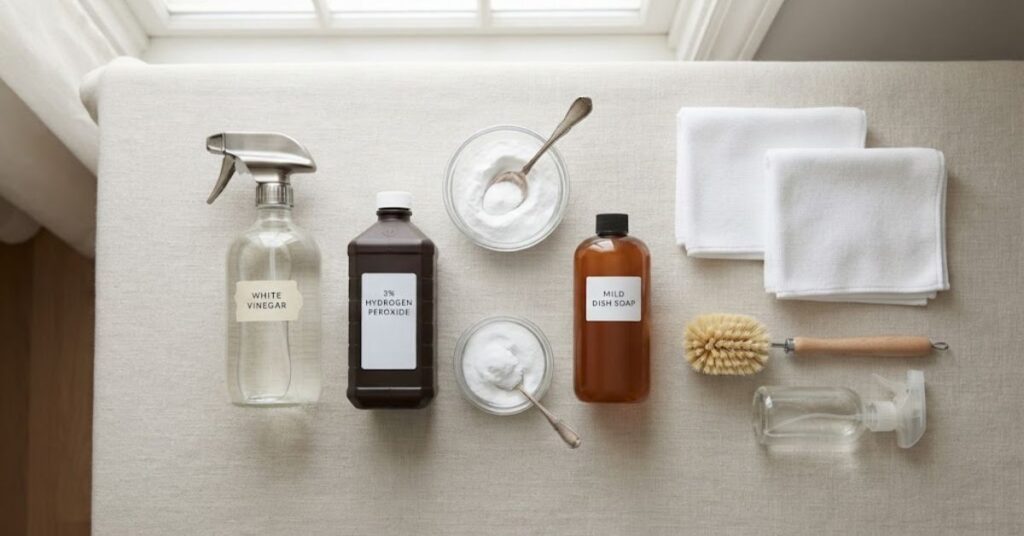
Depending on the method you choose, you may need:
- Baking soda
- White vinegar
- Hydrogen peroxide
- Mild liquid dish soap
- Clean white cloths
- Spray bottle
- Soft-bristled brush
- Vacuum cleaner
- Clean towels
- Fan
You do not need to use every ingredient at once. In fact, using too many cleaning products can make the process unnecessarily complicated.
The most important rule is simple: use as little liquid as possible and allow the mattress to dry completely.
1. Remove the Bedding and Vacuum the Mattress
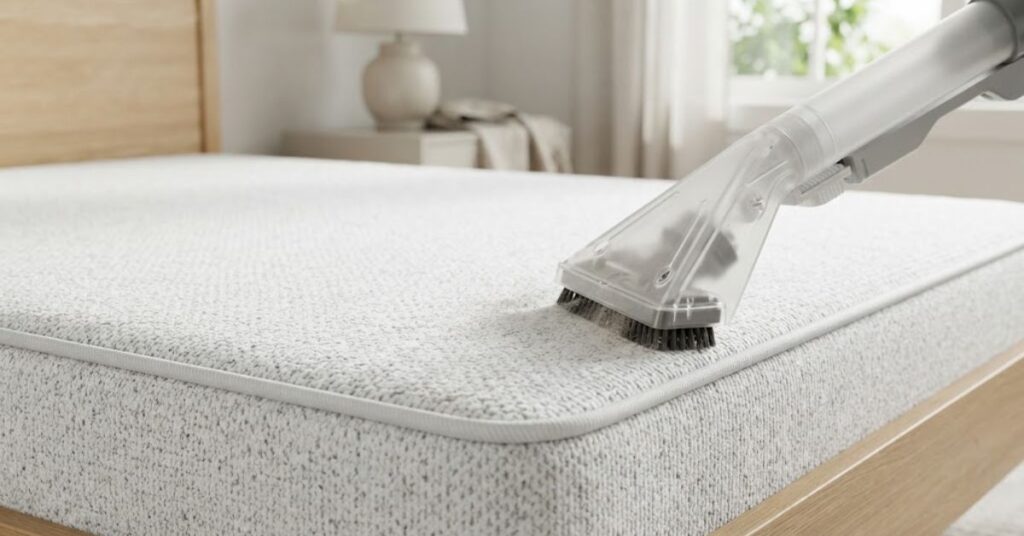
Start with a completely bare mattress.
Remove your sheets, mattress protector, blankets, and pillows. Wash the bedding according to its care instructions.
Next, vacuum the entire mattress using an upholstery attachment if you have one.
Move slowly over the surface and pay extra attention to:
- Seams
- Edges
- Corners
- Areas where you normally sleep
- Visible dusty or stained areas
Vacuuming first removes loose dirt, hair, skin cells, and dust. This makes the stain-cleaning process more effective.
If your mattress has a removable cover, check the manufacturer’s instructions before removing or washing it.
2. Try Baking Soda for Light Sweat Stains and Odors
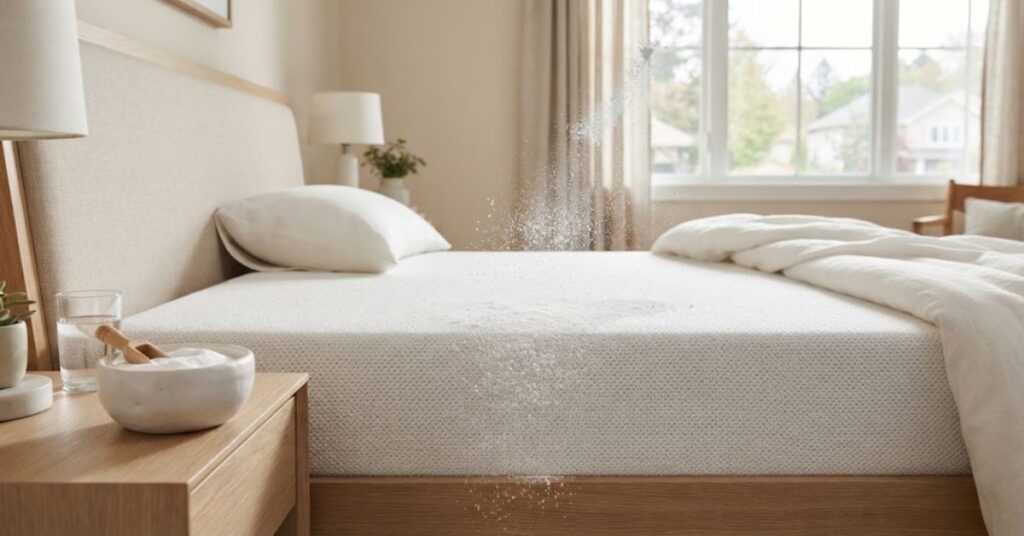
Baking soda is one of the easiest ways to freshen a mattress.
It can help absorb moisture and reduce unpleasant odors without adding a lot of liquid.
After vacuuming, sprinkle a thin, even layer of baking soda over the mattress.
For a mattress that smells particularly musty or sweaty, you can leave the baking soda on for several hours. If possible, leaving it for several hours during the day gives it more time to work.
Then vacuum the mattress thoroughly.
This method is especially useful when the main problem is odor rather than a deeply discolored stain.
For an old yellow stain, however, baking soda alone may not completely remove the discoloration. In that case, you may need a targeted stain treatment.
3. Use a Mild Soap Solution for Fresh Sweat Stains
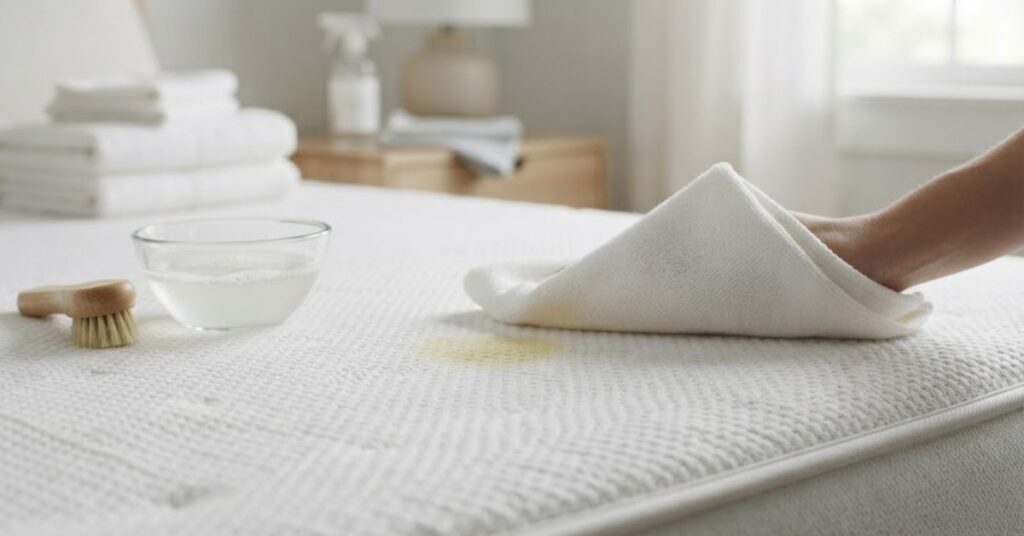
Fresh sweat marks are generally easier to treat than old stains.
Mix a small amount of mild liquid dish soap with cool or lukewarm water.
Dip a clean cloth into the solution and wring it out very well. The cloth should be damp, not dripping.
Gently blot the stained area.
Do not aggressively scrub the mattress. Scrubbing can push the stain deeper into the material and may damage delicate fibers.
Continue blotting with a clean section of the cloth until the visible mark begins to fade.
Afterward, use another slightly damp cloth to remove soap residue.
Finally, press a dry towel against the area to absorb as much moisture as possible.
4. Try a White Vinegar Solution
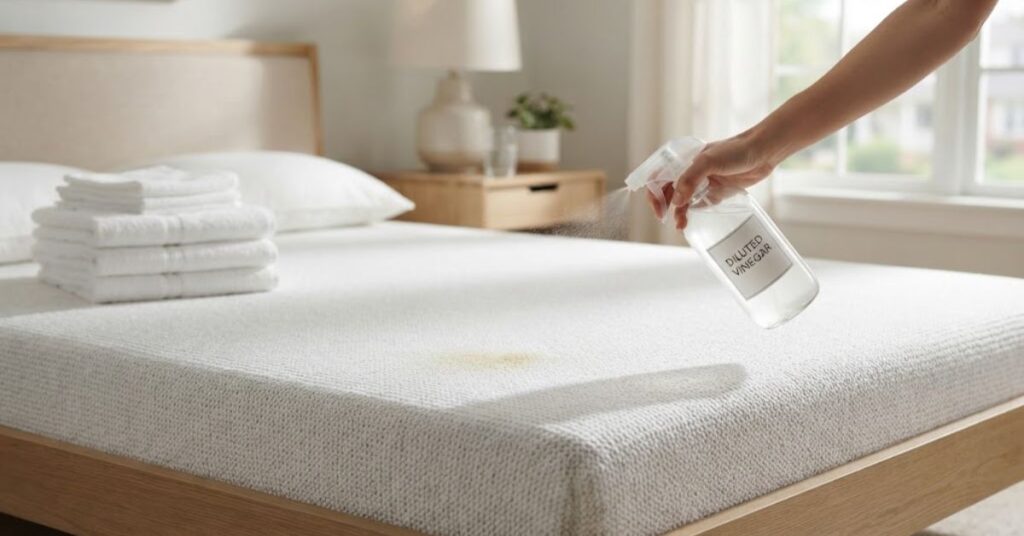
White vinegar can be useful for freshening areas affected by sweat and body odor.
To make a simple cleaning solution, mix equal parts white vinegar and water in a spray bottle.
Lightly mist the stained area. Do not saturate the mattress.
Allow the solution to sit briefly, then gently blot the area with a clean cloth.
The vinegar smell may be noticeable at first, but it should decrease as the mattress dries and the room is ventilated.
Keep windows open when possible and use a fan to improve airflow.
Because mattresses differ in materials and finishes, always test the solution on a small hidden area first.
5. Use Hydrogen Peroxide Carefully on Suitable Light-Colored Fabrics
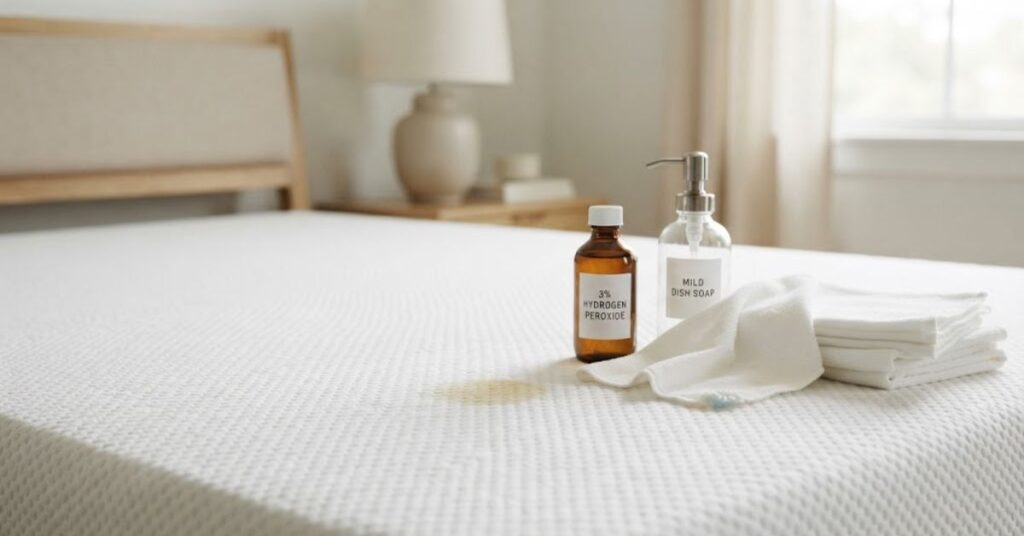
Hydrogen peroxide is sometimes used for difficult organic stains because it can help break down discoloration.
However, it can lighten some fabrics and materials. For that reason, it should not automatically be used on every mattress.
If the manufacturer’s care instructions allow it, test a small hidden area first.
A simple cleaning mixture can include:
- A small amount of 3% hydrogen peroxide
- A small amount of mild dish soap
- Water
Apply only a small amount to the stain and blot gently with a clean cloth.
Avoid soaking the mattress.
Hydrogen peroxide can be particularly useful for stubborn discoloration, but it should be treated as a targeted stain treatment rather than something to spray over the entire mattress.
Never mix hydrogen peroxide with other household cleaning chemicals.
6. Treat Old Yellow Sweat Stains
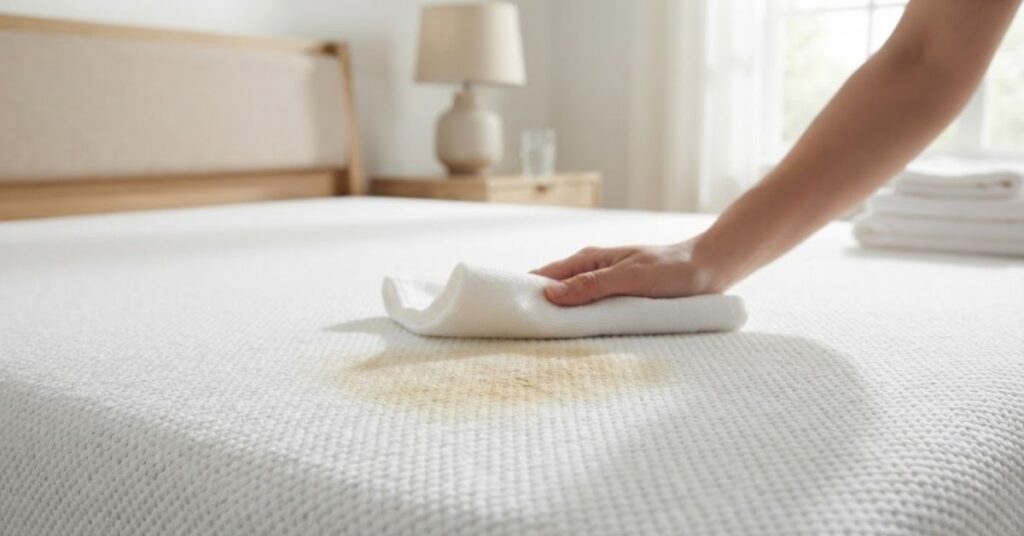
Old yellow sweat stains can be more difficult because they have had more time to settle into the mattress fabric.
Start by vacuuming the mattress.
Next, choose one suitable cleaning method rather than combining multiple strong solutions.
For a washable surface that allows light moisture, you can gently treat the stain with a mild cleaning solution.
Apply the solution to a cloth rather than heavily spraying the mattress. Dab the stained area and work gradually from the outside toward the center.
This helps prevent the stain from spreading.
After treating the area, blot with a clean, damp cloth to remove residue. Then press dry towels over the spot.
Use a fan to speed up drying.
If the stain has been present for a very long time or covers a large area, complete removal may not be possible with household cleaning alone. In that situation, professional mattress cleaning may be a better option.
7. Remove Sweat Odor From a Mattress
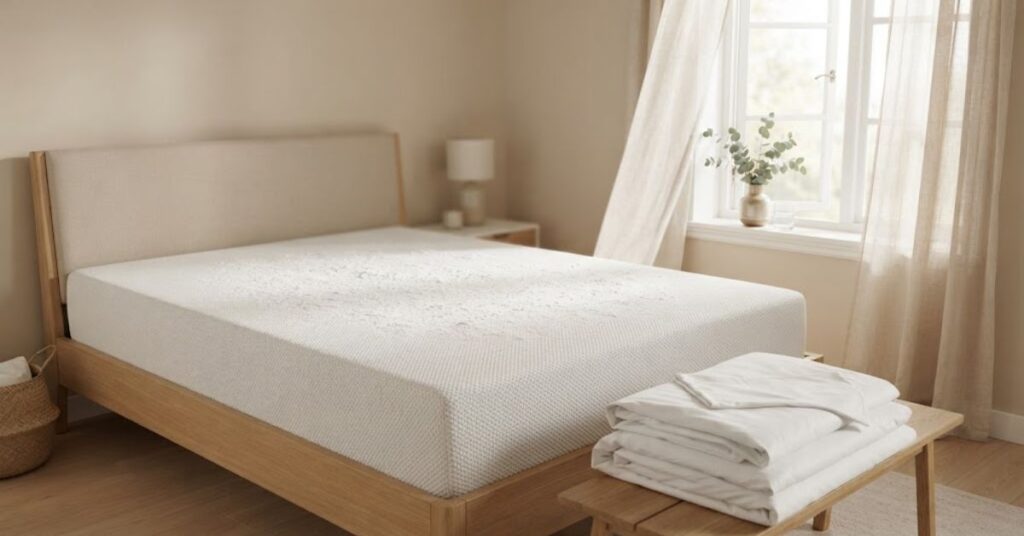
Sometimes the visible stain disappears, but the smell remains.
This usually means odor-causing residue is still present or moisture has not fully evaporated.
Baking soda is a simple first step.
Vacuum the mattress and sprinkle baking soda over the affected area. Leave it for several hours, then vacuum thoroughly.
Good ventilation is equally important.
Place the mattress in a well-ventilated room and use a fan if possible. If the mattress can safely receive indirect sunlight according to the manufacturer’s instructions, natural ventilation can also help freshen it.
Do not put sheets back on while the mattress is still damp.
Covering a damp mattress can trap moisture and create a more unpleasant odor.
8. Dry the Mattress Completely
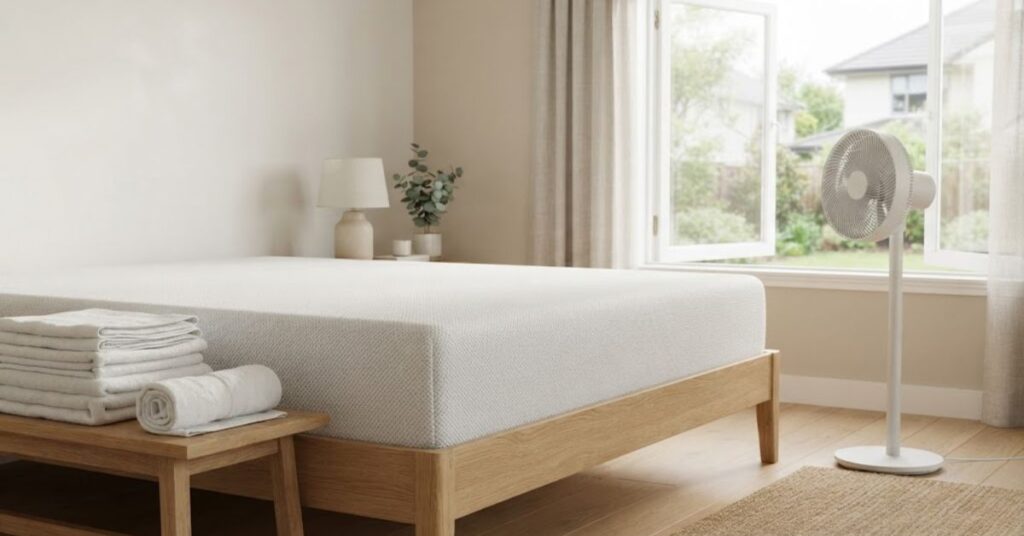
Drying is one of the most important parts of mattress cleaning.
Even if a stain looks better, hidden moisture can remain underneath the surface.
After cleaning:
- Press dry towels over the treated area.
- Open windows if weather and air quality allow.
- Use a fan to circulate air.
- Keep bedding off the mattress until it is completely dry.
- Check the treated area before making the bed.
Avoid using excessive heat unless the mattress manufacturer specifically allows it.
Never assume a mattress is dry simply because the surface feels dry. Give it plenty of airflow and time.
9. Repeat the Treatment Instead of Over-Wetting the Mattress
A common mistake is trying to remove a stubborn stain in one attempt by adding more and more cleaning solution.
This can make the situation worse.
If the stain is still visible after the mattress has completely dried, repeat a mild treatment rather than flooding the area with liquid.
Several gentle treatments can be safer than one aggressive treatment.
Always allow the mattress to dry fully between treatments.
What Not to Do When Cleaning Sweat Stains
Knowing what not to do is just as important as knowing what to do.
Do Not Soak the Mattress
Mattresses can hold moisture deep inside. Excess water may take a long time to dry and can contribute to odors or other problems.
Do Not Scrub Aggressively
Hard scrubbing can damage the fabric and spread the stain.
Blotting is usually a better approach.
Do Not Mix Cleaning Chemicals
Never randomly combine household cleaning products.
Some combinations can create dangerous fumes or unwanted chemical reactions.
Use one appropriate cleaning method at a time.
Do Not Put Bedding Back on a Damp Mattress
This can trap moisture.
Always allow the mattress to dry completely before making the bed.
Do Not Ignore the Manufacturer’s Instructions
Your mattress may have special cleaning requirements.
If the care label says to avoid certain products or moisture, follow those instructions.
How to Prevent Sweat Stains on Your Mattress
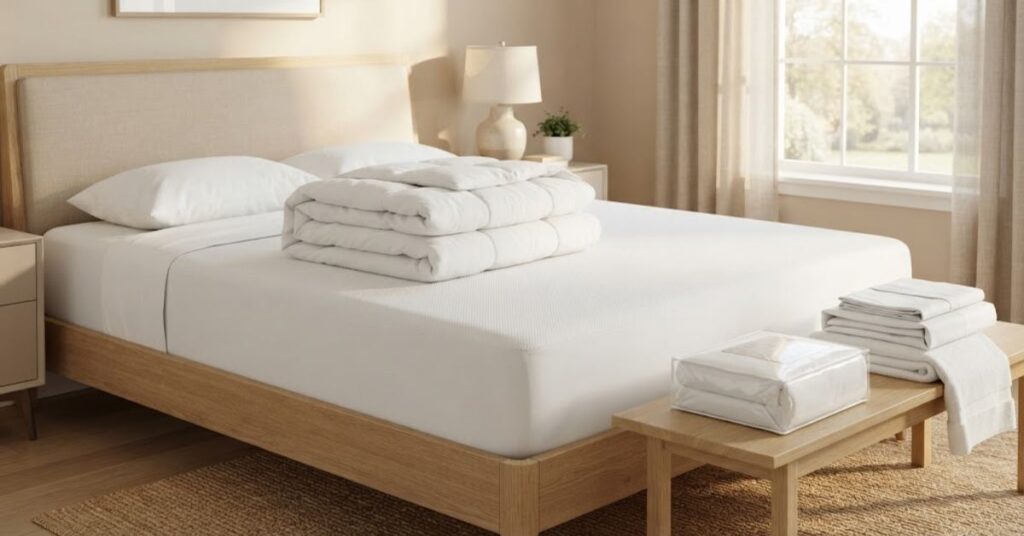
Once you have cleaned your mattress, prevention can save you a lot of work.
Use a Waterproof Mattress Protector
A washable mattress protector creates a barrier between your body, bedding, and mattress.
Choose one that fits properly and is breathable enough for your sleeping preferences.
Wash the protector regularly according to its care instructions.
Wash Sheets Regularly
Sheets collect sweat, body oils, and dead skin cells.
Regular washing helps reduce the amount of buildup that reaches your mattress.
During hot weather or if you sweat heavily at night, you may need to wash bedding more frequently.
Keep the Bedroom Comfortable
A hot bedroom can contribute to nighttime sweating.
Use breathable bedding and maintain a comfortable sleeping temperature.
Lightweight cotton or other breathable fabrics can be useful for people who tend to sleep hot.
Let Your Mattress Air Out
Whenever practical, remove heavy bedding for a while after waking up and allow the bed to air.
This gives moisture more opportunity to evaporate.
Vacuum Your Mattress Occasionally
Vacuuming can remove dust, hair, skin cells, and other surface debris.
You do not need to vacuum every day. Occasional cleaning as part of your home-care routine can help keep the mattress fresher.
How to get sweat stains out of a mattress
There is no single schedule that works for every household.
A good approach is to clean visible stains as soon as you notice them and freshen the mattress periodically.
Your mattress may need more frequent attention if:
- You sweat heavily at night
- You have allergies
- You have pets
- You eat or drink in bed
- You live in a humid climate
- You do not use a mattress protector
Regular sheet washing and the use of a mattress protector can reduce how often you need deeper mattress cleaning.
Can You Remove Completely Set-In Sweat Stains?
Sometimes, but not always.
Fresh stains usually respond better to home treatment than old, deeply discolored stains.
An old yellow stain may have changed the appearance of the fabric permanently. In that situation, cleaning may improve the stain without making it disappear completely.
Do not keep applying stronger and stronger chemicals in an attempt to make an old mattress look brand new.
If the mattress is heavily stained, has a persistent odor, or cannot be cleaned according to its care instructions, professional cleaning or mattress replacement may be worth considering.
When Should You Replace a Mattress Instead of Cleaning It?
Cleaning can improve the surface of a mattress, but it cannot fix every problem.
Consider replacing a mattress if it is:
- Severely sagging
- Damaged
- Heavily soiled
- Persistently odorous despite cleaning
- Showing significant wear
- No longer comfortable or supportive
A mattress protector can help protect a new mattress from future sweat, spills, and stains.
Frequently Asked Questions
What is the easiest way to get sweat stains out of a mattress?
Start by vacuuming the mattress. For a light stain, use a small amount of mild soap solution and blot gently. For odors, baking soda can help freshen the surface. Always use minimal moisture and allow the mattress to dry completely.
How do you remove old yellow stains from a mattress?
Old yellow stains may require repeated gentle treatment. Depending on the mattress care instructions, you can try a suitable mild cleaning solution or carefully use 3% hydrogen peroxide on a compatible light-colored fabric after testing a hidden area.
Does baking soda remove sweat stains from a mattress?
Baking soda is more useful for absorbing moisture and reducing odors than completely removing deep discoloration. It can be a helpful part of a mattress-cleaning routine, but stubborn yellow stains may require additional treatment.
Can I use vinegar to clean a mattress?
A diluted white vinegar solution can be useful for some mattress surfaces and odors. Lightly apply it rather than soaking the mattress, and always test an inconspicuous area first.
How long does a mattress take to dry after cleaning?
Drying time depends on how much moisture was used, the mattress material, humidity, temperature, and airflow. Use fans and good ventilation, and do not cover the mattress until it is completely dry.
Can I use bleach to remove mattress stains?
Bleach is generally not a good choice for mattress cleaning unless the manufacturer specifically says it is safe. It can damage fabrics and materials and may create other problems if used incorrectly.
Why does my mattress still smell after cleaning?
A lingering smell may come from trapped moisture, body oils, or odor-causing residue. Allow the mattress to dry completely and improve airflow. If the odor persists, you may need professional cleaning.
Final Thoughts
Learning how to get sweat stains out of a mattress does not have to involve complicated cleaning products.
Start with the simplest method: remove the bedding, vacuum the mattress, treat the stain gently, and use as little moisture as possible. Baking soda can help with odors, while carefully selected cleaning solutions can help with visible stains.
The most important step is allowing the mattress to dry completely before putting your bedding back on.
For long-term protection, use a washable mattress protector, wash your sheets regularly, and deal with sweat stains as soon as you notice them.
A little regular maintenance can keep your mattress fresher, cleaner, and more comfortable for much longer.
True Housekeeping Tip: If you are dealing with an old mattress stain, do not rush to use stronger chemicals. Start with the gentlest suitable method and repeat it only after the mattress has completely dried.