
If you share your home with a dog or cat, you already know how quickly pet hair can take over a couch. A few strands can turn into a layer of fur across cushions, underneath pillows, and deep inside the seams before you even notice it.
Regular vacuuming helps, but it does not always remove hair that has become trapped in upholstery. Pet hair can cling tightly to fabric because of static, body oils, and the texture of the material. Some types of hair can even work their way deep into the fibers.
The good news is that you do not need expensive equipment to get your furniture looking fresh again. With the right tools and a simple cleaning routine, you can remove loose and embedded pet hair from most couches and upholstered furniture.
This guide explains how to deep-clean pet hair from your couch step by step. You will also learn how to deal with stubborn hair, clean different upholstery materials, reach difficult corners, and prevent pet hair from building up again.
Why Is Pet Hair So Difficult to Remove From a Couch?
Pet hair does not simply sit on the surface of furniture. Some of it becomes trapped between upholstery fibers, especially when a pet regularly sleeps or rests in the same place.
Short, fine hairs can be particularly difficult to see and remove. They may blend into the color of the couch while still creating a rough or dirty-looking surface.
Static electricity can also make the problem worse. Dry upholstery may attract hair and cause it to cling tightly to the fabric.
Your pet’s natural oils can contribute as well. When hair mixes with body oils, dust, and everyday debris, it can stick more firmly to upholstery.
This is why simply running a vacuum over the couch once may not be enough.
A better approach is to loosen the hair first, collect as much as possible, and then vacuum the upholstery thoroughly.
Before You Start: Check Your Couch’s Cleaning Code
Before using water, soap, or any cleaning solution, check the manufacturer’s care instructions.
Many upholstered couches have a cleaning code on a tag underneath the cushions or furniture frame.
Common codes include:
- W: Water-based cleaning products can generally be used.
- S: Use a solvent-based upholstery cleaner.
- WS: Either water-based or solvent-based products may be suitable.
- X: Vacuuming or professional cleaning may be recommended instead of liquid cleaners.
Always follow the manufacturer’s instructions first.
If you cannot find a cleaning code, check the furniture manufacturer’s care guide before applying a homemade or commercial solution.
When testing any cleaner, apply a small amount to a hidden area first. This helps you check for discoloration, staining, or fabric damage.
What You Need to Remove Pet Hair From Upholstery
You probably already have most of the tools needed for this job.
Gather:
- Vacuum cleaner with an upholstery attachment
- Rubber cleaning gloves
- Microfiber cloths
- Lint roller
- Soft-bristled brush
- Pet-hair removal brush or upholstery scraper
- Clean water, if suitable for your fabric
- Mild upholstery cleaner
- Clean towels
- Small bowl or bucket
You do not necessarily need to use every tool.
Start with the gentlest method and move to a stronger method only when necessary.
How to Deep-Clean Pet Hair From Your Couch
The most effective method is to work in stages rather than trying to vacuum everything at once.
1. Remove Everything From the Couch
Start by taking blankets, pillows, throws, toys, and removable cushion covers off the couch.
Shake washable blankets and covers outdoors if possible.
Place them in the laundry according to their care instructions.
Removing these items gives you better access to the upholstery and prevents you from moving pet hair from one surface to another.
Do not forget to check underneath decorative pillows and between removable cushions.
2. Remove the Couch Cushions
If your couch has removable seat and back cushions, take them off.
This step is important because pet hair often collects underneath cushions where it is difficult to see.
Place the cushions on a clean surface.
Inspect the couch frame, seams, corners, and areas around the cushion supports.
You may be surprised by how much hair has accumulated in these hidden spaces.
3. Pick Up Large Amounts of Loose Hair First
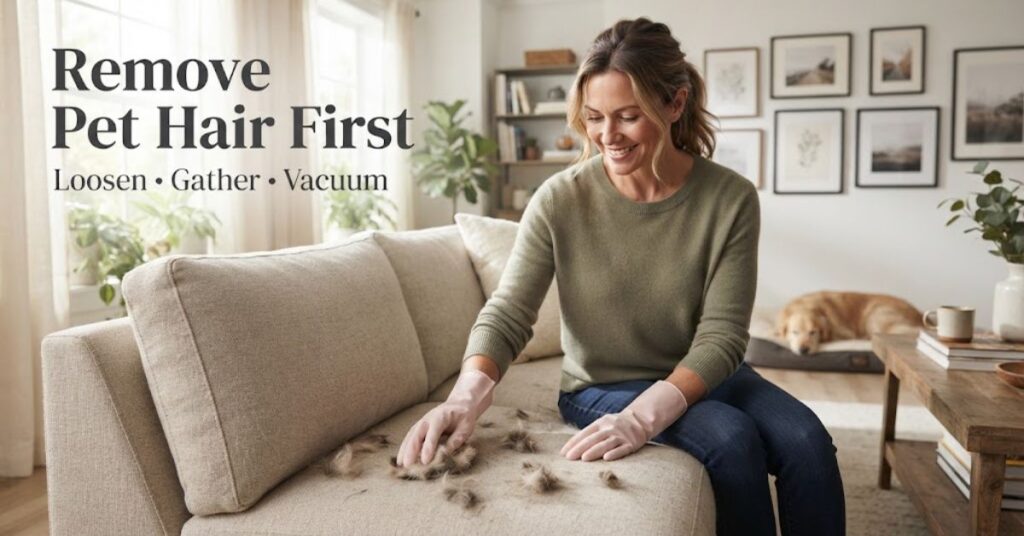
Before using your vacuum, remove large clumps of loose pet hair.
A lint roller works well for surface hair.
For larger areas, put on a pair of clean, slightly damp rubber gloves. Run your gloved hand slowly across the upholstery.
Pet hair often gathers into small balls that are much easier to pick up after rubbing the fabric.
Work in one direction instead of repeatedly moving your hand back and forth.
Collect the hair and place it directly into a trash bag.
4. Use Rubber Gloves for Embedded Hair
Rubber gloves are one of the simplest ways to loosen pet hair from upholstery.
Put on clean household rubber gloves and lightly dampen them with water.
Do not soak them.
Run your hand over the fabric using short, firm strokes.
The rubber creates friction that helps gather hair into clumps.
As the hair collects, remove it from the glove and place it in the trash.
This method is especially useful on fabric couches where hair has become embedded.
However, always test the technique on an inconspicuous area first.
Some delicate fabrics may react differently to rubbing.
5. Brush the Upholstery
If hair is deeply embedded, use a soft upholstery brush or a tool designed specifically for pet-hair removal.
Move the brush in one direction.
Avoid aggressively scraping the fabric.
Your goal is to loosen the hair, not damage the upholstery fibers.
Pay special attention to:
- Seat cushions
- Armrests
- Back cushions
- Seams
- Piping
- Areas where your pet sleeps
- The front edge of cushions
Once the hair is loosened, collect it before moving to the next step.
6. Vacuum the Couch Thoroughly
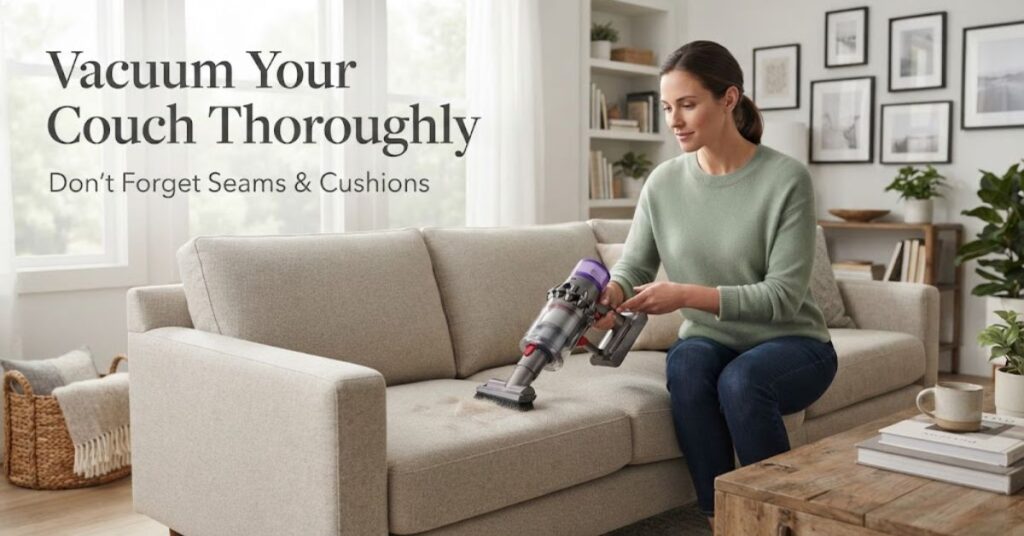
Now it is time to vacuum.
Attach your vacuum’s upholstery tool if you have one.
Start at the top of the couch and work downward.
Use slow, overlapping passes.
Moving the vacuum too quickly can leave hair behind.
Vacuum:
- Seat cushions
- Back cushions
- Armrests
- Sides of the couch
- Front edges
- Seams
- Under cushions
- Between cushions
- Around the couch frame
Use the crevice tool to reach narrow spaces.
For removable cushions, vacuum both sides when the manufacturer’s care instructions allow it.
7. Pay Extra Attention to Seams and Crevices
Seams are pet-hair magnets.
Hair can become trapped along stitching and piping where a regular vacuum head may not reach effectively.
Use the narrow crevice attachment.
Move it slowly along each seam.
If hair remains, use a soft brush or rubber glove to loosen it before vacuuming again.
Do not force a vacuum attachment into delicate seams.
Excessive pressure could stretch or damage the upholstery.
8. Clean the Upholstery After Removing the Hair
Once the majority of the hair is gone, you can move on to cleaning the fabric if it is safe to do so.
This order matters.
Trying to wash a couch covered in pet hair can make the cleaning process more difficult.
Follow the furniture manufacturer’s instructions and your upholstery cleaning code.
For water-safe upholstery, use an appropriate upholstery cleaner and a clean microfiber cloth.
Avoid soaking the fabric.
Too much moisture can create problems such as water marks, slow drying, or unpleasant odors.
Work in small sections.
Apply only as much cleaner as recommended.
9. Blot Instead of Scrubbing
When cleaning upholstery, aggressive scrubbing is usually unnecessary.
Instead, gently blot or work the cleaner according to the product’s instructions.
Scrubbing too hard can push dirt deeper into the fabric and may damage delicate fibers.
Use a clean microfiber cloth and work carefully.
If the fabric becomes visibly wet, use a dry towel to absorb excess moisture.
10. Let the Couch Dry Completely
Allow the couch to dry fully before putting cushions and blankets back.
Open windows when weather permits.
Use fans to improve air circulation if appropriate.
Avoid sitting on damp upholstery.
The goal is to make sure the fabric dries evenly and completely.
If cushions have removable covers, follow the manufacturer’s washing and drying instructions rather than assuming they can be machine dried.
How to Remove Pet Hair From Couch Crevices
Some of the hardest pet hair to remove hides between cushions.
Start by removing all loose cushions.
Use your hands to collect larger pieces of hair.
Then use a crevice attachment to vacuum the narrow gaps.
If hair remains stuck to the fabric, use a rubber glove or pet-hair brush.
Follow with another slow vacuum pass.
You can also use a clean, dry microfiber cloth to collect fine hair from smooth areas around the frame.
Do not push hair farther into the gaps.
Work from the deepest accessible area outward so that you are bringing debris toward you rather than redistributing it.
How to Remove Dog Hair From a Fabric Couch
Dog hair varies considerably from one breed to another.
Long hair may be relatively easy to see and pick up.
Fine, short hair can be much more difficult because it works into the fabric.
For a fabric couch, try this sequence:
- Remove cushions.
- Pick up loose hair by hand.
- Use a rubber glove to gather embedded hair.
- Brush the upholstery gently.
- Vacuum with an upholstery attachment.
- Use a crevice tool around seams.
- Clean the fabric according to its care instructions.
- Allow it to dry completely.
For heavy shedding, repeat the rubber-glove and vacuum steps before using any liquid cleaner.
How to Remove Cat Hair From Upholstered Furniture
Cat hair can be especially noticeable on dark furniture.
It can also collect on chairs, ottomans, headboards, and fabric benches.
A lint roller is useful for smaller pieces of furniture.
For larger surfaces, use a rubber glove or pet-hair brush first.
Then vacuum the loosened hair.
Pay attention to areas where your cat regularly sleeps.
If your cat has a favorite chair, cleaning that area more frequently can prevent a thick layer of hair from accumulating.
How to Remove Pet Hair From Velvet Furniture
Velvet requires extra care.
Do not assume that a rubber glove, brush, or damp cloth is safe simply because it works on ordinary fabric.
Check the manufacturer’s care instructions first.
For many velvet surfaces, gentle vacuuming with the appropriate attachment may be safer than aggressive rubbing.
Avoid excessive pressure.
If the furniture requires specialized cleaning, follow the manufacturer’s instructions or consider professional upholstery cleaning.
How to Remove Pet Hair From Microfiber Furniture
Microfiber can attract pet hair, but its relatively smooth surface may make loose hair easier to collect.
Start with a vacuum upholstery attachment.
For remaining hair, use a pet-hair removal tool appropriate for microfiber.
Avoid excessive moisture unless the manufacturer’s instructions allow it.
Microfiber can develop water marks or changes in texture if cleaned incorrectly.
Always test a cleaning method in a hidden area first.
How to Get Pet Hair Out of Couch Seams
Couch seams require patience.
Use the narrowest vacuum attachment you have.
Move slowly along the stitching.
If the vacuum cannot remove everything, loosen the hair with a soft brush.
You can also use a rubber glove on suitable fabric.
After loosening the hair, vacuum again.
A small handheld vacuum can be convenient for this task because it is easier to control around narrow areas.
What About a Lint Roller?
A lint roller is excellent for surface-level pet hair.
It works particularly well on:
- Small cushions
- Accent chairs
- Throw pillows
- Armrests
- Clothing
- Fabric ottomans
However, a lint roller may not be the most practical option for an entire sectional.
You could go through a large number of sheets.
For large furniture, remove most of the hair with a glove, brush, or vacuum first.
Then use a lint roller for the final touch.
Can You Use a Squeegee to Remove Pet Hair?
Some people use rubber squeegees to gather pet hair from upholstery.
The rubber edge creates friction and can pull hair into small piles.
However, not every upholstery fabric should be treated this way.
Always test a small hidden area first.
Do not use excessive pressure.
If the manufacturer recommends gentle cleaning only, follow those instructions instead.
Should You Vacuum or Brush First?
For heavily covered furniture, it can help to loosen the hair before vacuuming.
A good general sequence is:
Loosen → Gather → Vacuum → Clean → Dry
This works because deeply embedded hair may not come free during the first vacuum pass.
If you vacuum first and still see hair, do not assume your vacuum is ineffective.
Loosen the remaining hair and vacuum again.
How to Deal With Pet Hair That Is Stuck to Wet Upholstery
If pet hair is already mixed with moisture or a cleaning solution, allow the situation to dry according to the upholstery care instructions.
Do not aggressively rub wet fabric.
Once the area is appropriate to clean, follow the manufacturer’s recommended process.
Removing loose pet hair before wet cleaning is generally easier than trying to separate wet hair from damp upholstery.
How to Remove Pet Hair From Upholstered Chairs
The same basic process works for dining chairs, accent chairs, reading chairs, and other upholstered furniture.
Remove cushions if possible.
Gather loose hair.
Use a rubber glove or suitable hair-removal tool.
Vacuum the upholstery.
Clean according to the fabric’s care instructions.
For dining chairs, inspect the area underneath the seat.
Pet hair often collects around the bottom edges and between the cushion and frame.
How to Clean Pet Hair From an Upholstered Headboard
If your bedroom has an upholstered headboard, inspect it regularly.
Pet hair can collect on the top edge, especially if a pet spends time on the bed.
Use a vacuum upholstery attachment and move slowly across the surface.
A soft brush can help loosen stubborn hair when appropriate for the fabric.
Avoid using water unless the headboard’s care instructions permit it.
Because headboards can be difficult to dry, unnecessary moisture should be avoided.
Common Mistakes When Removing Pet Hair From Furniture
Using Too Much Water
More water does not necessarily mean better cleaning.
Excess moisture can create drying problems and may damage some upholstery.
Scrubbing Too Hard
Aggressive scrubbing can damage fabric fibers.
Use gentle, controlled movements.
Skipping the Care Label
Different upholstery materials require different cleaning methods.
Always check the manufacturer’s instructions first.
Vacuuming Too Quickly
Slow vacuum passes are usually more effective than rushing across the couch.
Cleaning Before Removing Hair
If there is a heavy layer of pet hair, remove as much as possible before wet cleaning.
Ignoring Hidden Areas
Under cushions and around seams are some of the most common places for pet hair to accumulate.
Using the Wrong Brush
A stiff brush may damage delicate upholstery.
Choose a tool appropriate for your furniture.
How Often Should You Deep-Clean a Couch With Pets?
The ideal schedule depends on how much your pet sheds and how frequently the furniture is used.
For homes with heavy shedders, quick hair removal every few days can make a noticeable difference.
A deeper cleaning can be done when the furniture needs it according to the manufacturer’s care instructions.
A simple routine might look like this:
Every few days:
Quick vacuum and surface hair removal.
Weekly:
Vacuum cushions, seams, and hard-to-reach areas.
Monthly or as needed:
More thorough hair removal and upholstery cleaning when appropriate.
If your pet spends most of the day on one particular couch, that area may need attention more frequently.
How to Prevent Pet Hair From Building Up on Your Couch
Cleaning your couch is only half the battle.
Prevention can make the next cleaning much easier.
Give Your Pet a Comfortable Bed
A comfortable pet bed can encourage your dog or cat to spend more time in its own resting area.
Choose a washable cover whenever possible.
Wash the bedding according to the manufacturer’s instructions.
Use Washable Furniture Covers
A washable throw or furniture cover can protect high-use areas.
This is particularly helpful if your pet has a favorite couch spot.
Instead of cleaning the entire couch as often, you can regularly wash the cover.
Groom Your Pet Regularly
Regular grooming can help reduce loose hair around your home.
The right grooming schedule depends on your pet’s coat and grooming needs.
If you are unsure which brush or grooming routine is appropriate, ask your veterinarian or professional groomer.
Vacuum Regularly
Frequent light cleaning is usually easier than waiting until the couch has a thick layer of hair.
Keep your vacuum accessible.
A quick five-minute cleanup can prevent a much bigger job later.
Keep a Lint Roller Nearby
Place a lint roller somewhere convenient.
When you notice hair on a cushion, remove it immediately.
Small maintenance tasks add up.
Wash Pet Bedding Regularly
Your pet’s bed can become a major source of loose hair.
If you clean the couch but leave heavily covered pet bedding nearby, hair can quickly return to the furniture.
A Simple Weekly Pet-Hair Cleaning Routine
If you want to keep your couch under control, try this simple routine.
Monday: Quick Vacuum
Vacuum the main seating areas and cushions.
Wednesday: Hair Removal
Use a rubber glove, pet-hair tool, or lint roller on areas where hair is accumulating.
Friday: Deep Vacuum
Remove cushions and vacuum underneath them.
Clean seams and corners with a crevice attachment.
Weekend: Wash Covers
Wash removable blankets, throws, and pet-bed covers according to their care instructions.
This routine takes much less effort than waiting until the couch becomes completely covered in fur.
How to Make Pet-Hair Cleaning Easier
The biggest secret is consistency.
You do not need to spend an hour cleaning your couch every day.
Instead, tackle pet hair before it becomes deeply embedded.
Keep your most useful tools together.
A small cleaning basket could contain:
- Lint roller
- Microfiber cloths
- Rubber gloves
- Upholstery brush
- Vacuum attachments
When everything is ready, quick maintenance becomes much easier.
When Should You Call a Professional Upholstery Cleaner?
Professional cleaning may be appropriate when:
- The furniture has delicate fabric.
- The manufacturer’s instructions recommend professional cleaning.
- The couch has significant staining.
- There is a persistent odor.
- Hair and dirt are deeply embedded.
- You are unsure which cleaning method is safe.
Professional cleaning can also be useful for expensive furniture where experimenting with homemade cleaning solutions could cause damage.
Always tell the professional that pets regularly use the furniture.
Frequently Asked Questions
What is the easiest way to remove pet hair from a couch?
For most suitable upholstery, start by loosening the hair with a rubber glove or appropriate pet-hair removal tool. Gather the loose hair and then vacuum the surface thoroughly using an upholstery attachment.
How do you get pet hair out of upholstery?
Use a combination of mechanical removal and vacuuming. A rubber glove, upholstery brush, lint roller, or pet-hair removal tool can loosen hair before you vacuum it away.
Can I use a vacuum cleaner to remove dog hair from my couch?
Yes, if your vacuum and upholstery are compatible. Use an upholstery attachment and make slow passes over the fabric. A crevice tool can help remove hair from seams and gaps.
Do rubber gloves really remove pet hair?
Rubber gloves can help gather loose and embedded hair because the rubber creates friction against the upholstery. Lightly dampen the glove if appropriate for the fabric, but always test the method first.
How often should I vacuum a couch with pets?
Homes with shedding pets may benefit from vacuuming several times a week, especially on the furniture your pet uses most. A deeper cleaning schedule depends on the upholstery and manufacturer’s care instructions.
How do I remove pet hair from couch cushions?
Remove the cushions if possible. Gather loose hair, use a suitable hair-removal tool or rubber glove, and then vacuum both sides and the edges according to the manufacturer’s care instructions.
How do I clean a couch without damaging the fabric?
Start by checking the manufacturer’s cleaning code. Use only products and methods recommended for that upholstery. Test any cleaner on an inconspicuous area before treating the entire couch.
Is a lint roller good for removing pet hair?
Yes. Lint rollers are particularly useful for small areas and surface hair. For a large couch, however, a vacuum, rubber glove, or reusable pet-hair removal tool may be more practical.
How do I stop my couch from getting covered in pet hair?
Regular grooming, washable furniture covers, frequent vacuuming, and giving your pet a comfortable bed can all help reduce the amount of hair that reaches your couch.
Should I clean pet hair before using upholstery cleaner?
Generally, removing as much loose hair as possible first makes the cleaning process easier. Vacuum and collect the hair before applying any liquid product that is approved for your upholstery.
Final Thoughts
Learning how to deep-clean pet hair from your couch does not require a complicated collection of cleaning products.
Start by removing cushions and loose items. Gather as much hair as possible with a lint roller, rubber glove, or suitable pet-hair tool. Then vacuum slowly, paying special attention to seams, corners, and the spaces underneath cushions.
Once the hair is gone, clean the upholstery according to its care instructions. Avoid excessive water and aggressive scrubbing, and give the furniture plenty of time to dry.
Most importantly, do not wait until your couch is completely covered in fur. A few minutes of regular maintenance can prevent pet hair from becoming deeply embedded.
With a simple routine, you can keep your upholstered furniture looking cleaner and fresher while still enjoying life with your favorite four-legged family members.
At True Housekeeping, we believe a clean home should be practical, comfortable, and realistic even when pets are part of the family.