
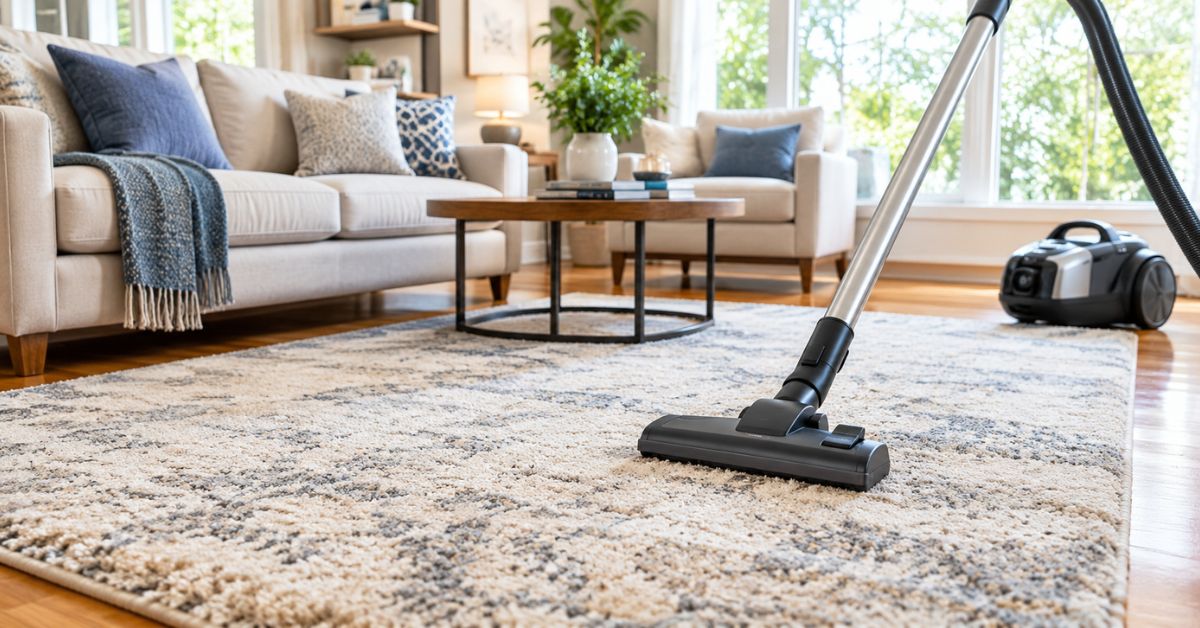
Rugs can completely transform a room. They add warmth, comfort, color, and personality while making hard floors feel more inviting. However, because rugs sit directly on the floor, they also collect dust, dirt, crumbs, pet hair, spills, and everyday grime. Over time, even a rug that looks reasonably clean can become dull, dusty, or develop unpleasant odors.
The good news is that learning how to clean a rug at home does not have to be difficult. With the right approach, you can refresh many rugs using basic household cleaning supplies and avoid the expense of professional cleaning for routine maintenance.
The most important thing to remember is that not every rug should be cleaned in the same way. A washable cotton rug can usually handle more moisture than a delicate wool, silk, antique, or hand-knotted rug. Before using water or cleaning products, always check the manufacturer’s care label and consider the rug’s material, construction, backing, and condition.
In this guide, you’ll learn how to vacuum, spot-clean, wash, deep-clean, deodorize, and dry a rug safely. You’ll also discover how to deal with common stains and the mistakes that can permanently damage your rug.
Why Regular Rug Cleaning Matters
Rugs are constantly exposed to foot traffic. Shoes, socks, pets, children, food, and outdoor dirt can all contribute to buildup.
Regular cleaning helps remove:
- Dust and fine particles
- Dirt and sand
- Pet hair
- Food crumbs
- Body oils
- Pet dander
- Everyday spills
- Unpleasant odors
Cleaning your rug regularly can also help maintain its appearance. Dirt particles can become trapped between fibers and act like tiny pieces of sandpaper when people walk across the rug. Frequent vacuuming helps reduce this buildup and may help the rug look newer for longer.
Regular care is particularly important for rugs placed in entryways, kitchens, dining rooms, hallways, and family rooms because these areas typically experience more traffic.
Before You Clean Your Rug
Before you start, take a few minutes to identify what type of rug you’re dealing with.
Check the Care Label
Look underneath or on the back of the rug for a care label. It may tell you whether the rug is:
- Machine washable
- Hand washable
- Spot clean only
- Dry clean only
- Suitable for professional cleaning
Follow these instructions whenever possible.
Identify the Material
Common rug materials include:
- Wool
- Cotton
- Polyester
- Nylon
- Polypropylene
- Jute
- Sisal
- Rayon
- Silk
- Synthetic blends
Synthetic rugs are often more forgiving, while natural fibers can require more careful handling.
Wool rugs, for example, can be sensitive to excessive moisture and harsh chemicals. Jute and sisal rugs can also react poorly to too much water.
Test the Cleaning Solution
Before applying any cleaning solution to a visible area, test it on a small hidden section.
Apply a small amount, wait several minutes, and check for:
- Color bleeding
- Discoloration
- Texture changes
- Damage to the fibers
- Changes to the backing
If anything looks unusual, stop and use a different cleaning method.
What You’ll Need to Clean a Rug
For basic rug cleaning, you may need:
- Vacuum cleaner
- Soft-bristled brush
- Microfiber cloths
- Bucket
- Lukewarm water
- Mild dish soap or rug-safe detergent
- Spray bottle
- White towels
- Baking soda for deodorizing
- Soft sponge
- Fan for drying
Avoid automatically reaching for strong bleach, ammonia, or concentrated household cleaners. A product that works on a hard bathroom surface may be far too aggressive for delicate rug fibers.
Step 1: Remove Furniture and Loose Items
Start by removing small furniture, toys, baskets, shoes, and anything else sitting on the rug.
If the rug is small enough to move easily, take it outdoors and shake it gently. This can help loosen dust and crumbs before vacuuming.
Do not aggressively beat delicate or antique rugs because excessive force can damage fibers or weaken the construction.
For large rugs that cannot be moved, simply clear the surrounding area so you can clean the entire surface.
Step 2: Vacuum the Rug Thoroughly
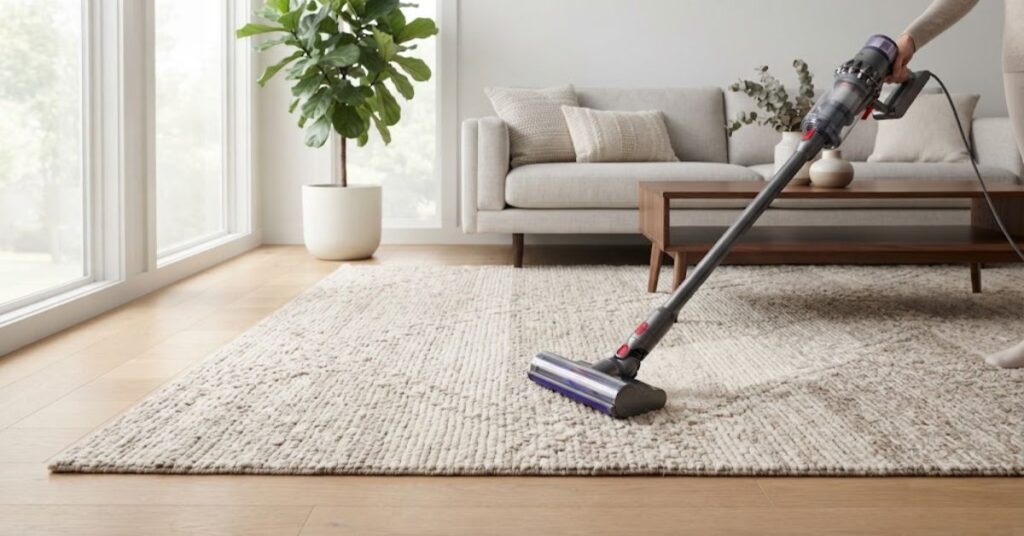
Vacuuming is one of the most important parts of rug maintenance.
Run the vacuum slowly over the entire rug rather than quickly passing over it once. Move in multiple directions to loosen embedded dirt.
Pay special attention to:
- Edges
- Corners
- Areas underneath furniture
- High-traffic sections
- Spaces where pet hair collects
If your rug has long or delicate fibers, use an appropriate vacuum setting. A powerful rotating brush can sometimes pull, stretch, or damage loose fibers.
For a reversible rug, check whether both sides can be vacuumed. Vacuuming underneath can remove dust that has worked through the fibers.
Step 3: Remove Loose Hair and Debris
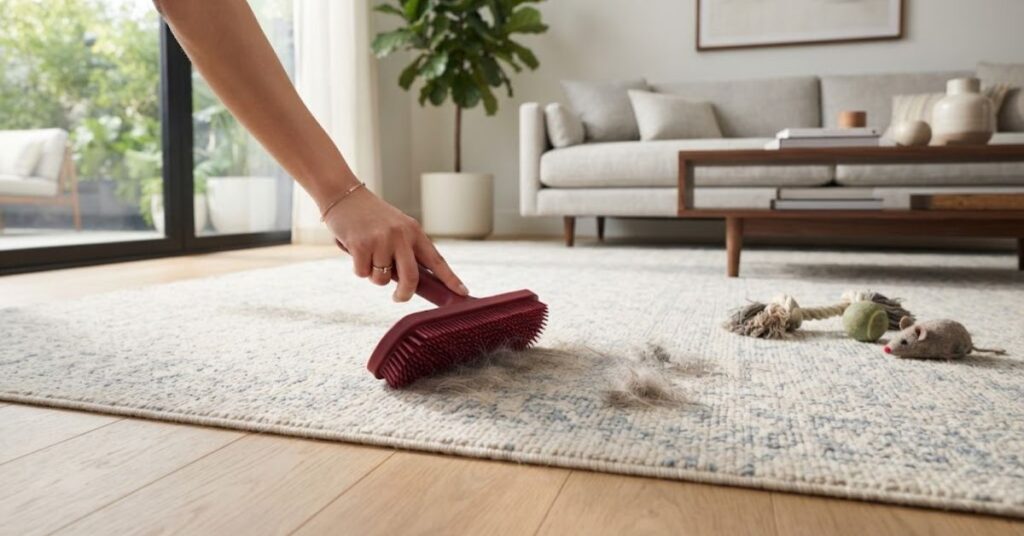
If you have pets, vacuuming alone may not remove every hair.
A soft brush, rubber glove, or appropriate pet-hair removal tool can help collect stubborn hair.
Work gently and avoid pulling aggressively on fibers.
Once loose hair and debris are removed, inspect the rug for stains.
Step 4: Treat Stains as Soon as Possible
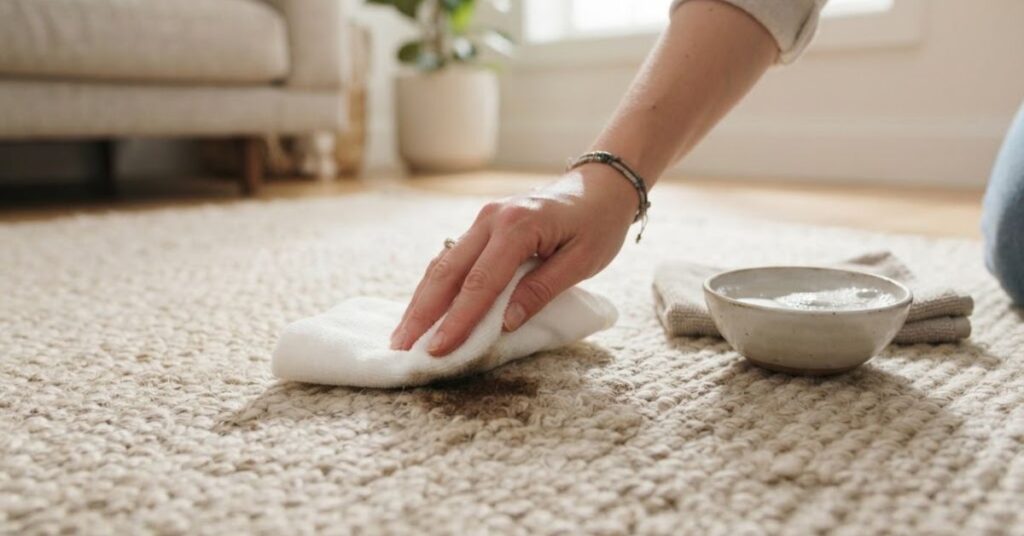
Fresh spills are much easier to remove than old, dried stains.
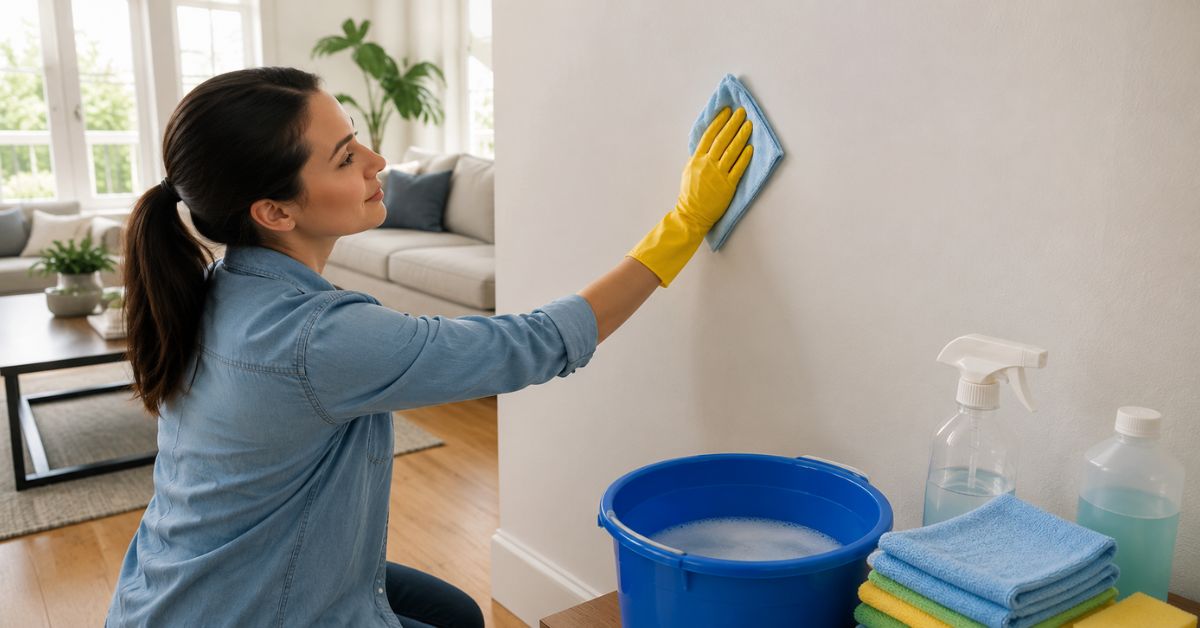
The first rule is simple: blot instead of rubbing.
When a liquid spills onto the rug, use a clean white towel or microfiber cloth to absorb as much moisture as possible.
Press down gently and lift the towel repeatedly.
Avoid scrubbing aggressively because rubbing can:
- Push the stain deeper
- Spread it to a larger area
- Damage delicate fibers
- Create a fuzzy or worn patch
Continue blotting until the towel is no longer picking up much moisture.
How to Make a Simple Rug Cleaning Solution
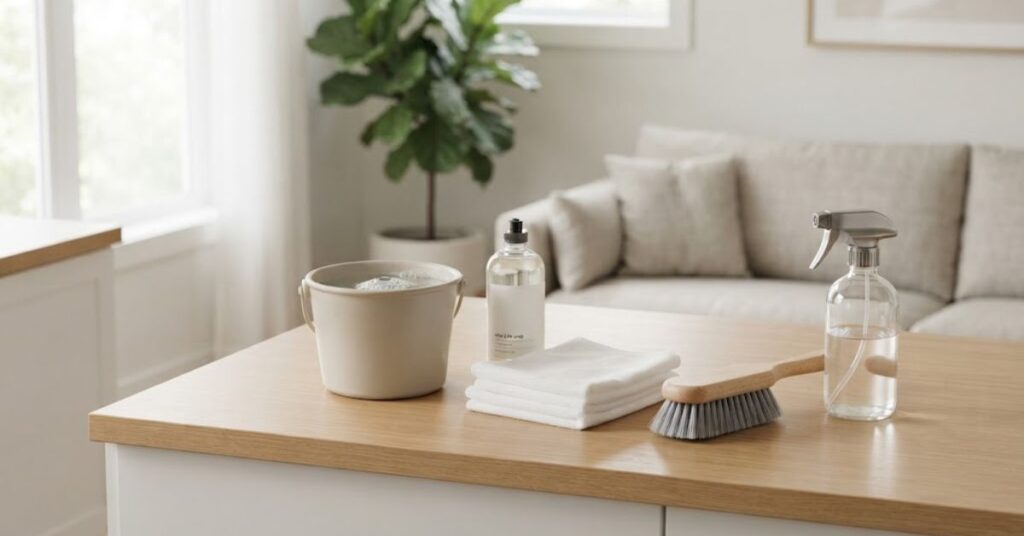
For many washable or synthetic rugs, a mild homemade solution can be useful.
Mix a small amount of mild dish soap with lukewarm water. You do not need a large amount of detergent. Too much soap can leave a sticky residue that attracts more dirt.
Dip a microfiber cloth or soft sponge into the solution and wring it out well.
The cloth should be damp rather than soaking wet.
Always test the solution on an inconspicuous area before treating the stain.
How to Remove Food and Drink Stains
Food and drink spills are common rug problems.
For coffee, tea, juice, or similar water-based spills, begin by blotting immediately.
Then use a small amount of mild cleaning solution on a clean cloth.
Work from the outside of the stain toward the center. This helps reduce the chance of spreading the stain outward.
After treating the area, use another cloth lightly dampened with clean water to remove soap residue.
Finally, blot the area with a dry towel.
Do not saturate the rug.
How to Remove Grease From a Rug
Greasy stains require a slightly different approach.
First, carefully remove any solid food or debris without pushing it deeper into the fibers.
For suitable rug materials, sprinkle a small amount of baking soda or another appropriate absorbent powder over the affected area and allow it to sit for a while.
Vacuum the powder thoroughly.
For remaining residue, use a mild cleaning solution appropriate for the rug’s material.
Because grease can be difficult to remove and some rugs are highly sensitive, test the method first.
How to Remove Pet Stains and Odors
Pets can leave behind more than visible stains. Urine and other accidents can create odors that remain even after the surface looks clean.
Act quickly when possible.
Blot fresh moisture with absorbent towels. Avoid rubbing.
Then use a pet-safe rug or carpet cleaning product suitable for the rug material. Follow its instructions carefully.
For persistent odors, professional cleaning may be necessary, particularly if the liquid has penetrated deeply into the rug or padding underneath.
Do not simply cover a strong pet odor with fragrance. The underlying contamination needs to be addressed.
How to Deep Clean a Rug
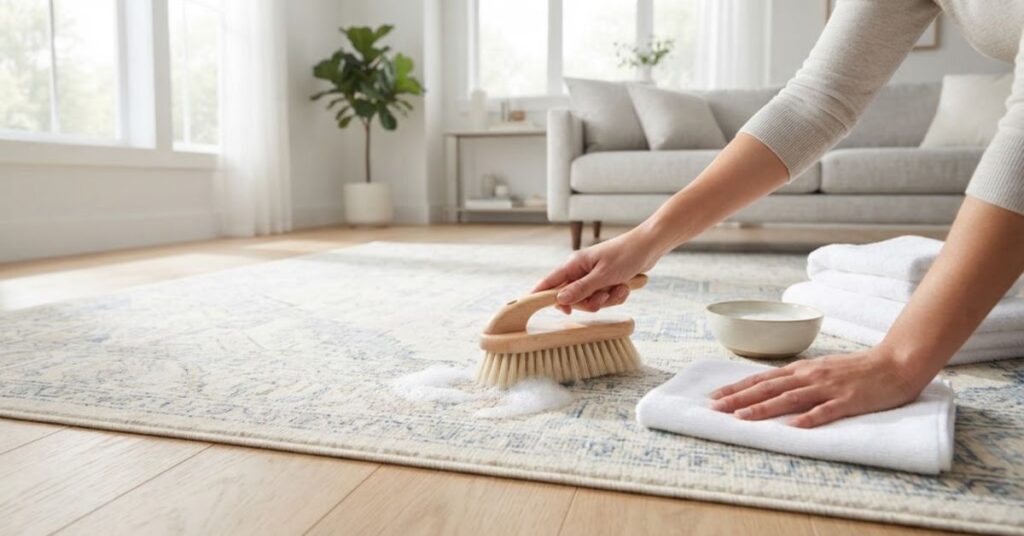
If regular vacuuming and spot cleaning are no longer enough, your rug may need a deeper cleaning.
The correct method depends heavily on the rug.
For Washable Rugs
Many modern washable rugs can be cleaned according to their care instructions.
Before washing:
- Vacuum the rug.
- Check the label.
- Treat obvious stains.
- Follow the recommended washing temperature.
- Use the recommended detergent.
- Avoid overloading the washing machine.
- Follow the manufacturer’s drying instructions.
Never assume a rug is machine washable simply because it looks lightweight.
For Synthetic Rugs
Synthetic rugs made from materials such as polypropylene or polyester can often tolerate gentle water-based cleaning.
Vacuum thoroughly first.
Prepare a mild cleaning solution and apply it sparingly. Work in small sections with a soft brush or sponge.
Avoid soaking the backing.
After cleaning, remove as much moisture as possible using clean towels and allow the rug to dry completely.
For Wool Rugs
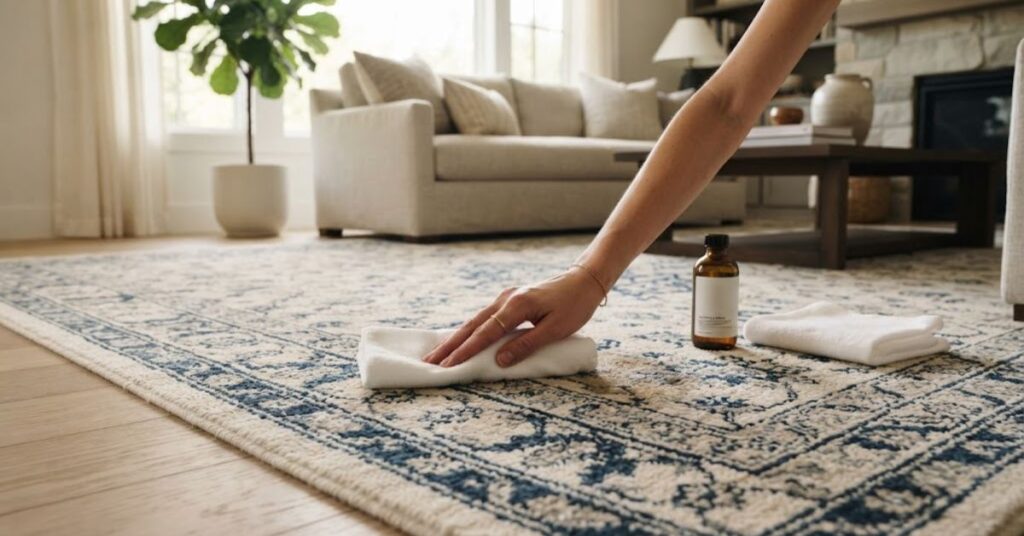
Wool requires extra care.
Avoid excessive water, aggressive scrubbing, and harsh chemicals.
For routine maintenance, frequent gentle vacuuming is usually more appropriate than repeated deep washing.
For a significant spill, blot quickly and use a cleaning product specifically designed for wool when appropriate.
If the rug is expensive, handmade, antique, or heavily soiled, professional cleaning is often the safest option.
How to Clean a Shag Rug
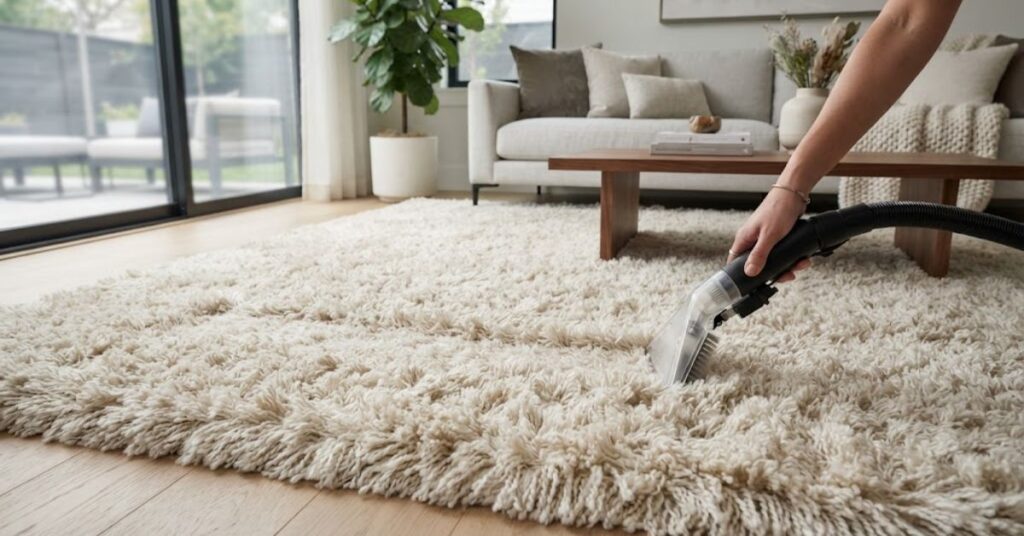
Shag rugs have long fibers that can trap a surprising amount of dust and debris.
Begin by checking the manufacturer’s instructions.
Vacuum using a setting that is safe for the rug. If necessary, use a hose attachment instead of a rotating brush.
For spot cleaning, apply very little moisture and blot carefully.
Avoid saturating the long fibers because moisture can become trapped underneath and create a drying problem.
A fan can help improve airflow after cleaning.
How to Clean a Jute or Sisal Rug
Jute and sisal rugs require special attention because natural plant fibers can be sensitive to moisture.
For everyday care, vacuum regularly.
When a spill occurs, blot immediately.
Avoid soaking the rug or using excessive amounts of water. Too much moisture can contribute to discoloration, shrinking, warping, or other damage.
Always follow the manufacturer’s care instructions for natural-fiber rugs.
How to Clean a Small Rug in a Washing Machine
Some small rugs are specifically designed to be machine washable.
If the label confirms that machine washing is allowed:
- Shake or vacuum the rug first.
- Check for stains and pre-treat them.
- Place the rug in the washer as directed.
- Use the recommended cycle.
- Choose the correct water temperature.
- Use an appropriate amount of mild detergent.
- Do not overload the machine.
- Dry according to the care label.
Some rugs should never be placed in a dryer, so always check the instructions first.
How to Dry a Rug Properly
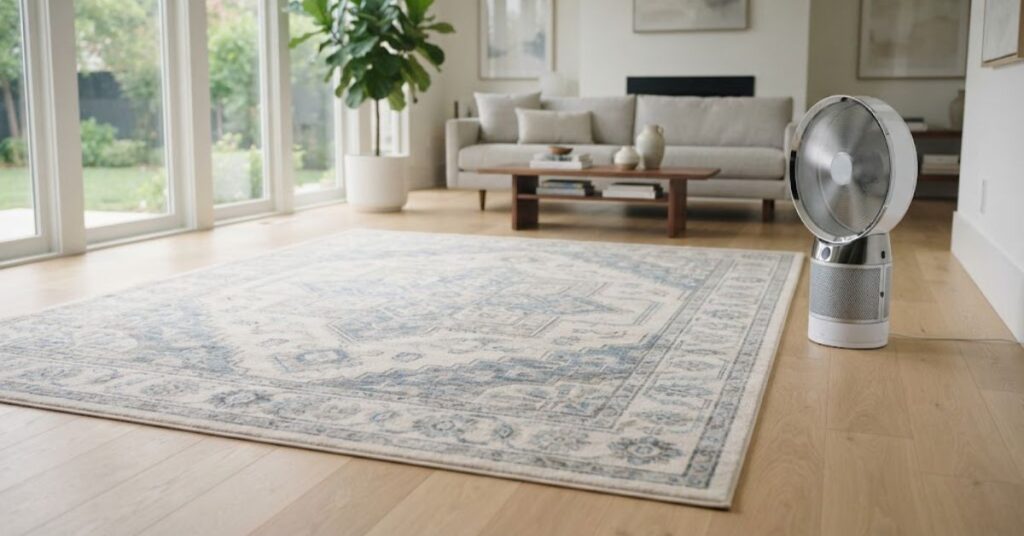
Drying is just as important as cleaning.
A damp rug left folded or rolled can develop unpleasant odors and may encourage mold or mildew growth.
After cleaning, remove excess water with clean towels.
Then lay the rug flat in a well-ventilated area.
Use fans to improve airflow when possible.
If the care instructions permit outdoor drying, place the rug in a suitable area where it can dry completely.
Avoid leaving delicate or brightly colored rugs in intense direct sunlight for long periods because prolonged exposure can contribute to fading.
Make sure the rug is completely dry before placing it back on the floor.
How Often Should You Clean a Rug?
There isn’t one schedule that works for every household.
Consider cleaning frequency based on:
- Foot traffic
- Pets
- Children
- Allergies
- Indoor air quality
- Rug color
- Rug location
- Material
As a general routine, vacuum rugs at least weekly in frequently used rooms. High-traffic areas may benefit from more frequent vacuuming.
Spot-clean spills immediately.
A deeper cleaning can be done periodically according to the rug’s material and manufacturer’s recommendations.
Entryway rugs and rugs in busy family rooms often need more attention than decorative rugs in low-traffic areas.
Common Rug-Cleaning Mistakes to Avoid
Knowing what not to do is just as important as knowing how to clean a rug.
Using Too Much Water
More water does not necessarily mean a cleaner rug.
Excess moisture can penetrate the backing and make drying difficult.
Scrubbing Too Hard
Aggressive scrubbing can damage fibers and spread stains.
Blot first and use gentle movements when cleaning.
Using Too Much Soap
Excess detergent can leave residue behind.
That residue can make the rug feel sticky and attract dirt.
Skipping the Patch Test
Even a mild-looking cleaner can cause discoloration on certain materials.
Always test first.
Ignoring the Backing
Some rugs have delicate backings that can crack, curl, separate, or deteriorate when exposed to excessive moisture.
Putting a Damp Rug Back in Place
Never return a wet or damp rug to its normal position.
Allow it to dry completely first.
Using Harsh Chemicals
Bleach and strong cleaners can permanently change the color or texture of a rug.
Use a product specifically suitable for the rug material.
How to Keep Your Rug Cleaner for Longer

Once you’ve cleaned your rug, a few simple habits can reduce future buildup.
Use Doormats
Place doormats at entrances to reduce the amount of outdoor dirt brought inside.
Remove Shoes
A no-shoes policy can significantly reduce the amount of dirt tracked onto rugs.
Vacuum Regularly
Don’t wait until a rug looks dirty before vacuuming.
Regular vacuuming removes particles before they become deeply embedded.
Rotate the Rug
If your rug receives uneven foot traffic or sunlight, rotating it periodically can help distribute wear and fading more evenly.
Deal With Spills Immediately
The longer a spill remains untreated, the more difficult it may become to remove.
Groom Pet Areas
If pets spend a lot of time on a particular rug, vacuum that area more frequently.
When Should You Hire a Professional Rug Cleaner?
DIY cleaning is useful for routine maintenance, but some rugs are better left to professionals.
Consider professional cleaning if you have:
- Antique rugs
- Persian or Oriental rugs
- Silk rugs
- Expensive handmade rugs
- Heavily stained rugs
- Water-damaged rugs
- Persistent odors
- Extensive pet contamination
- Significant color bleeding
- Delicate natural fibers
Professional cleaners can evaluate the rug’s construction and choose a cleaning process appropriate for the material.
Trying an aggressive DIY technique on an expensive rug may cost far more than professional cleaning.
Frequently Asked Questions
Can I clean a rug with dish soap?
A small amount of mild dish soap diluted in water can work for some washable or synthetic rugs, particularly for small spot treatments. However, always check the rug’s care instructions and test the solution first.
Can I use vinegar to clean a rug?
Vinegar is commonly used in homemade cleaning solutions, but it isn’t suitable for every rug material or finish. Before using it, check the manufacturer’s instructions and test it on a hidden area.
Can I wash every rug?
No. Some rugs are machine washable, while others require spot cleaning, specialized cleaning, or professional care. Always check the care label.
How do I clean a rug without a carpet cleaner?
For many rugs, you can vacuum thoroughly, spot-treat stains with a suitable mild solution, blot moisture, and air-dry the rug. However, delicate rugs may require professional cleaning.
How do I get a musty smell out of a rug?
First, make sure the rug is completely dry. Improve airflow with fans and clean according to the rug’s care instructions. If the musty smell persists, professional cleaning may be necessary.
Can I pressure-wash a rug?
Pressure washing can be too aggressive for many rugs and may damage fibers, backing, dyes, or adhesives. Unless the manufacturer specifically recommends it, avoid pressure washing.
How do I clean a rug with pet hair?
Vacuum slowly and thoroughly. A suitable rubber brush or pet-hair removal tool can help lift stubborn hair. Pay particular attention to corners and areas where your pet spends the most time.
How long does a rug take to dry?
Drying time depends on the material, thickness, humidity, airflow, and amount of moisture used. A thin rug may dry relatively quickly, while a thick rug can take much longer. Never put a rug back into use while it is still damp.
Final Thoughts
Learning how to clean a rug is mostly about using the right method for the right material. Regular vacuuming, quick stain treatment, gentle cleaning, and thorough drying can keep many household rugs looking fresh without requiring complicated equipment.
The biggest mistake is treating every rug the same way. A washable synthetic rug may tolerate a water-based cleaning method, while a delicate wool, jute, silk, or antique rug may need much gentler care.
When in doubt, check the manufacturer’s instructions, test a cleaning solution in a hidden area, and avoid excessive moisture. For valuable or delicate rugs, professional cleaning is usually the safer choice.
With consistent maintenance and quick attention to spills, you can keep your rugs cleaner, fresher, and more attractive for years to come.







Leave a Reply