
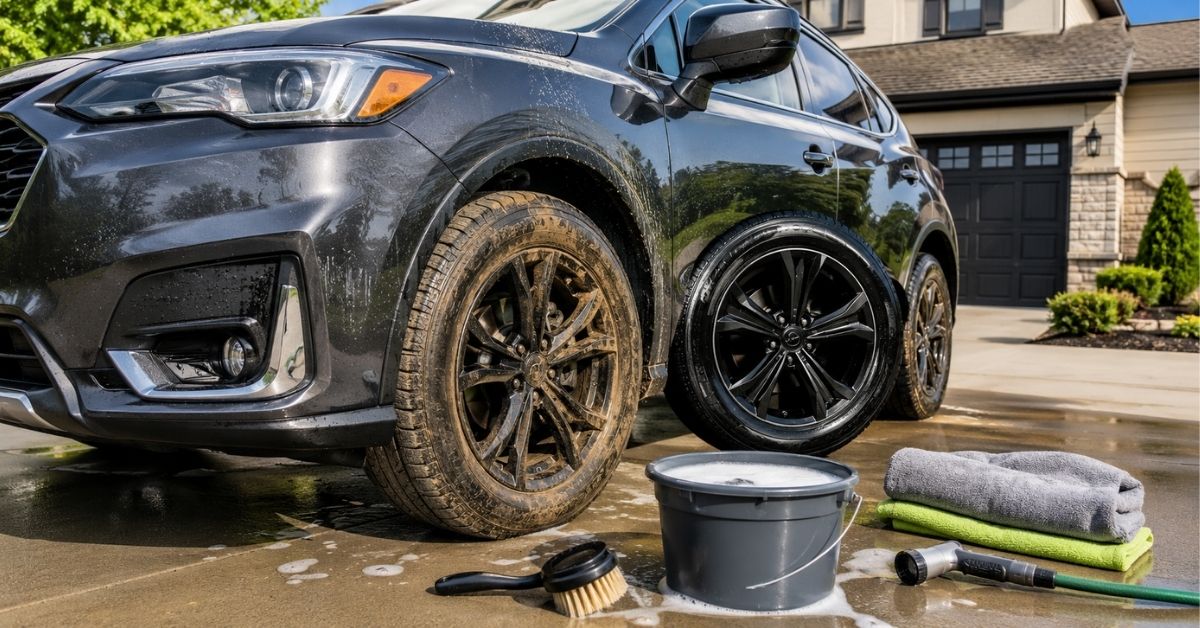
Keeping your car clean does not have to mean paying for a professional detail every few weeks. In fact, one of the easiest parts of car care to handle yourself is cleaning the tires. If your tires look dull, brown, dusty, or covered in road grime, a few simple household supplies can make a noticeable difference.
Learning how to clean car tires at home can help your vehicle look fresher while removing dirt, brake dust, mud, and other buildup from the rubber. The good news is that you do not need expensive equipment or specialty products to get started.
In this guide, you’ll learn seven easy ways to clean car tires at home, what supplies you need, how to clean stubborn grime, what products to avoid, and how to keep your tires looking clean for longer.
Why Should You Clean Your Car Tires?
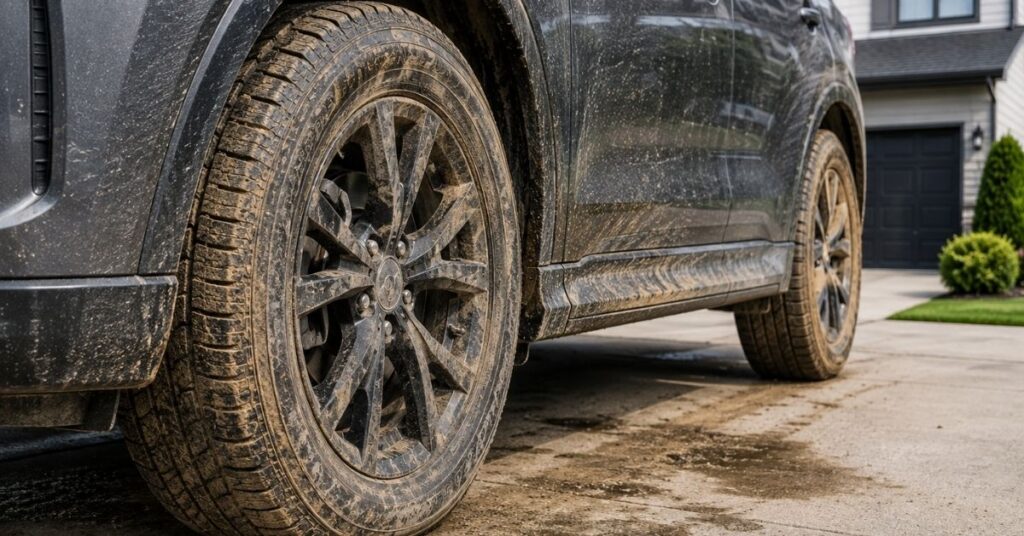
Your tires are constantly exposed to dirt and harsh conditions. Every time you drive, they come into contact with road dust, mud, water, oil residue, salt, and other contaminants.
Brake dust can also collect around the wheels and tires. If dirt is left on the surface for too long, it can become difficult to remove.
Regular tire cleaning can:
- Remove road dirt and mud
- Reduce the buildup of brake dust and grime
- Improve the appearance of your vehicle
- Make old tires look fresher
- Help you notice cracks, cuts, or unusual wear
- Prepare the tire surface before applying a tire dressing
Cleaning your tires also gives you a chance to inspect them. While washing, look for visible damage, bulges, cracks, or objects stuck in the tread.
Important: Cleaning cannot repair damaged or worn tires. If you notice serious damage or the tread is dangerously worn, have the tire inspected by a qualified tire professional.
What You Need to Clean Car Tires at Home
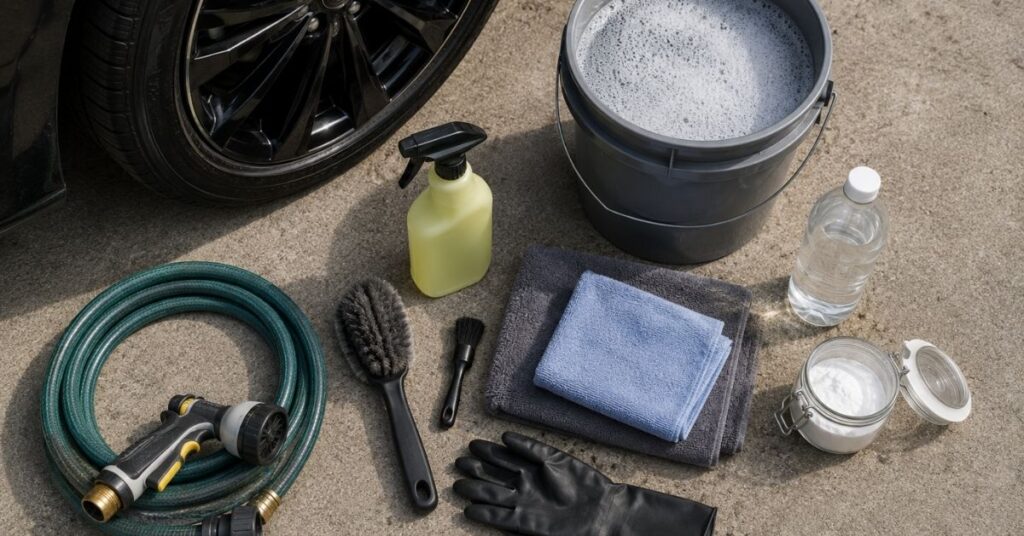
Before starting, gather your supplies. You do not need a complicated collection of products.
Basic supplies
- Bucket of water
- Mild car-wash soap or gentle dish soap
- Tire or soft-bristle brush
- Old toothbrush for small areas
- Microfiber towels
- Garden hose
- Baking soda, if needed
- White vinegar, if needed
- Spray bottle
- Rubber gloves
A dedicated tire brush is ideal because the rubber sidewalls can hold stubborn dirt. Choose a brush that is firm enough to remove grime but not so aggressive that it damages the surface.
Before You Start: Park Safely
Always clean your tires on a cool surface and avoid working immediately after driving.
Hot tires, wheels, and brake components can make cleaning more difficult and may cause water or cleaning products to dry too quickly.
Park your vehicle on a stable, level surface away from direct sunlight if possible. Engage the parking brake and make sure the vehicle is secure.
If you are cleaning all four tires, work one tire at a time.
1. Clean Car Tires With Soap and Water
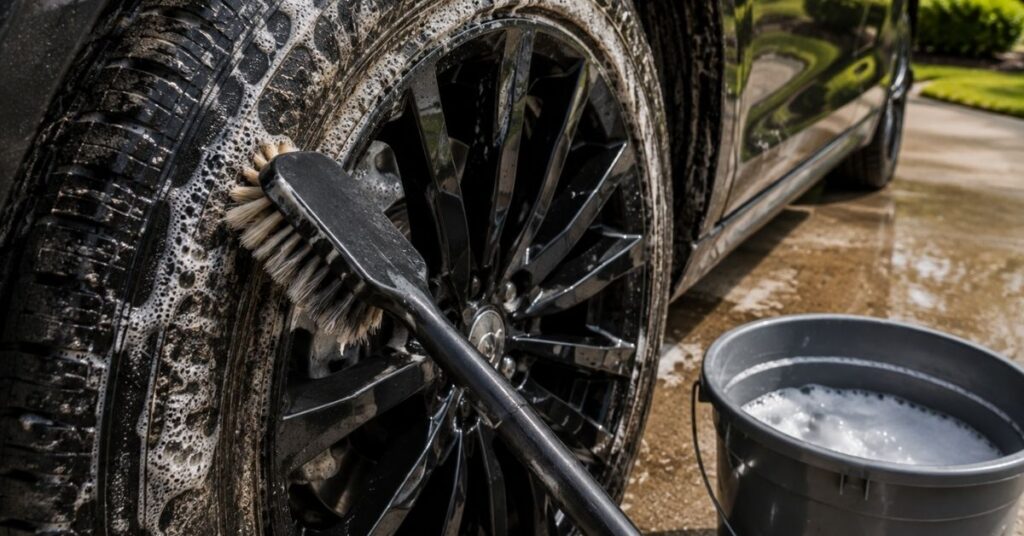
The simplest method is also one of the safest starting points for routine cleaning.
A mixture of water and mild soap can remove ordinary road dust, mud, and surface grime without requiring harsh chemicals.
What you need
- Warm or cool water
- Mild car-wash soap
- Bucket
- Tire brush
- Hose
- Microfiber towel
How to do it
Start by rinsing the tire thoroughly with a hose. This removes loose dirt and prevents you from grinding larger particles into the rubber while scrubbing.
Add a small amount of mild soap to a bucket of water.
Dip your tire brush into the solution and begin scrubbing the sidewall using moderate pressure. Work in small sections rather than trying to clean the entire tire at once.
Pay attention to the grooves and areas on the wheel.
Rinse the brush frequently because it will quickly collect dirt.
Once the tire looks clean, rinse it thoroughly with fresh water.
Finally, wipe away excess water with a microfiber towel or allow the tire to air-dry.
Why this method works
Soap helps loosen oily road residue and dirt while the brush provides the mechanical action needed to remove buildup.
For regularly maintained tires, you may find that this simple method is all you need.
2. Use Baking Soda for Stubborn Grime
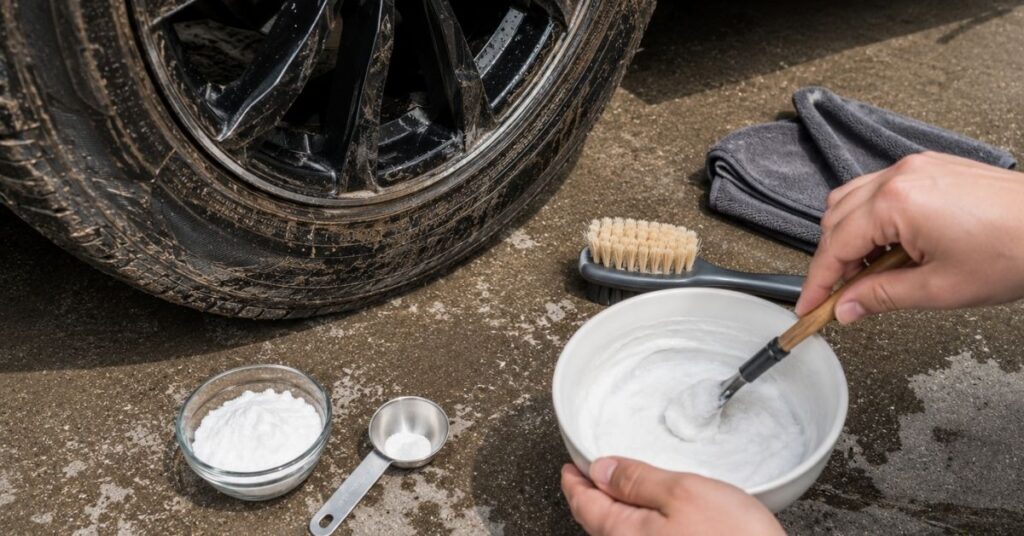
Baking soda can be useful when ordinary soap and water aren’t enough to remove stubborn dirt.
It is mildly abrasive, so it can help loosen grime when used carefully.
What you need
- Baking soda
- Water
- Small bowl
- Soft or medium-bristle brush
- Microfiber cloth
How to clean
Mix baking soda with a small amount of water to create a loose paste.
Apply the mixture to the dirty tire sidewall.
Let it sit for a few minutes, but don’t allow it to dry completely.
Using a tire brush, gently scrub the surface in circular motions.
Rinse the tire thoroughly with clean water.
Wipe the surface with a microfiber towel.
A note about baking soda
Do not scrub aggressively. Baking soda may help with surface grime, but more pressure is not necessarily better.
For heavily soiled tires, repeat the process rather than aggressively scrubbing the rubber.
Also, test any homemade cleaning mixture on a small, inconspicuous area first.
3. Try a Mild Vinegar Solution
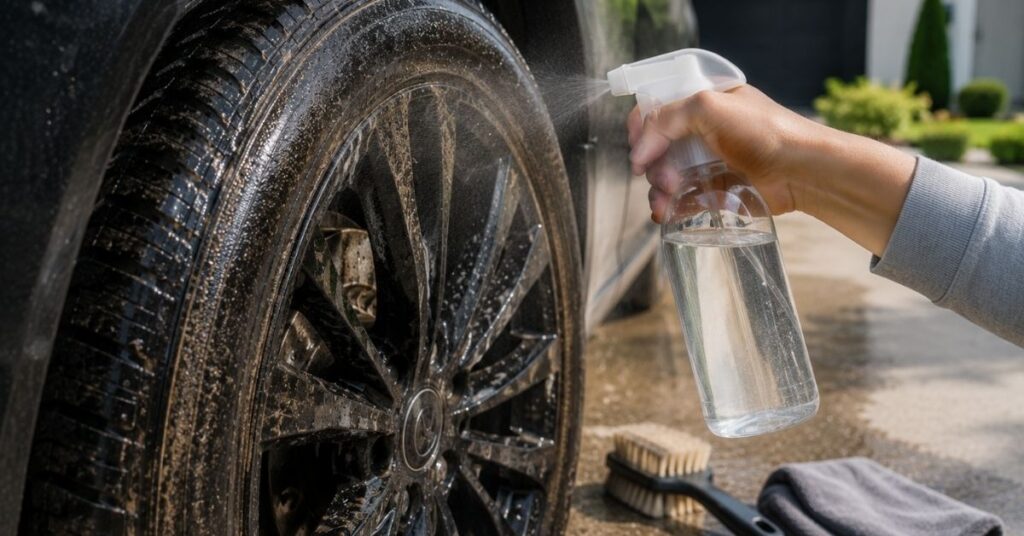
White vinegar is another common household ingredient that can help loosen certain types of dirt and residue.
However, vinegar should not be treated as a universal tire cleaner. It may be useful for certain surface contaminants, but it won’t necessarily remove every type of automotive grime.
How to make the solution
Mix:
- 1 part white vinegar
- 1 part water
Pour the mixture into a spray bottle.
How to use it
First, rinse the tire with water.
Lightly spray the diluted vinegar solution onto the tire surface.
Allow it to sit briefly.
Use a tire brush to scrub the surface gently.
Rinse thoroughly with water afterward.
Dry the tire with a microfiber towel.
When to skip vinegar
If your tire manufacturer or tire-care product instructions advise against acidic cleaners, follow those instructions instead.
You should also avoid letting vinegar solution sit on the tire or nearby metal components for an extended period.
When in doubt, stick with plain water and a mild automotive soap.
4. Use Dish Soap for Everyday Dirt
If you don’t have car-wash soap available, a small amount of mild dish soap can sometimes be used for cleaning tires.
Dish soap is designed to break down grease and food residue, which can make it effective at loosening some road grime.
However, it should be diluted and used sparingly.
Steps
Fill a bucket with water.
Add a small amount of mild dish soap.
Rinse the tire first.
Dip your tire brush into the soapy water.
Scrub the sidewall thoroughly.
Rinse with clean water.
Dry the surface with a microfiber towel.
Don’t overdo it
More soap does not mean cleaner tires.
Using excessive detergent can create a lot of residue and may make rinsing more difficult. For regular vehicle washing, a dedicated automotive soap is generally the better choice.
5. Clean Tire Sidewalls With a Dedicated Tire Brush
Sometimes the cleaning solution isn’t the problem the brush is.
A normal sponge may remove loose dirt, but tire sidewalls often have textured surfaces that trap grime.
A dedicated tire brush can reach those small textured areas more effectively.
The best technique
Begin at the top of the tire.
Work your way around the sidewall in small sections.
Use short back-and-forth motions.
Rinse the brush regularly.
Move closer to the wheel edge carefully.
Don’t forget the inner sidewall if it is accessible and safe to clean.
After scrubbing, rinse the entire tire.
If the water running off the tire is still dark or dirty, repeat the process.
Watch for brown residue
You may notice a brownish color appearing on the tire during cleaning. This can happen because tire rubber contains ingredients that migrate toward the surface over time.
A thorough cleaning can remove surface residue, but you should not try to aggressively scrub the rubber simply to make it look completely black.
6. Remove Heavy Mud With a Two-Step Wash
If you frequently drive on dirt roads, through muddy areas, or in wet conditions, your tires may need more than a quick wash.
The best approach is to loosen the dirt before scrubbing.
Step 1: Rinse thoroughly
Use a strong stream of water to remove as much mud as possible.
Pay special attention to:
- Tread grooves
- Sidewalls
- Areas around the wheel
- Mud trapped between tread blocks
Do not immediately attack thick mud with a dry brush.
Step 2: Apply soap
Once the majority of mud has been removed, apply your diluted soap solution.
Let it sit briefly to loosen remaining dirt.
Step 3: Scrub
Use a tire brush to work around the sidewall and tread.
For narrow areas, an old toothbrush can help.
Step 4: Rinse
Rinse until the water runs clear.
Step 5: Dry
Use a microfiber towel or let the tire air-dry.
This two-stage process reduces the amount of hard scrubbing you need to do.
7. Finish With a Tire Dressing or Conditioner
After learning how to clean car tires at home, you may want to make them look darker and more polished.
A tire dressing can provide that finishing appearance.
However, not every tire dressing is appropriate for every situation.
Look for a product specifically labeled for automotive tires and follow its instructions carefully.
How to apply it
Make sure the tire is completely clean.
Allow it to dry.
Apply a small amount of tire dressing to an applicator pad.
Spread a thin, even layer across the sidewall.
Avoid applying excessive product.
Allow it to set according to the product directions.
Wipe away excess dressing if recommended.
Keep tire dressing off the tread
This is extremely important.
Do not intentionally apply slippery tire dressing to the tread surface that contacts the road.
Also avoid getting tire dressing on brake components, brake rotors, or other surfaces where it could interfere with braking or vehicle control.
For this reason, careful application is more important than achieving an extremely glossy finish.
How to Clean the Tire Tread
The tire tread deserves attention too, especially if you regularly drive through mud, gravel, or dirty roads.
Start by rinsing the tread thoroughly.
Use a tire brush to loosen dirt between the tread blocks.
For stubborn pieces of mud, continue rinsing and brushing rather than using sharp objects to dig aggressively into the rubber.
Check the tread for:
- Small stones
- Nails or screws
- Embedded debris
- Uneven wear
- Cracks
- Objects stuck deep in the tread
If you discover a nail, screw, or other object embedded in the tire, don’t simply pull it out yourself. Removing it can cause or worsen a leak. Have the tire inspected by a qualified professional.
How to Clean White or Brown Tire Marks
Some tires develop brown discoloration after being exposed to weather, road grime, and rubber compounds.
This doesn’t necessarily mean the tire is permanently dirty.
Start with soap and water.
Use a suitable tire brush.
Rinse thoroughly.
If discoloration remains, you can try a tire cleaner specifically designed for removing tire browning.
Follow the product directions carefully.
Avoid using extremely strong household chemicals simply because they appear to remove stains quickly. Automotive tires are engineered rubber components, not ordinary household surfaces.
What Should You Avoid Using on Car Tires?
Knowing what not to use is just as important as knowing how to clean car tires.
Avoid experimenting with harsh household chemicals or solvents.
Avoid gasoline and fuel
Never use gasoline as a tire cleaner.
It is flammable and can damage rubber and other vehicle components.
Avoid strong solvents
Paint thinner, acetone, and similar solvents are not appropriate general-purpose tire cleaners.
They can affect rubber and may create additional safety concerns.
Avoid bleach
Bleach is unnecessary for normal tire cleaning and can be harsh on surrounding materials.
Avoid abrasive scouring products
Extremely abrasive cleaners or aggressive scrubbing can damage surfaces without providing meaningful benefits.
Avoid oily homemade tire-shine mixtures
Some DIY recipes recommend applying cooking oil or other oily substances to tires to make them shiny.
This isn’t a good idea.
A purpose-made tire dressing is a better option when you want a finished appearance.
How Often Should You Clean Car Tires?
There isn’t one perfect schedule for every vehicle.
How often you clean your tires depends on where and how you drive.
If you drive mostly on clean paved roads, washing your tires whenever you wash your vehicle may be enough.
If you regularly drive through mud, construction areas, gravel roads, or areas with winter road salt, you may need to clean them more frequently.
A simple routine could look like this:
Every 1–2 weeks:
Quick rinse and wash if the tires are visibly dirty.
Every few weeks:
Thorough cleaning with a tire brush.
After muddy or salty driving:
Rinse and clean as soon as practical.
Before applying tire dressing:
Always clean and dry the tires first.
Common Mistakes When Cleaning Car Tires
Even a simple cleaning job can go wrong if you use the wrong technique.
Mistake 1: Cleaning hot tires
Hot tires can cause cleaning solutions to dry quickly.
Wait until the tires have cooled down.
Mistake 2: Scrubbing dry dirt
Dry, gritty dirt can act like an abrasive.
Always rinse first.
Mistake 3: Using too much cleaner
More product doesn’t automatically mean better cleaning.
Start with a small amount and increase only when necessary.
Mistake 4: Using the same brush for everything
Your wheel, tire, and car paint have different surfaces.
A brush that is appropriate for a tire may be too aggressive for delicate painted surfaces.
Keep separate cleaning tools when possible.
Mistake 5: Ignoring the wheel
Tire cleaning often reveals how dirty the wheel really is.
Clean the wheel separately with an appropriate wheel cleaner and brush.
Mistake 6: Applying dressing to the tread
Keep glossy tire products on the sidewall and away from the road-contact surface.
How to Make Tires Stay Clean Longer
Once you’ve gone through the effort of cleaning your tires, you probably want them to stay clean.
Here are a few simple habits that can help.
Wash the car regularly
Don’t wait until the tires are covered in thick grime.
Regular light cleaning is easier than occasional deep cleaning.
Rinse after muddy drives
Removing mud before it dries can save significant scrubbing later.
Use floor mats and clean wheel wells
Although these areas don’t directly clean your tires, keeping the surrounding vehicle clean can reduce the amount of accumulated dirt.
Avoid parking in extremely muddy areas
Where you park can make a surprising difference.
Use an appropriate tire dressing
If you want a darker finished appearance, choose a product designed specifically for tires rather than relying on household oils.
Can You Clean Car Tires With Just Water?
Yes, water can remove loose dirt, mud, and dust.
However, water alone may not remove oily road residue or stubborn grime.
For lightly dirty tires, a thorough rinse may be enough.
For heavily soiled tires, combine water with a mild cleaning solution and a suitable brush.
Can You Use a Toothbrush to Clean Car Tires?
Yes, an old toothbrush can be useful for small areas.
It works particularly well around:
- Tire lettering
- Small grooves
- Wheel edges
- Tight spaces
- Hard-to-reach areas
However, a toothbrush is not ideal for cleaning an entire tire because it is too small.
Use a dedicated tire brush for the main surface and a toothbrush for detail work.
Can You Use Baking Soda and Vinegar Together?
You can physically combine baking soda and vinegar, but doing so isn’t necessarily a better tire-cleaning method.
When they react, they produce fizzing, but much of the cleaning ingredients neutralize each other.
Instead, if you want to use baking soda, make a simple paste with water.
If you use diluted vinegar, use it separately and rinse thoroughly afterward.
For routine tire maintenance, mild automotive soap and water remain the simplest option.
How to Clean Car Tires Without a Hose
Don’t have access to a garden hose?
You can still clean your tires.
Fill a bucket with water and use a separate spray bottle for applying your cleaning solution.
First, wipe or rinse away loose dirt using a damp microfiber towel.
Apply your cleaning solution.
Scrub gently with a tire brush.
Use clean water and fresh microfiber towels to remove the remaining cleaner and dirt.
You’ll need several towels if the tires are particularly dirty.
Avoid dragging gritty towels across the vehicle’s painted surfaces.
FAQs
What is the best homemade cleaner for car tires?
For everyday cleaning, a mixture of water and mild soap is one of the simplest options. For stubborn grime, baking soda and water may help loosen surface buildup. Always test homemade mixtures first and rinse thoroughly.
How do you clean really dirty tires?
Start with a thorough water rinse to remove loose mud and grit. Then apply a mild cleaning solution and scrub with a tire brush. For severe buildup, repeat the cleaning process instead of using increasingly harsh chemicals.
Can I use dish soap to clean my tires?
A small amount of mild dish soap diluted in water can be used occasionally. However, a dedicated automotive soap is generally preferable for routine vehicle washing.
How do I make my tires black again?
Clean the tires thoroughly first. Once they are completely dry, you can apply a tire dressing designed for automotive tires. Avoid using household oils or applying slippery products to the tread.
Does vinegar damage car tires?
Diluted vinegar used briefly and rinsed thoroughly is less concerning than prolonged exposure to concentrated vinegar, but it is not necessary for routine tire cleaning. Follow tire and vehicle-care recommendations whenever available.
How often should I wash my tires?
For most vehicles, cleaning the tires whenever you wash the car is a practical routine. Clean them sooner if they become heavily covered with mud, salt, or road grime.
Final Thoughts
Learning how to clean car tires at home doesn’t require expensive equipment or complicated techniques. In many cases, all you need is water, mild soap, a good tire brush, and a little patience.
Start by rinsing away loose dirt, then work with a mild cleaning solution and scrub the sidewalls carefully. For stubborn buildup, you can try simple household options such as baking soda and water, while remembering that specialized automotive products are often the safer choice for difficult contaminants.
Once the tires are clean and dry, you can use a suitable tire dressing if you want a darker, more finished appearance. Just keep dressing away from the tread and braking components.
Most importantly, use tire cleaning as an opportunity to inspect your tires. Look for cracks, cuts, bulges, embedded objects, or unusual tread wear. A clean tire may look better, but safe tires are always more important than shiny tires.
With a simple cleaning routine every few weeks and extra attention after muddy or dirty drives, you can keep your tires looking cleaner and your entire vehicle looking better without paying for professional detailing every time.












Leave a Reply