
How to clean a food processor doesn’t have to be a frustrating kitchen chore. With a few simple steps, you can quickly clean the bowl, blades, lid, and other removable parts after cooking.
Food, oil, dough, and tiny pieces of vegetables can get stuck around the blade, inside the bowl, or underneath the lid. If you leave the processor dirty for too long, dried food becomes harder to remove and unpleasant odors can develop.
The good news is that cleaning a food processor does not have to be complicated. With the right order and a few simple cleaning supplies, you can get the bowl, blades, lid, and attachments clean without spending a lot of time.
This guide explains an easy way to clean your food processor after everyday use, deal with stuck-on food, and keep its parts fresh and ready for your next recipe.
Why You Should Clean Your Food Processor Right Away
Cleaning your food processor soon after use makes the job much easier.
Fresh food residue usually wipes away with warm water and dish soap. Once it dries, however, it can harden around the blade, inside small grooves, and along the lid.
Regular cleaning also helps prevent lingering smells and keeps old food particles from mixing with fresh ingredients.
If you use your processor frequently, a quick cleaning after every use can save you from having to do a much deeper scrub later.
What You Need to Clean a Food Processor
You do not need special products for most food processor cleaning jobs.
Gather:
- Warm water
- Mild dish soap
- Soft sponge or dishcloth
- Small soft-bristled brush
- Clean microfiber towel
- Dish rack
- Baking soda for stubborn odors or residue
Avoid abrasive scrubbers that can scratch plastic bowls or other surfaces.
Before cleaning, always unplug the food processor from the electrical outlet. Never put the motor base in water.
Step 1: Unplug the Food Processor
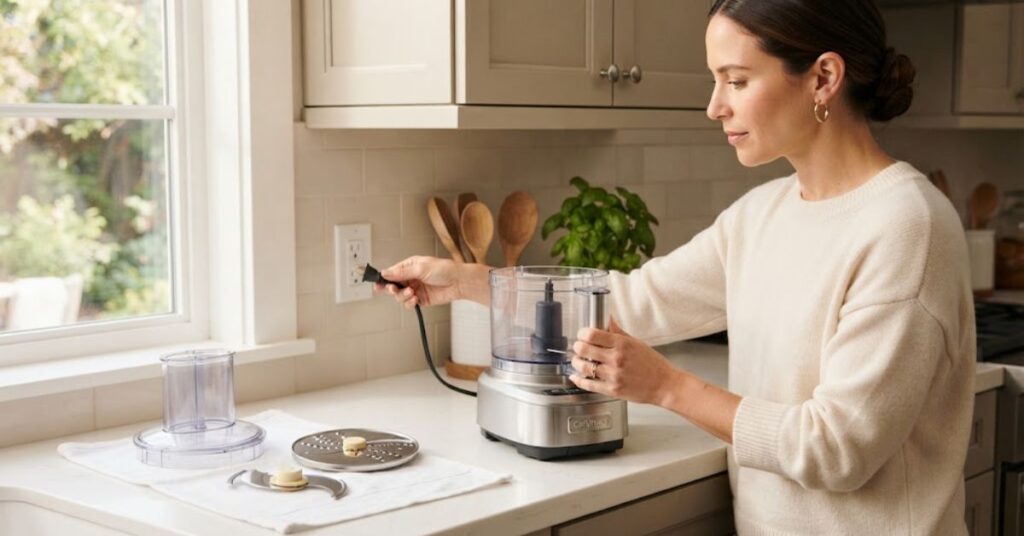
Safety should come first.
Once you finish using the food processor, turn it off and unplug it before removing any parts. This prevents the motor from accidentally starting while you are handling the blade or other attachments.
Place the motor base on a dry countertop away from the sink.
Do not rinse, soak, or submerge the motor base. If it has splashes or food spots, wipe it with a slightly damp cloth and then dry it.
Step 2: Take Apart the Removable Parts
Carefully remove the bowl, lid, pusher, blade, and any other removable attachments.
Handle sharp blades carefully. Instead of grabbing the cutting edge, hold the blade by its center or plastic hub when possible.
Taking the processor apart allows you to clean areas that are difficult to reach when everything is assembled.
It also helps prevent food from remaining underneath the blade or around the lid seal.
Step 3: Remove Loose Food First
Before adding water, scrape or wipe away any large pieces of food.
Use a soft spatula or paper towel to remove leftover vegetables, cheese, dough, herbs, or other ingredients.
Do not use your fingers to reach around sharp blades.
This simple step reduces the amount of food that goes down your sink drain and makes washing the individual parts easier.
Step 4: Wash the Food Processor Bowl
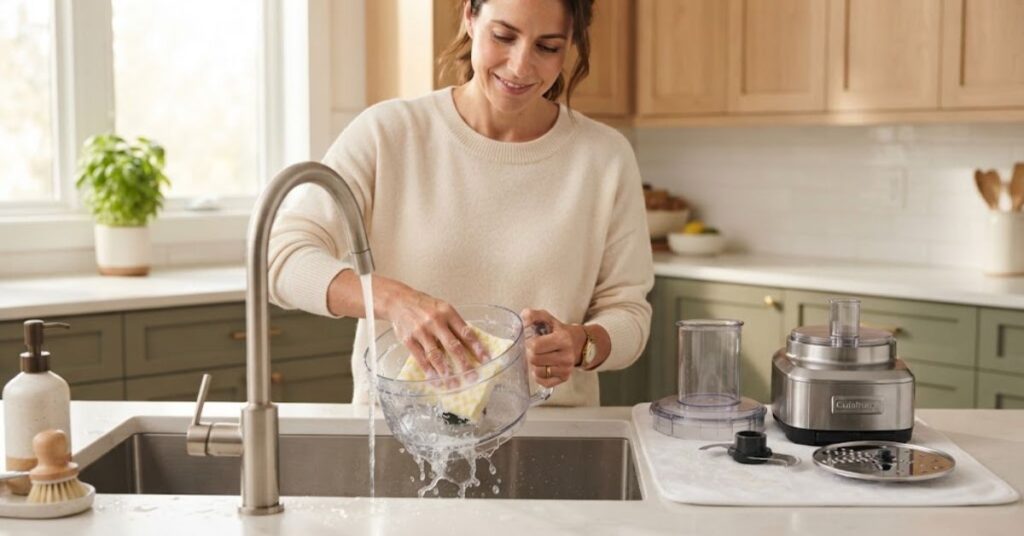
The bowl often holds the most food residue, especially after preparing sauces, dips, dough, or chopped vegetables.
Start by rinsing the bowl with warm water. Add a few drops of mild dish soap and use a soft sponge to clean the inside and outside.
Pay attention to:
- The bottom of the bowl
- The area around the blade attachment
- The rim
- The handle
- Any grooves or locking areas
This is the main part of food processor cleaning, so take a moment to check the bowl carefully before rinsing.
If food has dried onto the surface, let the bowl soak in warm, soapy water for several minutes rather than scrubbing aggressively.
Step 5: Clean the Food Processor Blades Carefully
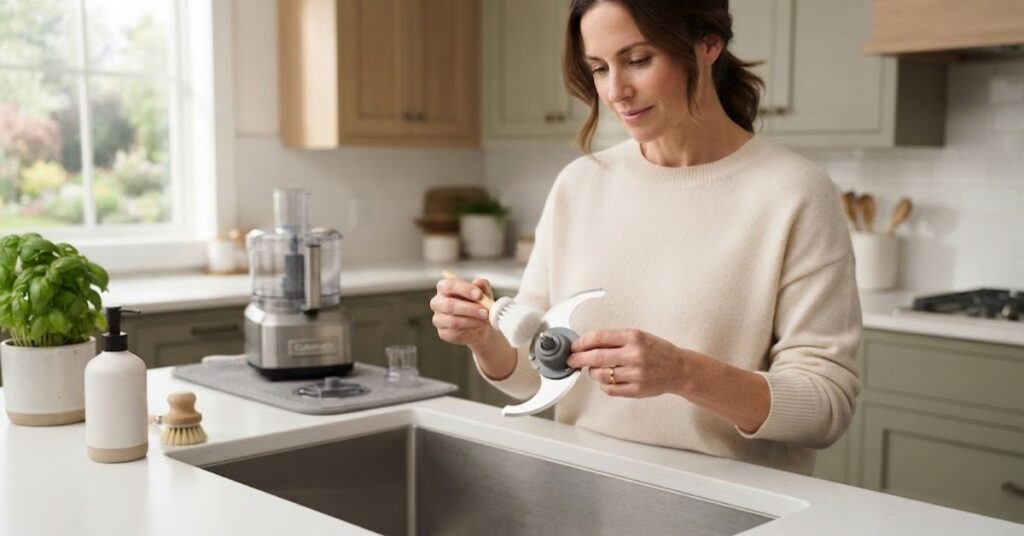
The blade needs extra attention because food can collect around its center and edges.
When learning how to clean food processor blades, safety is more important than speed.
Hold the blade by its center or designated handle. Never run your fingers along the cutting edge.
Use a soft sponge or small brush to remove food residue. Warm, soapy water can help loosen sticky ingredients.
For dried food, soak the removable blade attachment in warm soapy water if the manufacturer’s instructions allow it.
After washing, rinse it thoroughly and place it somewhere safe to dry.
Never leave a sharp blade hidden under water in a sink where someone could accidentally reach into it.
Step 6: Clean the Lid and Food Pusher
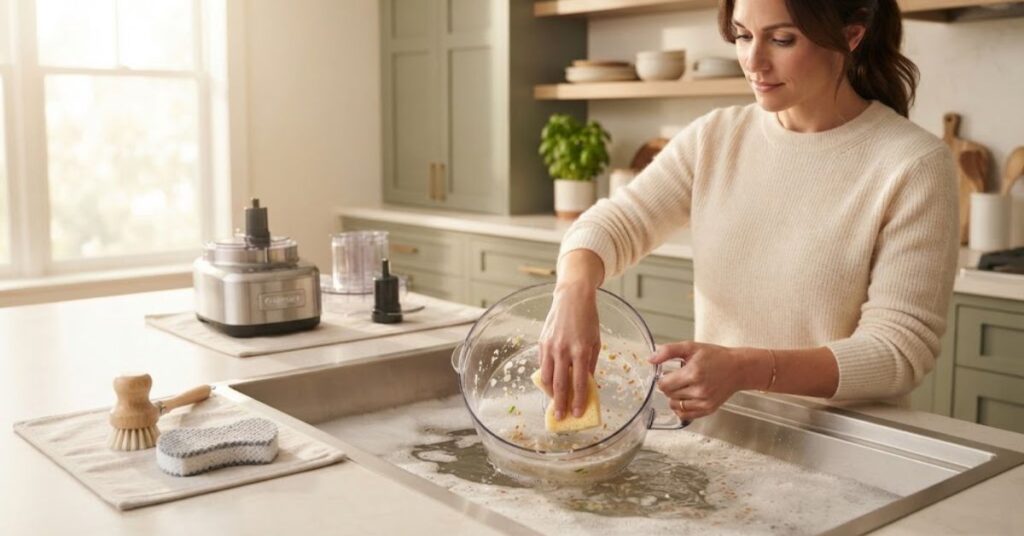
The lid can collect food particles around its rim, feeding tube, and locking mechanism.
Wash the lid with warm water and mild dish soap. Use a small brush to reach narrow areas where food may become trapped.
Do the same with the food pusher.
Check the underside of the lid before putting it away. Small pieces of food can sometimes remain in areas that are easy to overlook.
If your food processor has removable seals or gaskets, follow the manufacturer’s instructions for removing and cleaning them.
Step 7: How to Remove Food Residue From a Food Processor
Dried or sticky food can be the most frustrating part of cleaning.
If you are wondering how to remove food residue from a food processor, start with soaking rather than hard scrubbing.
Fill the removable bowl with warm water and add a small amount of dish soap. Let it sit for several minutes.
The warm water helps soften dried ingredients so they can be wiped away more easily.
For stubborn residue, make a gentle paste using a small amount of baking soda and water. Apply it to the affected area and gently wipe with a soft sponge.
Avoid using knives, metal scrapers, or abrasive cleaning pads. They can scratch plastic surfaces or damage components.
Step 8: Clean Around the Motor Base
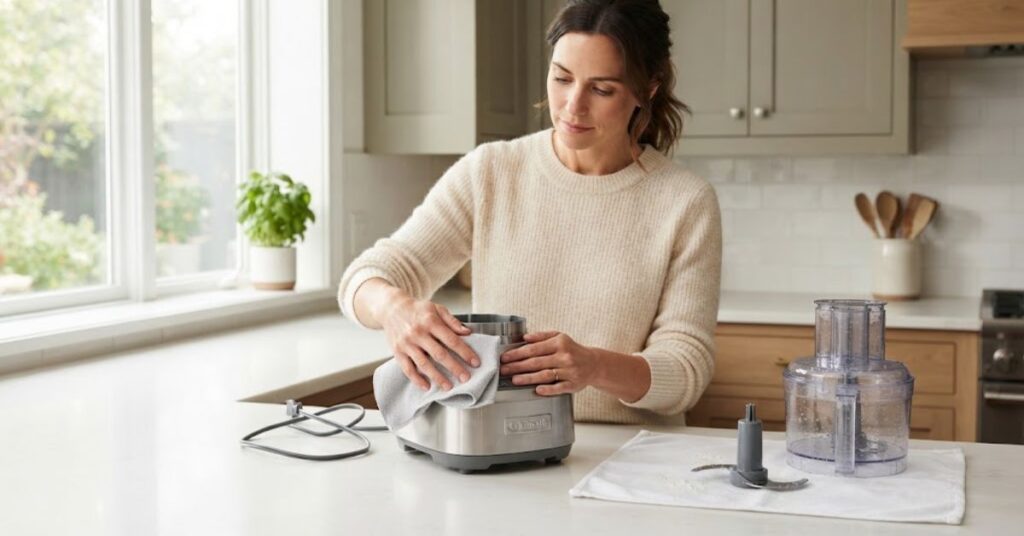
The motor base should never be submerged in water.
Instead, unplug the appliance and wipe the outside with a soft, slightly damp cloth.
Food can sometimes collect around the buttons, seams, or bottom of the bowl where it meets the motor base.
Use a barely damp cloth to clean these areas. If necessary, use a small soft brush to loosen dry crumbs.
Keep moisture away from electrical openings.
Once finished, wipe the base with a dry cloth.
Step 9: Rinse Everything Thoroughly
Soap residue can leave an unpleasant taste or film, so rinse the removable parts thoroughly with clean water.
Pay particular attention to:
- Blade attachments
- Bowl grooves
- Lid edges
- Seals
- Food pusher
- Small locking areas
A quick inspection before drying can help you spot any remaining food particles.
Step 10: Dry Every Part Completely
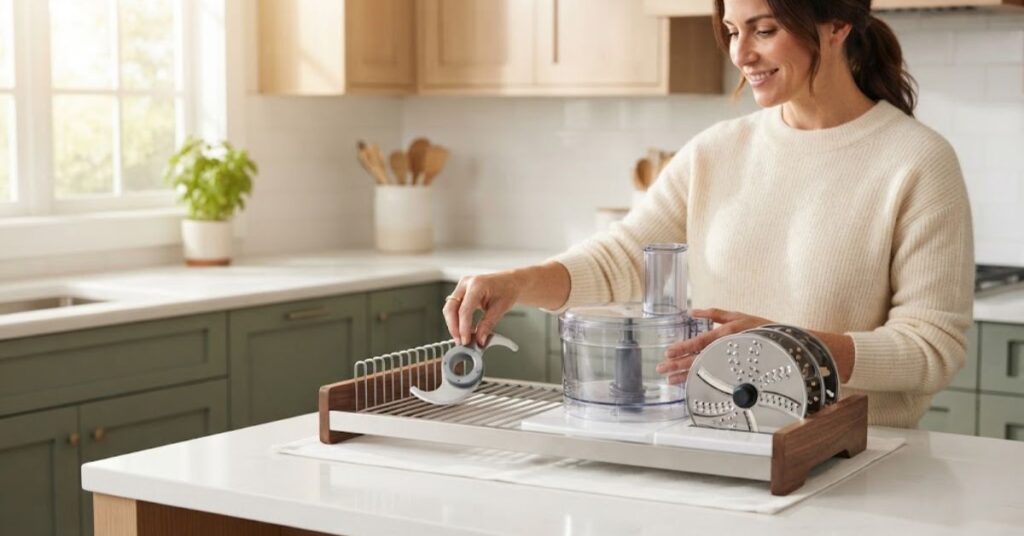
Proper drying is an important part of keeping your food processor fresh.
Place washed parts upside down on a clean dish rack so excess water can drain away.
You can also dry them with a clean microfiber towel if you need to use the processor again soon.
Make sure the blade, bowl, lid, and attachments are completely dry before storing them.
Putting damp parts into a closed cabinet can encourage unpleasant odors and moisture buildup.
What If Your Food Processor Still Smells?
Sometimes a food processor can retain odors after processing strong ingredients such as garlic, onions, spices, or certain sauces.
Start by washing the parts thoroughly with warm water and dish soap.
If an odor remains, sprinkle a small amount of baking soda inside the removable bowl, add a little water, and gently wipe the surface.
Rinse thoroughly afterward.
Do not use harsh chemicals unless the manufacturer specifically recommends them for that appliance.
Can You Put Food Processor Parts in the Dishwasher?
Some food processor parts are dishwasher-safe, but not every part should automatically go into the dishwasher.
Check the manufacturer’s instructions for your specific model before placing anything inside.
The motor base should never go into the dishwasher.
Even when removable parts are dishwasher-safe, hand-washing sharp blades and certain delicate components may help protect them from unnecessary wear.
If you use a dishwasher, place small pieces securely in the appropriate rack or utensil basket according to the manufacturer’s recommendations.
How Often Should You Clean a Food Processor?
You should clean the removable parts after every use.
A quick cleaning after preparing vegetables may take only a few minutes. After making sticky dough, nut butter, cheese mixtures, or sauces, you may need additional soaking and scrubbing.
Give the appliance a more careful inspection regularly, especially around:
- Blade attachments
- Lid seals
- Bowl grooves
- Locking mechanisms
- Feeding tube
Frequent cleaning keeps small food particles from building up over time.
Common Food Processor Cleaning Mistakes to Avoid
Even a simple cleaning routine can go wrong if you use the wrong method.
1. Putting the Motor Base in Water
Never soak or submerge the motor base. Electrical components can be damaged by water.
2. Reaching Into the Bowl Carelessly
Food processor blades are extremely sharp. Always handle them carefully and use the center or designated grip.
3. Using Abrasive Cleaners
Rough scrubbers can scratch plastic surfaces and make them look cloudy or worn.
4. Leaving Food to Dry Overnight
Dried food is much harder to remove than fresh residue. Cleaning soon after use usually saves time.
5. Storing Parts While They Are Wet
Allow removable components to dry completely before storing them.
6. Forgetting the Lid
The bowl may look clean while food remains around the lid, feeding tube, or seal.
7. Ignoring Manufacturer Instructions
Different food processors have different materials and removable components. Always check the manufacturer’s care instructions when you are unsure.
A Quick Food Processor Cleaning Routine
If you are short on time, use this simple routine:
- Unplug the processor.
- Remove the bowl, lid, blade, and attachments.
- Scrape away large food pieces.
- Rinse removable parts with warm water.
- Wash them with mild dish soap.
- Use a soft brush around small grooves.
- Carefully clean the blade.
- Wipe the motor base with a damp cloth.
- Rinse and dry everything completely.
- Store the parts in a clean, dry place.
Once you get into the habit, the entire process can become a quick part of your cooking cleanup.
Final Thoughts
Knowing how to clean a food processor properly can make kitchen cleanup much less frustrating. The key is to clean the removable parts soon after use, handle sharp blades carefully, and avoid putting water near the motor base.
For everyday food processor cleaning, warm water, mild dish soap, and a soft sponge are usually enough. If residue has dried onto the bowl or attachments, soaking gives it time to soften before you scrub.
Most importantly, do not rush when cleaning the blade. A few extra minutes of careful cleaning can help keep your food processor fresh, safe, and ready for your next meal.
Frequently Asked Questions
How do I clean a food processor after every use?
Unplug the appliance, remove the bowl, lid, blade, and attachments, then wash the removable parts with warm water and mild dish soap. Wipe the motor base with a damp cloth and dry everything completely before storage.
How do I clean food processor blades safely?
Hold the blade by its center or designated grip and avoid touching the sharp cutting edges. Use warm soapy water and a soft sponge or brush to remove food residue.
How do I clean a food processor bowl?
Rinse the bowl with warm water, apply mild dish soap, and wipe it with a soft sponge. Soak it for several minutes if food has dried onto the surface.
How do I remove food residue from a food processor?
Soak the removable part in warm, soapy water to soften dried food. For stubborn residue, gently use a soft sponge or a small amount of baking soda and water.
Can I wash the food processor motor base?
No. Do not submerge or soak the motor base. Unplug it and wipe the outside with a slightly damp cloth, then dry it thoroughly.