
A cluttered kitchen can make even simple cooking tasks feel harder than they need to be. When countertops are covered with appliances, drawers are packed with random utensils, and cabinets are hard to navigate, everyday mess can easily take over.
The good news is you don’t need a large kitchen or an expensive remodeling project to create a more organized space. A few smart changes can make your kitchen easier to use and much more enjoyable to maintain.
Good kitchen organization is less about buying more storage products and more about giving everything a practical place. When you group similar items, use forgotten spaces, and remove things you no longer need, your kitchen can feel noticeably bigger.
Here are 10 clever ways to organize your kitchen and eliminate clutter without making the process overwhelming.
1. Start by Decluttering One Area at a Time
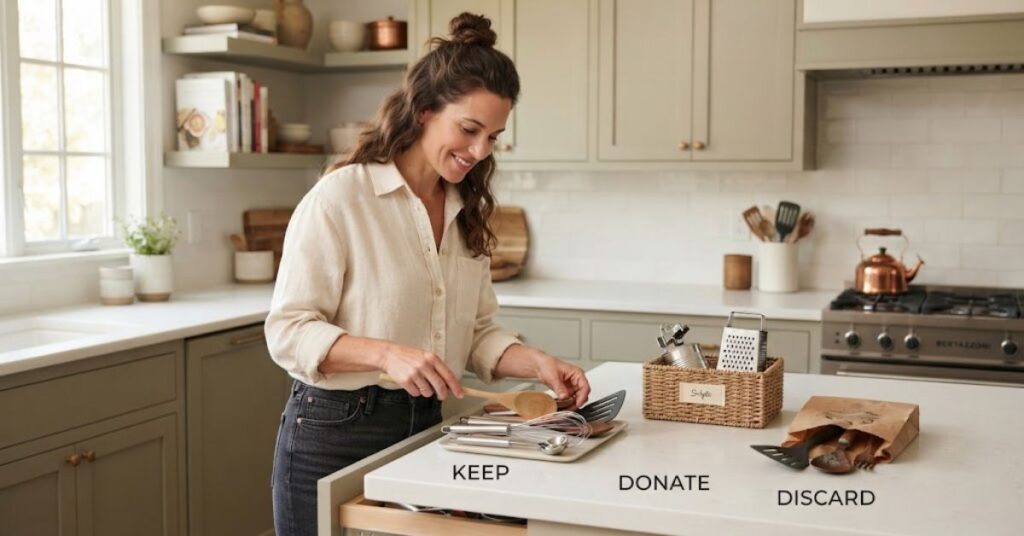
Before buying organizers or rearranging cabinets, remove the items you no longer use.
Trying to declutter the entire kitchen at once can quickly become exhausting. Instead, choose one small area, such as a single drawer, cabinet, or section of the countertop.
Take everything out and sort the items into three groups:
- Keep
- Donate or give away
- Discard
Be honest about how often you use each item. If you have not touched a kitchen gadget in several years and cannot remember the last time you needed it, it may be taking up valuable space.
Pay special attention to duplicate items. Many kitchens contain several spatulas, measuring cups, serving spoons, water bottles, or food containers when only a few are regularly used.
A simple question to ask
Before putting something back, ask:
“Would I buy this again today?”
If the answer is no, consider whether you really need to keep it.
Decluttering first makes every other organization step easier.
2. Keep Frequently Used Items Within Easy Reach
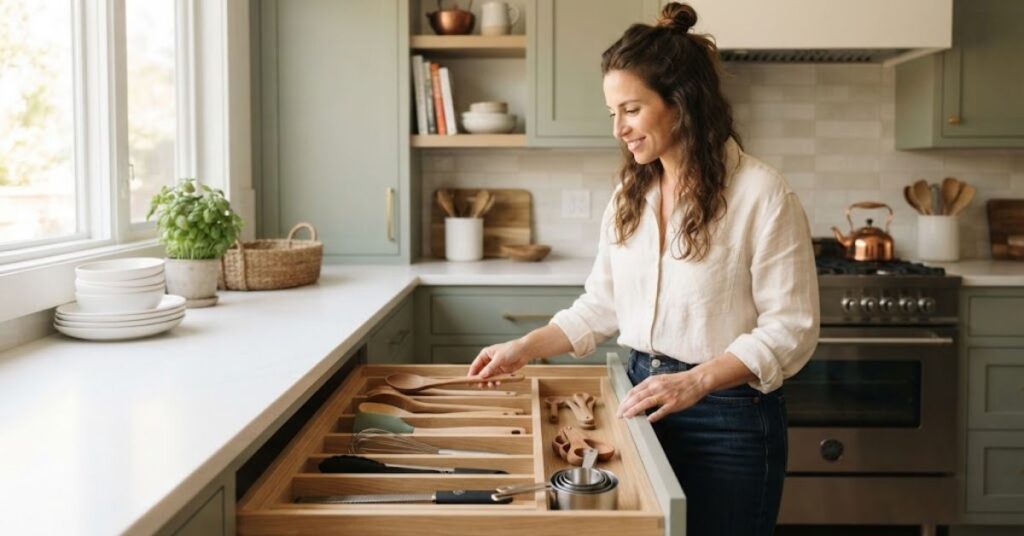
Your kitchen should be organized around the way you actually use it.
Items you reach for every day should be stored where they are easy to grab. This might include your favorite frying pan, cooking utensils, cutting board, coffee supplies, or everyday dishes.
Less frequently used items can go into higher cabinets, deeper drawers, or other less convenient areas.
For example, you might keep:
- Plates and bowls near the dishwasher
- Cooking utensils beside the stove
- Knives near your main food-preparation area
- Coffee and tea supplies together
- Baking ingredients near your mixing area
This type of organization saves time because you do not have to search through multiple cabinets every time you cook.
It also helps prevent clutter from building up on countertops.
3. Make Better Use of Cabinet Doors
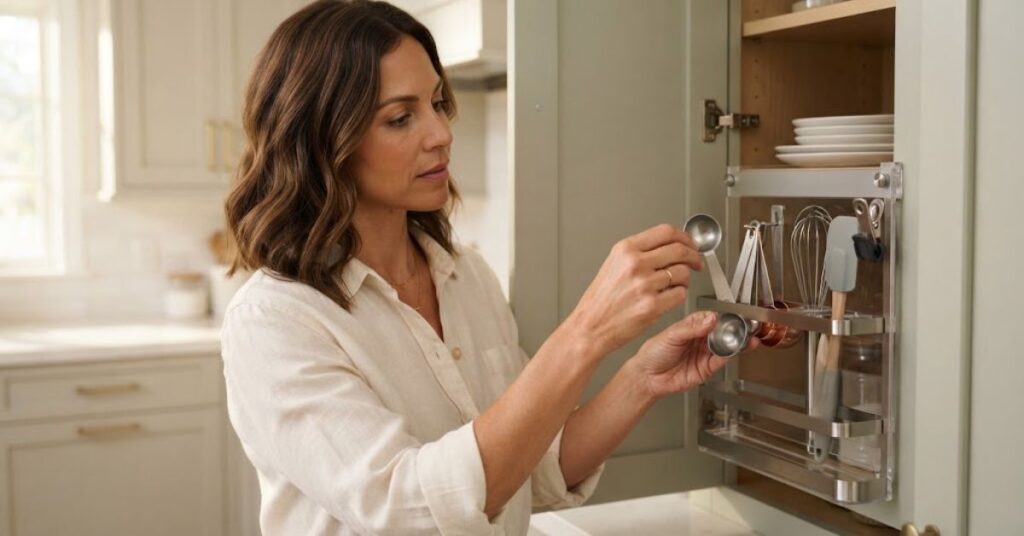
The inside of a cabinet door is often wasted space.
A small adhesive organizer, slim rack, or properly installed door-mounted storage system can create an extra place for lightweight kitchen supplies.
Depending on the cabinet, you can use the door to store things such as:
- Measuring spoons
- Pot lids
- Small cutting boards
- Kitchen towels
- Cleaning supplies
- Spice packets
- Food storage accessories
Before installing anything, check that the cabinet door can close properly with the organizer attached.
Avoid putting heavy objects on doors that are not designed to support extra weight. The goal is to create useful storage without damaging the cabinet.
4. Organize Your Pantry by Category
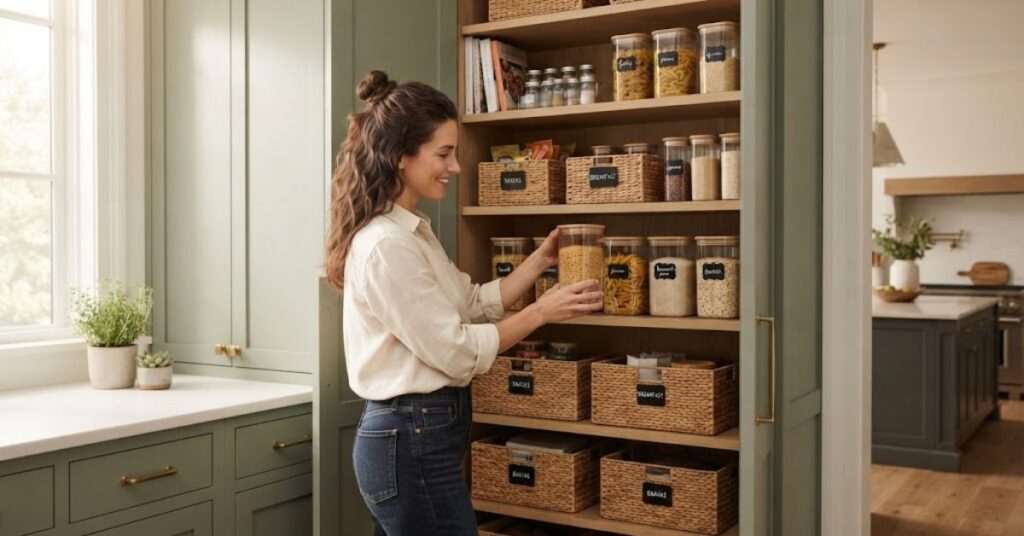
A messy pantry can make it difficult to see what you already have. It can also lead to buying duplicate products.
Instead of placing food wherever there is an empty spot, group similar items together.
You might create sections for:
- Breakfast foods
- Pasta and grains
- Canned foods
- Baking supplies
- Snacks
- Sauces and condiments
- Tea and coffee
- Back-up supplies
Clear containers can be helpful for dry foods such as rice, flour, cereal, pasta, and beans. They allow you to see how much is left and can make shelves look less crowded.
However, you do not need to transfer every food item into a container. Use containers where they actually solve a storage problem.
If you use baskets, label them clearly. A simple label can prevent family members from putting items in random places.
Keep older food toward the front
When adding new groceries, move older items forward and place newer items behind them.
This simple habit helps you use food before it expires and keeps your pantry easier to manage.
5. Use Drawer Dividers for Small Kitchen Tools
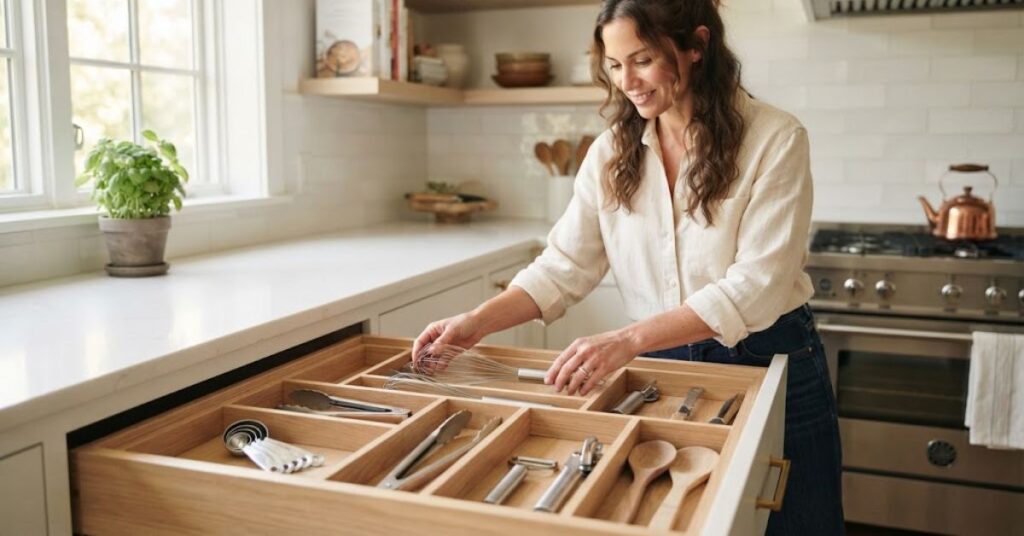
Kitchen drawers can become cluttered quickly because utensils come in different shapes and sizes.
A drawer divider can create separate sections for different types of tools.
For example, one section can hold:
- Wooden spoons
- Measuring spoons
- Tongs
- Whisks
- Peelers
- Can openers
Instead of tossing everything into one large drawer, give each category its own space.
Adjustable dividers are especially useful because you can change the layout as your needs change.
Do not pack the drawer too tightly. Leave enough room to remove one item without pulling out everything around it.
A well-organized drawer should make finding an item easier, not simply make the drawer look neat when it is closed.
6. Turn Empty Wall Space Into Storage
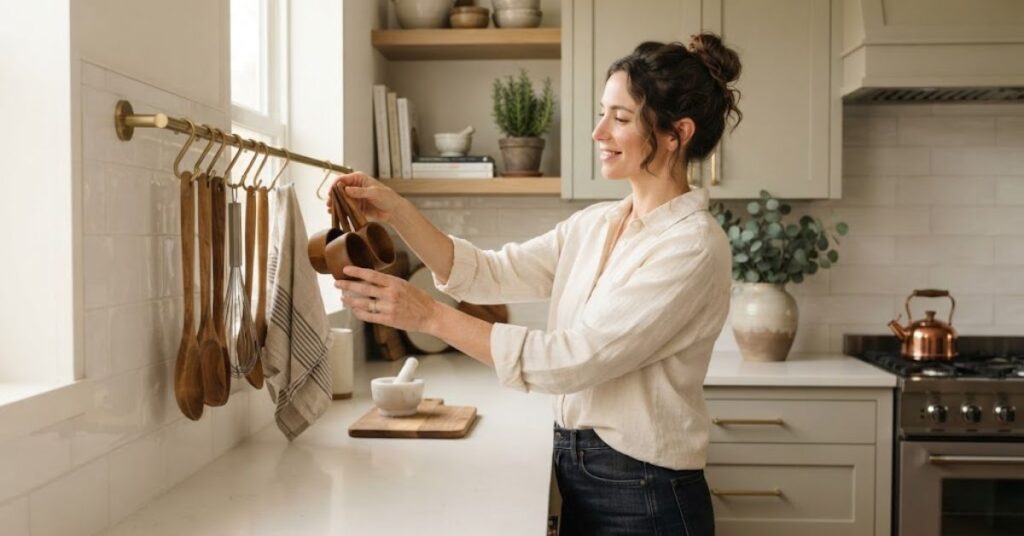
If your cabinets are full, look at your walls.
An empty wall can sometimes provide useful storage without taking up valuable countertop space.
Depending on your kitchen layout, you could use:
- A wall-mounted rail
- Hooks
- A narrow shelf
- A pegboard
- A magnetic strip designed for kitchen tools
Wall storage works particularly well for items you use regularly.
For example, a rail with hooks can hold measuring cups, kitchen towels, or frequently used utensils.
Keep the arrangement simple. Too many objects on an open wall can create visual clutter instead of solving it.
Choose only the items that make sense to keep visible.
7. Create a Dedicated Food-Storage Area
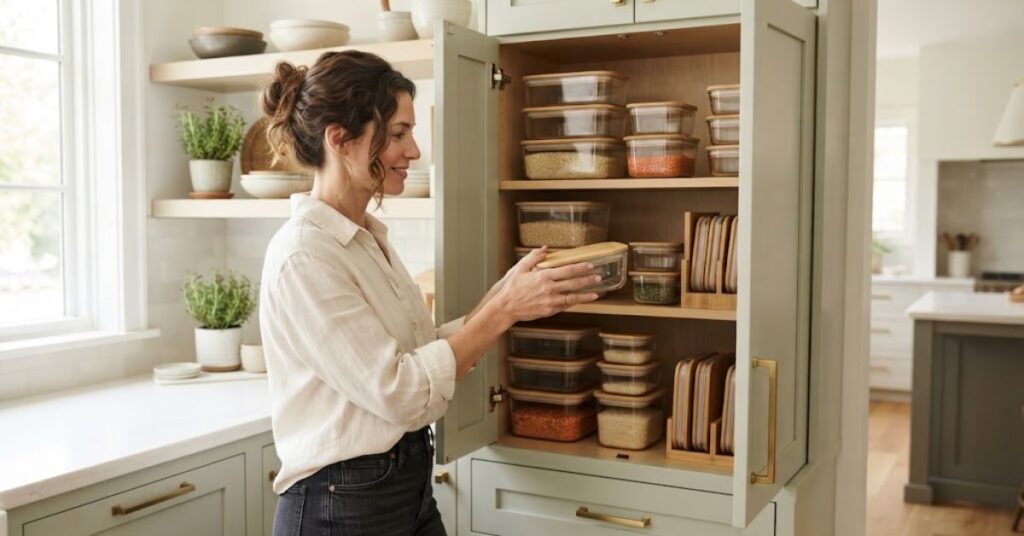
Food containers are one of the easiest kitchen items to lose control of.
You may have containers without lids, lids without matching containers, and several different sizes stacked together.
Start by taking all your food-storage containers and lids out of the cabinet.
Match each container with its lid and remove damaged or unusable pieces.
Then stack containers by size.
Store lids vertically in a small bin or organizer rather than placing them randomly in a pile.
A simple system might look like this:
Large containers: Bottom of the cabinet
Medium containers: Middle section
Small containers: Front or upper section
Lids: Vertical organizer
Try to avoid keeping more containers than your household actually needs.
If the cabinet is still overflowing after organizing it, that may be a sign that you simply have too many.
8. Give Your Countertops a Clear Purpose
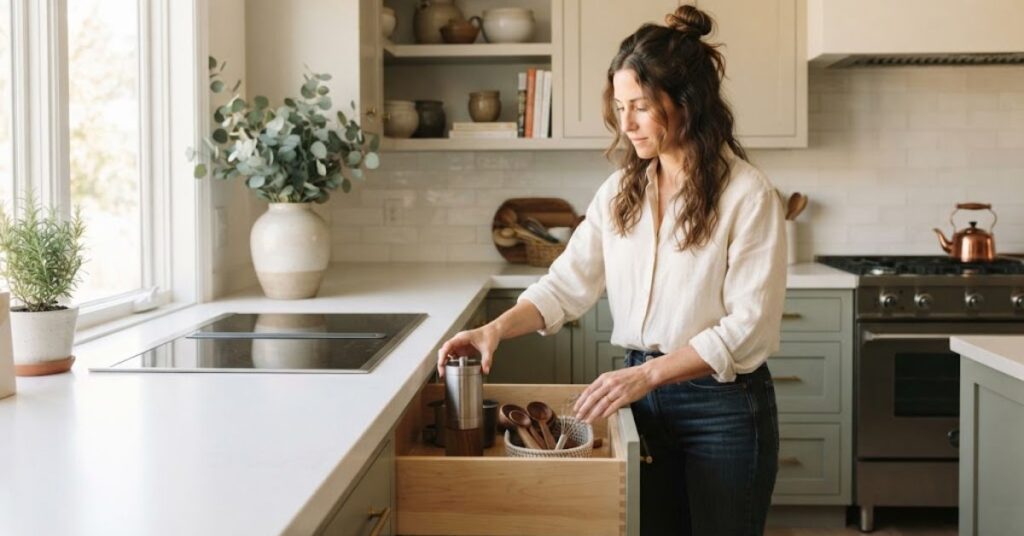
Countertops are often the first place where kitchen clutter appears.
Mail, grocery bags, appliances, food packages, and miscellaneous household items can quickly turn a clean counter into a crowded surface.
Start by deciding what genuinely needs to stay out.
You may want to keep a coffee maker, toaster, or another appliance that you use every day. Other appliances can be stored in a cabinet when they are not needed.
Create specific homes for items that tend to land on the counter.
For example, keep:
- Mail in a small organizer
- Keys in a designated bowl
- Produce in one basket
- Cooking oils together
- Frequently used utensils in one holder
Try to leave at least one clear section of countertop available for food preparation.
A clear work surface can make your entire kitchen feel more organized.
9. Use the Space Under the Sink Wisely
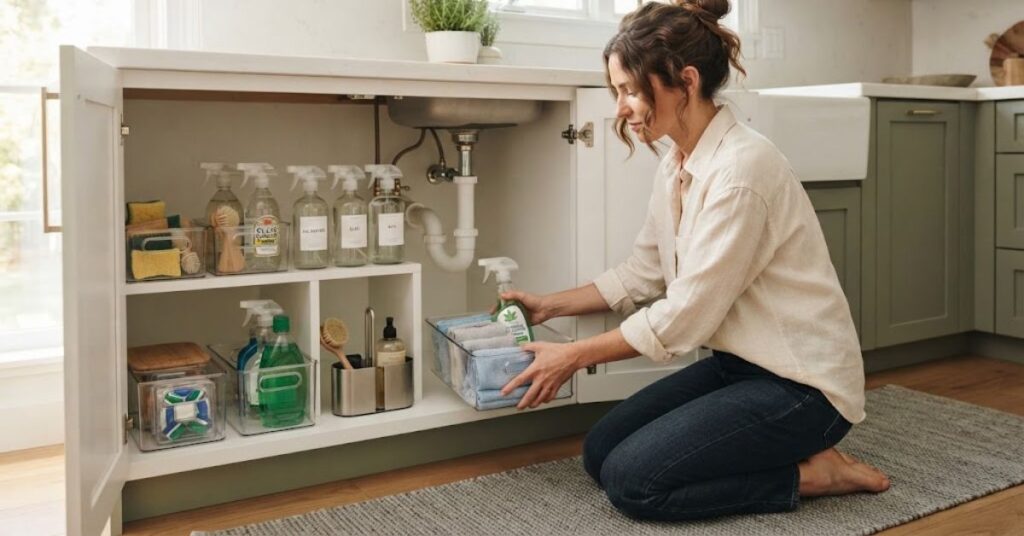
The cabinet beneath the kitchen sink is often one of the messiest areas in the house.
Cleaning sprays, sponges, brushes, trash bags, gloves, and extra supplies can easily become mixed.
Start by removing everything.
Wipe the cabinet interior and check for leaks or moisture before putting anything back.
Then group cleaning supplies by type.
A small bin can hold sponges and scrub brushes, while another can hold extra cleaning products.
You can also use a simple shelf riser to create a second level inside the cabinet.
Keep products you use most often toward the front.
If you have young children or pets, store household cleaning products securely and follow the safety instructions on their labels.
The goal is not to fill every inch of the cabinet. It is to make the things you need easy to find.
10. Create a Five-Minute Kitchen Reset
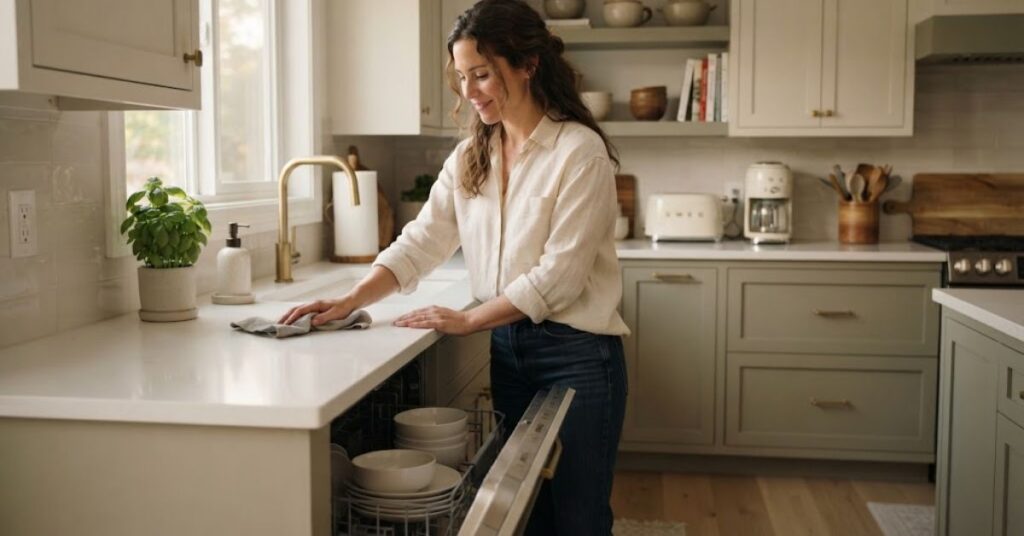
Even the best organization system will not stay effective without a simple maintenance routine.
You do not need to spend an hour cleaning and reorganizing your kitchen every night.
Instead, create a five-minute reset.
Before going to bed, try to:
- Put dishes in the dishwasher or wash them.
- Return appliances and tools to their proper places.
- Clear unnecessary items from the countertops.
- Wipe obvious spills and crumbs.
- Put food and ingredients back where they belong.
This small routine can prevent clutter from accumulating.
It also means you are less likely to wake up to a messy kitchen the next morning.
Make everyone responsible
If you share your home with family members, kitchen organization should not be one person’s job.
Give commonly used items a clear home so everyone knows where things belong.
When the storage system is simple, people are more likely to follow it.
How to Keep Your Kitchen Organized Longer
Organizing your kitchen once is helpful, but maintaining it is what makes the biggest difference.
Every few weeks, take a quick look through your drawers and cabinets.
Check for items that have gradually migrated into the wrong places.
Also look for expired food, empty packages, damaged containers, and appliances you are no longer using.
A seasonal mini-declutter can be especially useful.
For example, before the holidays, you might make room for baking supplies and serving dishes. In summer, you may want easier access to outdoor dining supplies and drinkware.
The goal is not a perfectly styled kitchen.
The goal is a kitchen that works well for your daily life.
Common Kitchen Organization Mistakes to Avoid
Buying Organizers Before Decluttering
Storage containers and organizers can be useful, but buying them before removing unnecessary items can make the problem worse.
You may end up organizing things you do not actually need.
Declutter first, then decide what type of storage is missing.
Storing Everything on the Counter
Open shelves and countertop storage can be convenient, but too many visible items can make a kitchen feel crowded.
Keep only frequently used items within easy reach.
Ignoring Vertical Space
Many cabinets have unused space above the items stored inside them.
Shelf risers, stackable storage, and vertical organizers can help you use that space more effectively.
Creating a Complicated System
If putting something away requires several steps, people may stop following the system.
Good kitchen organization should be simple enough to maintain every day.
FAQs
How do I organize a small kitchen?
Start by removing items you rarely use. Then focus on vertical storage, cabinet doors, drawer dividers, and multi-purpose organizers. Keep frequently used items easy to reach and store occasional-use items in less accessible spaces.
How can I declutter my kitchen quickly?
Work on one small area at a time. Remove everything, sort it into keep, donate, and discard groups, then return only the items you use and need.
What should I keep on my kitchen counter?
Keep appliances and supplies that you use regularly. Items used only occasionally can usually be stored in cabinets or another designated area.
How often should I reorganize my kitchen?
A quick reset can be done daily, while a deeper decluttering session every few months can help prevent unnecessary items from building up.
How do I organize a messy pantry?
Group similar foods together, use baskets for loose packages, keep older items toward the front, and label containers or shelves when helpful.
Are clear storage containers worth using?
They can be useful for dry foods and other items you frequently need to monitor. However, you do not need to transfer everything into containers. Use them where they genuinely improve organization.
Final Thoughts
A more organized kitchen does not require a complete makeover.
Start with the clutter you can see every day. Clear your countertops, group similar items, organize your drawers, and make better use of cabinets and vertical space.
Most importantly, create storage systems that match the way you actually use your kitchen.
When every frequently used item has a simple home, keeping the kitchen tidy becomes much easier. With a few small changes and a regular five-minute reset, you can create a kitchen that feels calmer, more spacious, and easier to use every day.