
Fresh apples are one of the easiest fruits to keep at home, but storing them incorrectly can quickly change their texture. An apple that was crisp and juicy when you bought it can become soft, dry, wrinkled, or unpleasantly mealy after sitting on the counter for too long.
The good news is that you can slow this process considerably with a few simple storage habits. Learning how to store apples properly comes down to controlling temperature, moisture, airflow, bruising, and exposure to ethylene gas, the natural plant hormone involved in ripening.
At True Housekeeping, we believe good food storage should be practical enough for everyday kitchens. Whether you have a small bag of apples from the grocery store or a large harvest from an apple tree, the right storage method can help you enjoy crisp fruit for much longer.
In this guide, you’ll learn how to store apples in the refrigerator, when you can leave them on the counter, how to prevent apples from getting mealy, which apples tend to store well, and what to do when your apples are already starting to soften.
Why Do Apples Turn Soft and Mealy?
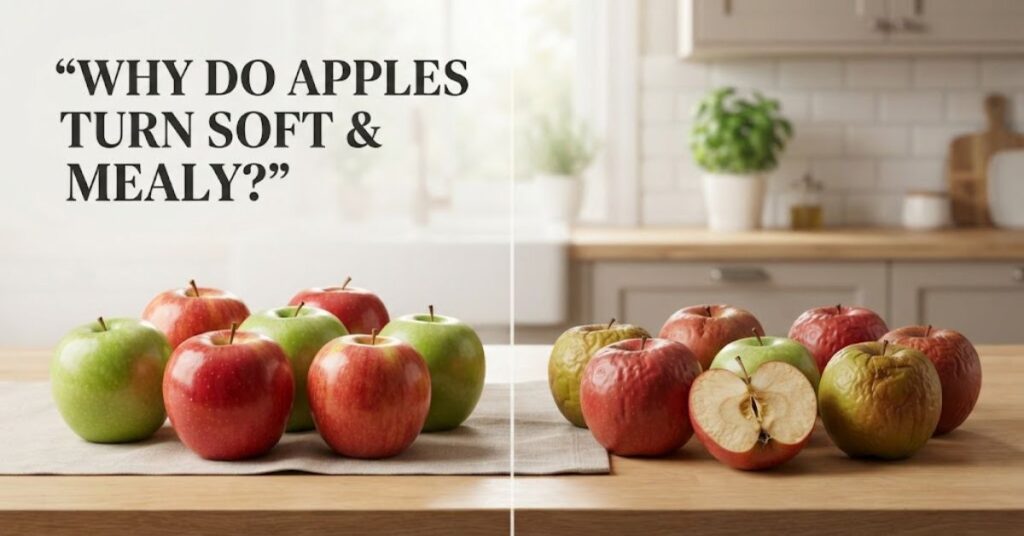
Before discussing how to store apples, it helps to understand why their texture changes.
Apples are living plant tissues. Even after they are harvested, they continue to respire and ripen. During this process, natural changes take place inside the fruit.
Ethylene is especially important. Apples produce ethylene as they ripen, and exposure to ethylene can speed up ripening in other apples and certain fruits and vegetables stored nearby.
Temperature also makes a major difference.
Warm temperatures generally speed up the ripening process. Extension guidance notes that apples can soften much faster when stored at warmer temperatures than under cold storage conditions.
Moisture matters too.
If the environment is too dry, apples can lose water and become wrinkled. If moisture becomes trapped around damaged fruit, however, decay can develop more easily.
The goal is therefore not simply to put apples somewhere cold. You want a cool, appropriately humid environment with some ventilation, while also protecting the fruit from bruising.
What Temperature Is Best for Apples?
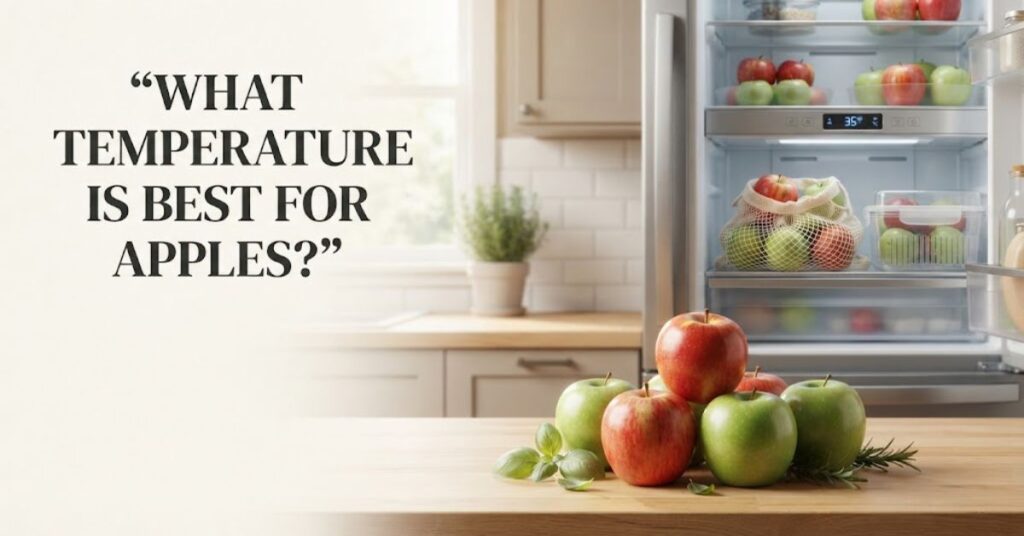
Temperature is one of the biggest factors affecting apple storage.
For long-term storage, extension guidance commonly recommends temperatures around 32–40°F (0–4.4°C), depending on the variety. Iowa State University Extension gives an optimum range of approximately 32–40°F with high relative humidity for stored apples.
However, there isn’t one perfect temperature for every apple variety.
Some apples are more sensitive to very cold storage. Honeycrisp, for example, can be susceptible to chilling injury at temperatures below approximately 36°F, according to the University of Maryland Extension.
For an ordinary household refrigerator, you don’t need to create a laboratory-perfect storage environment.
Instead:
- Keep the refrigerator cold and consistent.
- Avoid freezing the apples.
- Use the crisper drawer when appropriate.
- Check apples regularly.
- Remove damaged fruit quickly.
For ordinary grocery-store quantities, these simple practices are usually more practical than trying to reproduce commercial controlled-atmosphere storage.
Should You Store Apples in the Refrigerator?
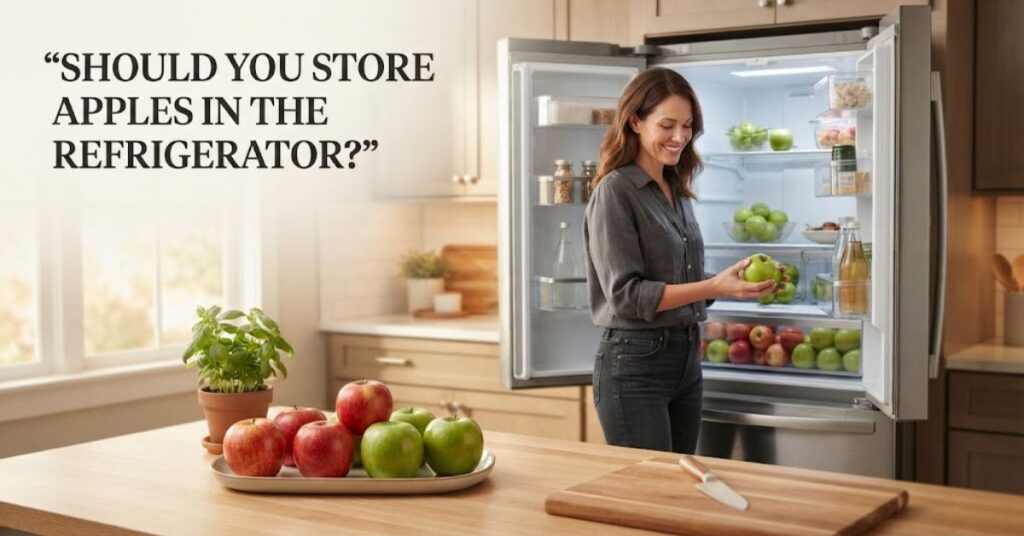
Yes, refrigeration is generally the better choice if your goal is to keep apples crisp for longer.
Apples stored at room temperature continue ripening relatively quickly. Harvard’s Nutrition Source notes that apples may last roughly one to two weeks on the counter, while refrigeration can extend their freshness substantially.
That doesn’t mean apples must always be refrigerated.
If you’re planning to eat them within a few days, a cool kitchen counter may be perfectly reasonable.
But if you bought a large bag and want to keep it fresh for weeks, refrigeration is usually the more reliable approach.
This is one of the most important principles when learning how to store apples: cold storage slows the processes that cause softening.
How to Prevent Apples From Getting Mealy
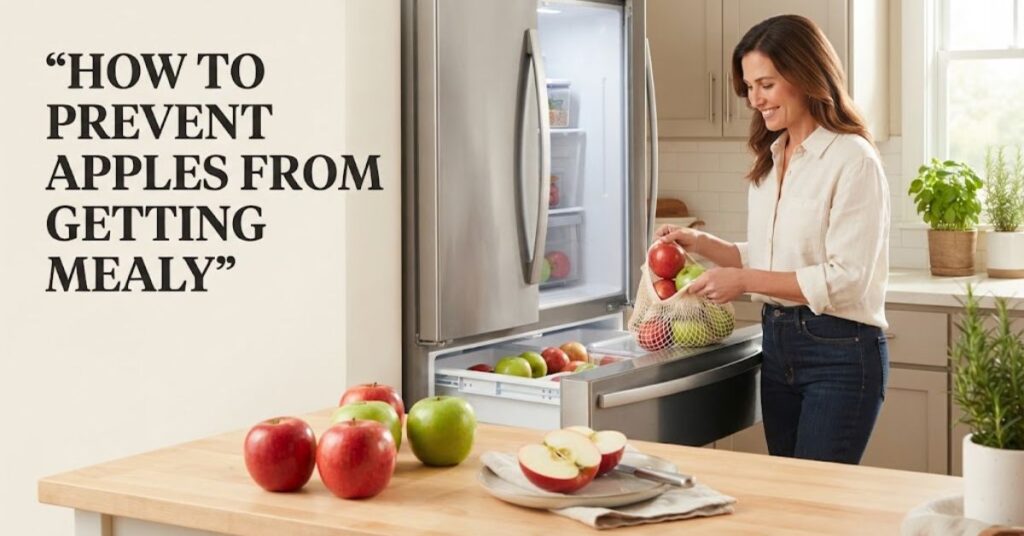
If your biggest concern is mealy apples, focus on five things:
- Buy firm apples.
- Avoid bruising them.
- Refrigerate them.
- Keep damaged apples separate.
- Don’t store them beside ethylene-sensitive produce.
The phrase mealy apples usually describes fruit whose flesh has lost its pleasant crisp, juicy bite. Instead of snapping when you bite into it, the flesh may feel dry, grainy, soft, or crumbly.
Once an apple has become significantly mealy, storage cannot restore its original crisp texture.
That’s why prevention matters.
Keep Apples Away From Ethylene-Sensitive Produce

Apples naturally release ethylene, especially as they mature.
Ethylene is a plant hormone that regulates ripening. Higher ethylene exposure can accelerate ripening in susceptible produce.
This is why you shouldn’t automatically place every fruit and vegetable together in the same drawer.
For example, apples can affect the storage life of some vegetables and fruits that are sensitive to ethylene.
If your refrigerator allows it, keep apples in their own crisper drawer or away from produce that is particularly sensitive to ethylene.
This is an important part of how to store apples because the goal isn’t only to protect the apples themselves. You’re also protecting the other produce in your refrigerator.
Should Apples Be Stored in Plastic Bags?
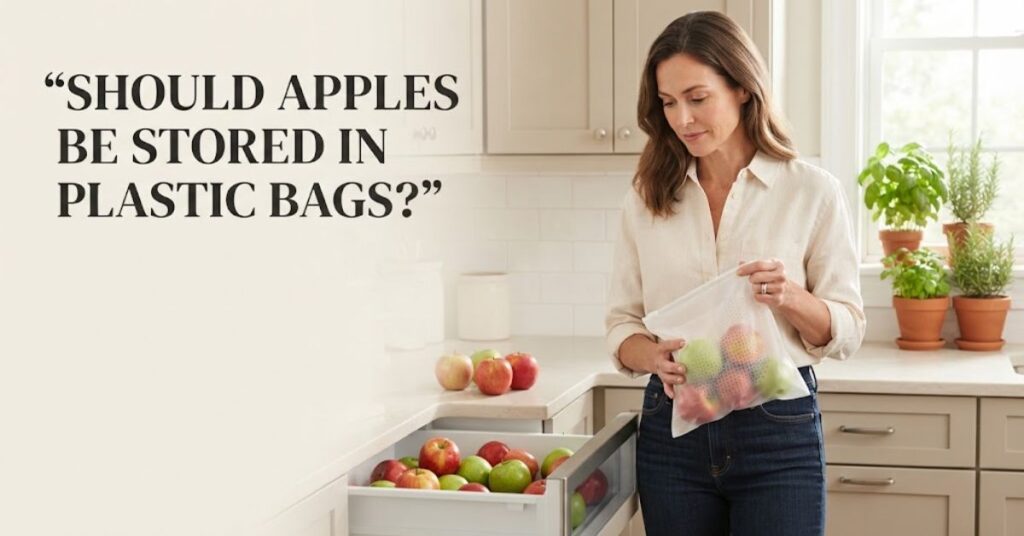
They can be, but the type of bag matters.
A completely airtight plastic bag can trap moisture. Too much trapped moisture may contribute to surface deterioration and mold.
For longer storage, Iowa State University Extension recommends perforated plastic bags for small quantities of apples because the holes help maintain humidity while allowing excess moisture and gases to escape.
If you’re using a regular produce bag, don’t tightly seal wet apples inside it.
A breathable or perforated bag is more appropriate.
The basic idea is simple:
Retain enough humidity to slow dehydration without trapping excessive moisture.
Why Humidity Matters When Storing Apples
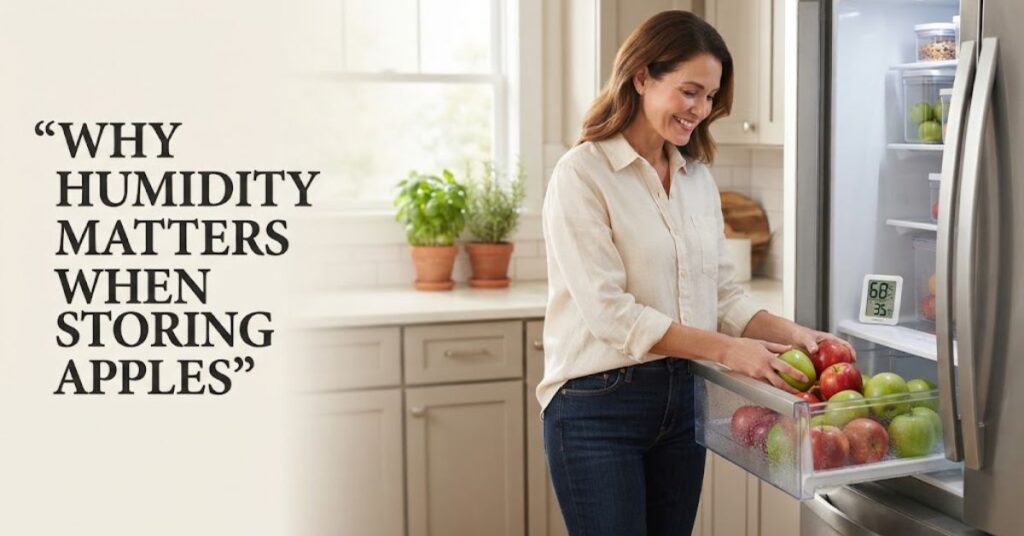
Apples need moisture, but they don’t need to sit in water.
Low humidity can cause apples to lose moisture, which may lead to:
- Wrinkled skin
- Shriveling
- Reduced juiciness
- Softer texture
- Weight loss
Iowa State University Extension recommends approximately 90–95% relative humidity for optimum apple storage.
A household refrigerator won’t necessarily maintain that exact humidity around every apple, and you don’t need to measure it for normal home storage.
Instead, use practical habits:
- Keep apples in a suitable crisper drawer.
- Avoid storing wet apples.
- Don’t seal them in completely airtight packaging.
- Don’t leave them exposed to very dry refrigerator air for long periods.
Don’t Bruise Apples During Storage
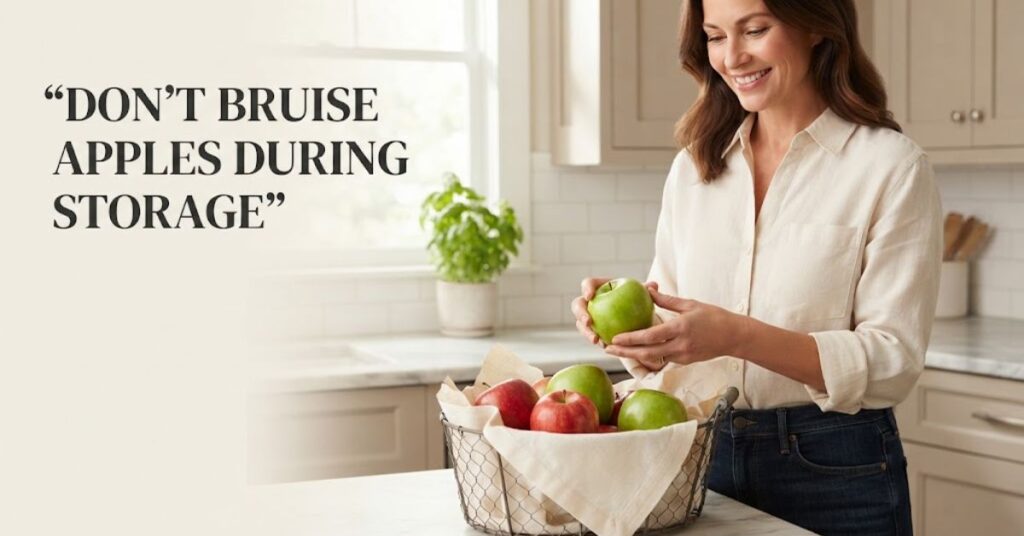
One of the simplest ways to improve apple storage is also one of the easiest to overlook: handle the fruit gently.
A bruise may seem harmless at first, but damaged tissue deteriorates faster than healthy tissue.
When putting apples into a refrigerator drawer or storage box, don’t throw them in or pile heavy items on top of them.
Instead, place them gently.
If one apple develops a significant soft spot, separate it from the others.
This is especially important when you’re trying to figure out how to store apples for an entire season rather than just a few days.
Can You Store Apples on the Counter?

Yes, especially if you plan to eat them soon.
A countertop can be convenient if you’re eating the apples within several days.
The problem is prolonged room-temperature storage.
Warm conditions accelerate ripening and can lead to softening. Maine Extension explains that apples quickly soften and become mealy at ambient temperatures and recommends refrigeration for maintaining quality beyond about a week.
If you love having apples available for snacks, you can keep a small number on the counter and store the rest in the refrigerator.
This gives you convenience without exposing the entire batch to room-temperature conditions.
How to Store Cut Apples
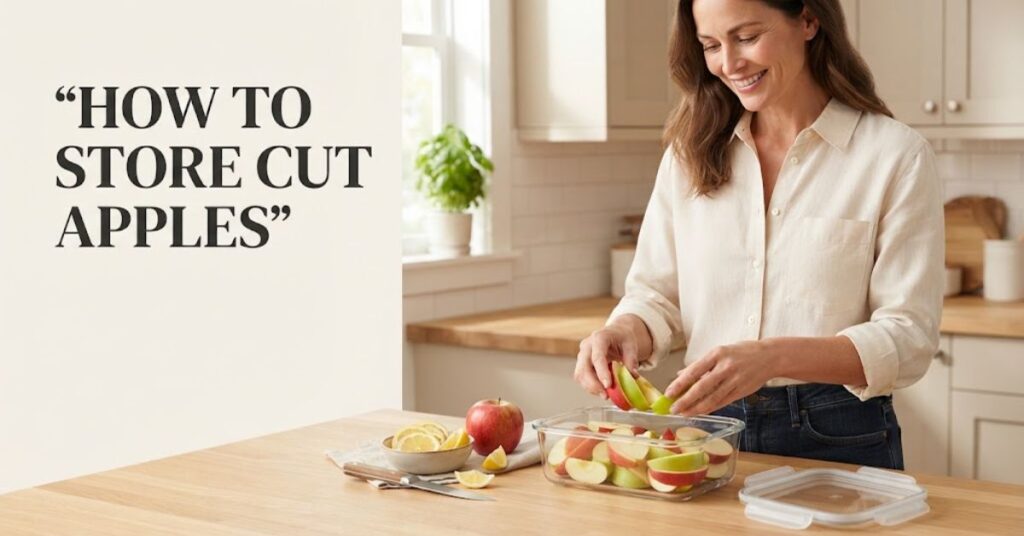
Whole apples generally keep their quality much better than cut apples.
Once an apple is cut, its flesh is exposed to oxygen and begins to brown. Cut apples should therefore be handled differently.
After cutting an apple:
- Place the pieces in a clean airtight container.
- Refrigerate them promptly.
- Use them within a short period for the best texture and quality.
- If you’re preparing them for a recipe, follow the recipe’s recommended storage instructions.
Cut apples are much more perishable than intact fruit because cutting damages the protective outer skin.
What Causes Mealy Apples?

There isn’t always one single cause.
Mealy apples can result from natural ripening, storage temperature, storage duration, variety, maturity at harvest, and other physiological changes.
Some apples are naturally better suited to long storage than others.
The University of Maryland Extension explains that fruit texture is influenced by maturity, temperature, storage duration, and cultivar characteristics.
This means that even if you do everything correctly, a particular apple variety may eventually lose its crisp texture.
Storage can slow the process, but it can’t stop natural aging indefinitely.
Why One Bad Apple Really Can Affect the Others
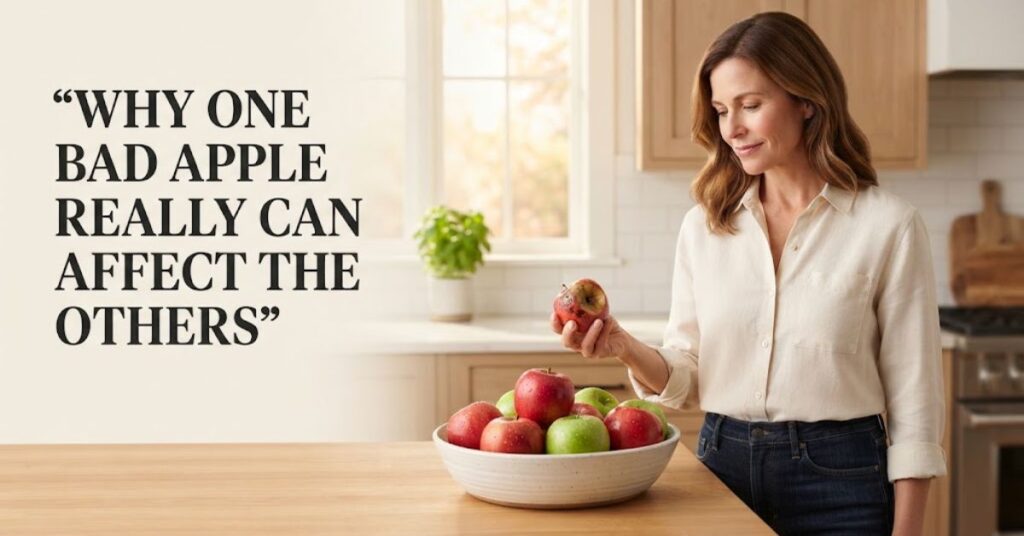
The old saying has some science behind it.
Damaged or injured apples can produce more ethylene, and ethylene promotes ripening.
Nebraska Extension notes that damaged fruit can release ethylene more rapidly, accelerating ripening of other apples stored nearby.
That doesn’t mean one imperfect apple will instantly ruin an entire refrigerator drawer.
It does mean you should regularly inspect stored apples and remove fruit that is becoming seriously damaged or rotten.
Think of it as simple food-storage maintenance.
Can You Make Mealy Apples Crisp Again?
Unfortunately, you generally can’t completely reverse an apple that has developed a truly mealy internal texture.
Cooling an apple may make it feel firmer because cold fruit is firmer to the touch, but it doesn’t undo the structural changes that have already occurred.
This is why preventing mealy apples is more effective than trying to repair them afterward.
If an apple is only slightly soft, refrigerating it can still help slow further deterioration.
But if the inside has already become grainy and dry, cooking or blending is usually a better use for it.
Common Apple Storage Mistakes to Avoid
1. Leaving the Entire Bag on the Counter
If you’re planning to keep apples for weeks, room-temperature storage can accelerate softening.
2. Storing Damaged Apples With Perfect Ones
A bruised apple should be used first.
3. Washing Every Apple Before Storage
Extra surface moisture isn’t helpful for long-term storage.
4. Sealing Wet Apples in an Airtight Bag
Trapped moisture can contribute to deterioration.
5. Putting Apples Beside Sensitive Produce
Ethylene can accelerate ripening in susceptible produce.
6. Ignoring the Refrigerator Temperature
A refrigerator that is too warm won’t provide the same storage benefits.
7. Forgetting About the Apples
Even properly stored apples need occasional inspection.
The best method for storing apples is not simply putting them somewhere cold and forgetting about them. Good storage combines the right conditions with regular checking.
A Simple Weekly Apple Storage Routine
You don’t need to spend much time maintaining stored apples.
Once a week:
First, open the crisper drawer.
Second, check for soft spots.
Third, remove any apple that is significantly damaged.
Fourth, wipe away any moisture from the storage area if necessary.
Fifth, move older apples toward the front.
Finally, plan a meal or snack around apples that are beginning to soften.
This simple first-in, first-out system helps you eat the oldest fruit before opening a new batch.
Frequently Asked Questions
How should I store apples so they stay crisp?
The easiest approach is to keep whole, undamaged apples refrigerated, preferably in a suitable crisper drawer. Avoid bruising, excessive moisture, and prolonged exposure to room temperature.
Is it better to store apples in the fridge or on the counter?
For short-term eating, the counter can be convenient. For longer freshness, refrigeration is generally better because colder temperatures slow ripening.
How do I prevent apples from getting mealy?
Keep apples cool, handle them gently, separate damaged fruit, avoid excessive storage time, and choose varieties suited to storage. Temperature and cultivar both influence texture.
Should apples be stored in plastic bags?
They can be stored in perforated plastic bags. Ventilation helps maintain humidity without trapping excessive moisture.
Should I wash apples before putting them in the refrigerator?
For longer storage, it is generally more practical to keep whole apples dry and wash them immediately before eating. When washing, gently rinse them under cool running water.
Can apples be stored next to bananas?
It is better to consider ethylene production when deciding where to place produce. Apples release ethylene, which can affect nearby ethylene-sensitive produce.
Why do my apples become mealy in the refrigerator?
Refrigeration slows ripening, but it doesn’t stop it completely. Variety, maturity, previous storage, temperature, and length of storage can all influence texture.
How long can apples stay in the refrigerator?
Storage life varies widely. Some varieties can remain in good condition for several months under optimum storage conditions, while ordinary supermarket apples may have a shorter practical life at home.
Can soft apples still be eaten?
If an apple is merely soft but has no mold, serious decay, or other spoilage signs, it may still be useful for cooking. Applesauce, baked desserts, and other cooked dishes are good options.
Can you make a mealy apple crisp again?
Not completely. Once the internal texture has deteriorated, refrigeration cannot restore the original structure. It’s usually better to use the apple in a cooked or blended recipe.
Should apples be stored separately from vegetables?
Separating apples from ethylene-sensitive vegetables and fruits can help slow unwanted ripening. USDA guidance notes that ethylene-producing fruits should ideally be kept away from ethylene-sensitive produce.
What temperature is best for storing apples?
Many apples store well around 32–40°F, although the ideal temperature varies by cultivar. Some varieties, including Honeycrisp, can be sensitive to temperatures that are too cold.
Final Thoughts
Knowing how to store apples doesn’t require complicated equipment or a perfect storage room. For most households, the biggest improvements come from a few simple habits: start with firm apples, handle them gently, separate damaged fruit, keep whole apples refrigerated when you want longer freshness, and avoid excessive moisture.
Remember that apples are living fruit. Even under excellent conditions, their texture will eventually change. Variety, harvest maturity, temperature, humidity, and storage time all influence how long an apple stays crisp.
If your apples are already beginning to soften, don’t automatically throw them away. Use them in applesauce, oatmeal, baked desserts, smoothies, or other recipes where crisp texture isn’t essential.
At True Housekeeping, we believe practical home care is about making everyday routines easier, not making them complicated. With the right storage habits, you can keep more apples fresh, reduce food waste, and enjoy that satisfying crisp bite for much longer.
The key to how to store apples is simple: keep them cool, keep them protected, keep damaged fruit separate, and check your storage regularly.