
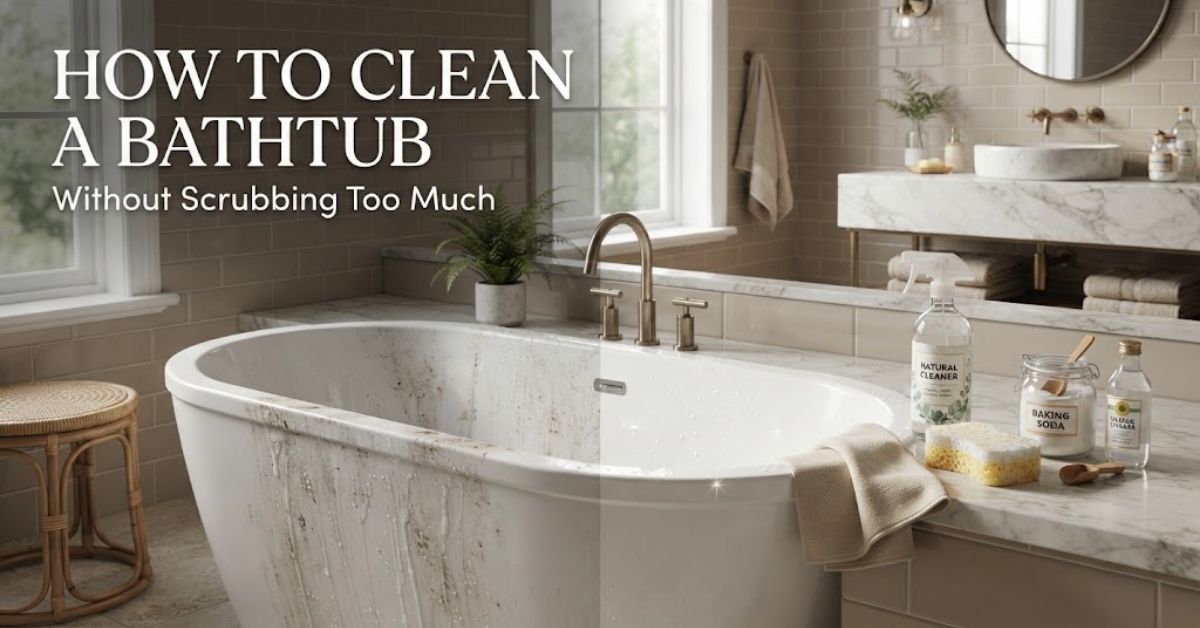
A clean bathtub can make your entire bathroom feel fresher, brighter, and more inviting. However, removing soap scum, body oils, hard-water stains, and built-up grime often feels like a tiring job, especially when it seems like you have to scrub for hours.
The good news is that you don’t always need heavy scrubbing to get a bathtub looking clean. With the right cleaning solution, enough soaking time, and a simple routine, you can loosen stubborn buildup before you even touch the surface.
In this guide, you’ll learn how to clean a bathtub without scrubbing using simple household supplies and practical cleaning techniques. These methods can work for many common bathtub materials, including porcelain, ceramic, fiberglass, and acrylic, although you should always check your tub manufacturer’s care instructions first.
How Often Should You Clean a Bathtub?

How often you should clean your bathtub depends on how often you use it.
For a regularly used family bathroom, a quick cleaning once a week is a good starting point. If several people use the same tub every day, you may need to clean it more frequently.
A deeper cleaning can usually be done every few weeks or whenever you notice:
- Soap scum building up
- Dull or cloudy surfaces
- Hair and dirt around the drain
- Yellow or brown stains
- Hard-water deposits
- A musty smell
- Grime collecting around the edges
Regular light cleaning is much easier than waiting until several layers of buildup have accumulated.
What Causes Bathtub Grime?
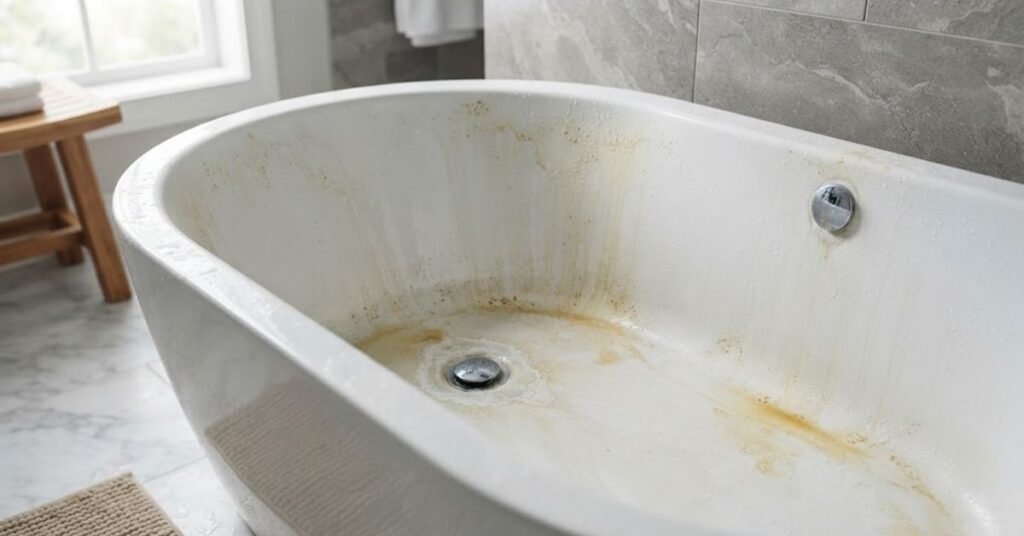
Before learning how to clean a bathtub, it helps to understand what you’re actually removing.
Soap Scum
Soap scum forms when soap or body wash mixes with minerals in water, body oils, and dirt. Over time, it can create a dull, sticky film across the tub.
Hard-Water Deposits
Hard water contains minerals such as calcium and magnesium. These minerals can leave white, chalky, cloudy, or crusty deposits on bathtub surfaces.
Body Oils and Dirt
Bathing naturally leaves behind oils, dead skin cells, hair products, and other residues. If they aren’t rinsed away, they can gradually create a greasy layer.
Mold and Mildew
Bathrooms are naturally humid environments. Moisture that remains around tub edges, caulk, grout, or shower curtains can encourage mold and mildew growth.
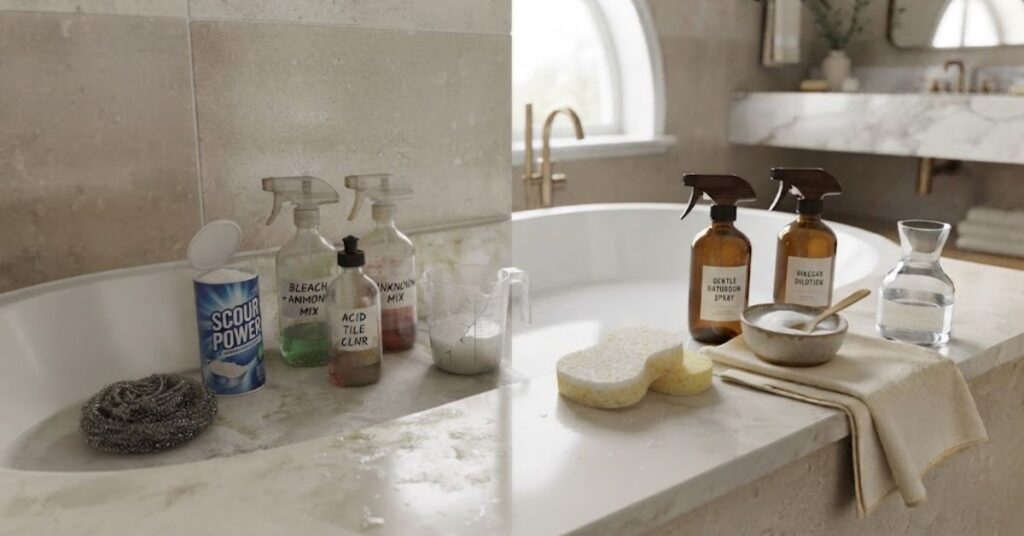
What You Need to Clean a Bathtub
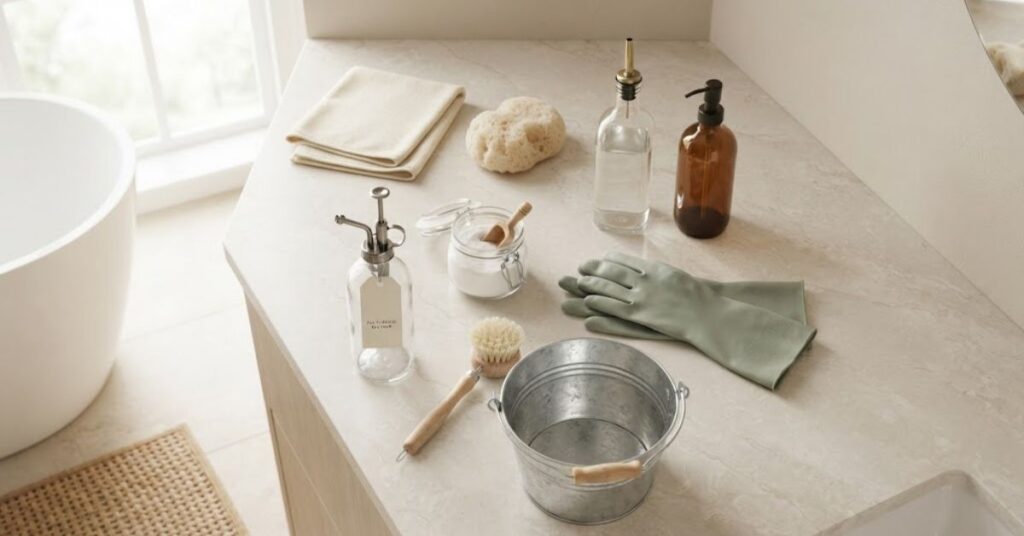
You don’t need a large collection of specialized cleaners.
For basic bathtub cleaning, gather:
- Dish soap
- Baking soda
- White vinegar
- Warm water
- A spray bottle
- Soft sponge
- Microfiber cloth
- Old toothbrush or small soft brush
- Rubber gloves
- Bucket
- Squeegee, if available
For stubborn mineral deposits, you may also use a commercial bathroom cleaner designed specifically for your bathtub’s material.
Important: Never mix bleach with vinegar, ammonia, or other household cleaners. Dangerous fumes can result.
How to Clean a Bathtub Without Scrubbing Too Much
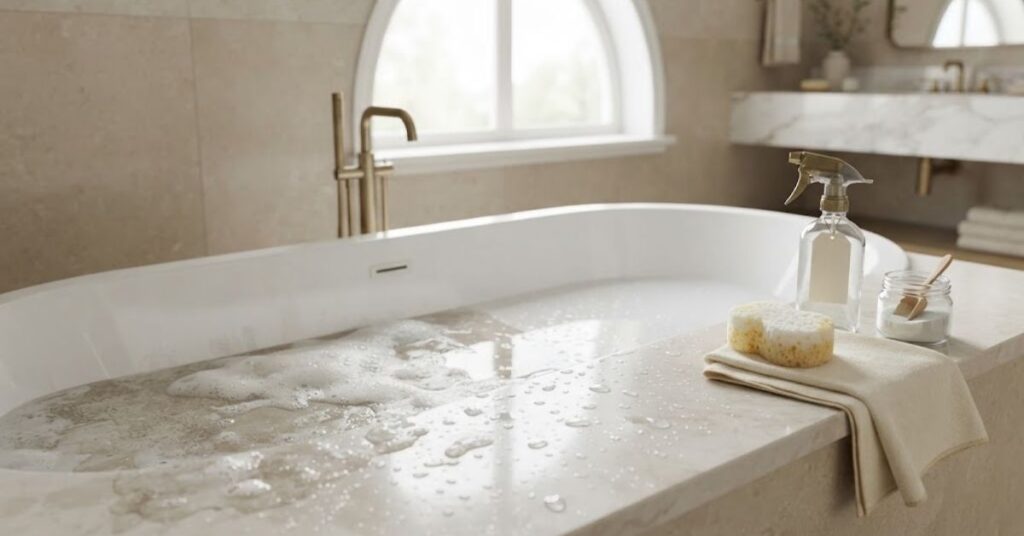
The key to low-effort bathtub cleaning is simple: let the cleaning solution do most of the work.
Instead of immediately attacking the buildup with a brush, loosen it first.
Step 1: Remove Everything From the Tub
Start by taking out shampoo bottles, soap, bath toys, razors, loofahs, and other items.
This gives you complete access to the bathtub and prevents dirt from hiding underneath products.
Also remove loose hair and visible debris from the drain.
Step 2: Rinse the Bathtub With Warm Water
Run warm water over the entire surface.
Warm water helps soften soap residue and makes it easier for your cleaning solution to spread across the tub.
Pay particular attention to corners, around the drain, and along the edges where grime tends to accumulate.
Step 3: Make a Gentle Cleaning Solution
For everyday soap scum, mix warm water with a small amount of dish soap in a spray bottle or bowl.
A simple mixture is:
- 2 cups warm water
- 1/2 cup dish soap
Shake or stir gently.
Dish soap is useful because it helps break down greasy body oils and residues without requiring aggressive scrubbing.
Step 4: Apply the Cleaner Generously
Spray the solution over the entire bathtub.
Don’t forget:
- Tub walls
- Bottom surface
- Corners
- Around the drain
- Faucet area
- Overflow opening
- Edges and ledges
Allow the solution to sit for about 10 to 15 minutes.
This waiting period is one of the easiest ways to reduce scrubbing.
Step 5: Wipe With a Soft Sponge
After the cleaner has had time to work, use a damp, non-abrasive sponge.
Work in small sections using gentle circular motions.
You may be surprised by how easily the softened grime comes away.
Avoid using steel wool, harsh scouring pads, or abrasive powders on surfaces that can scratch easily.
Step 6: Rinse Thoroughly
Rinse the bathtub with clean warm water.
Make sure no soap or cleaning residue remains.
If the surface still feels greasy or looks dull, repeat the cleaning process rather than immediately using a harsher abrasive.
Step 7: Dry the Bathtub
Use a clean microfiber cloth to dry the surface.
Drying removes remaining moisture and helps reduce water spots.
It also gives you a chance to see whether any stains or buildup still need attention.
How to Remove Soap Scum With Baking Soda
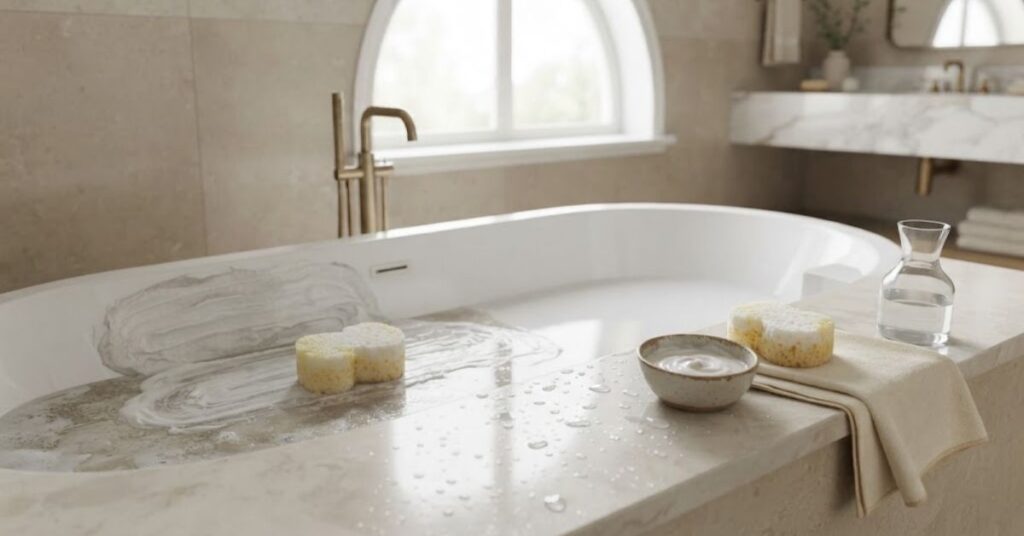
Baking soda can be useful for mild bathtub buildup because it provides gentle cleaning action.
Create a paste using:
- 1/2 cup baking soda
- Enough water to form a spreadable paste
Apply the paste to areas with soap scum.
Allow it to sit for approximately 10 minutes.
Then gently wipe with a soft sponge and rinse thoroughly.
For delicate acrylic or fiberglass tubs, avoid aggressive rubbing because repeated abrasion can dull the surface.
How to Use Vinegar for Hard-Water Stains
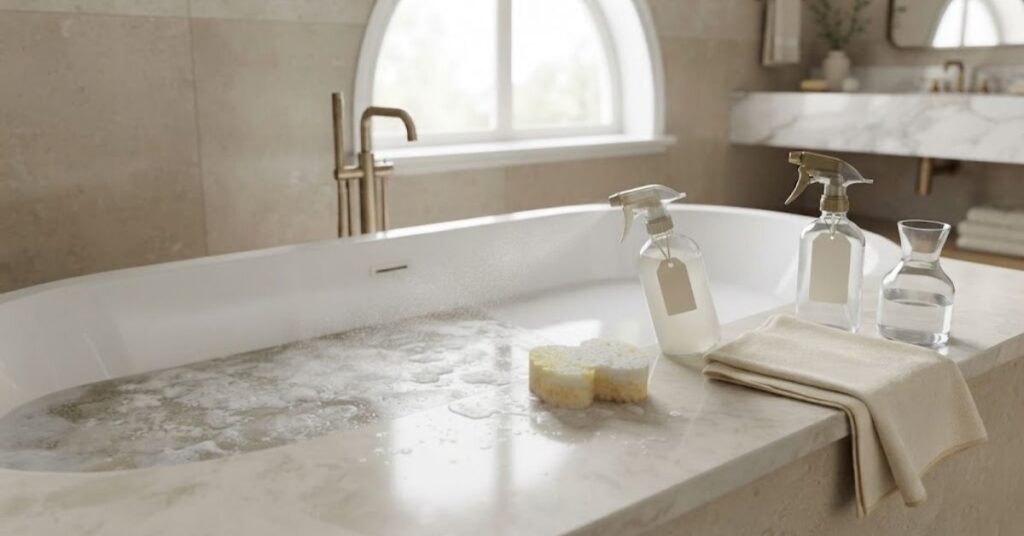
White vinegar is commonly used to help dissolve mineral deposits from hard water.
For light buildup, combine equal parts white vinegar and water in a spray bottle.
Spray the affected areas and let the solution sit for around 10 to 15 minutes.
Then wipe with a soft cloth or sponge and rinse well.
For heavier deposits, you may need to repeat the process.
Important Surface Safety
Vinegar is acidic, so it isn’t suitable for every bathtub or bathroom surface. Avoid using vinegar on natural stone surfaces such as marble or limestone because acids can damage them.
Always check the manufacturer’s recommendations before using vinegar.
How to Clean a Bathtub Without Scrubbing Hard
If your bathtub is heavily dirty, don’t immediately start scrubbing harder.
Instead, use this method:
- Wet the bathtub with warm water.
- Apply your preferred bathtub-safe cleaner.
- Allow it to sit according to the product instructions.
- Gently wipe the surface.
- Rinse completely.
- Repeat if necessary.
The longer a cleaner is safely allowed to work, the less physical effort may be needed.
However, never leave a cleaning product on a surface longer than the label recommends.
How to Remove Yellow Bathtub Stains
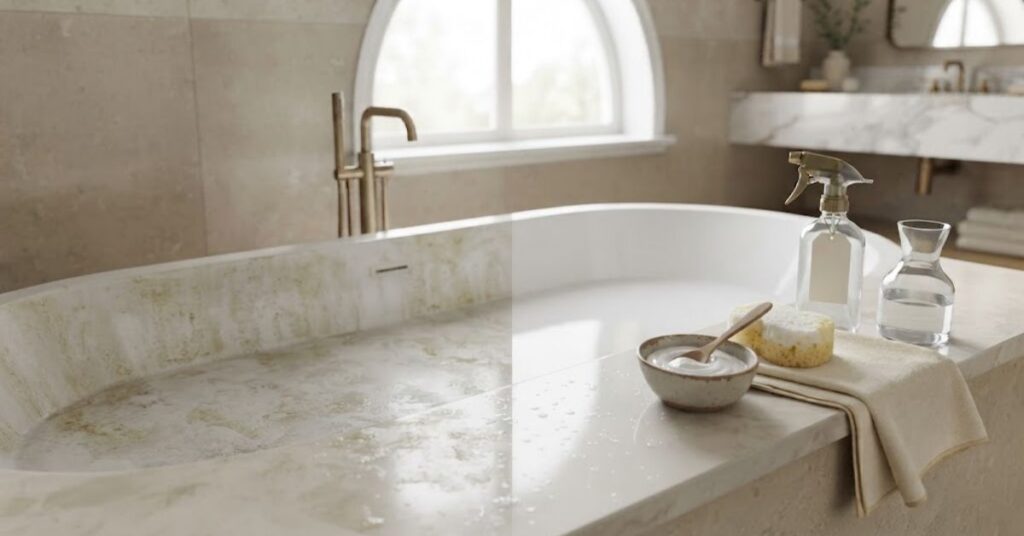
Yellow stains can develop from soap residue, hard water, aging finishes, or other buildup.
Start with a gentle cleaning solution rather than immediately reaching for a strong chemical.
Apply a baking-soda paste to the stained area and allow it to sit for several minutes. Gently wipe and rinse.
If the stain remains, use a bathtub-safe commercial stain remover appropriate for your tub material.
Persistent discoloration may not be surface dirt. In older tubs, the finish itself can become discolored or damaged.
How to Remove Hard-Water Stains From a Bathtub
Hard-water stains are often white, gray, chalky, or cloudy.
For mild deposits, a diluted vinegar solution can help loosen mineral buildup on compatible surfaces.
Spray the affected area and allow it to sit briefly. Then wipe with a soft sponge.
For thicker mineral deposits, repeat the process rather than applying excessive pressure.
A plastic scraper designed for delicate surfaces can sometimes help with stubborn buildup, but use extreme care to avoid scratching.
How to Clean Around the Bathtub Drain
The drain area can collect hair, soap residue, and grime.
First, remove visible hair and debris.
Then apply your bathtub-safe cleaner around the drain and surrounding surface. Let it sit briefly before wiping with a small soft brush or old toothbrush.
For the drain itself, remove the drain cover if it is designed to be removed and clean underneath it.
Never pour random chemical mixtures down the drain.
How to Clean Bathtub Grout and Caulk
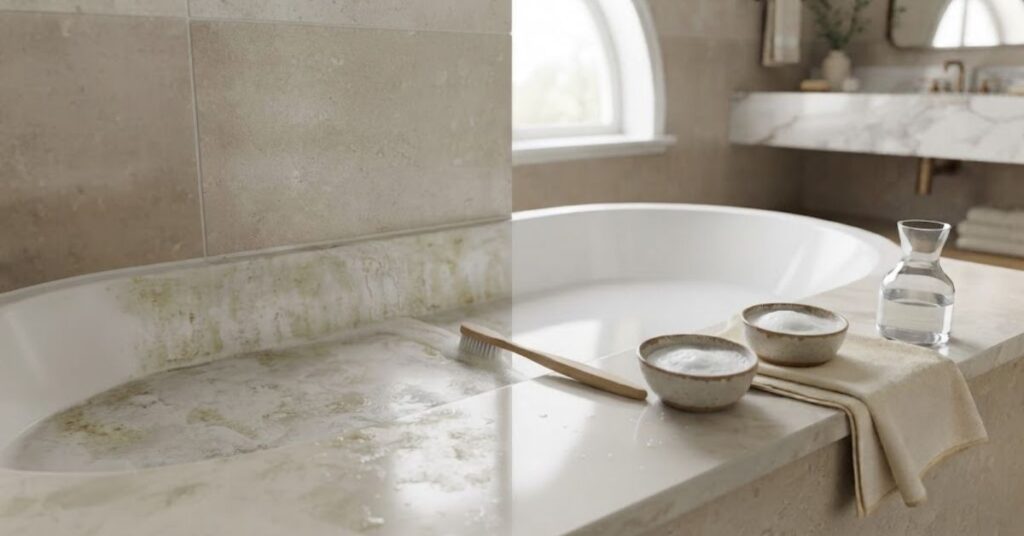
Grout and caulk can become dirty faster than the smooth bathtub surface.
Use a soft toothbrush or small cleaning brush to gently clean these areas.
For everyday grime, warm water and dish soap may be enough.
If you notice persistent black or pink discoloration, determine whether you’re dealing with mold, mildew, or another type of buildup before choosing a cleaning product.
Do not aggressively scrub damaged caulk. If the caulk is cracked, peeling, or permanently discolored, replacing it may be more effective than trying to clean it.
How to Clean a Fiberglass Bathtub
Fiberglass can scratch relatively easily, so gentle cleaning is important.
Use:
- Warm water
- Mild dish soap
- Soft sponge
- Microfiber cloth
Avoid abrasive scouring pads and harsh powders unless the manufacturer specifically recommends them.
For stubborn buildup, allow a suitable cleaner to soak for the recommended amount of time before gently wiping it away.
How to Clean an Acrylic Bathtub
Acrylic tubs also benefit from non-abrasive cleaning.
Use a mild cleaner and a soft microfiber cloth or sponge.
Avoid rough brushes and abrasive cleaning products because they can create tiny scratches that make the surface appear dull.
Always follow the care instructions supplied with your bathtub.
How to Clean a Porcelain Bathtub
Porcelain can generally tolerate more cleaning than acrylic, but you should still avoid unnecessary abrasion.
Start with mild soap and warm water.
For stains that remain, use a suitable bathtub cleaner according to its label.
If you have an older porcelain tub, be especially careful because the finish may already be worn.
How to Make Your Bathtub Easier to Clean
The best way to avoid heavy scrubbing is to prevent buildup in the first place.
Rinse the Tub After Bathing
After using the bathtub, rinse the walls and bottom with clean water.
This removes some soap and body-product residue before it dries.
Wipe the Surface
Keep a microfiber cloth nearby and quickly wipe the tub after use.
This takes less than a minute and can dramatically reduce buildup over time.
Keep Products Off the Tub Floor
Instead of leaving bottles directly on the bathtub floor, use a shower caddy or wall-mounted organizer.
This reduces the areas where soap residue and standing water collect.
Improve Bathroom Ventilation
Turn on the bathroom exhaust fan during bathing and leave it running for a while afterward.
If possible, open a window or door to allow moisture to escape.
Lower humidity can help reduce mildew-related problems.
Common Bathtub Cleaning Mistakes to Avoid
Using Too Much Cleaner
More cleaner doesn’t necessarily mean a cleaner bathtub.
Excess product can leave behind residue and may make rinsing more difficult.
Scrubbing Too Aggressively
Hard scrubbing can scratch or dull certain bathtub materials.
Let the cleaning solution do more of the work.
Using Abrasive Tools
Steel wool and rough scouring pads can damage delicate surfaces.
Choose a soft sponge or microfiber cloth instead.
Mixing Cleaning Products
Never mix household cleaning chemicals unless the product instructions specifically say the combination is safe.
In particular, never mix bleach with vinegar or ammonia.
Ignoring the Manufacturer’s Instructions
Different bathtub materials require different care.
When in doubt, check the manufacturer’s cleaning recommendations.
How to Keep a Bathtub Clean Longer
Once you’ve cleaned the tub, maintaining it becomes much easier.
Try this simple routine:
After every bath or shower:
Rinse away visible soap and residue.
A few times per week:
Quickly wipe the surface with a microfiber cloth.
Once a week:
Perform a more thorough cleaning.
Every few weeks:
Check the drain, caulk, corners, and hard-to-reach areas.
This small routine prevents grime from becoming heavily embedded.
Can You Clean a Bathtub Without Scrubbing?
Yes. While some stubborn stains may eventually require gentle scrubbing, you can significantly reduce the amount of physical effort by using the right cleaner and allowing it enough contact time.
The most important trick is not to rush the cleaning process.
Spray or apply the appropriate cleaner, let it work safely, then wipe instead of immediately attacking the surface with a brush.
This approach is especially useful for routine cleaning when the bathtub isn’t heavily stained.
FAQs
What is the easiest way to clean a bathtub?
The easiest method is to rinse the tub with warm water, apply a bathtub-safe cleaner, let it sit for the recommended time, gently wipe with a soft sponge, and rinse thoroughly.
How do you clean a bathtub without scrubbing?
Use a suitable cleaner and allow it enough time to loosen soap scum and grime. After soaking, most light buildup should wipe away with much less effort.
Can baking soda clean a bathtub?
Yes, baking soda can help with mild grime and soap scum. Make a paste with water, apply it to the affected area, let it sit briefly, and gently wipe before rinsing.
Can I use vinegar to clean my bathtub?
Vinegar can help remove mineral deposits on some bathtub materials. However, it should not be used on acid-sensitive surfaces such as natural stone. Always check your tub’s care instructions first.
How often should I deep clean my bathtub?
For most homes, a deeper cleaning every few weeks is reasonable, while a lighter cleaning should be done weekly or more frequently depending on usage.
Final Thoughts
Learning how to clean a bathtub without scrubbing too much is mostly about changing your cleaning strategy.
Instead of relying on physical effort, start by choosing a bathtub-safe cleaner, applying it evenly, and giving it enough time to loosen the buildup. Then use a soft sponge or microfiber cloth to wipe away the grime.
Regular rinsing, quick wiping, proper ventilation, and keeping products organized can make future cleaning even easier.
With a simple routine, you can keep your bathtub fresh and clean without spending hours scrubbing it every week.










Leave a Reply