
Accidentally getting paint on your favorite shirt, jeans, pants, or other clothing can be frustrating. Whether you were painting a room, working on a DIY project, or helping someone with an art project, a small splash of paint can quickly turn into a stubborn stain.
The good news is that you do not always need to throw the clothing away. With the right treatment, many fresh and dried paint marks can be removed at home.
In this guide, you will learn how to remove paint stains from clothes using simple household supplies. We will cover water-based paint, acrylic paint, latex paint, and oil-based paint, along with practical methods for both fresh and dried stains.
At True Housekeeping, our goal is to make everyday cleaning easier with practical solutions you can actually use at home. Just like removing other difficult clothing stains, paint removal works best when you identify the stain and treat it correctly instead of immediately throwing the garment into the washing machine.
Can Paint Stains Be Removed From Clothes?
Yes, many paint stains can be removed from clothing, especially when you treat them while they are still fresh.
However, the result depends on several factors, including:
- The type of paint
- Whether the paint is wet or completely dried
- The type of fabric
- How long the stain has been on the clothing
- Whether the garment has already been washed or dried
- The cleaning product you use
Fresh water-based paint is generally easier to remove than old, dried oil-based paint. Delicate fabrics may also require gentler treatment than sturdy cotton or denim.
The most important rule when you want to remove paint stains from clothes is simple: do not put the stained garment in the dryer until the stain is gone.
Heat can make some stains much harder to remove.
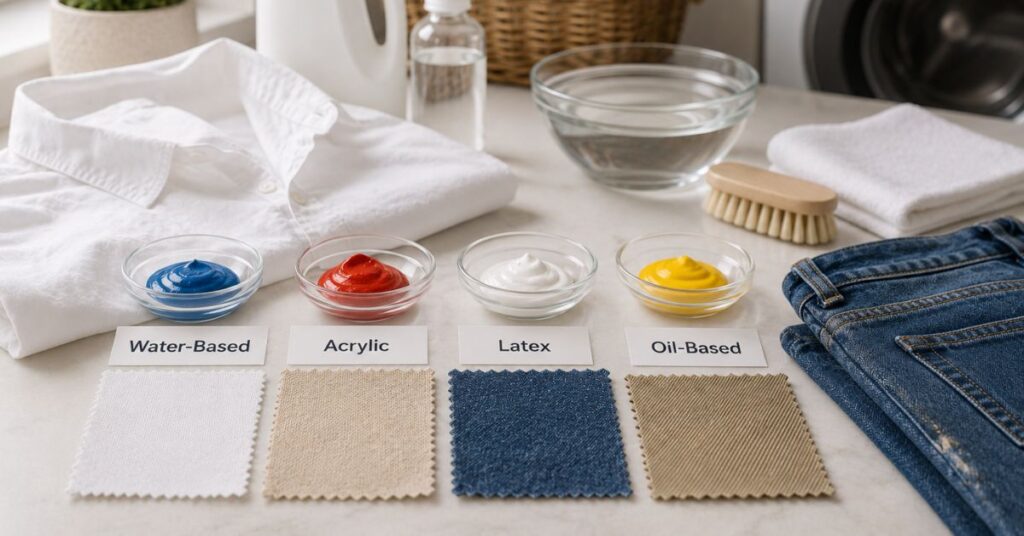
Step 1: Identify the Type of Paint
Before choosing a cleaning method, check what type of paint caused the stain.
This matters because different paints have different formulas and may require different treatments.
Water-Based Paint
Water-based paints include many household wall paints and some craft paints. They are usually easier to clean, especially when the stain is fresh.
You can often start with:
- Liquid laundry detergent
- Dish soap
- Cold or lukewarm water
- A soft toothbrush or cleaning brush
Acrylic Paint
Acrylic paint is commonly used for crafts, artwork, and DIY projects. Once it dries, it can become much more difficult to remove.
For fresh acrylic paint, soap and water may work. Dried acrylic paint may require a stronger treatment, such as rubbing alcohol, depending on the fabric.
Latex Paint
Latex paint is commonly used for interior and exterior home painting. Fresh latex paint can often be treated with detergent and water.
The sooner you act, the better your chances of removing the mark completely.
Oil-Based Paint
Oil-based paint is more challenging because it does not dissolve easily in water.
Removing oil-based paint may require a suitable solvent or paint thinner. However, solvents can damage certain fabrics, so always check the clothing care label and test the product on an inconspicuous area first.
Step 2: Check the Clothing Care Label
Before you begin trying to remove paint stains from clothes, look at the care label.
The label can tell you whether the garment can safely be washed, bleached, dry-cleaned, or exposed to certain cleaning products.
Pay extra attention to delicate materials such as:
- Silk
- Wool
- Rayon
- Velvet
- Suede
- Some synthetic fabrics
If the clothing is expensive, delicate, or labeled “dry clean only,” professional cleaning may be the safest choice.
For ordinary cotton shirts, jeans, towels, and other washable fabrics, you can usually try a home treatment.
Step 3: Remove Excess Wet Paint
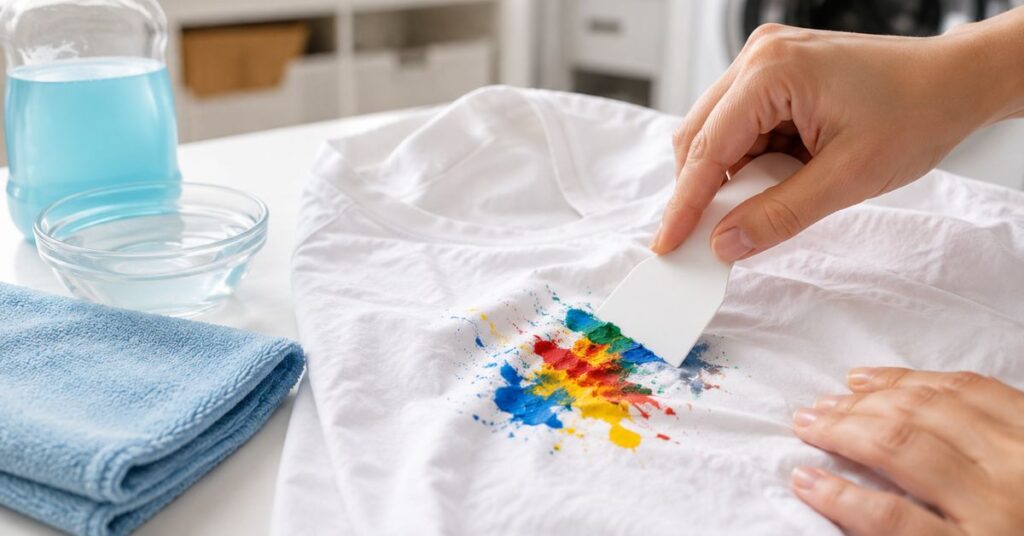
If the paint is still wet, act quickly.
Do not rub the stain aggressively. Rubbing can spread the paint deeper into the fabric fibers and create a larger stain.
Instead, carefully remove excess paint from the surface.
What You Need
- A dull spoon or old plastic card
- Paper towel or clean cloth
- Cold or lukewarm water
- Liquid laundry detergent
How to Do It
- Carefully scrape away excess paint with a dull spoon or plastic card.
- Avoid pushing the paint deeper into the fabric.
- Place the stained area under running water.
- If possible, rinse from the back of the fabric so the water pushes the paint away from the fibers.
- Apply a small amount of liquid laundry detergent.
- Gently work the detergent into the stain with your fingers.
- Let it sit for several minutes.
- Rinse thoroughly.
If the stain is still visible, repeat the process before washing the garment.
This simple approach is often one of the best ways to remove paint stains from clothes when the paint has not dried yet.
Method 1: Dish Soap and Water
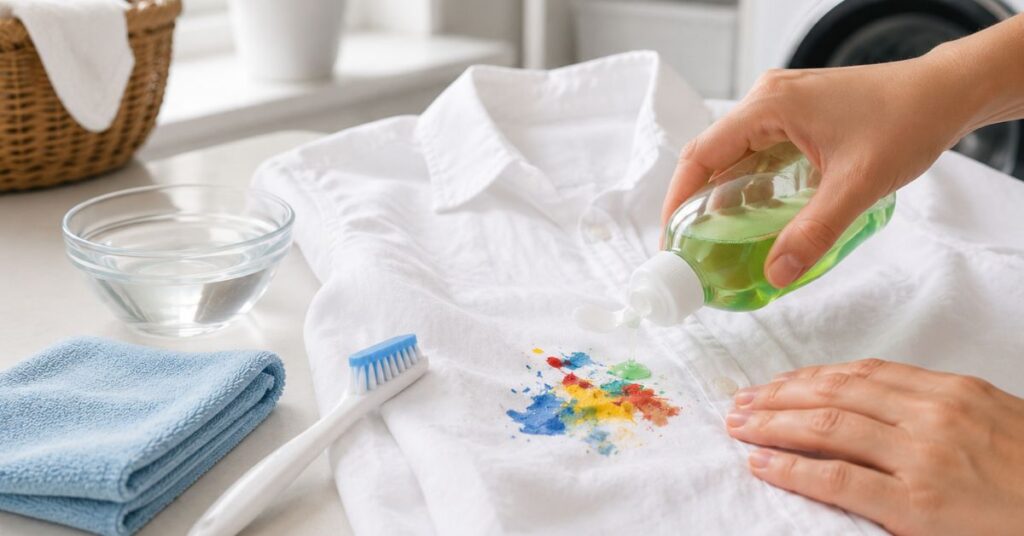
Dish soap is one of the easiest household solutions for treating fresh water-based paint stains.
Dish soap is designed to break down greasy and oily residues, and it can also help loosen certain fresh paint residues from washable fabrics.
What You Need
- Mild dish soap
- Lukewarm water
- Soft toothbrush
- Clean towel
Instructions
1. Remove excess paint.
Use a spoon or plastic card to gently lift away as much wet paint as possible.
2. Rinse the fabric.
Hold the stained area under running water. Rinse from the back whenever possible.
3. Apply dish soap.
Put a small amount of mild dish soap directly on the stain.
4. Gently work the soap in.
Use your fingertips or a soft toothbrush. Avoid aggressive scrubbing.
5. Let it sit.
Leave the soap on the stain for about 5 to 10 minutes.
6. Rinse.
Rinse the area thoroughly with water.
7. Check before drying.
If the paint is still visible, repeat the treatment.
Only place the garment in the dryer after you are satisfied that the stain has disappeared.
Method 2: Liquid Laundry Detergent
Liquid laundry detergent is another useful option for fresh paint stains on washable clothing.
This method is particularly convenient because you probably already have laundry detergent at home.
Step-by-Step Instructions
Start by removing any excess paint from the surface of the fabric.
Next, rinse the stain with water. Then apply a small amount of liquid laundry detergent directly to the affected area.
Gently massage the detergent into the fabric with your fingers or use a soft toothbrush for sturdy fabrics.
Allow the detergent to work for approximately 10 minutes.
Rinse the clothing and inspect the stain under good lighting.
If you can still see paint, repeat the process before washing.
After the stain has been treated, wash the garment according to its care label.
Remember that removing paint stains from clothes is much easier when you check the garment before putting it in the dryer.
Method 3: Rubbing Alcohol for Acrylic Paint
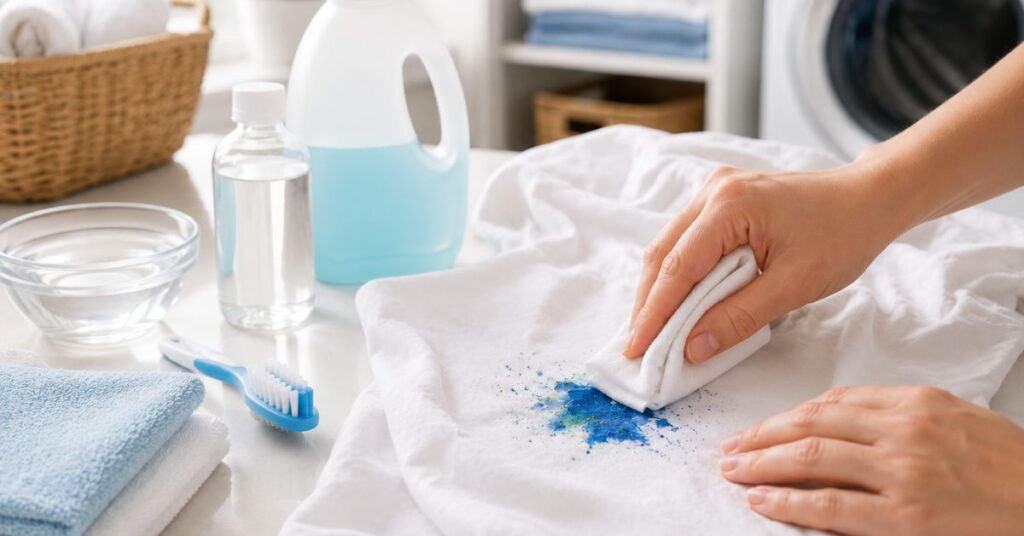
Rubbing alcohol can be helpful for some acrylic paint stains, particularly when the paint has started to dry.
However, you should always test it first because alcohol may affect certain dyes, finishes, or synthetic fabrics.
Before You Start
Check the care label and test a small amount of rubbing alcohol on an inside seam or another hidden area.
Wait a few minutes and check for:
- Color fading
- Fabric damage
- Discoloration
- Changes in texture
If there is no visible damage, you can continue carefully.
How to Use Rubbing Alcohol
- Place a clean towel underneath the stained section.
- Apply a small amount of rubbing alcohol to a clean cloth or cotton pad.
- Gently dab the paint stain.
- Avoid aggressively rubbing the fabric.
- As the paint loosens, blot the area with a clean section of the cloth.
- Rinse the garment thoroughly.
- Apply liquid laundry detergent.
- Wash according to the care label.
This method can be particularly useful when learning how to remove paint stains from clothes after acrylic paint has partially dried.
Why You Should Treat Paint Stains Quickly
Time can make paint stains significantly harder to remove.
Fresh paint has not completely bonded with the fabric fibers, so there is usually a better opportunity to loosen it.
Once paint dries, it can form a hard layer over or within the fibers. At that point, simply washing the garment may not be enough.
For this reason, keep a few basic cleaning supplies nearby when doing home improvement or craft projects.
A useful stain-treatment kit can include:
- Liquid laundry detergent
- Mild dish soap
- Clean microfiber cloths
- Soft toothbrush
- Old towels
- Plastic scraper
- Rubbing alcohol
Having these supplies ready can help you react quickly when an accident happens.
Mistakes to Avoid When Removing Paint
Knowing what not to do is just as important as knowing how to treat the stain.
Do Not Immediately Use the Dryer
The heat can make some remaining paint residue more difficult to remove.
Do Not Scrub Aggressively
Hard scrubbing can spread the paint and damage the fibers.
Do Not Mix Cleaning Chemicals
Never mix different cleaning products unless the manufacturer specifically says they are safe to combine.
Do Not Use Strong Solvents Without Testing
Paint removers and solvents can damage clothing, especially delicate fabrics.
Do Not Ignore the Care Label
The fabric manufacturer’s instructions should always be considered before using a new cleaning product.
What If the Paint Has Already Dried?
Dried paint requires a different approach.
First, gently scrape away the hardened surface using a dull plastic scraper or spoon. Do not use a sharp blade because it can cut or weaken the fabric.
After removing as much dried paint as possible, identify the paint type.
For water-based paint, detergent and careful soaking may help loosen the remaining residue.
For acrylic paint, rubbing alcohol may be useful on some washable fabrics after testing.
For oil-based paint, a suitable solvent may be necessary, but extra care is required because solvents can damage clothing.
The key is to work slowly rather than trying to remove everything in one aggressive step.
Method 4: Remove Dried Paint With Rubbing Alcohol
Rubbing alcohol can help loosen certain dried water-based and acrylic paint stains from washable fabrics.
However, always test it first on a hidden part of the garment.
What You Need
- Rubbing alcohol
- Clean white cloth
- Soft toothbrush
- Liquid laundry detergent
- Lukewarm water
- Old towel
Step-by-Step Instructions
1. Scrape off the dried surface.
Use a dull spoon, plastic scraper, or old bank card to gently lift away loose pieces of dried paint.
Do not use a sharp knife because it can damage the fabric.
2. Place a towel underneath.
Put an old clean towel behind the stained area. This helps absorb loosened paint and prevents it from transferring to another part of the garment.
3. Apply rubbing alcohol.
Dampen a clean cloth with a small amount of rubbing alcohol.
Gently dab the paint rather than aggressively rubbing it.
4. Allow the paint to loosen.
Give the alcohol a few minutes to work. You may notice the paint becoming softer or transferring onto the cloth.
5. Gently brush the area.
For sturdy fabrics such as cotton or denim, use a soft toothbrush to loosen the remaining residue.
6. Rinse thoroughly.
Rinse the treated area with clean water.
7. Apply laundry detergent.
Add a small amount of liquid laundry detergent and gently work it into the remaining stain.
8. Wash normally.
Wash the garment according to its care label.
Before drying, inspect the area carefully.
If the stain remains, repeat the treatment.
This is one of the useful approaches for people wondering how to remove paint stains from clothes after acrylic paint has dried.
Method 5: Use Laundry Detergent for Latex Paint
Latex paint is usually water-based, making it easier to treat than oil-based paint.
If the latex paint is still slightly soft, laundry detergent may be enough to remove it.
Follow These Steps
First, remove as much excess paint as possible using a plastic scraper.
Next, rinse the fabric from the back with lukewarm water.
Apply liquid laundry detergent directly to the stain.
Gently massage the detergent into the affected area using your fingertips.
Let it sit for approximately 10 to 15 minutes.
Rinse thoroughly.
If the paint is still visible, repeat the process before washing.
For a stubborn latex paint stain, you can carefully use a soft toothbrush on durable fabric.
Avoid excessive scrubbing because it may spread the paint or damage the fibers.
Important Tip
Do not use hot water automatically.
Check the garment’s care label first. Some fabrics can shrink, fade, or become damaged by high temperatures.
Method 6: Remove Acrylic Paint From Clothes
Acrylic paint is popular for crafts, painting projects, school activities, and DIY decorations.
Fresh acrylic paint can often be treated with soap and water. Dried acrylic paint is more difficult because it forms a firm layer.
If you need to remove paint stains from clothes caused by acrylic paint, start by removing the dried surface.
Step 1: Scrape Gently
Use a dull plastic scraper to remove loose paint.
Work slowly and avoid pulling at the fabric.
Step 2: Apply Rubbing Alcohol
After testing the fabric, apply a small amount of rubbing alcohol to the paint.
Blot gently with a clean cloth.
As the paint begins to soften, continue blotting with a clean section of the cloth.
Step 3: Add Detergent
Apply liquid laundry detergent to the treated area.
Gently work it into the fabric.
Allow it to sit for several minutes.
Step 4: Rinse
Rinse thoroughly with water.
Step 5: Wash
Wash the garment according to the care instructions.
Do not dry it until you have checked that the paint has disappeared.
If you can still see the stain, repeat the process.
Method 7: How to Remove Oil-Based Paint From Clothes
Oil-based paint is generally more difficult to remove than water-based paint.
The biggest mistake is assuming that ordinary water and detergent will completely dissolve it.
Depending on the paint product, a suitable paint solvent or thinner may be required.
However, this approach carries more risk.
Some solvents can:
- Damage synthetic fibers
- Remove fabric dye
- Leave a strong odor
- Affect fabric finishes
- Weaken certain materials
Because of this, check the paint manufacturer’s cleaning instructions and the garment care label before using a solvent.
A Safer First Approach
Before reaching for a strong solvent, carefully remove as much dried paint as possible with a dull scraper.
Then place an absorbent towel underneath the stain.
If the garment is washable and the care instructions allow it, apply a small amount of an appropriate cleaning product to a hidden area first.
Wait and check for discoloration or damage.
If the fabric reacts badly, stop.
For expensive clothing, delicate fabrics, or valuable garments, professional dry cleaning is usually the safer option.
How to Remove Paint Stains From Jeans
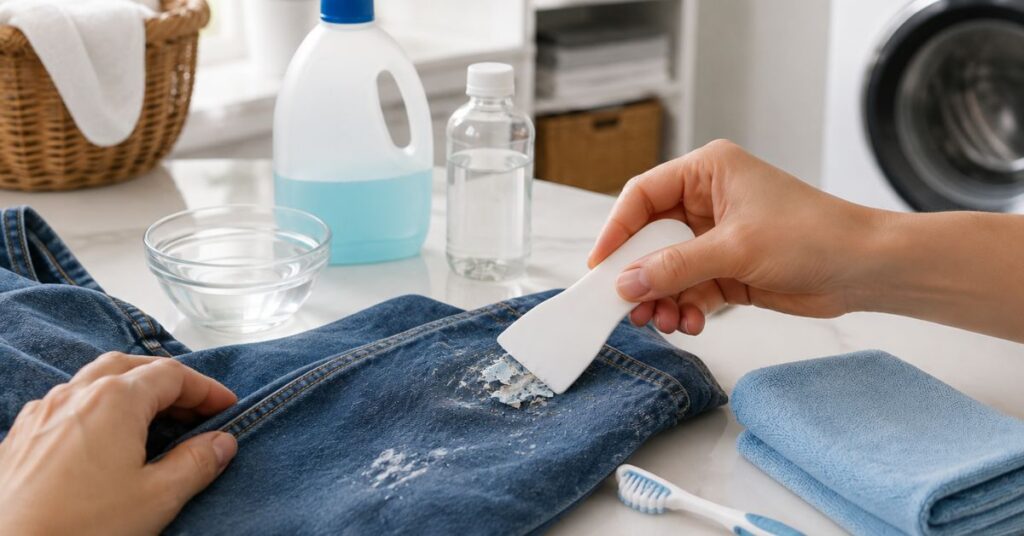
Jeans are usually made from durable cotton denim, which can tolerate more careful scrubbing than delicate fabrics.
However, denim can still fade or become damaged by strong chemicals.
For Fresh Paint
Start by scraping away excess paint.
Rinse the stain from the back.
Apply liquid laundry detergent or mild dish soap.
Gently work the product into the stain.
Rinse and repeat if necessary.
For Dried Paint
First scrape away loose dried paint.
For acrylic or some water-based paints, rubbing alcohol may help loosen the residue after testing it on an inconspicuous area.
Once the paint has softened, gently brush the area with a soft toothbrush.
Apply detergent and wash according to the care label.
Check the stain before putting the jeans in the dryer.
How to Remove Paint From Cotton Clothes
Cotton is one of the most common clothing fabrics, and many cotton garments can tolerate gentle stain treatments.
For fresh water-based paint:
- Remove excess paint.
- Rinse from the back.
- Apply liquid detergent.
- Gently work the detergent into the stain.
- Rinse.
- Repeat if necessary.
- Wash according to the care label.
For dried acrylic paint, rubbing alcohol may help loosen the residue if the fabric and dye are compatible.
Always perform a spot test first.
If you are dealing with a white cotton garment, you may have additional options depending on the care label and type of paint.
However, never assume that bleach is automatically the best solution. Incorrect use of bleach can damage fabric and cause discoloration.
How to Remove Paint From Polyester
Polyester requires a little more caution because certain solvents can damage synthetic fibers.
For a fresh water-based paint stain, start with mild detergent and water.
Avoid immediately applying strong paint thinner.
If the stain is dried, carefully scrape away the surface first.
Before using rubbing alcohol or another solvent, test a hidden section of the garment.
Look for:
- Color changes
- Melting or distortion
- Texture changes
- Weakening of the fabric
If anything unusual happens, stop the treatment.
When you are unsure how to remove paint stains from clothes made from synthetic materials, a professional cleaner may be the safest option.
How to Remove Paint From a White Shirt
White clothing can make paint stains especially noticeable.
Start with the gentlest method appropriate for the paint type.
For fresh water-based paint, rinse the stain and apply liquid laundry detergent.
For acrylic paint, rubbing alcohol may help after a spot test.
For dried paint, gently scrape away the surface before treating the remaining residue.
Do not automatically use chlorine bleach.
Bleach does not work equally well on every type of paint and can damage some fabrics.
Always follow the garment’s care instructions.
How to Remove Paint From Colored Clothes
Colored clothing requires extra caution because some cleaning products can cause fading.
Before using alcohol, stain removers, solvents, or other strong products, test a small hidden area.
If the color transfers onto your testing cloth, stop using that product.
When treating colored clothing, gentle detergent and water should generally be your first choice for fresh water-based paint.
The goal is not simply to remove paint stains from clothes but to remove the stain without creating a larger discoloration.
What If the Paint Stain Has Been Washed Already?
Sometimes you discover the stain after the garment has already gone through the washing machine.
Do not panic.
First, allow the garment to cool completely if it has been through a dryer.
Inspect the stain.
If paint remains, do not put it through another drying cycle.
Instead:
- Identify the paint type.
- Gently scrape away any hardened residue.
- Test an appropriate treatment.
- Apply the treatment carefully.
- Rinse thoroughly.
- Repeat if necessary.
- Wash again according to the care label.
- Air-dry while checking the stain.
A stain that has already been heat-dried may require more patience, but repeated gentle treatments can sometimes improve the result.
Can Vinegar Remove Paint From Clothes?
Vinegar is a popular household cleaning ingredient, but it is not a universal paint remover.
It may help with some general cleaning tasks, but it should not be considered the primary solution for every paint stain.
Paint chemistry varies considerably.
Using vinegar on the wrong type of paint may do little or nothing.
If you are trying to remove paint stains from clothes, first identify the paint and choose a treatment designed for that type of stain.
You can also read more about situations where vinegar should be avoided in household cleaning in a related True Housekeeping article:
Things You Should Never Clean With Vinegar
Can Baking Soda Remove Paint Stains?
Baking soda is useful for many household cleaning tasks, but it is not a powerful paint solvent.
It may provide mild physical cleaning when combined with another suitable cleaning method, but it should not be expected to dissolve dried acrylic or oil-based paint.
For paint stains, identifying the paint type is more important than simply choosing a popular household ingredient.
Should You Use Acetone or Nail Polish Remover?
Acetone can dissolve certain paints, but it can also damage fabrics, finishes, dyes, and synthetic materials.
For that reason, it should not be your first choice for ordinary clothing.
If a product contains acetone, carefully read the garment care label and product instructions before using it.
Never assume that because acetone removes paint from a hard surface, it will be safe for clothing.
When the garment is valuable or delicate, professional cleaning is a better option.
How to Know When to Stop Cleaning
Sometimes repeated treatment can do more damage than the original stain.
Stop if you notice:
- Fabric discoloration
- Fraying
- Weak fibers
- A chemical smell that will not disappear
- Texture changes
- Color bleeding
The goal of stain removal is to restore the garment, not damage it while trying to make it perfect.
If several gentle treatments have failed, professional cleaning may be the better choice.
Important Safety Tips
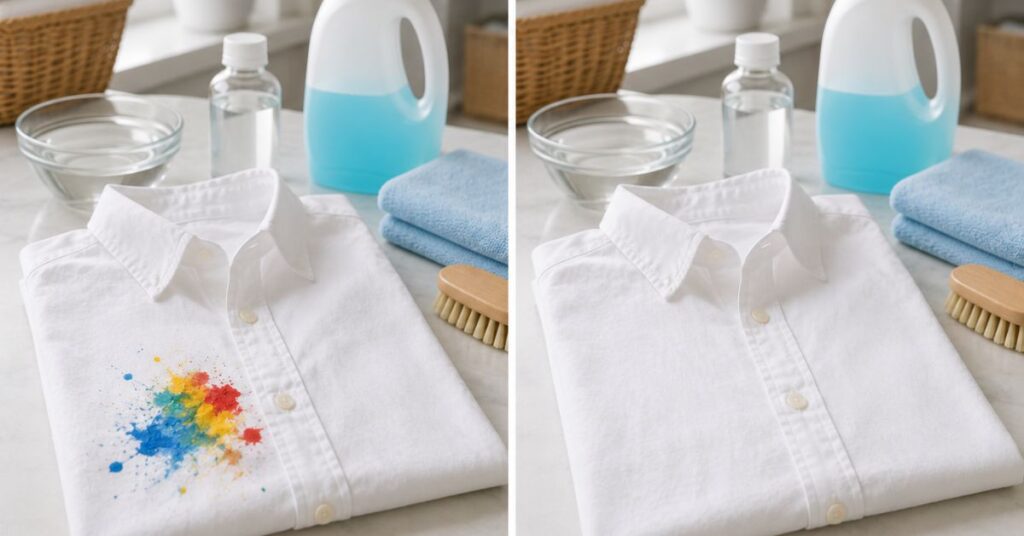
When treating paint stains at home, follow these precautions:
Work in a Ventilated Area
Some cleaning products and paint solvents produce strong fumes.
Wear Gloves
Gloves can protect your skin from cleaning products and paint residue.
Keep Solvents Away From Flames
Many solvents are flammable.
Never use them near candles, gas burners, cigarettes, heaters, or other ignition sources.
Never Mix Cleaning Products
Combining household chemicals can produce dangerous fumes.
Use one cleaning product at a time and rinse the fabric thoroughly before trying another treatment.
Follow Product Instructions
If you are using a commercial paint remover, always follow the manufacturer’s directions.
Common Mistakes That Make Paint Stains Worse
Knowing what to avoid can be just as important as knowing how to remove paint stains from clothes.
1. Putting the Clothes in the Dryer Too Soon
One of the biggest mistakes is drying a garment while paint is still visible.
The heat from a dryer can make remaining residue harder to remove.
Always inspect the stain after washing and before drying.
If you can still see paint, treat it again.
2. Scrubbing Too Hard
It may be tempting to scrub a paint stain aggressively, especially when the paint has dried.
However, hard scrubbing can:
- Spread the stain
- Push paint deeper into fibers
- Damage the fabric
- Cause fuzzing
- Make the affected area look worn
Instead, use gentle dabbing, scraping, or brushing depending on the fabric.
3. Using the Wrong Solvent
Not every paint remover is safe for clothing.
A solvent that works perfectly on a wall, floor, or metal surface could damage your shirt or jeans.
Always check the product instructions and test it on a hidden part of the garment first.
4. Ignoring the Fabric Type
A sturdy pair of jeans and a delicate silk blouse should not be treated the same way.
Before trying to remove paint stains from clothes, check the care label.
If the garment is delicate or expensive, professional cleaning may be the safest option.
5. Using Too Many Products at Once
Do not pour several cleaning products onto the same stain.
Mixing household chemicals can create dangerous fumes or damage the fabric.
Use one treatment at a time and rinse thoroughly before trying another method.
6. Using Hot Water Automatically
Hot water is not always better for stain removal.
Depending on the paint and fabric, hot water may make the situation worse or damage the garment.
Start with the temperature recommended on the care label.
Paint Stain Removal Emergency Checklist
If you accidentally spill paint on your clothes, don’t panic.
Use this quick checklist:
Step 1: Stop What You Are Doing
Deal with the stain before continuing your painting or craft project.
Step 2: Remove Excess Paint
Use a dull spoon or plastic card to lift excess paint.
Step 3: Identify the Paint
Check the paint container if possible.
Determine whether it is:
- Water-based
- Acrylic
- Latex
- Oil-based
Step 4: Check the Fabric
Read the garment care label.
Step 5: Test Your Cleaning Product
Test the product on an inconspicuous area first.
Step 6: Treat the Stain
Use the appropriate method for the paint type.
Step 7: Rinse Thoroughly
Remove cleaning residue before washing.
Step 8: Wash the Garment
Follow the garment’s care instructions.
Step 9: Inspect Before Drying
This is extremely important.
If the paint is still visible, repeat the treatment.
Step 10: Air-Dry if Necessary
Air-drying makes it easier to continue treatment if any residue remains.
How to Prevent Paint Stains on Clothes
The easiest way to remove paint stains from clothes is to prevent them in the first place.
When painting at home, take a few simple precautions.
Wear Old Clothing
Wear clothes that you do not mind getting dirty.
An old T-shirt and pair of pants can protect your everyday wardrobe from accidental splashes.
Use a Painting Apron
A washable apron can provide an additional layer of protection.
This is particularly useful when painting furniture, walls, crafts, or artwork.
Cover Nearby Surfaces
Use:
- Drop cloths
- Plastic sheets
- Old towels
- Newspapers
- Protective covers
Covering the floor and nearby furniture can also reduce the amount of cleaning required after a project.
Keep Cleaning Supplies Nearby
Before starting a painting project, keep a few supplies within reach:
- Paper towels
- Old microfiber cloths
- Water
- Mild dish soap
- Laundry detergent
- Disposable gloves
If a small accident happens, you can treat it immediately instead of allowing the paint to dry.
How Long Does It Take to Remove Paint From Clothes?
There is no single answer because the time depends on the type of paint, fabric, and age of the stain.
A fresh water-based paint mark may respond to treatment within minutes.
A dried acrylic stain may require several treatment cycles.
Oil-based paint can be considerably more difficult and may require specialized cleaning.
Instead of focusing on a specific number of minutes, concentrate on checking the fabric between each step.
Never leave a chemical treatment on clothing longer than the product instructions recommend.
Can You Remove Completely Dried Paint From Clothes?
Yes, sometimes.
However, completely dried paint can be much harder to remove than fresh paint.
Start by gently scraping away the hardened surface.
Then identify the paint type and choose an appropriate treatment.
For some acrylic and water-based paints, rubbing alcohol or detergent may help loosen the remaining residue.
Oil-based paint can be more challenging and may require a suitable solvent or professional cleaning.
If the paint has been present for a long time or has already been heat-dried, you may not be able to remove every trace.
The goal should be to improve the garment without damaging the fabric.
Can You Remove Paint From Clothes Without Bleach?
Yes.
In fact, bleach is not necessary for many paint stains.
Depending on the paint type, you may be able to use:
- Water
- Liquid laundry detergent
- Dish soap
- Rubbing alcohol
- A suitable commercial stain remover
The best option depends on the paint and fabric.
If you are trying to remove paint stains from clothes without bleach, start with the gentlest suitable method and increase the strength only when necessary.
Never assume that a stronger chemical will produce a better result.
Can Dish Soap Remove Dried Paint?
Dish soap works best on fresh or partially dried water-based paint.
It may help loosen some residue, but it is not a powerful solvent for every type of dried paint.
For completely dried acrylic or oil-based paint, another treatment may be required.
Always identify the paint before deciding which cleaning product to use.
Is Rubbing Alcohol Safe for All Clothes?
No.
Rubbing alcohol can affect certain dyes, finishes, and synthetic materials.
Always perform a spot test before using it.
Apply a small amount to an inconspicuous area and check for:
- Fading
- Color transfer
- Fabric damage
- Texture changes
If you notice any reaction, do not continue.
Should You Scrape Dried Paint?
Yes, but only carefully.
A dull plastic scraper, spoon, or old card can help lift hardened paint from the surface.
Avoid sharp blades because they can cut fibers.
Never pull aggressively on the fabric.
The purpose of scraping is simply to remove loose surface paint before applying the appropriate treatment.
What Should You Do If Paint Gets on Delicate Clothing?
Delicate clothing requires extra caution.
If the garment is made from silk, wool, velvet, rayon, or another sensitive material, avoid experimenting with strong solvents.
Instead:
- Remove excess paint gently.
- Do not rub the stain.
- Check the care label.
- Avoid heat.
- Take the garment to a professional cleaner if necessary.
For an expensive or sentimental garment, professional cleaning is often worth the cost.
A Simple Paint-Stain Removal Routine
If you want a simple routine to remember, use this:
SCRAPE → RINSE → TREAT → RINSE → WASH → CHECK → DRY
Scrape
Remove excess wet or dried paint carefully.
Rinse
Use the appropriate water temperature and rinse from the back when possible.
Treat
Apply the cleaning method appropriate for the paint type.
Rinse
Remove the cleaning product and loosened paint.
Wash
Wash according to the garment care label.
Check
Inspect the garment before drying.
Dry
Only dry the garment once the stain is gone or you are satisfied with the result.
This simple routine can make it easier to remember how to remove paint stains from clothes without rushing through the process.
When You Should Call a Professional Cleaner
Home treatment is not always the best option.
Consider professional cleaning when:
- The garment is expensive
- The fabric is delicate
- The garment is labeled “dry clean only”
- The paint is oil-based
- A strong solvent is required
- The stain covers a large area
- Several home treatments have failed
- The garment has sentimental value
Professional cleaners have specialized equipment and experience with difficult stains.
Trying multiple strong chemicals at home could cause permanent damage.
Other Difficult Clothing Stains
Paint is not the only stubborn stain you may encounter around the house.
If you regularly deal with clothing stains, you may also find these True Housekeeping cleaning guides useful:
Keeping a small collection of practical stain-removal guides can make everyday laundry problems much easier to handle.
FAQs
1. What is the fastest way to remove fresh paint from clothes?
The fastest approach is usually to act immediately. Remove excess paint, rinse the fabric, and apply an appropriate detergent or dish soap for fresh water-based paint.
Avoid rubbing aggressively and do not put the garment in the dryer until you have checked the stain.
2. How do you remove dried paint from clothes?
First, gently scrape away the hardened paint. Then identify the type of paint and use a suitable treatment.
For some acrylic paints, rubbing alcohol may help after testing the fabric. Water-based paints may respond to detergent and careful washing.
3. Can I use rubbing alcohol on colored clothes?
You can use it on some colored fabrics, but always perform a hidden-area test first.
Rubbing alcohol can affect certain dyes, so stop immediately if you notice color transfer or fading.
4. Does laundry detergent remove paint?
Laundry detergent can help remove fresh water-based paint and loosen some paint residue.
However, it may not completely dissolve dried acrylic or oil-based paint.
The type of paint matters.
5. Can paint stains be removed after drying?
Sometimes, yes.
Dried paint is more difficult than fresh paint, but careful scraping followed by an appropriate treatment can improve the result.
Do not aggressively scrub the fabric.
6. Can I put paint-stained clothes in the washing machine?
You can wash many washable garments after treating the paint stain.
However, remove as much paint as possible first and inspect the garment before drying.
7. Does vinegar remove paint from clothing?
Vinegar is not a universal paint remover.
It may not effectively dissolve many types of paint, especially dried acrylic or oil-based paint.
Use a treatment appropriate for the specific paint instead.
8. Is bleach good for removing paint stains?
Not necessarily.
Bleach is not designed to remove every type of paint and can damage or discolor some fabrics.
Always identify the paint and follow the garment care label.
9. What should I do if paint has been dried in the dryer?
Do not continue drying the garment.
Let it cool, gently scrape any hardened paint, identify the paint type, and carefully treat the stain.
Because heat can make stains more stubborn, several gentle treatment cycles may be necessary.
10. What if nothing removes the paint?
If several appropriate treatments have failed, stop before damaging the fabric.
For valuable, delicate, or expensive clothing, take the garment to a professional cleaner and tell them what type of paint caused the stain and which products you have already used.
Final Thoughts
Paint stains can be frustrating, but they do not automatically mean that a garment is ruined.
The most important thing is to act quickly and avoid making the stain worse.
Start by identifying the paint type and checking the clothing care label. Remove excess paint carefully, choose an appropriate treatment, and always test stronger products before applying them to a visible area.
For fresh water-based paint, detergent and water may be enough. Dried acrylic paint may require a more targeted treatment, while oil-based paint often needs extra caution and may be better handled by a professional.
Most importantly, never put a paint-stained garment in the dryer before checking the stain.
If you follow the right steps and work patiently, you have a much better chance of successfully removing paint stains from clothes while protecting the fabric.
At True Housekeeping, we believe everyday cleaning does not have to be complicated. With the right information, simple household supplies, and a little patience, many difficult cleaning problems can be handled more confidently at home.