
Why Washing Bananas Matters More Than You Think
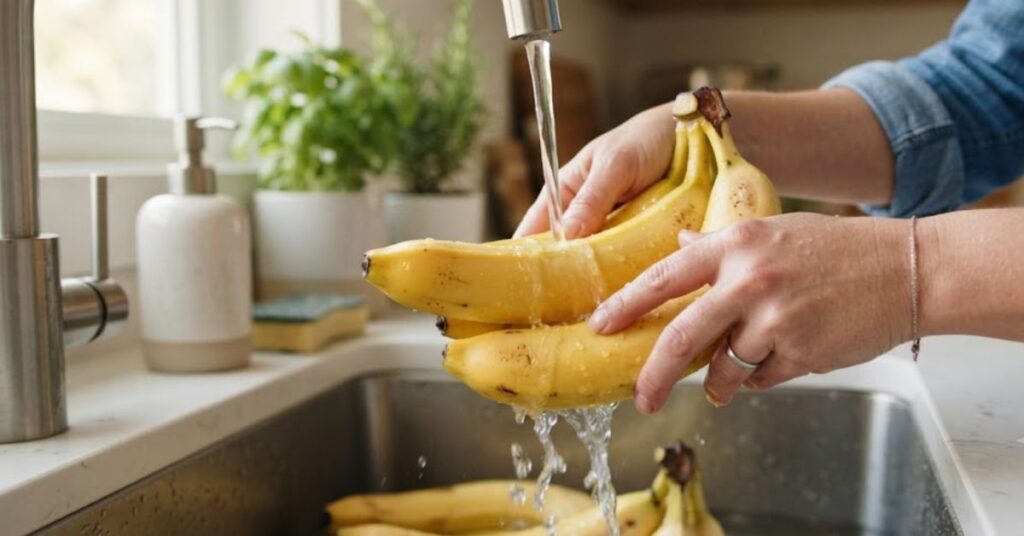
Bananas are one of the most popular fruits in the world. They’re affordable, nutritious, naturally sweet, and incredibly convenient to eat. Most people simply bring bananas home from the grocery store, place them on the kitchen counter, and peel one whenever they’re hungry. It feels like the safest fruit because the edible part is protected by a thick peel.
However, many people never stop to ask an important question: Should you wash bananas before storing or eating them?
The answer may surprise you.
Although you don’t eat the peel itself, the outside of a banana can collect dirt, dust, bacteria, pesticide residue, and germs while it travels from farms to supermarkets and finally into your home. Every time you touch the peel and then handle the fruit, there’s a chance that some of those contaminants can transfer to your hands or even the edible part of the banana.
That’s exactly why you should wash your bananas as soon as you get home. It’s a quick habit that improves kitchen hygiene and supports better food safety with very little effort.
In this guide, you’ll learn what can be found on banana peels, why washing them is beneficial, and the safest way to do it without shortening their shelf life.
Do Bananas Really Need to Be Washed?
Many people assume bananas don’t need washing because they remove the peel before eating.
While it’s true that the peel protects the fruit inside, the outer surface isn’t sterile.
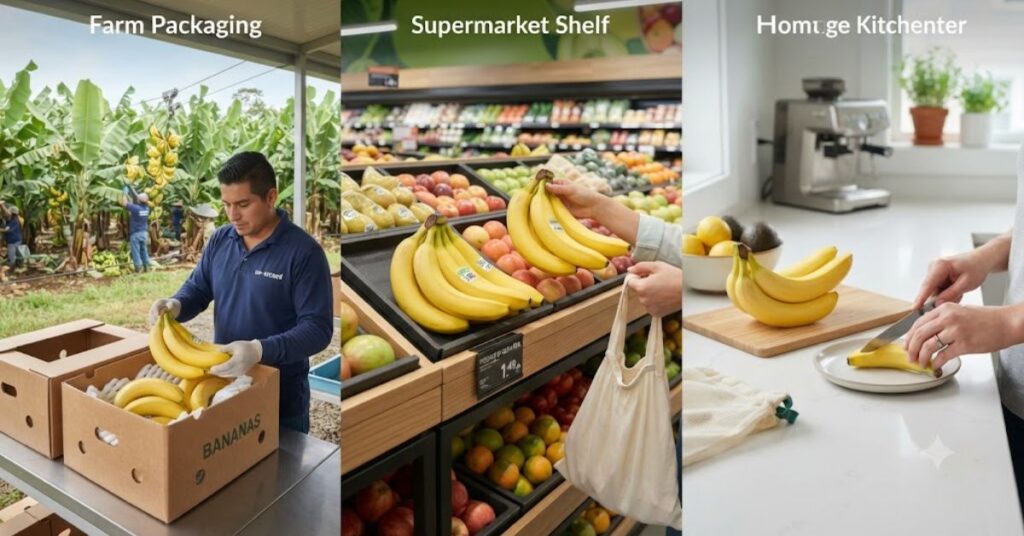
Think about the journey bananas take before reaching your kitchen:
- They grow outdoors where they’re exposed to soil, insects, rain, and dust.
- Farm workers harvest and handle them.
- They are packed into large boxes.
- They travel through warehouses and shipping containers.
- Grocery store employees unpack and stock them.
- Hundreds of shoppers may touch the same bunch before you buy it.
Every step introduces opportunities for dirt and microorganisms to end up on the peel.
When you peel a banana, your fingers touch the outside first, then immediately touch the inside. If the peel carries contaminants, some may transfer through your hands, cutting boards, knives, or countertops.
This doesn’t mean bananas are dangerous. It simply means they’re like any other fresh produce; they benefit from proper handling and basic cleaning.
What’s Really on Banana Peels?
You can’t always see what’s on the surface of a banana.
Even if the peel looks perfectly clean, it may still contain invisible contaminants.
These can include:
1. Dirt and Dust
Bananas are harvested outdoors where wind, soil, and dust naturally settle on their surface.
Even after washing during commercial processing, small amounts of residue can remain by the time they reach grocery stores.
2. Pesticide Residue
Modern farming often uses approved pesticides to protect crops from insects and disease.
Government regulations help ensure these residues remain within safe limits, but washing fresh produce can help remove some surface residue.
Although the peel isn’t eaten, cleaning it can reduce the amount transferred to your hands during handling.
3. Germs from Handling
One bunch of bananas may be touched by dozens of people before reaching your home.
These include:
- Farm workers
- Packing facility employees
- Shipping crews
- Grocery store workers
- Customers browsing the produce section
Every touch has the potential to leave behind microorganisms.
4. Bacteria
Fresh produce can naturally carry bacteria from soil or water.
While bananas are generally considered low-risk because the edible fruit is protected by the peel, keeping the surface clean is still a smart food safety habit.
Why You Should Wash Your Bananas As Soon As You Get Home
Developing this simple habit offers several benefits.
It Reduces Surface Dirt
A quick rinse helps remove visible dirt, dust, and debris collected during transportation and storage.
Even if the peel appears clean, washing gives you extra confidence that your fruit is ready to handle.
It Supports Better Kitchen Hygiene
Imagine placing unwashed bananas on your clean countertop next to fresh vegetables or other foods.
Anything on the peel can spread to nearby surfaces.
Cleaning bananas before storing them helps keep your kitchen cleaner overall.
It Reduces Cross-Contamination
Many people slice bananas into cereal, yogurt, smoothies, or fruit salads.
During cutting, your knife touches the peel before passing through the fruit.
A cleaner peel helps lower the chance of transferring unwanted residue.
It’s a Healthy Everyday Habit
Good food safety isn’t about fear; it’s about building small habits that reduce unnecessary risks.
Just as people wash apples, grapes, cucumbers, and tomatoes, washing bananas can become another easy part of preparing fresh produce.
Can Germs Transfer from the Peel to the Fruit?
This is one of the biggest reasons experts encourage careful produce handling.
When peeling a banana:
- Your hands touch the outside first.
- Those same fingers immediately touch the fruit.
- A knife may touch both the peel and the edible portion.
- The banana may rest on a cutting board that was in contact with the peel.
This process creates opportunities for cross-contamination, even though the fruit itself remains protected inside the peel.
Fortunately, reducing this risk is simple.
A quick rinse of the peel before storing or preparing bananas can help remove some surface contaminants, especially dirt and debris that may otherwise spread during handling.
Is Washing Bananas Recommended by Food Safety Experts?
Food safety organizations generally recommend washing fresh fruits and vegetables under clean running water before preparation, especially produce with surfaces that may be handled before eating.
Although bananas are peeled, maintaining clean hands, clean kitchen surfaces, and clean produce helps support safe food handling practices.
One important point to remember is that plain running water is enough.
There is no need to use soap, bleach, disinfectants, or commercial cleaning chemicals on bananas. These products are not intended for food and may leave unwanted residues behind.
A gentle rinse with clean water is the safest and simplest approach.
Common Myths About Washing Bananas
There are several misconceptions about this topic.
Myth: The peel protects everything, so washing isn’t necessary.
Fact: The peel protects the fruit, but your hands still touch the peel before touching the fruit.
Myth: Washing bananas removes all pesticides.
Fact: Washing can reduce some surface residue, but it cannot remove everything that may already be inside the peel.
Myth: Soap cleans fruit better.
Fact: Food safety experts do not recommend washing fresh produce with soap because it may leave residues that are not meant to be eaten.
Why You Should Wash Your Bananas As Soon As You Get Home
The Right Way to Wash and Store Bananas
In Part 1, we discussed why banana peels can collect dirt, dust, bacteria, and residue during their journey from farms to your kitchen. Although bananas have a natural protective peel, cleaning the outside surface is still a smart habit for maintaining better food hygiene.
Now that you understand why you should wash your bananas as soon as you get home, the next step is learning the correct way to clean them without damaging the fruit or making them spoil faster.
Many people make simple mistakes when washing and storing bananas. Some wash them incorrectly, while others avoid washing them completely because they worry the bananas will turn brown too quickly.
The good news is that with the right method, you can keep your bananas clean, fresh, and ready to enjoy.
How to Wash Bananas the Right Way
Washing bananas is simple and only takes a few seconds. You don’t need expensive products or special cleaners.
Follow these easy steps:
Step 1: Wash Your Hands First
Before handling any fresh produce, start with clean hands.
Wash your hands with soap and water for at least 20 seconds, especially if you have been outside, shopping, or handling grocery bags.
Clean hands prevent you from transferring additional germs onto your bananas.
Step 2: Separate the Bananas Carefully
When bananas come in a large bunch, separate them gently before washing.
This helps you reach more areas of the peel, especially around the stems where dirt and residue can collect.
The stem area is one of the most commonly touched parts of a banana bunch, so giving it extra attention is helpful.
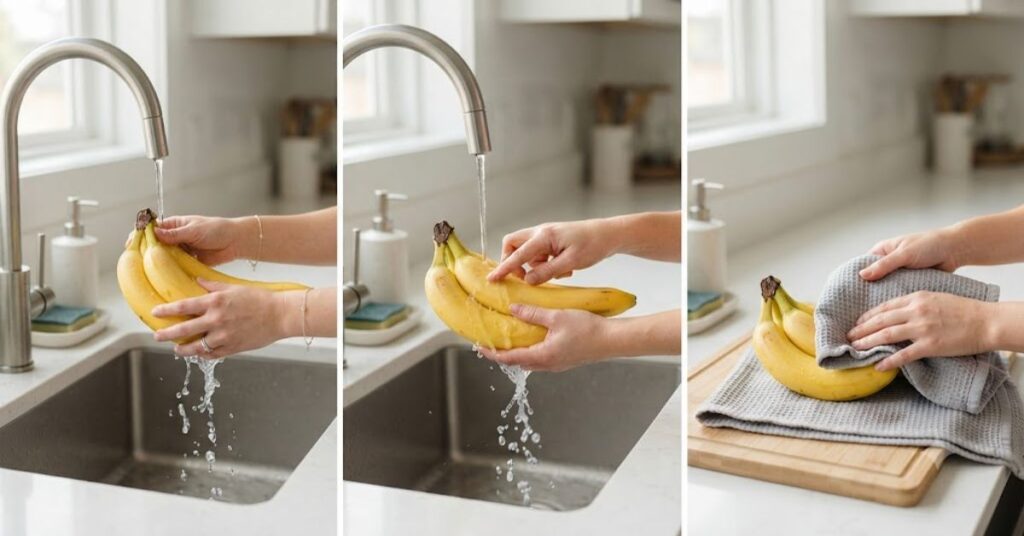
Step 3: Rinse Bananas Under Running Water
Hold each banana under cool running water.
Use your hands to gently rub the entire peel, including:
- The top stem area
- The sides
- The bottom tip
- Any areas with visible dirt
You do not need to scrub aggressively. A gentle rinse is enough to remove surface dust and debris.
Step 4: Dry Bananas Completely
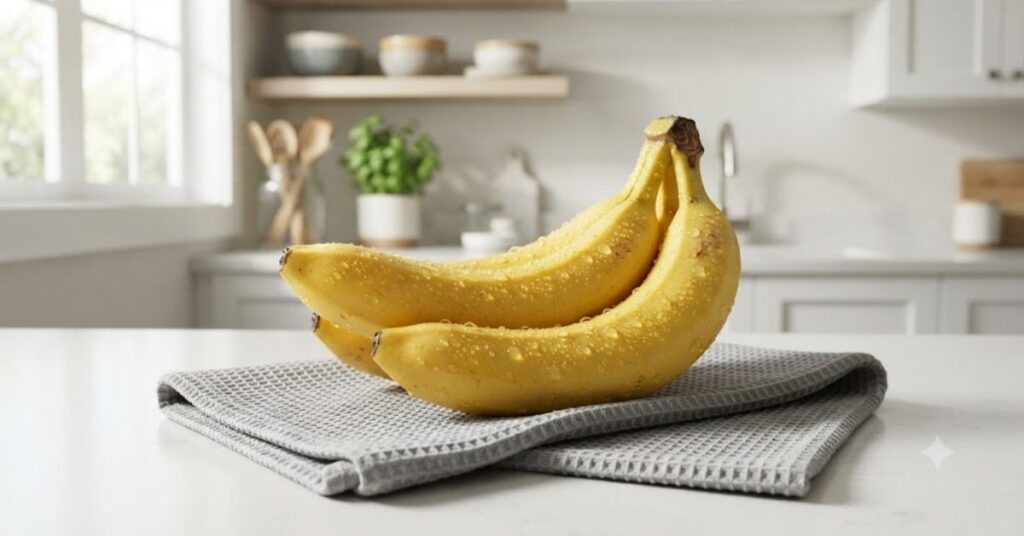
After washing, use a clean kitchen towel or paper towel to dry the bananas.
This step is important because excess moisture can speed up the ripening process and may encourage mold growth.
Drying your bananas helps them stay fresh longer.
Should You Wash Bananas Before or After They Ripen?
This is a common question.
The best time to wash bananas is usually when you bring them home from the store, before placing them with your other kitchen items.
However, there is one important thing to remember:
Do not store wet bananas.
Moisture sitting on the peel can cause bananas to develop dark spots or spoil more quickly.
The ideal routine is:
- Bring bananas home.
- Wash the outside gently.
- Dry them completely.
- Store them properly.
This simple process keeps your kitchen cleaner while helping your bananas stay fresh.
Should You Use Vinegar or Baking Soda to Wash Bananas?
Many people use vinegar or baking soda when cleaning fruits and vegetables.
While these ingredients are popular natural cleaners, bananas usually do not require anything more than clean running water.
For most household situations:
Running water is enough
Gentle rubbing removes surface dirt
Proper drying prevents moisture problems
Avoid soaking bananas for long periods because the peel can absorb moisture, which may affect freshness.
If you choose to use a produce wash, make sure it is specifically designed for food and follow the manufacturer’s instructions.
Should You Wash Organic Bananas Too?
Yes.
Organic bananas are grown without synthetic pesticides, but that doesn’t mean the peel is completely free from dirt or handling residue.
Organic bananas still travel through:
- Farms
- Packing facilities
- Transportation systems
- Grocery stores
- Shopping carts and bags
Washing organic bananas is still a good food preparation habit.
How to Store Washed Bananas Properly
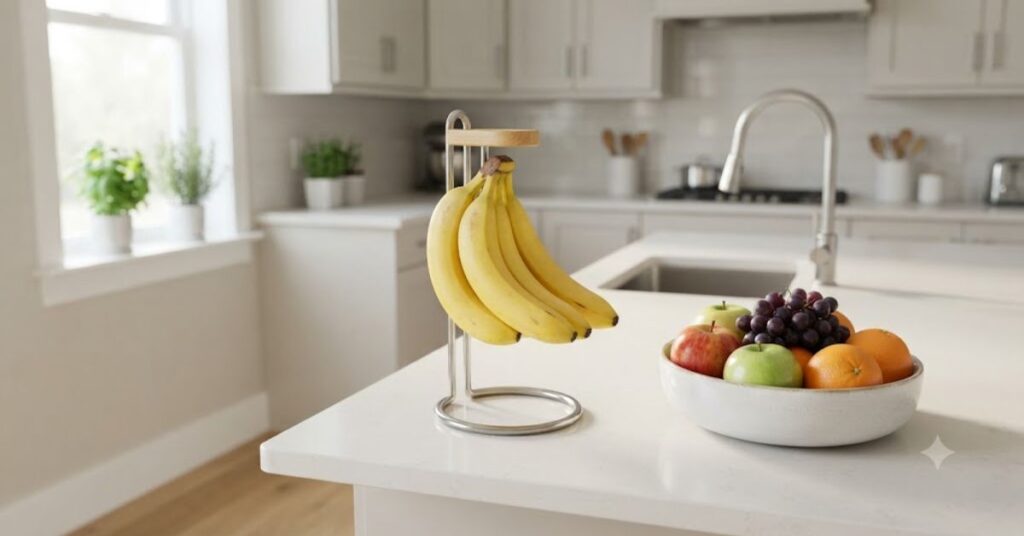
After washing and drying your bananas, proper storage is the next important step.
Keep Them at Room Temperature
Fresh bananas usually stay best at room temperature.
Avoid placing unpeeled bananas in the refrigerator too early because cold temperatures can darken the peel.
The inside fruit may still be fine, but the appearance can change.
Keep Bananas Away from Other Fruits
Some fruits release a natural ripening gas called ethylene.
Fruits such as:
- Apples
- Avocados
- Pears
- Tomatoes
can speed up banana ripening when stored nearby.
If you want bananas to last longer, keep them separate from fast-ripening fruits.
Use a Banana Hanger
A banana hanger can help improve airflow around the fruit.
When bananas sit directly on a counter, the bottom area may become bruised from pressure.
Hanging bananas can reduce bruising and help them ripen more evenly.
Wrap the Banana Stems
Many people use plastic wrap around banana stems to slow ripening.
The stem area releases ethylene gas, and covering it may help extend freshness for a few extra days.
This trick is especially useful if your bananas ripen too quickly.
Mistakes to Avoid When Washing Bananas
Even though washing bananas is simple, some common mistakes can create problems.
Mistake 1: Using Soap or Dishwashing Liquid
Never wash bananas with dish soap.
Soap is designed for dishes, not food. It can leave behind chemicals that are not meant to be consumed.
Use clean running water instead.
Mistake 2: Washing and Storing Them While Wet
Putting wet bananas directly into a fruit bowl can encourage faster spoilage.
Always dry the peel completely before storage.
Mistake 3: Washing Only the Part You Eat
Some people only clean the banana after peeling it.
However, the outside peel is the part that gets touched during transportation and handling.
Cleaning the whole banana before peeling is the better habit.
Mistake 4: Using Harsh Cleaning Products
Products like bleach, disinfectant sprays, and household cleaners should never be used on food.
They are designed for surfaces, not produce.
How Restaurants and Professional Kitchens Handle Fresh Produce
Professional kitchens follow strict food safety routines.
Before preparing fruits and vegetables, many chefs focus on:
- Clean hands
- Clean preparation areas
- Proper produce handling
- Preventing cross-contamination
While bananas are easier to handle than many other fruits, the same principles apply.
A clean preparation routine helps keep food safer and kitchens more hygienic.
Does Washing Bananas Make Them Last Longer?
Washing bananas does not necessarily make them last longer by itself.
In fact, storing wet bananas may cause them to spoil faster.
The main purpose of washing bananas is:
- Removing surface dirt
- Improving handling hygiene
- Reducing transfer of unwanted residue
- Keeping your kitchen cleaner
The key is washing them correctly and drying them completely.
Quick Banana Washing Routine
For busy households, this simple routine works well:
- Bring bananas home from shopping.
- Rinse them under cool running water.
- Gently rub the peel.
- Dry completely with a clean towel.
- Store them in a cool, dry place.
This takes less than a minute but creates a cleaner food preparation habit.
Why You Should Wash Your Bananas As Soon As You Get Home
By now, you understand why you should wash your bananas as soon as you get home and how this simple habit can improve your kitchen hygiene. Although bananas have a natural peel that protects the edible fruit, cleaning the outside surface is still a smart step for reducing dirt, improving food handling, and keeping your kitchen cleaner.
Many people still have questions about washing bananas. Some wonder if it is necessary, while others are unsure about the best cleaning method.
Let’s clear up the most common questions and separate facts from myths.
Banana Washing Myths vs Facts
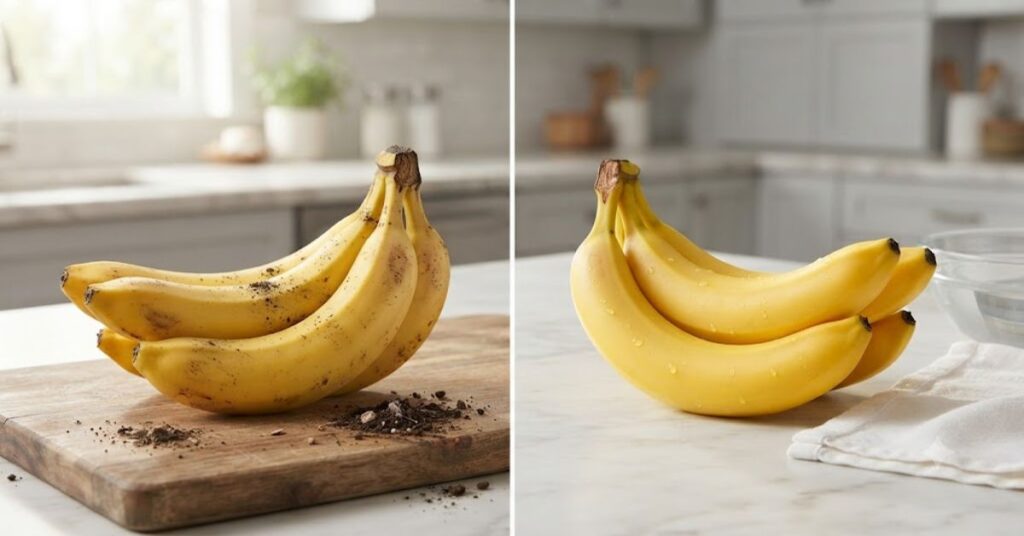
Myth 1: Bananas Don’t Need Washing Because You Don’t Eat the Peel
Fact:
The banana peel protects the fruit, but it is still handled by many people before reaching your home.
When you peel a banana, your hands touch the outside surface first. Any dirt or residue on the peel can transfer to your hands, kitchen surfaces, or the fruit itself.
Washing the peel before eating creates a cleaner food preparation routine.
Myth 2: Clean-Looking Bananas Are Already Safe
Fact:
Appearance does not always tell the whole story.
A banana can look perfectly clean while still having invisible dust, residue, or microorganisms on the surface.
Just like other fresh produce, bananas benefit from proper handling.
Myth 3: Soap Is Better Than Water for Cleaning Bananas
Fact:
Soap and household cleaners should not be used on bananas.
These products are created for cleaning surfaces, not food. They can leave behind residues that are not intended for consumption.
Clean running water and gentle rubbing are the safest options for washing bananas.
Myth 4: Washing Bananas Makes Them Spoil Immediately
Fact:
Washing itself does not ruin bananas.
The problem is storing them while they are wet.
If you rinse bananas and dry them completely before storage, they can remain fresh and ready to eat.
Myth 5: Only Non-Organic Bananas Need Washing
Fact:
Both organic and conventional bananas should be handled carefully.
Organic bananas may have fewer pesticide residues, but they can still collect:
- Dust
- Dirt
- Handling residue
- Packaging debris
Cleaning all bananas is a good kitchen habit.
FAQs
Should You Wash Bananas Before Eating Them?
Yes, washing bananas before eating is a good practice.
Even though you remove the peel, the outside surface is touched during peeling. A quick rinse helps remove surface dirt and keeps handling more hygienic.
What Is the Best Way to Wash Bananas?
The best method is simple:
- Rinse bananas under clean running water.
- Gently rub the peel with your hands.
- Pay extra attention to the stem area.
- Dry them completely before storing.
There is no need for special chemicals or harsh cleaning products.
Can You Wash Bananas With Vinegar?
While vinegar is commonly used for cleaning some fruits and vegetables, bananas usually do not need vinegar.
A simple rinse with clean water is enough to remove surface dirt.
If you choose to use a produce wash, make sure it is specifically made for food and follow the instructions carefully.
Can You Wash Bananas With Baking Soda?
Baking soda is sometimes used for cleaning produce, but it is not necessary for everyday banana washing.
Running water combined with gentle rubbing is usually sufficient.
Should You Wash Bananas Before Putting Them in a Fruit Bowl?
Yes.
Washing bananas before placing them with other foods can help keep your fruit storage area cleaner.
However, always dry them completely first to prevent excess moisture.
How Long Do Washed Bananas Last?
The lifespan of bananas depends on:
- Ripeness when purchased
- Storage temperature
- Humidity
- Handling
Washing does not significantly extend their shelf life, but proper drying and storage can help prevent unnecessary spoilage.
Should You Wash Banana Peels Before Making Banana Bread?
Yes.
If you use banana peels for recipes, composting, or handling during cooking, cleaning the peel first is especially important.
Even when only using the inside fruit, washing the peel before preparation is a good habit.
Is It Safe to Eat a Banana Without Washing It?
Eating an unwashed banana is unlikely to cause problems for most healthy people because the peel provides protection.
However, washing bananas is a simple extra step that supports better food hygiene and reduces unnecessary exposure to surface contaminants.
Additional Tips for Keeping Bananas Fresh
Besides washing bananas properly, these tips can help maintain quality:
Buy Bananas at Different Ripeness Levels
If you always buy bright yellow bananas, they may all become ripe at the same time.
Instead, choose a mix:
- Some green bananas for later
- Some yellow bananas for immediate eating
This helps you enjoy fresh bananas throughout the week.
Avoid Crushing Bananas in Shopping Bags
Bananas bruise easily.
Place them carefully in your grocery bag and avoid putting heavy items on top of them.
Bruised areas ripen faster and may develop soft spots.
Remove Damaged Bananas From the Bunch
If one banana becomes overripe quickly, separate it from the others.
A damaged banana can affect nearby fruit by releasing more ethylene gas.
Freeze Overripe Bananas
Do not throw away bananas that become too soft.
Frozen bananas are excellent for:
- Smoothies
- Banana bread
- Homemade desserts
- Healthy snacks
Simply peel them, place them in a freezer-safe container, and use them later.
Why Small Cleaning Habits Matter in Everyday Life
Household cleanliness is not only about floors, bathrooms, and kitchens.
It also includes the way we handle the food we bring into our homes.
Small habits like washing fruits and vegetables can make your daily routine more organized and hygienic.
You don’t need complicated cleaning methods. Often, the easiest habits are the ones that make the biggest difference.
Taking a few seconds to clean your bananas when you get home is one simple step toward a cleaner kitchen.
Final Thoughts
Bananas are one of the easiest and healthiest fruits to enjoy, but they still deserve proper handling.
The next time you return from grocery shopping, remember why you should wash your bananas as soon as you get home. A quick rinse under clean water can help remove surface dirt, improve kitchen hygiene, and create a safer food preparation routine.
You do not need expensive cleaners or complicated methods. Just wash, dry, and store your bananas properly.
This small habit takes almost no time but can become a valuable part of a cleaner, healthier home.
A cleaner kitchen starts with simple choices, and sometimes, it begins with something as ordinary as washing a banana.