
Removing hard water stains is one of the most common bathroom cleaning challenges. Even if you clean your sink, faucet, or shower regularly, white chalky spots and cloudy mineral deposits can quickly return. Over time, these stains can make otherwise clean fixtures look dull, neglected, and older than they really are.
The good news is that most hard water stains can be removed safely without damaging your bathroom fixtures. The key is understanding what causes the buildup, choosing the right cleaning method for your fixture’s finish, and avoiding common mistakes that can scratch or discolor the surface.
At True Housekeeping, we’ve found that many homeowners scrub too aggressively or use harsh chemicals that do more harm than good. In most cases, gentle cleaning methods combined with regular maintenance provide better long-term results while protecting the finish of your faucets, showerheads, sinks, and other bathroom fixtures.
This guide explains how to remove hard water stains from bathroom fixtures, when natural cleaning methods work best, when stronger cleaners may be necessary, and how to prevent mineral buildup from returning.
Quick Answer
The safest way to remove hard water stains from bathroom fixtures is to soften the mineral deposits first, then wipe them away using a soft microfiber cloth and a cleaner that is appropriate for the fixture’s finish. Avoid abrasive scrubbers, steel wool, or harsh chemicals that can scratch or damage protective coatings.
What Are Hard Water Stains?
Hard water contains naturally occurring minerals, mainly calcium and magnesium.
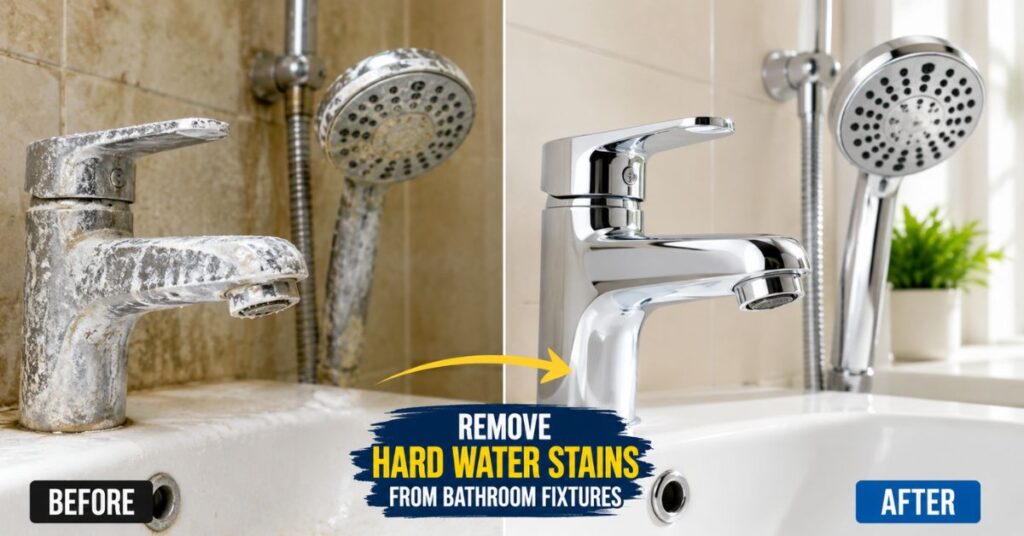
When water evaporates from your bathroom fixtures, these minerals remain behind, gradually forming a white, chalky residue known as hard water stains or limescale.
As the buildup becomes thicker, it may appear as:
- White spots
- Cloudy film
- Chalky residue
- Crusty mineral deposits
- Yellowish or brown stains in severe cases
Although these stains are usually not harmful, they can become difficult to remove if ignored for long periods.
Why Bathroom Fixtures Develop Hard Water Stains
Bathrooms are constantly exposed to moisture. Remove Hard Water Stains
Every time you use the sink, shower, or bathtub, tiny droplets remain on the fixture.
As the water dries, mineral deposits stay behind.
Several factors make the problem worse:
- Remove Hard Water Stains
- Poor bathroom ventilation
- Infrequent cleaning
- Water left to air dry
- Soap scum mixing with minerals
- High humidity
The longer these deposits remain, the more difficult they become to remove.
Which Bathroom Fixtures Are Most Affected?
Hard water stains can appear on almost every bathroom surface, but some fixtures collect mineral deposits faster than others.
Common problem areas include: Remove Hard Water Stains
- Bathroom faucets
- Showerheads
- Sink fixtures
- Bathtub faucets
- Handheld shower wands
- Toilet handles
- Drain covers
- Chrome trim
- Glass shower doors
- Metal soap holders
Regular maintenance helps prevent heavy buildup on all of these surfaces.
Know Your Fixture Finish Before Cleaning
Not every bathroom fixture should be cleaned the same way.
Using the wrong cleaner can damage decorative finishes or protective coatings.
Before you begin, identify the material.
Chrome Fixtures
Chrome is durable but scratches easily.
Always use soft microfiber cloths and avoid abrasive powders or steel wool.
Stainless Steel Fixtures
Stainless steel resists corrosion but may develop water spots.
Clean gently and wipe in the direction of the metal grain whenever possible.
Brushed Nickel
Brushed nickel has a soft matte appearance.
Harsh chemicals can dull its finish over time.
Gentle cleaning is usually the safest approach.
Brass Fixtures
Brass may be lacquered or unlacquered.
Some brass finishes require specialty cleaners, so always check the manufacturer’s care recommendations.
Matte Black Fixtures
Matte black finishes have become increasingly popular in modern bathrooms.
These finishes can show mineral spots easily and may scratch if cleaned with abrasive tools.
Use only soft microfiber cloths and gentle cleaners. Remove Hard Water Stains
Materials Needed for Cleaning
Before starting the cleaning process, gather these common household items:
- White vinegar (natural acid that breaks down minerals)
- Baking soda (mild abrasive for scrubbing)
- Fresh lemon or lemon juice (natural bleaching and descaling agent)
- Soft-bristled brush (to avoid scratching surfaces)
- Microfiber cloth (for polishing and drying)
- Spray bottle (for easy application)
- Warm water (for rinsing)
- Remove Hard Water Stains
These items are safe, affordable, and highly effective for DIY cleaning hacks that remove even Remove Hard Water Stains.
Step-by-Step Guide: How to Remove Hard Water Stains From Bathroom Fixtures
Follow these simple steps to restore shine to your bathroom fixtures:
Step 1: Prepare a Vinegar Solution
Mix equal parts of white vinegar and warm water in a spray bottle. This solution helps break down mineral deposits effectively.
If stains are light, this solution alone may be enough.
Step 2: Apply the Solution
Spray the mixture generously onto affected areas such as: Remove Hard Water Stains
- Faucets
- Showerheads
- Sink handles
- Glass panels
Let it sit for 10–15 minutes so the acid in the vinegar can dissolve the calcium buildup.
Step 3: Scrub Gently
Using a soft-bristled brush, gently scrub the surface in circular motions.
For chrome fixtures, avoid hard scrubbing as it may cause scratches.
Step 4: Use Baking Soda for Tough Stains
If stains are stubborn: Remove Hard Water Stains
- Make a paste using baking soda and a small amount of water
- Apply it directly to the stained areas
- Let it sit for 10 minutes
- Scrub gently with a brush
This combination works as a powerful natural cleaning agent.
Step 5: Vinegar-Soaked Cloth Method
For very tough buildup:
- Soak a cloth in white vinegar
- Wrap it around the fixture
- Leave it for 30–60 minutes
- Remove and scrub lightly
This method is especially effective for removing heavy limescale from bathroom taps and shower fixtures. Remove Hard Water Stains
Step 6: Rinse and Wipe Dry
After cleaning:
- Rinse all surfaces with clean water
- Wipe thoroughly with a microfiber cloth
- Make sure no moisture remains
Drying is important to prevent new stains from forming.
Prevention Tips to Keep Fixtures Clean
Prevention is always easier than cleaning. Follow these tips:
1. Wipe After Every Use
Always dry your faucets and shower fixtures after use to prevent water spots.
2. Install a Water Softener
If possible, install a water softening system to reduce mineral content.
3. Weekly Light Cleaning
Use a mild vinegar solution once a week to prevent buildup.
4. Use Protective Coatings
Apply protective sprays designed for chrome or metal fixtures to reduce staining.
Safety and Care Warnings
While cleaning is simple, improper methods can damage your fixtures.
Avoid the following:
- Do not use steel wool or harsh scrubbers
- Avoid strong chemical cleaners on chrome or brass finishes
- Do not leave acidic solutions on surfaces for too long
- Avoid mixing cleaning chemicals (especially bleach and vinegar)
- Always test on a small area first
Proper care ensures long-lasting shine and prevents permanent damage. Remove Hard Water Stains
Why DIY Cleaning Works Best
DIY cleaning methods are effective because natural ingredients like vinegar and lemon contain acids that naturally break down mineral deposits.
Benefits include:
- Safe for most surfaces
- Affordable and easily available
- Environmentally friendly
- No harsh chemical fumes
- Effective for regular maintenance
This makes DIY methods the preferred choice for most homeowners dealing with hard water issues.
Removing Heavy Hard Water Stains That Won’t Come Off
Sometimes, hard water stains have been building up for months or even years. In these cases, a quick wipe isn’t enough because the mineral deposits have hardened into thick layers. Remove Hard Water Stains
The safest approach is to remove the buildup gradually instead of trying to scrape it off.
Professional cleaners recommend repeating gentle treatments rather than using excessive force, which can permanently scratch the fixture’s finish.
Method 1: Use a Mild Dish Soap Solution
For light to moderate mineral deposits, warm water and a few drops of mild pH-neutral dish soap are often enough. Remove Hard Water Stains
Steps
- Fill a small bowl or spray bottle with warm water.
- Add a few drops of mild dish soap.
- Dampen a microfiber cloth.
- Wipe the fixture gently.
- Rinse with clean water.
- Dry immediately with a soft microfiber towel.
This method is suitable for routine weekly cleaning.
Method 2: Cleaning With White Vinegar (Only When Appropriate)
White vinegar is a popular household cleaner because its mild acidity helps dissolve calcium and magnesium deposits.
However, it is not suitable for every fixture finish. Remove Hard Water Stains
Always check the manufacturer’s care instructions before using vinegar, especially on natural stone surfaces, unlacquered brass, matte finishes, or specialty coatings.
How to Use Vinegar Safely
- Soak a microfiber cloth in white vinegar.
- Wrap it around the stained area.
- Allow it to sit for several minutes.
- Remove the cloth.
- Wipe gently with a soft sponge.
- Rinse thoroughly with clean water.
- Dry immediately.
- Remove Hard Water Stains
If stains remain, repeat the process rather than scrubbing aggressively.
Method 3: Commercial Hard Water Stain Removers
Sometimes mineral deposits become too thick for household cleaning methods.
In these situations, a bathroom cleaner specifically designed for limescale removal may be more effective.
When using commercial products: Remove Hard Water Stains
- Follow the label instructions carefully.
- Wear gloves if recommended.
- Never mix different cleaning products.
- Rinse the fixture thoroughly afterward.
- Dry completely.
- Remove Hard Water Stains
Using more cleaner than directed usually doesn’t improve results and may increase the risk of damaging delicate finishes.
Natural Cleaners vs Commercial Cleaners
Many homeowners wonder which option works best.
The answer depends on the severity of the mineral buildup.
| Natural Cleaning | Commercial Cleaning |
|---|---|
| Good for routine maintenance | Better for heavy buildup |
| Usually gentle on finishes | Often works faster on stubborn deposits |
| Readily available household supplies | Designed specifically for limescale removal |
| Lower cost | May require protective gloves |
Neither option is automatically better.
Choose the method that matches your fixture’s finish and the severity of the stains.
Common Mistakes to Avoid
Many people make cleaning harder by:
- Ignoring early stains until they become stubborn
- Using overly strong chemicals too often
- Not drying surfaces after cleaning
- Scrubbing too hard and damaging finishes
Avoiding these mistakes will keep your bathroom fixtures in excellent condition.
FAQs
1. What is the fastest way to remove hard water stains?
Remove Hard Water Stains: Vinegar spray is the fastest and most effective method for light to medium stains.
2. Can baking soda damage bathroom fixtures?
No, baking soda is safe when used gently as a cleaning paste.
3. How often should I clean bathroom fixtures?
Once a week is ideal for preventing buildup.
4. Are chemical cleaners better than natural methods?
Natural methods are safer and usually just as effective for regular cleaning.
5. How do I remove limescale from bathroom taps permanently?
Regular cleaning and drying after use is the only way to prevent permanent buildup.
Conclusion
Removing hard water stains from bathroom fixtures is a common issue, but they are not permanent. With the right techniques and simple household items, you can easily restore the shine of your bathroom fixtures.
By following this guide on removing hard water stains from bathroom fixtures, you can keep your bathroom clean, fresh, and sparkling without expensive cleaning products or professional help.
Consistency is key; regular maintenance will always give the best long-term results.