
An iron is supposed to leave your clothes smooth, fresh, and wrinkle-free. However, over time, the soleplate can develop burn marks, sticky residue, mineral buildup, rust, and dark stains. When this happens, using the iron can become frustrating because the dirty soleplate may transfer marks onto freshly washed clothes.
The good news is that you usually do not need to replace your iron. With a few simple household cleaning methods, you can safely remove many common stains and residues from an iron.
In this guide, you’ll learn how to remove stains from an iron using practical methods, how to clean the steam holes, what mistakes to avoid, and how to keep your iron clean for longer.
Why Does an Iron Get Stained?
Before cleaning your iron, it helps to understand why stains develop in the first place.
1. Fabric Residue
Synthetic fabrics can melt when the iron temperature is too high. The melted fibers may stick to the soleplate and create a dark or sticky coating.
2. Starch and Fabric Products
Spray starch, fabric sizing, and other laundry products can leave residue behind. Repeated ironing can bake this residue onto the soleplate.
3. Burned Fabric
If an iron is left on fabric for too long or used at an unsuitable temperature, the fabric can scorch and leave brown or black marks.
4. Hard Water Mineral Deposits
If you use tap water in a steam iron, minerals can gradually accumulate inside the water reservoir and around the steam holes.
5. Rust and Corrosion
Moisture left inside an iron can sometimes contribute to rust or discoloration, particularly around the soleplate or steam openings.
Before You Clean Your Iron
Safety should come first.
Always unplug the iron before cleaning the soleplate unless the instructions for a specific cleaning product say otherwise.
Allow the iron to cool completely before touching the soleplate. Never immerse an electric iron in water.
You should also check the manufacturer’s instructions because some irons have special soleplate coatings that can be damaged by abrasive cleaners.
Avoid using:
- Steel wool
- Knives or razor blades
- Sandpaper
- Harsh abrasive powders
- Strong chemical cleaners not recommended by the manufacturer
- Excessive force
These can scratch the soleplate and make future cleaning more difficult.
7 Easy Ways to Remove Stains from an Iron
Different stains may require different cleaning methods. Start with the gentlest method and move to a stronger option only if necessary.
Method 1: Clean the Iron with Dish Soap
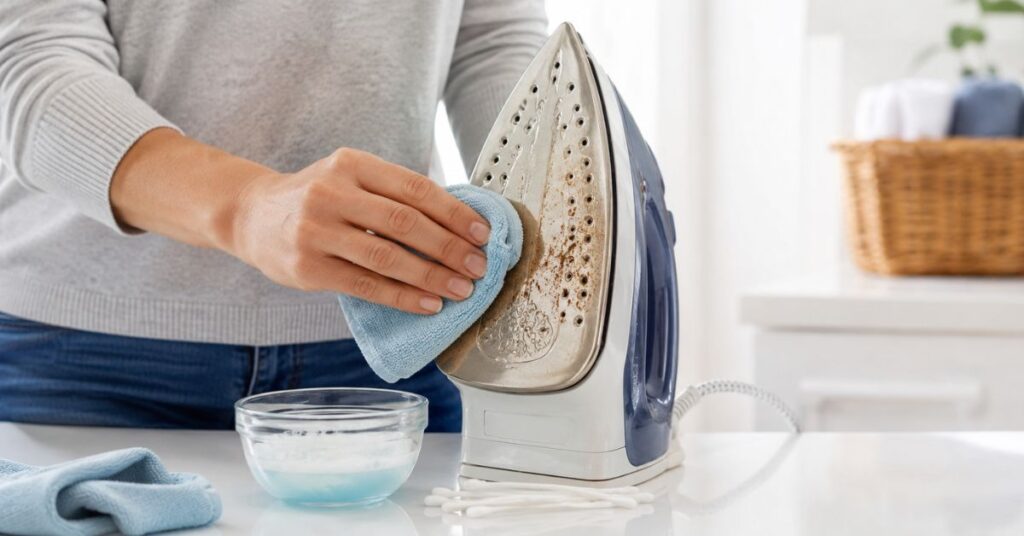
Dish soap is one of the simplest options for removing greasy or sticky residue from an iron.
What You’ll Need
- A few drops of mild dish soap
- Warm water
- A soft microfiber cloth
- A cotton swab
Steps
- Unplug the iron and allow it to cool completely.
- Mix a small amount of dish soap with warm water.
- Dip a microfiber cloth into the solution.
- Wring the cloth thoroughly so it is damp rather than soaking wet.
- Wipe the soleplate gently.
- Use a cotton swab to clean around the steam holes.
- Wipe the surface again with a clean damp cloth.
- Dry the soleplate completely before using the iron.
This method works particularly well for light residue caused by starch, fabric products, or everyday buildup.
Important Tip
Do not pour soapy water directly onto the iron. Keep moisture away from electrical openings and controls.
Method 2: Use White Vinegar for Mineral Residue
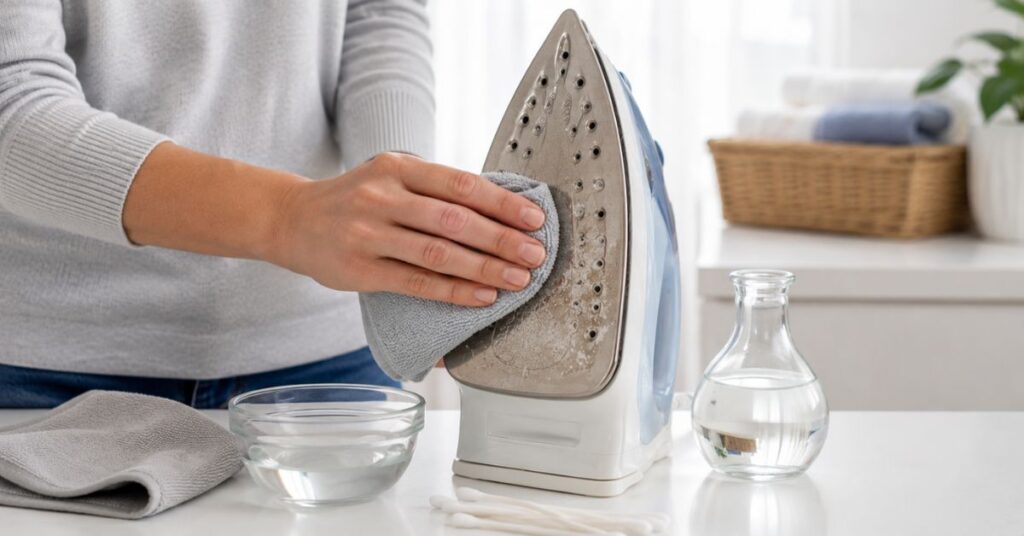
White vinegar can help loosen certain mineral deposits and residues. However, you should check your iron’s care instructions before using vinegar because some manufacturers advise against it.
What You’ll Need
- White vinegar
- Water
- Soft cloth
- Cotton swabs
Steps
- Unplug the iron.
- Let it cool completely.
- Mix equal parts white vinegar and water.
- Dampen a soft cloth with the solution.
- Gently wipe the soleplate.
- Use a cotton swab around the steam openings.
- Wipe the soleplate with a clean damp cloth.
- Dry it thoroughly.
If your iron’s manufacturer specifically recommends a particular descaling product, use that product instead.
What About the Water Reservoir?
Do not automatically pour vinegar into the water reservoir. Steam irons vary considerably, and some manufacturers specifically warn against vinegar or other household liquids inside the reservoir.
Always follow the manufacturer’s instructions for descaling the interior.
Method 3: Remove Sticky Residue with Baking Soda
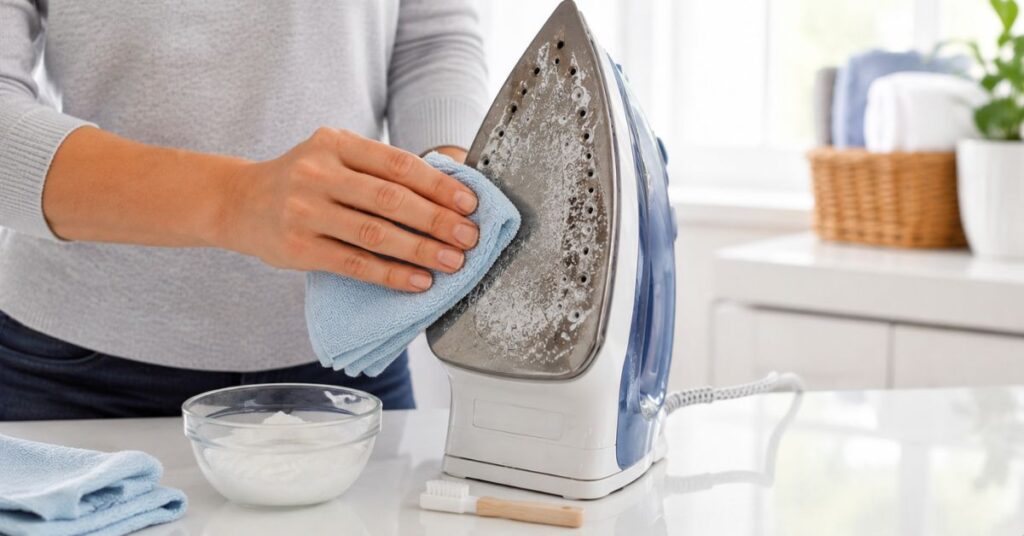
Baking soda can help with stubborn residue, but it is mildly abrasive. Therefore, it should be used carefully and only if the manufacturer allows it for your iron’s soleplate.
You’ll Need
- Baking soda
- Water
- Soft cloth
How to Do It
- Make a thin paste using baking soda and a small amount of water.
- Make sure the iron is unplugged and completely cool.
- Apply a small amount of paste to the stained area.
- Gently rub with a soft cloth.
- Do not aggressively scrub.
- Remove all residue with a clean damp cloth.
- Dry the soleplate completely.
Be especially careful with nonstick or coated soleplates. If the manufacturer advises against abrasive materials, choose a different method.
Method 4: Clean the Iron with a Commercial Iron Cleaner
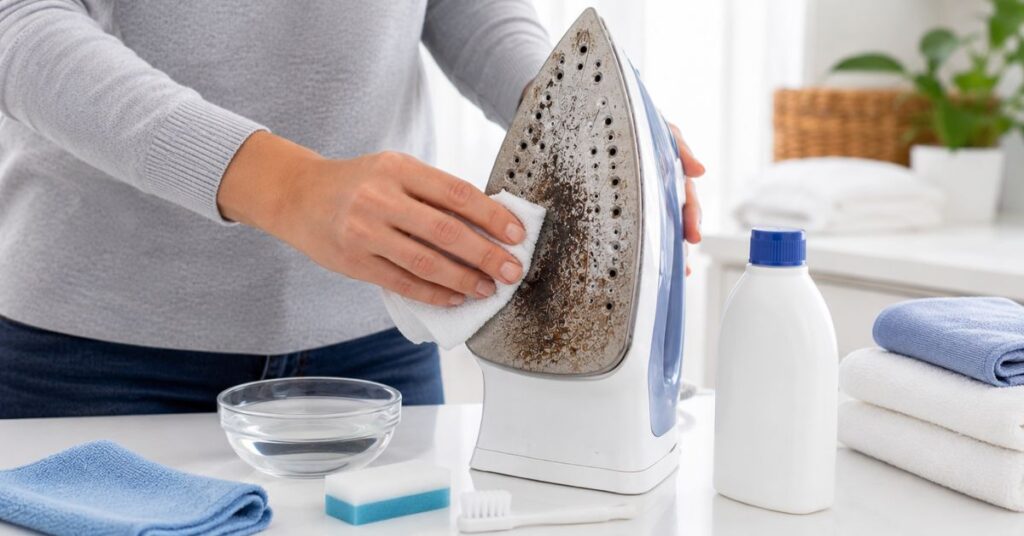
For heavily stained irons, a cleaner specifically designed for iron soleplates can be a useful option.
Commercial iron cleaners are formulated to remove baked-on residue without requiring aggressive scraping.
How to Use One
- Read the product label carefully.
- Unplug the iron if the instructions require it.
- Apply the cleaner according to the manufacturer’s directions.
- Use the recommended cloth or material.
- Remove all remaining cleaner.
- Allow the iron to dry completely.
- Test the iron on an old piece of cotton fabric before ironing your good clothes.
This is often a better choice for valuable irons or stubborn buildup when household methods are not recommended.
Method 5: Remove Burn Marks from an Iron
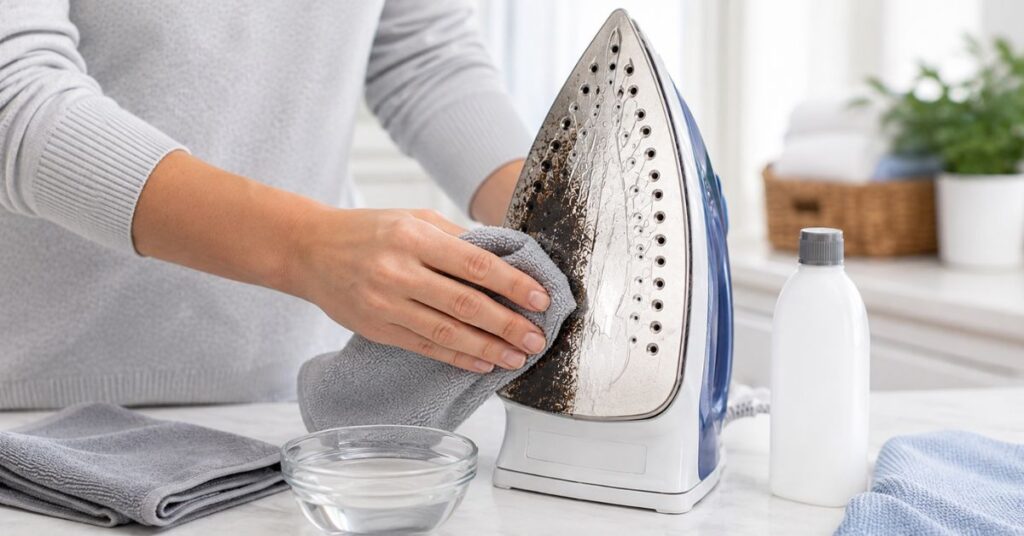
Burn marks can be particularly difficult because they may consist of scorched fabric fibers stuck to the soleplate.
The first step is to determine whether the mark is residue or the soleplate’s coating has been damaged.
If melted fabric is stuck to the soleplate, do not scrape it aggressively with a knife.
Instead:
- Unplug the iron.
- Allow it to cool.
- Follow the manufacturer’s instructions for removing melted fabric.
- Use a suitable soleplate cleaner if recommended.
- Wipe the surface gently.
- Remove every trace of residue.
- Test the iron on an old cloth.
If the soleplate has a deep scratch, peeling coating, or permanent damage, cleaning may not solve the problem.
Method 6: Clean the Steam Holes
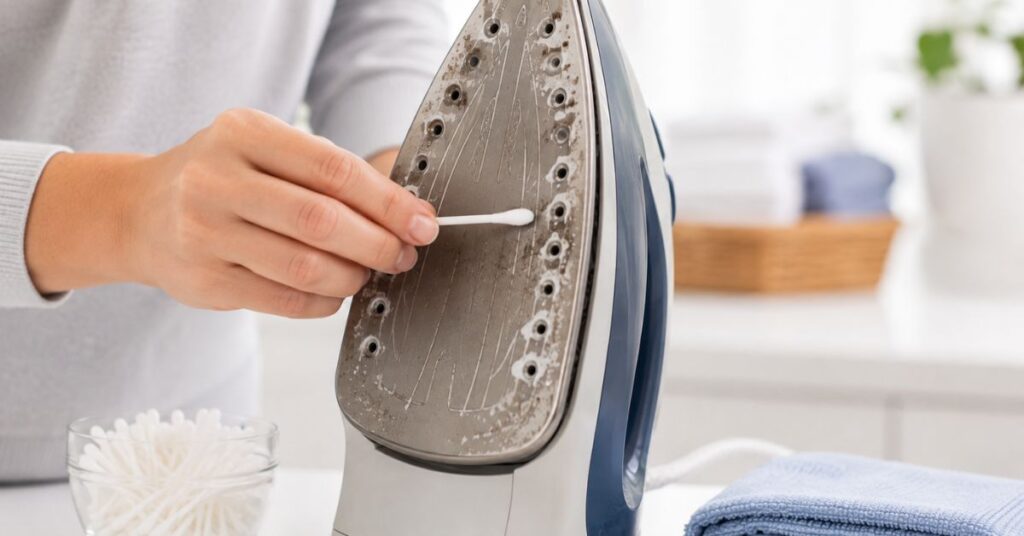
Sometimes an iron looks clean but still leaves marks because the steam holes are clogged with mineral deposits or residue.
Cleaning these openings can improve steam performance and help prevent debris from transferring to clothing.
Steps
- Unplug the iron.
- Empty the water reservoir.
- Allow the iron to cool.
- Use a cotton swab to clean around the steam holes gently.
- Remove loose mineral deposits carefully.
- Wipe the soleplate with a soft damp cloth.
- Follow the manufacturer’s instructions for the iron’s self-clean or descaling function, if available.
Never push sharp metal objects deep into the steam holes because you could damage internal components.
Method 7: Use the Iron’s Self-Clean Function
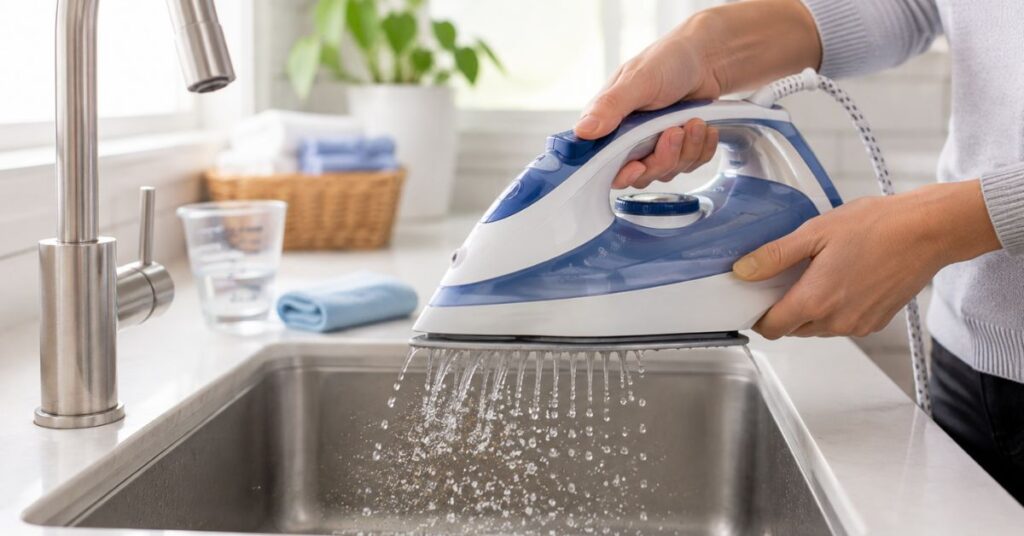
Many modern steam irons have a self-cleaning function designed to flush mineral deposits from the internal steam system.
If your iron has this feature, it can be one of the easiest ways to maintain the appliance.
General Process
The exact procedure varies by model, so check the owner’s manual.
Usually, the process involves:
- Filling the reservoir with the recommended type of water.
- Heating the iron.
- Holding it over a sink or suitable container.
- Activating the self-clean function.
- Allowing water and mineral deposits to flow out.
- Emptying the reservoir.
- Wiping the soleplate.
- Allowing the iron to cool and dry.
Do not assume every iron uses the same process. Follow the instructions specifically provided for your model.
How to Remove Rust-Like Stains from an Iron
If you notice orange, brown, or reddish marks, the problem may be rust or mineral buildup.
First, inspect the soleplate carefully. If the surface is scratched or corroded, the problem may be more serious than simple dirt.
For light surface residue:
- Unplug the iron.
- Let it cool completely.
- Wipe the surface with a soft damp cloth.
- Use a manufacturer-approved soleplate cleaner if necessary.
- Clean the steam holes carefully.
- Dry the soleplate completely.
If rust continues to appear or the soleplate is deteriorating, consider replacing the iron rather than risking damage to clothing.
How to Clean the Outside of an Iron
The soleplate is not the only part that gets dirty. The handle, controls, and exterior can collect dust, starch residue, and fingerprints.
To clean the exterior:
- Unplug the iron.
- Allow it to cool.
- Dampen a microfiber cloth with water.
- Wipe the handle and exterior.
- Use a cotton swab for small crevices.
- Dry the surface with another clean cloth.
Never spray cleaner directly onto the electrical controls.
How to Prevent Stains on Your Iron
Cleaning your iron regularly is easier than removing years of buildup.
1. Use the Correct Temperature
Always choose the temperature recommended for the fabric.
Synthetic fabrics generally require lower temperatures than cotton or linen. Using excessive heat can melt fibers and create stubborn residue.
2. Clean the Soleplate Regularly
Don’t wait until the soleplate becomes heavily stained.
A quick wipe after the iron has cooled can help prevent residue from becoming baked on.
3. Follow Water Recommendations
Different irons have different requirements for water.
Some models can use tap water, while others recommend filtered or distilled water depending on local water quality.
Follow the manufacturer’s instructions.
4. Empty the Reservoir
If your manufacturer recommends emptying the water reservoir after use, make it part of your routine.
Leaving water inside the iron unnecessarily can contribute to mineral buildup or other problems.
5. Be Careful with Spray Products
If you use spray starch or other ironing products, avoid excessive application.
Heavy product buildup can transfer onto the soleplate and eventually become sticky or burned.
Common Mistakes to Avoid When Cleaning an Iron
Cleaning an iron incorrectly can cause more damage than the original stain.
Don’t Scrape with a Knife
A sharp object can scratch the soleplate and permanently damage its surface.
Don’t Use Steel Wool
Steel wool is too abrasive for many iron surfaces.
Don’t Pour Water Over the Iron
Water and electrical appliances do not mix. Keep moisture away from electrical components.
Don’t Clean a Hot Iron with Your Hands
Even when the iron appears only slightly warm, the soleplate can remain hot enough to cause serious burns.
Don’t Ignore the Manufacturer’s Instructions
The safest cleaning method depends on the iron’s design and soleplate material.
How Often Should You Clean an Iron?
There is no universal schedule because it depends on how frequently you iron and which products you use.
If you iron frequently, inspect the soleplate every few weeks.
Clean it when you notice:
- Sticky residue
- Brown marks
- Dark stains
- Reduced steam performance
- White mineral deposits
- Fabric sticking to the soleplate
Regular light cleaning is usually easier than trying to remove thick, baked-on residue later.
What If the Iron Is Still Leaving Marks?
If you’ve cleaned the iron and it still leaves stains on clothing, check a few other things.
First, inspect the soleplate for scratches or peeling.
Next, check the steam holes for mineral deposits.
Then consider whether the water reservoir needs cleaning according to the manufacturer’s instructions.
Finally, test the iron on an old white cotton cloth.
If the iron continues to transfer brown, black, or rusty marks, the appliance may have internal corrosion or a damaged soleplate.
In that situation, replacing the iron may be safer than risking damage to your clothes.
FAQs
Can I clean an iron with vinegar?
Vinegar may help with certain residues, but you should check the manufacturer’s instructions first. Some iron manufacturers recommend against using vinegar inside the appliance.
Can baking soda damage an iron?
Baking soda is mildly abrasive and may damage certain coated soleplates if rubbed aggressively. Always check the manufacturer’s instructions and use a gentle touch.
How do I remove melted plastic from an iron?
Unplug the iron and allow it to cool. Follow the manufacturer’s cleaning instructions for melted material. Avoid using knives or other sharp tools that could scratch the soleplate.
Why is my iron leaving brown marks on clothes?
Brown marks can come from mineral deposits, burned residue, rust, or buildup inside the steam system. Clean the soleplate and steam system according to the manufacturer’s instructions.
How can I clean iron steam holes?
Use a cotton swab to gently clean around the openings while the iron is unplugged and cool. For internal buildup, use the manufacturer’s recommended self-cleaning or descaling procedure.
Can I use toothpaste to clean an iron?
Toothpaste is sometimes suggested as a household cleaning trick, but it can be abrasive and may not be suitable for modern coated soleplates. A manufacturer-approved iron cleaner is a safer choice.
Should I clean my iron while it is hot?
Do not clean the soleplate by hand while it is hot. Unplug the iron and allow it to cool before cleaning unless the manufacturer’s cleaning instructions specifically require a different procedure.
Final Thoughts
Learning how to remove stains from an iron can help extend the life of your appliance and prevent unwanted marks from appearing on freshly cleaned clothes.
For light residue, a soft microfiber cloth and mild dish soap may be enough. For mineral deposits, follow your iron manufacturer’s recommended descaling method. Stubborn residue may require a purpose-made soleplate cleaner.
Most importantly, avoid aggressive scraping, abrasive tools, and cleaning methods that are not approved for your particular iron. A little regular maintenance can keep the soleplate smooth, clean, and ready for your next load of laundry.
Before ironing an important garment after cleaning, always test the iron on an old piece of fabric. This simple step can help make sure no leftover residue transfers onto your clothes.