
Mehndi, also known as henna, is beautiful when it is on your hands, but accidental mehndi stains on clothes, carpets, countertops, furniture, and other surfaces can be frustrating. Whether you are preparing for a wedding, Eid, festival, party, or simply enjoying a traditional henna design, stains can happen easily. Fresh mehndi paste can fall onto clothing, while dried henna may leave a stubborn orange-brown mark.
The good news is that most mehndi stains can be reduced or removed with the right treatment. The key is to act quickly, choose a cleaning method suitable for the material, and avoid using harsh products without testing them first. In this guide, you will learn how to remove mehndi stains from clothes, fabric, skin, carpets, furniture, countertops, floors, and other common household surfaces.
At True Housekeeping, we focus on practical cleaning solutions that make everyday household problems easier to manage. This guide will help you understand which method to use depending on where the mehndi stain has appeared.
Why Are Mehndi Stains So Difficult to Remove?
Mehndi contains natural coloring compounds that can leave a strong orange, reddish-brown, or dark brown stain. The longer the stain remains on a surface, the more difficult it may become to remove.
Several factors affect the difficulty of removing a mehndi stain:
- How fresh the stain is
- The amount of mehndi involved
- The type of material
- Whether the stain has dried
- Whether the item has already been washed
- The cleaning product used
- How long the cleaning product remains on the material
Fresh mehndi is generally easier to deal with than an old, dried stain.
For this reason, one of the most important rules when learning how to remove mehndi stains is to start treatment as soon as possible.
How to Remove Mehndi Stains From Clothes
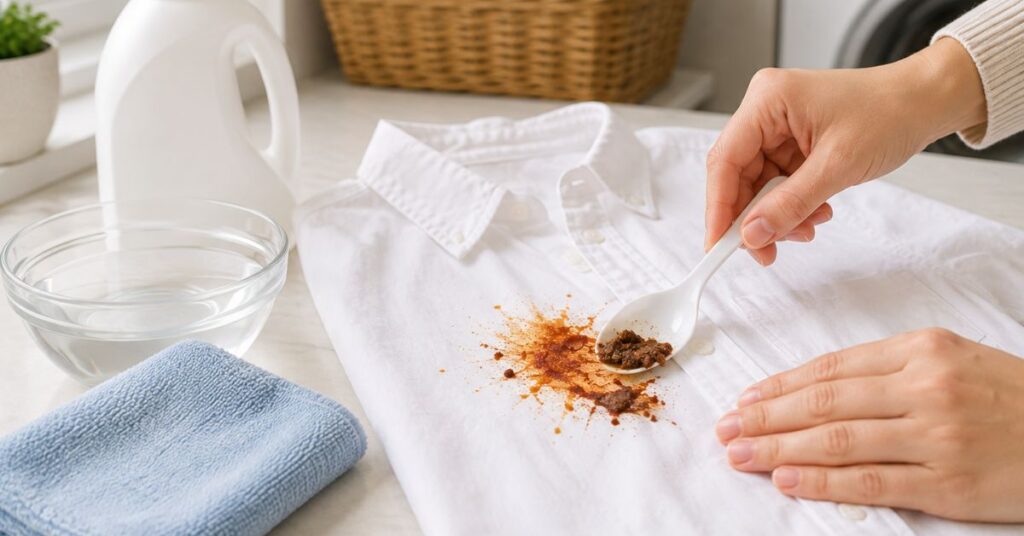
Clothing is one of the most common places for accidental mehndi stains. A small amount of henna can easily transfer from freshly decorated hands onto sleeves, shirts, dresses, scarves, bedsheets, or towels. The best method depends on whether the stain is fresh or dried.
Step-by-Step Instructions
1. Remove excess mehndi.
Use a spoon or dull plastic card to lift the paste from the surface. Do not scrub it into the fabric.
2. Rinse the stain.
Hold the stained area under cool running water. Whenever possible, rinse from the back of the fabric. This can help push the stain away from the fibers instead of further into them.
3. Apply liquid detergent.
Place a small amount of liquid laundry detergent directly onto the stain. Gently massage the detergent into the fabric using your fingertips. For sturdy fabrics, you can use a soft toothbrush.
4. Let it sit.
Allow the detergent to work for approximately 10 to 15 minutes, or follow the instructions on the detergent label.
5. Rinse thoroughly.
Rinse the area with cool water.
6. Check the stain.
If the orange or brown color is still visible, repeat the treatment.
7. Wash normally.
Once the stain has been treated, wash the garment according to its care label. Do not put it in the dryer until you have checked that the stain has been removed. This simple method is often the best first step when learning how to remove mehndi stains from washable clothes.
How to Remove Dried Mehndi From Clothes
Dried mehndi can be more difficult to remove because the paste may have bonded to the fabric and left behind concentrated color. Start by gently scraping away any dry residue. Use a dull spoon or plastic card rather than a sharp object. Once the dried material has been removed, rinse the area with cool water. Apply liquid laundry detergent and gently work it into the stain. Allow it to sit for several minutes before rinsing. If the orange-brown mark remains, repeat the treatment or use a suitable commercial stain remover according to its instructions. Avoid immediately using chlorine bleach. Bleach is not always appropriate for colored clothing, delicate fabrics, or every type of stain.
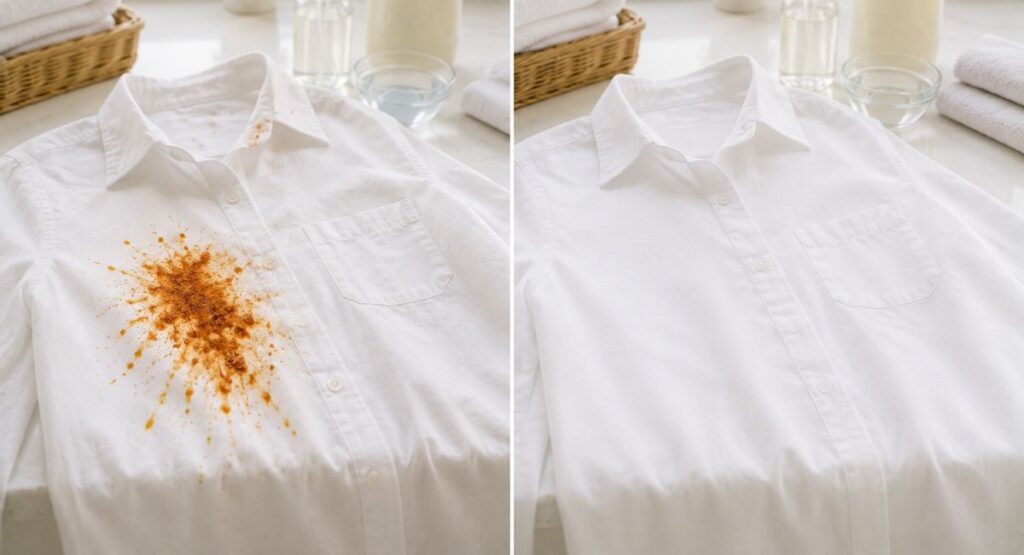
How to Remove Mehndi Stains From White Clothes
White clothing can make mehndi stains particularly noticeable. Start with a gentle treatment such as liquid laundry detergent. If the stain remains, an oxygen-based stain remover may be suitable for some washable white fabrics. Always check the care label first. For stubborn stains, avoid repeatedly applying strong chemicals without testing them. If the garment is delicate, expensive, or marked “dry clean only,” professional cleaning may be the safest option. The goal is not simply to remove mehndi stains but to remove them without damaging the original fabric.
How to Remove Mehndi From Colored Clothes
Colored clothing requires extra caution because some cleaning products can cause fading. Before applying any stain remover, test it on an inconspicuous area.
Check for:
- Color fading
- Color transfer
- Fabric damage
- Changes in texture
For a fresh stain, start with mild detergent and cool water. Avoid aggressive scrubbing because it can spread the stain and make the affected area look lighter than the rest of the garment. When treating colored clothes, gentle and repeated treatment is often safer than using one very strong chemical.
How to Remove Mehndi From Jeans
Denim is generally more durable than delicate fabrics, but it can still fade when exposed to strong cleaning products.
For fresh mehndi on jeans:
- Remove excess paste.
- Rinse with cool water.
- Apply liquid laundry detergent.
- Gently work the detergent into the stain.
- Let it sit for several minutes.
- Rinse.
- Wash according to the care label.
For dried stains, gently scrape away the surface residue before applying detergent. Avoid excessive scrubbing because it may create a lighter patch on the denim.
How to Remove Mehndi From Cotton Fabric
Cotton is commonly used for shirts, dresses, bedsheets, towels, and scarves.
For washable cotton, begin with liquid laundry detergent and cool water.
If the stain is fresh, remove excess mehndi before rinsing.
For an older stain, allow the detergent more time to loosen the discoloration before washing.
A soft toothbrush can be used carefully on sturdy cotton, but avoid aggressive brushing.
Always inspect the fabric before drying.
Heat from a dryer can make remaining stains more difficult to treat.
How to Remove Mehndi From Bedsheets and Towels
Accidental removal of mehndi stains from clothes can easily transfer onto bedsheets and towels after applying henna.
If the stain is fresh, remove excess paste immediately.
Rinse the area with cool water and apply liquid laundry detergent.
For larger stains, you may need to treat the affected area more than once.
Wash the item according to its care instructions.
Before drying, check the stained area carefully.
If a faint orange or brown mark remains, repeat the treatment rather than drying it immediately.
Can Lemon Juice Remove Mehndi Stains From Clothes?
Lemon juice is often suggested as a natural stain-removal remedy, but it should be used carefully. Acidic ingredients can sometimes affect fabric dyes, particularly on colored or delicate clothing. If you want to try lemon juice, perform a small hidden-area test first. Never assume that a natural ingredient is automatically safe for every fabric. For most washable clothing, starting with liquid laundry detergent is a more controlled approach.
Can Baking Soda Remove Mehndi Stains?
Baking soda can help with many household cleaning tasks, but it is not guaranteed to completely remove mehndi dye. It may be used as part of a gentle cleaning approach on suitable washable fabrics, but avoid relying on aggressive scrubbing. If you are trying to remove mehndi stains from clothes, the paint-like appearance of the stain can make it tempting to scrub hard. Instead, loosen the residue gradually and rinse between treatments.
Why You Should Avoid the Dryer
One of the most important rules for stain removal is to check the garment before drying it. If a mehndi stain remains after washing, heat from a dryer can make the remaining discoloration more difficult to treat. Instead, air-dry the garment while you are still working on the stain. Once you are satisfied with the result, you can dry it according to the care instructions.
Quick Clothing Stain-Removal Checklist
When you need to remove mehndi stains from clothes, remember:
REMOVE → RINSE → TREAT → WASH → CHECK → DRY
Remove
Lift away excess mehndi paste.
Rinse
Use cool water and rinse from the back when possible.
Treat
Apply a suitable cleaning product.
Wash
Wash according to the garment care label.
Check
Inspect the stain before drying.
Dry
Dry only after you are satisfied with the result.
How to Remove Mehndi Stains From Skin
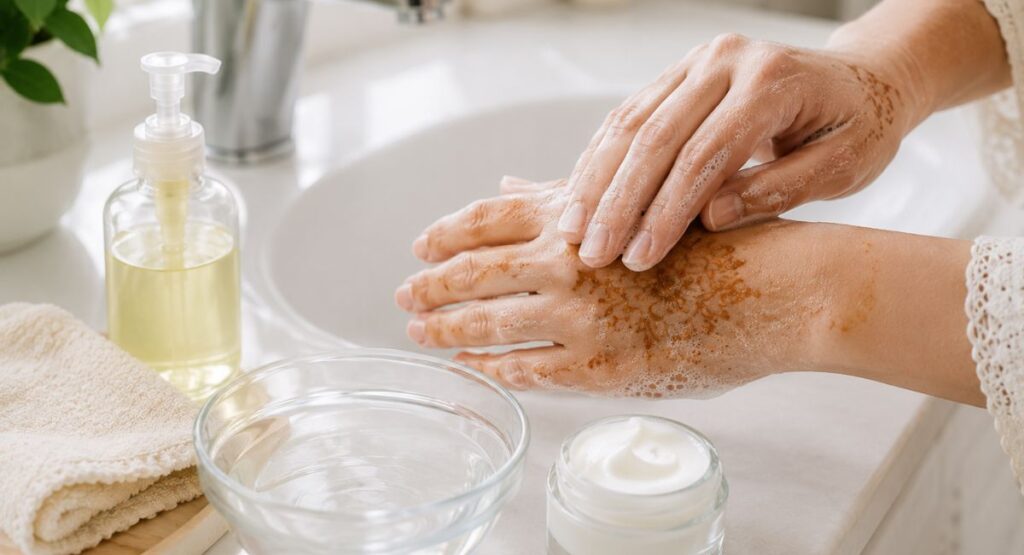
Henna is designed to stain skin, so removing it completely immediately is usually not realistic. Natural henna color develops over time and gradually fades as the outer skin cells naturally shed. If you accidentally get mehndi somewhere you do not want it, you can gently encourage the stain to fade. The most important rule is to avoid harsh scrubbing. Your skin can become irritated long before the stain disappears.
Method 1: Warm Water and Gentle Soap
If the mehndi is still relatively fresh, start with the simplest method.
What You Need
- Warm water
- Mild hand soap
- Soft washcloth
- Moisturizer
Steps
- Wet the stained area with warm water.
- Apply a small amount of mild soap.
- Gently massage the area with your fingertips.
- Rinse thoroughly.
- Pat the skin dry.
- Apply a gentle moisturizer.
Repeat once or twice during the day if necessary. Do not scrub continuously in an attempt to remove the stain immediately.
This method is particularly useful when you are trying to remove mehndi stains from clothes where the paste has accidentally spread beyond the intended design.
Method 2: Gentle Exfoliation
Once the mehndi has dried and the stain has developed, gentle exfoliation can help the color fade as dead skin cells are removed.
You can use a mild body scrub or a soft washcloth.
How to Do It
Wet the skin first.
Apply a small amount of gentle exfoliating product.
Massage the area lightly using circular movements.
Do not use excessive pressure.
Rinse thoroughly and apply moisturizer afterward.
If the skin becomes red, sore, itchy, or irritated, stop exfoliating.
Remember that the purpose is to gradually fade the color, not remove several layers of skin.
Method 3: Oil and Gentle Massage
A small amount of a skin-safe oil can help loosen dried residue on the surface of the skin.
Suitable options may include:
- Coconut oil
- Olive oil
- Baby oil
Apply a small amount to the stained area and gently massage it for a few minutes. Then wash your hands with mild soap and warm water.
This method may not instantly remove the underlying henna color, but it can help loosen remaining paste and make the stain appear less intense over time.
If you have sensitive skin, test the oil on a small area first.
How to Remove Mehndi From Fingernails
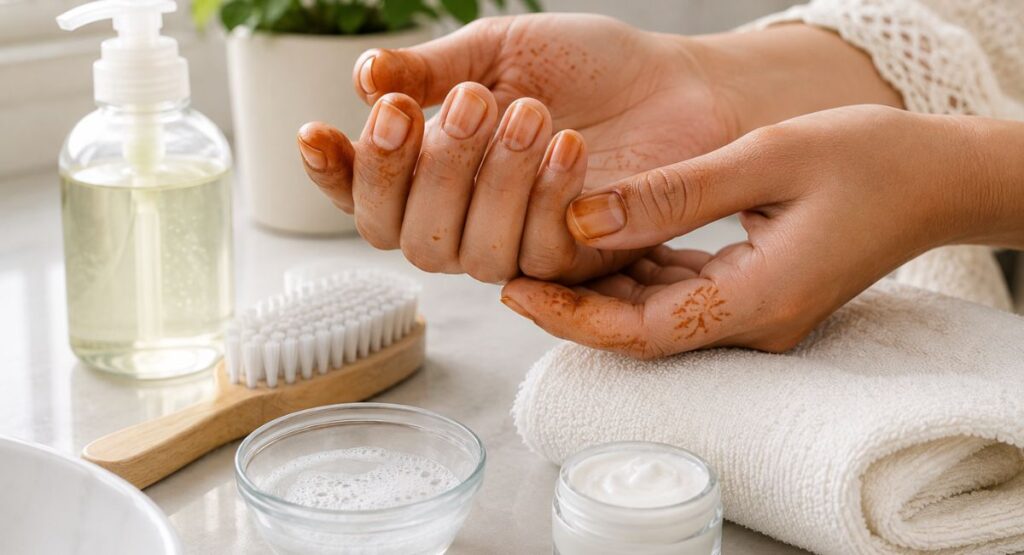
Henna can leave a noticeable orange or brown color on fingernails, especially when the paste has been applied around the fingertips. Nails are different from skin because the nail plate is not living skin. The stain generally fades as the nail grows and is gradually trimmed.
What You Can Do
Keep your nails clean and wash them regularly with mild soap. You can gently brush the surface using a soft nail brush. Avoid aggressively scraping the nail. If the stain is on the surrounding skin, use a gentle soap-and-water treatment. For stubborn discoloration, patience is often the safest solution. Trying to force the color off the nail can damage the nail surface without significantly speeding up the natural fading process.
Can Lemon Juice Remove Mehndi From Skin?
Lemon juice is a commonly suggested home remedy for fading henna stains.
However, acidic ingredients can irritate skin, especially if you have sensitive or dry skin.
Lemon juice can also make skin more sensitive to sunlight.
For these reasons, it is better not to rely on lemon juice as your first method.
Gentle washing, moisturizing, and natural skin exfoliation are safer approaches for most people.
If your skin is irritated or broken, avoid applying acidic ingredients altogether.
Should You Use Bleach to Remove Mehndi From Skin?
No.
Household bleach should never be used on your skin to remove mehndi.
Bleach is a strong chemical designed for appropriate household cleaning applications. It can cause significant skin irritation and chemical burns.
If you are trying to remove mehndi stains from your hands or fingers, use gentle methods and allow the stain to fade naturally.
What About Rubbing Alcohol on Skin?
Rubbing alcohol can dry and irritate the skin.
It may remove some surface residue, but it is not necessary for ordinary henna stains.
Because the color is within the outer layers of stained skin rather than simply sitting on top, harsh chemicals are unlikely to provide an instant solution.
If you have already used a strong product and your skin feels irritated, rinse the area thoroughly with water and stop using the product.
How Long Does Mehndi Take to Fade From Skin?
Natural henna typically fades gradually as the outer layer of skin sheds.
The exact timing varies depending on:
- Where the henna was applied
- How often the area is washed
- How quickly your skin sheds
- How dark the original stain became
- Whether the area is exposed to water frequently
Hands and fingers may fade at a different rate from other parts of the body.
Instead of trying to remove the color aggressively, gentle washing and normal skin exfoliation are usually the better approach.
How to Remove Mehndi Stains From Countertops
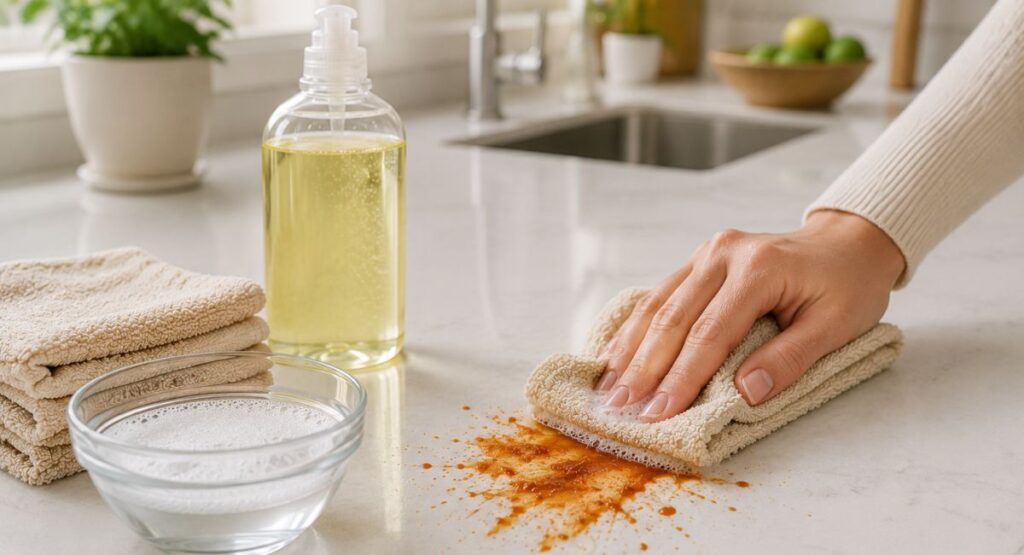
Mehndi can leave orange-brown marks on kitchen counters, bathroom counters, tables, and other hard surfaces.
The correct method depends on the countertop material.
Always check the manufacturer’s care instructions before using a cleaning product.
Method 1: Dish Soap and Water
For a fresh mehndi spill on a sealed, washable countertop, start with mild dish soap.
Steps
- Remove excess mehndi paste with a paper towel or plastic scraper.
- Mix a small amount of mild dish soap with warm water.
- Dip a microfiber cloth into the solution.
- Wring out excess water.
- Gently wipe the stained area.
- Rinse the surface with a clean damp cloth.
- Dry with a clean towel.
This is usually the safest starting point for many sealed surfaces.
Method 2: Baking Soda Paste for Suitable Hard Surfaces
Baking soda can provide gentle abrasive action, but it should not be used on every countertop.
It may scratch some polished, glossy, or delicate surfaces.
If the manufacturer allows it, make a thin paste using baking soda and a small amount of water.
Apply it gently to the stain.
Allow it to sit briefly.
Wipe away the paste with a soft microfiber cloth.
Rinse the surface thoroughly and dry it.
Do not scrub aggressively.
Before using baking soda, confirm that it is suitable for your specific countertop material.
How to Remove Mehndi From a Sink
Fresh mehndi can sometimes stain bathroom and kitchen sinks.
Start by rinsing away any loose paste.
Apply a small amount of mild dish soap to a damp microfiber cloth.
Gently wipe the stained area.
Rinse thoroughly.
For stubborn discoloration, use a surface cleaner specifically recommended for your sink material.
Avoid using abrasive powders or harsh chemicals on delicate finishes unless the manufacturer says they are safe.
How to Remove Mehndi From a Bathroom Counter
Bathroom counters can be made from many different materials, including ceramic, porcelain, quartz, marble, granite, laminate, and other engineered surfaces.
Because cleaning recommendations differ, always identify the surface before using a strong product.
For most washable sealed surfaces, start with:
Mild soap → Damp microfiber cloth → Rinse → Dry
If the stain remains, check the manufacturer’s cleaning recommendations.
Do not assume that a product safe for ceramic is also safe for natural stone.
How to Remove Mehndi From Marble
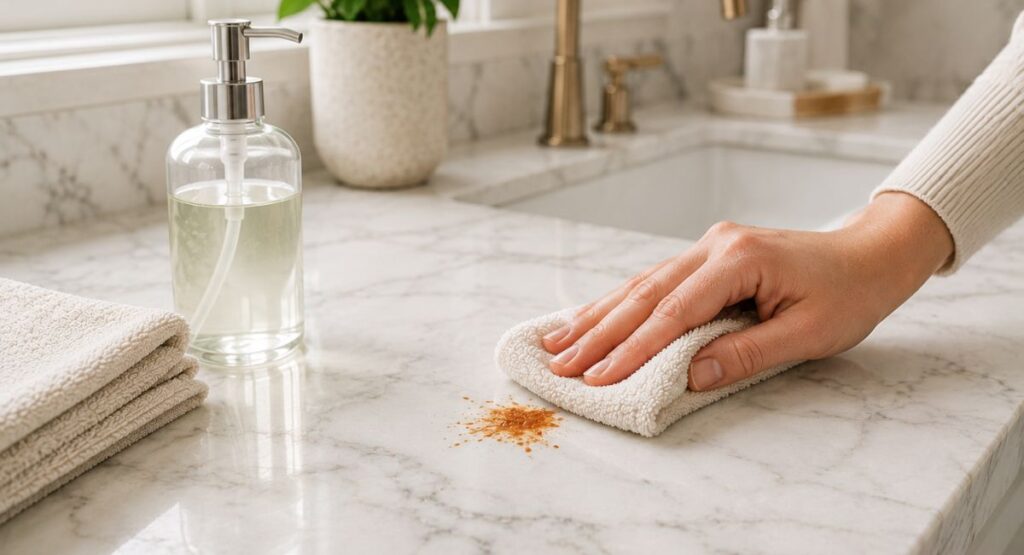
Marble requires extra caution.
It is a natural stone and can be sensitive to acidic products.
Avoid experimenting with lemon juice or vinegar on marble.
Also avoid harsh abrasive cleaners that could dull the polished surface.
For a fresh mehndi spill:
- Blot or lift the excess paste.
- Clean with a pH-neutral stone cleaner or a product recommended for marble.
- Wipe with a soft microfiber cloth.
- Rinse if appropriate for the cleaning product.
- Dry the surface.
If the stain has penetrated porous marble, professional stone restoration may be necessary.
This is an important consideration when learning how to remove mehndi stains from natural stone.
How to Remove Mehndi From Granite
Granite is generally more resistant than some other natural stones, but its care depends on the finish and seal.
Start with a stone-safe cleaner or mild soap and water.
Remove excess mehndi first.
Wipe gently with a microfiber cloth.
Rinse away any residue and dry the surface.
Avoid harsh acids and abrasive scrubbing unless the stone manufacturer specifically recommends them.
How to Remove Mehndi From a Wooden Table
Wood requires a careful approach because moisture and aggressive chemicals can damage its finish.
If fresh mehndi lands on a wooden table, remove the excess immediately.
Do not allow the paste to sit on the wood for a long period.
Dampen a microfiber cloth with a small amount of mild soapy water.
Wipe the affected area gently.
Immediately dry the surface with another clean cloth.
For unfinished or highly porous wood, the stain may penetrate deeper.
In that situation, repeated wet cleaning may actually cause more damage.
A furniture professional may be needed for a stubborn stain.
How to Remove Mehndi From a Glass Table
Glass is usually easier to clean than porous materials.
First, remove any dried paste with a plastic scraper.
Then spray a suitable glass cleaner onto a microfiber cloth rather than directly onto the surface if there are nearby sensitive materials.
Wipe the stained area.
Use a clean, dry microfiber cloth to remove streaks.
For fresh stains, mild dish soap and water can also work well.
Avoid using sharp blades unless the glass manufacturer specifically recommends the method.
How to Remove Mehndi From Ceramic Tile
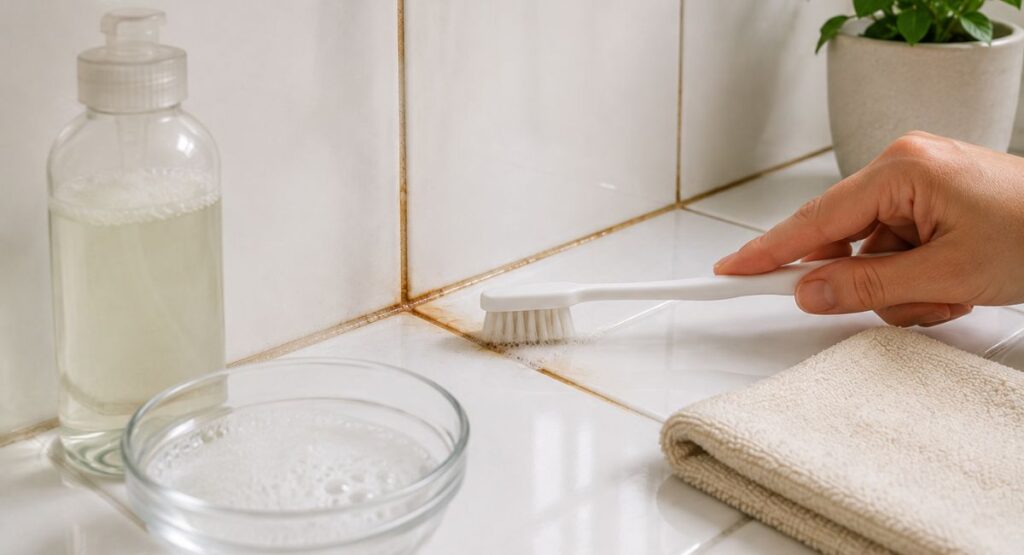
Ceramic and porcelain tiles are generally easier to clean than porous natural stone.
Start by removing excess mehndi.
Apply mild dish soap diluted with water.
Use a microfiber cloth or soft sponge to wipe the stain.
For textured tile, a soft toothbrush can help clean the grooves.
Rinse the area and dry it.
Pay attention to the grout because grout can be more porous than the tile itself.
How to Remove Mehndi From Grout
Grout can absorb stains more easily than glazed tile.
For fresh mehndi:
- Blot away the excess.
- Apply a mild cleaning solution.
- Use a soft grout brush or toothbrush.
- Gently work the cleaner into the grout.
- Rinse thoroughly.
- Dry the area.
Avoid aggressive scrubbing because it can wear down grout over time.
If the stain remains, use a grout cleaner appropriate for your specific grout type.
How to Remove Mehndi From Carpet
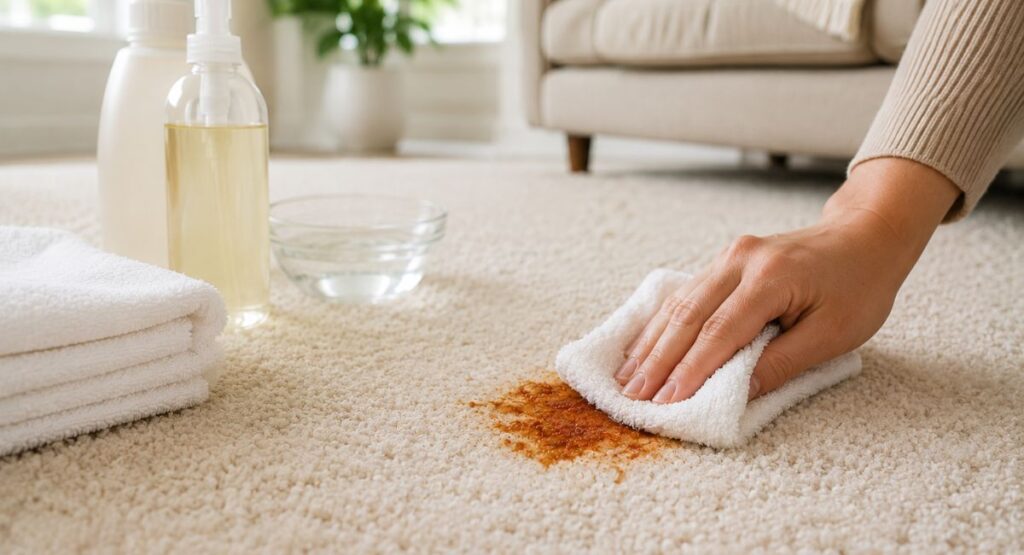
Carpet requires immediate attention because liquid and pigment can move deep into the fibers.
The first step is to remove excess mehndi without rubbing.
Use a spoon to lift the paste.
Then blot the area with a clean white cloth.
Apply a small amount of suitable carpet-cleaning solution according to the carpet manufacturer’s instructions.
Blot from the outside toward the center.
Do not saturate the carpet.
Continue blotting with clean sections of the cloth.
Finally, allow the area to dry completely.
Avoid aggressive rubbing because it can spread the stain and damage carpet fibers.
How to Remove Mehndi From a Fabric Sofa
If mehndi lands on a fabric sofa, check the upholstery cleaning code before applying any product.
Some upholstery can be cleaned with water-based products, while others require specialized treatment.
For a fresh stain:
- Lift excess mehndi
- Blot gently
- Use an upholstery-safe cleaner
- Avoid soaking the fabric
- Allow it to dry thoroughly
Never assume that a clothing stain-removal method is safe for furniture upholstery.
The fabric backing, dye, and finish can react differently.
How to Remove Mehndi From a Mattress
If mehndi gets onto a mattress, remove the excess paste immediately.
Use a clean spoon to lift it away.
Blot the affected area with a clean damp cloth.
Use a small amount of upholstery-safe or mattress-safe cleaning solution if appropriate.
Avoid soaking the mattress.
Excess moisture can take a long time to dry and may create additional problems.
Allow the area to dry completely before covering the mattress again.
A Simple Surface-Cleaning Routine
For many sealed hard surfaces, remember:
LIFT → WIPE → RINSE → DRY
Lift
Remove excess mehndi paste.
Wipe
Use an appropriate gentle cleaning solution.
Rinse
Remove cleaning residue with a clean damp cloth when appropriate.
Dry
Dry the surface completely with a microfiber cloth.
This simple process helps reduce the risk of spreading the stain.
Final Tips for Skin and Surface Stains
When dealing with mehndi stains, patience is often more effective than aggressive cleaning. For skin, allow the natural color to fade gradually while keeping the area clean and moisturized. For hard surfaces, remove fresh paste quickly and start with the gentlest cleaning method appropriate for the material. For porous materials such as natural stone, unfinished wood, grout, and some fabrics, stains can penetrate more deeply and may require specialized treatment.
How to Remove Old Mehndi Stains
Old mehndi stains can be challenging because the pigment has had more time to settle into fabric or porous materials. The first step is to identify the material. A method that is appropriate for cotton clothing may not be suitable for marble, wood, carpet, or upholstery. For washable clothing, begin with liquid laundry detergent. Apply it directly to the stain and allow it to work according to the detergent instructions. Rinse thoroughly and repeat if necessary. For hard surfaces, start with the gentlest cleaner that is appropriate for the material. Do not immediately reach for strong chemicals. Sometimes several gentle treatments are safer than one aggressive treatment.
How to Remove Mehndi Stains After Washing
If you washed the garment before noticing the stain, there is still a chance of improving it.
First, inspect the fabric.
If the stain is still visible, avoid putting the garment in the dryer.
Apply liquid laundry detergent directly to the affected area.
Gently work it into the fabric.
Let it sit according to the detergent instructions.
Rinse and wash again.
For suitable washable fabrics, an oxygen-based stain remover may be another option.
Always follow the product label and check the garment care instructions.
If the stain has already been through a hot dryer, it may be more difficult to remove.
In that situation, patience is particularly important.
How to Remove Mehndi Stains From a Carpet After They Dry
A dried mehndi stain on carpet requires careful treatment.
Start by gently removing loose dried material.
Use a spoon or dull plastic edge.
Do not scrape aggressively.
Next, vacuum or carefully lift away loose particles if appropriate for the carpet.
Use a carpet-safe cleaning product according to the manufacturer’s instructions.
Apply a small amount to a clean white cloth rather than saturating the carpet.
Blot the stain from the outside toward the center.
Continue using clean sections of the cloth as the pigment transfers.
Avoid vigorous rubbing.
Once the treatment is complete, allow the carpet to dry completely.
If the stain remains or the carpet is expensive, professional carpet cleaning may be the safest option.
How to Remove Mehndi From Upholstery
Old mehndi on a sofa or upholstered chair can be particularly difficult because the stain may have penetrated beyond the surface.
Before doing anything, check the upholstery cleaning code.
If the manufacturer recommends professional cleaning, follow that guidance.
For upholstery that can safely be treated at home:
- Remove loose dried mehndi.
- Vacuum the area if appropriate.
- Use an upholstery-safe cleaning product.
- Apply only a small amount.
- Blot rather than scrub.
- Allow the area to dry completely.
- Check the result before repeating.
Do not saturate upholstery.
Excess moisture can penetrate the cushion and create additional problems.
How to Remove Mehndi From a Painted Wall
If mehndi accidentally gets onto a painted wall, be careful.
Aggressive scrubbing can remove the paint along with the stain.
Start with a clean microfiber cloth slightly dampened with water.
Gently wipe the affected area.
If the mark remains, use a small amount of mild dish soap diluted with water, but test it on an inconspicuous part of the wall first.
Avoid abrasive cleaning products on delicate or matte paint finishes.
If the wall paint begins to transfer onto the cloth, stop cleaning.
In some cases, touching up the affected area may be safer than continuing to scrub.
How to Remove Mehndi From a Painted Door
Painted doors can be treated similarly to painted walls.
First, remove any dried mehndi residue carefully.
Then use a damp microfiber cloth.
If necessary, use a small amount of mild soapy water.
Do not use excessive pressure.
Glossy paint may tolerate gentle cleaning better than flat or matte finishes, but you should still test the cleaning solution first.
The goal is to remove mehndi stains without creating a noticeable patch in the paint.
How to Remove Mehndi From Plastic
Plastic surfaces are generally easier to clean than porous materials.
For a fresh stain:
- Remove excess mehndi.
- Wipe with a damp microfiber cloth.
- Apply mild dish soap.
- Gently clean the surface.
- Rinse with clean water.
- Dry thoroughly.
For stubborn stains, use a plastic-safe commercial cleaner according to its instructions.
Avoid abrasive materials that could leave scratches.
Scratched plastic can become more difficult to clean in the future.
How to Remove Mehndi From a Phone Case
If mehndi gets onto a removable phone case, take the case off the phone before cleaning it.
This is important because cleaning liquids should not get into the phone.
For washable silicone or plastic cases, start with mild dish soap and water.
Use a soft cloth or soft toothbrush for textured areas.
Rinse the case if the material allows it and dry it completely before putting it back on your phone.
For leather or specialty cases, follow the manufacturer’s cleaning instructions instead.
How to Remove Mehndi From a White Tablecloth
White tablecloths can show even a small amount of henna.
If the stain is fresh, remove excess paste immediately.
Rinse with cool water.
Apply liquid laundry detergent.
Allow it to sit according to the product instructions.
Wash according to the fabric care label.
If the stain remains, an oxygen-based stain remover may be suitable for some washable white fabrics.
Do not automatically use chlorine bleach.
Always check whether the fabric and stain-removal product are compatible.
How to Remove Mehndi From a Wedding Dress
Wedding dresses require special care.
If mehndi gets onto a wedding dress, do not experiment with strong home remedies.
Many wedding dresses contain:
- Silk
- Satin
- Lace
- Beading
- Sequins
- Embroidery
- Decorative finishes
These materials can react badly to ordinary stain removers.
Gently lift away any excess mehndi without rubbing.
Then contact a professional cleaner who specializes in formalwear.
Tell the cleaner exactly what caused the stain and which products, if any, have already been applied.
For an expensive wedding dress, professional treatment is usually much safer than experimenting at home.
Common Mistakes When Removing Mehndi Stains
Understanding common mistakes can make the cleaning process much easier.
Mistake 1: Scrubbing Fresh Mehndi
Aggressive rubbing can spread wet mehndi across a larger area.
Instead, lift the excess paste first.
Mistake 2: Waiting Too Long
Fresh stains are usually easier to treat than old stains.
If possible, start cleaning as soon as you notice the spill.
Mistake 3: Using Too Much Water
Water can spread pigment across fabric, carpet, and upholstery.
Use controlled amounts of liquid and blot carefully.
Mistake 4: Using Bleach on Everything
Bleach is not a universal stain remover.
It can damage fabrics, discolor clothing, and harm surfaces.
Never use household bleach on skin.
Mistake 5: Using Lemon or Vinegar on Natural Stone
Acidic cleaners can damage certain stone surfaces.
Avoid using them on marble and other acid-sensitive materials unless the manufacturer specifically says they are safe.
You can also learn more about surfaces that should not be treated with vinegar in the True Housekeeping guide:
Things You Should Never Clean With Vinegar
Mistake 6: Drying Stained Clothes Too Early
If a stain remains, avoid putting the garment in the dryer.
Inspect it first and repeat the treatment if necessary.
Mistake 7: Using a Strong Cleaner Without Testing
Always test a new cleaning product in an inconspicuous area when possible.
A cleaner that removes the stain but damages the surface is not a successful cleaning solution.
How to Prevent Mehndi Stains During Events
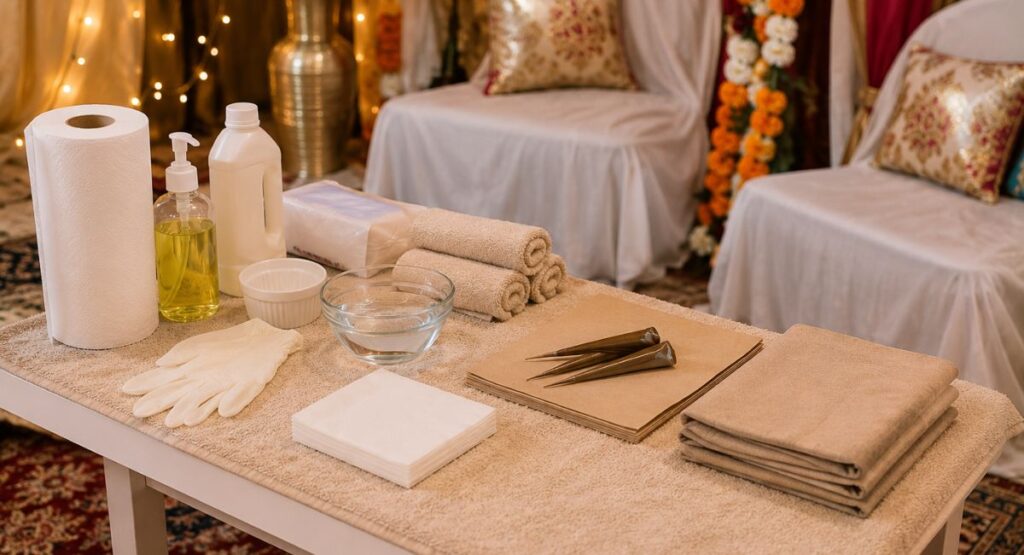
If you are hosting a mehndi party, wedding, Eid gathering, or another henna event, prevention can save a lot of cleaning time.
Protect Clothing
Wear older clothing while applying mehndi.
If you are helping someone with henna, consider wearing an apron.
Protect Furniture
Cover sofas and chairs with washable sheets or towels.
This is particularly useful when guests are sitting while their mehndi dries.
Use a Designated Mehndi Area
Set up a small table or station specifically for henna application.
Keep the area away from expensive furniture and delicate fabrics.
Keep Cleaning Supplies Nearby
Have these items ready:
- Paper towels
- Microfiber cloths
- Mild dish soap
- Liquid laundry detergent
- Clean water
- Disposable gloves
- Old towels
Quick action can prevent a small spill from becoming a large stain.
Keep Freshly Applied Henna Away From Fabrics
After applying mehndi, allow it to dry before touching clothing, bedding, cushions, or other fabric surfaces.
This simple precaution can prevent many accidental stains.
FAQs
1. What is the easiest way to remove mehndi stains from clothes?
For a fresh stain on washable clothing, start by removing excess mehndi and rinsing the fabric with cool water.
Then apply liquid laundry detergent and gently work it into the stain.
Wash according to the care label and inspect the garment before drying.
2. Can dried mehndi stains be removed?
Yes, dried stains can sometimes be reduced or removed, although they may require repeated treatment.
Start by removing dried residue and then use an appropriate cleaning method for the fabric.
3. How can I remove mehndi from my hands quickly?
Natural henna stains the outer layers of skin, so it usually cannot be completely removed instantly.
Gentle washing, moisturizing, and gradual exfoliation can help the color fade faster.
Avoid harsh chemicals.
4. Does soap remove henna from skin?
Soap can remove leftover henna paste from the skin, especially before the color has fully developed.
However, once henna has stained the skin, ordinary soap will not immediately remove the underlying color.
The stain generally fades naturally over time.
5. Can I use bleach to remove henna from skin?
No.
Household bleach should never be applied to skin.
It can cause severe irritation and chemical burns.
6. Does lemon juice remove mehndi stains?
Lemon juice is sometimes suggested as a home remedy, but it can irritate skin and may affect some materials.
It should also be avoided on acid-sensitive surfaces such as many natural stone countertops.
Use a material-appropriate cleaning method instead.
7. Can baking soda remove mehndi stains?
Baking soda may help with gentle cleaning on some suitable hard surfaces and washable materials, but it is not guaranteed to remove henna pigment completely.
Avoid aggressive scrubbing.
8. How do I remove mehndi from a carpet?
Remove excess paste first.
Then blot rather than rub and use a carpet-safe cleaning product according to the manufacturer’s instructions.
Avoid soaking the carpet.
9. How do I remove mehndi from marble?
Use a cleaner specifically designed for natural stone or follow the marble manufacturer’s recommendations.
Avoid acidic ingredients such as lemon juice and vinegar because they can damage marble.
10. How do I remove mehndi from a sofa?
Check the upholstery cleaning instructions first.
Remove excess paste, blot gently, and use an upholstery-safe cleaner if the fabric allows it.
Avoid soaking the cushion.
11. Will washing clothes remove mehndi stains?
Washing may reduce a fresh mehndi stain, especially when the stain is treated before washing.
However, an older or concentrated stain may require pretreatment.
Always inspect the garment before drying.
12. What should I do if a mehndi stain will not come out?
Stop using increasingly strong products if the stain is not improving.
For delicate, expensive, or sentimental items, professional cleaning may be the safest solution.
Final Thoughts
Mehndi is an important part of many celebrations, but accidental stains can be frustrating.
Fortunately, you do not always need harsh chemicals to deal with them.
The best approach is to act quickly, remove excess paste, identify the material, and begin with the gentlest suitable cleaning method.
For washable clothing, liquid laundry detergent and careful washing are good starting points. For skin, gentle washing and natural fading are safer than harsh chemicals. For countertops and other hard surfaces, mild soap and water can often handle fresh spills, while delicate materials such as marble, unfinished wood, carpet, and upholstery require more specialized care.
Most importantly, never assume that one stain-removal method is safe for every material.
A method that works on a cotton shirt may damage a polished stone countertop, while a household cleaner that is safe for a hard surface should never automatically be used on skin.
If you regularly deal with household stains, True Housekeeping offers practical cleaning guides designed to make everyday cleaning easier and more manageable.
With the right method, a little patience, and careful treatment, you can often reduce or completely remove unwanted mehndi marks while protecting the material underneath.
Written by Farheen Gull
A practical guide by Farheen Gull on how to safely remove mehndi stains from clothes, skin, carpets, furniture, countertops, and other household surfaces.
Published on True Housekeeping